
 Dwi Wanna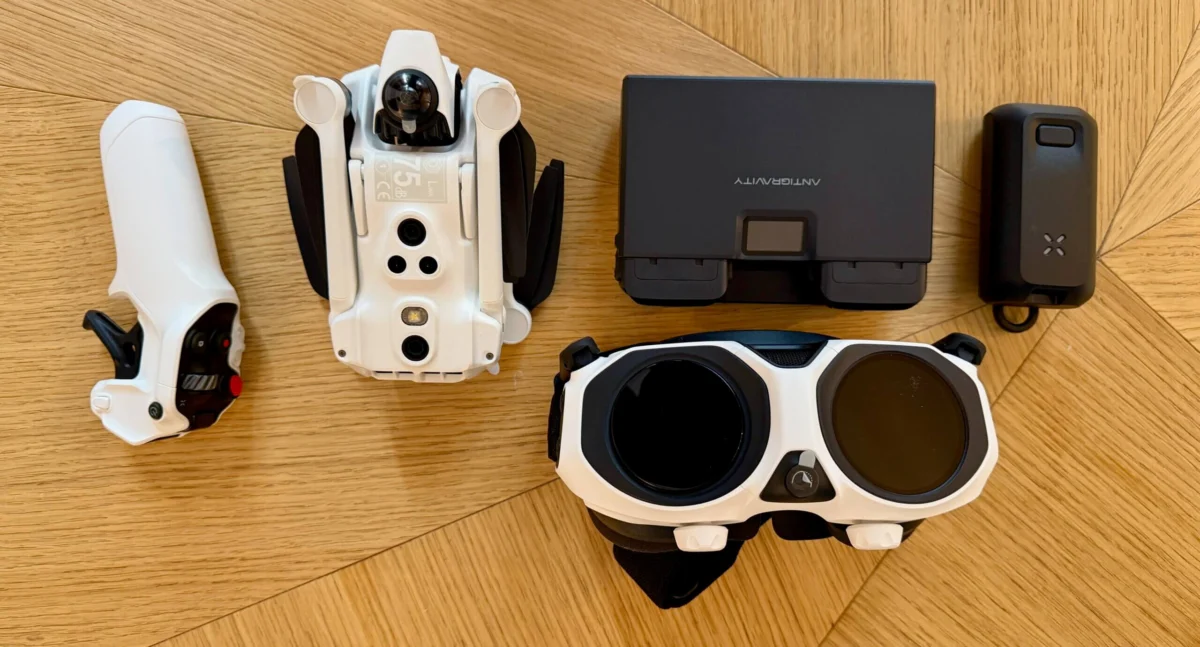
The landscape of portable aerial videography has been fundamentally reshaped with the late 2025 release of the Antigravity A1 drone. This innovative device aims to render traditional gimbals obsolete for a significant segment of creators by employing a sophisticated dual-lens 360-degree capture system. The A1 records simultaneously in all directions, offering users a "fly now, frame later" experience that shifts the paradigm from piloting a drone to directing a virtual camera within a pre-recorded digital environment. Initial hands-on testing suggests this technology represents a substantial leap forward, particularly for travelers seeking to capture expansive and dynamic aerial perspectives.
Revolutionary Dual-Lens System Eliminates Blind Spots
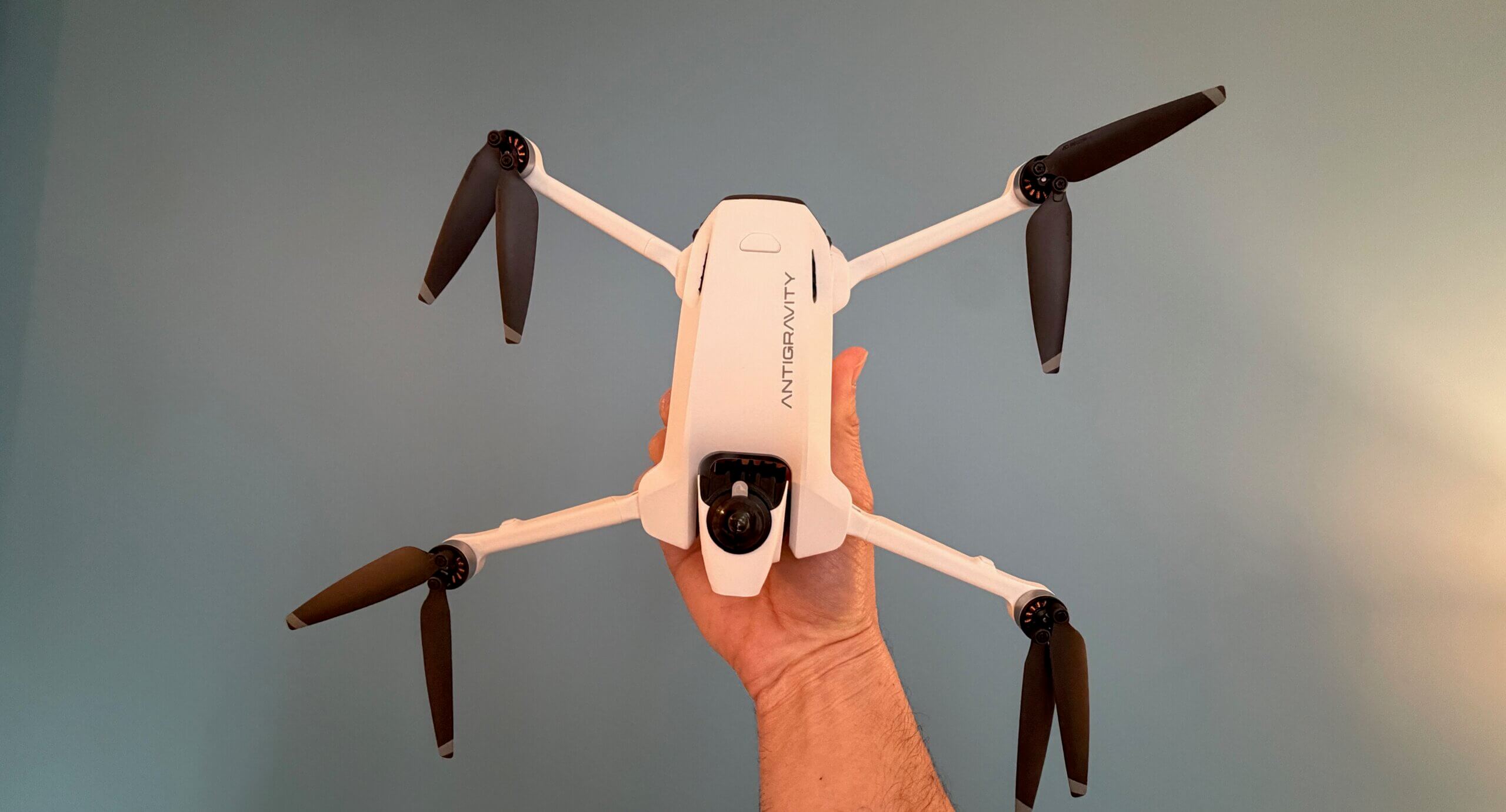
The core innovation of the Antigravity 360 A1 lies in its dual-lens configuration, a departure from the single, forward-facing lens common in most drones. The A1 features two ultra-wide-angle lenses, one positioned at the top and the other at the bottom of its central fuselage. Each lens boasts a 200-degree field of view. When these images are processed, they overlap to create a seamless 360-degree sphere of captured data. A key feature of the A1’s output is the digital removal of the drone itself in the final exported footage. This process creates a compelling illusion of a camera floating weightlessly in mid-air, with no visible means of support, an effect previously achievable only with complex rigging or extensive post-production.
The imaging sensors are specified as 1/1.28-inch CMOS units. While these are smaller than the 1-inch sensors found in some professional-grade photography drones, they represent a significant advancement over the sensors typically integrated into standard 360-degree action cameras. This larger sensor size contributes to demonstrably better low-light performance and an enhanced dynamic range. Consequently, the A1 is capable of capturing finer details in both the brightest highlights and deepest shadows, a critical advantage in challenging lighting conditions such as the harsh contrast of midday sun, where traditional cameras often struggle to balance exposure.
Regulatory Compliance and Robust Construction
Antigravity has strategically engineered the A1 to weigh precisely 249 grams with its standard battery. This crucial detail places the drone just under the 250-gram threshold, a common regulatory benchmark. In many countries, drones exceeding this weight limit are classified as commercial drones and are subject to mandatory registration and more stringent operational rules. By adhering to this weight limit, the A1 bypasses these regulatory hurdles for many recreational users, simplifying the adoption process for travelers and hobbyists.
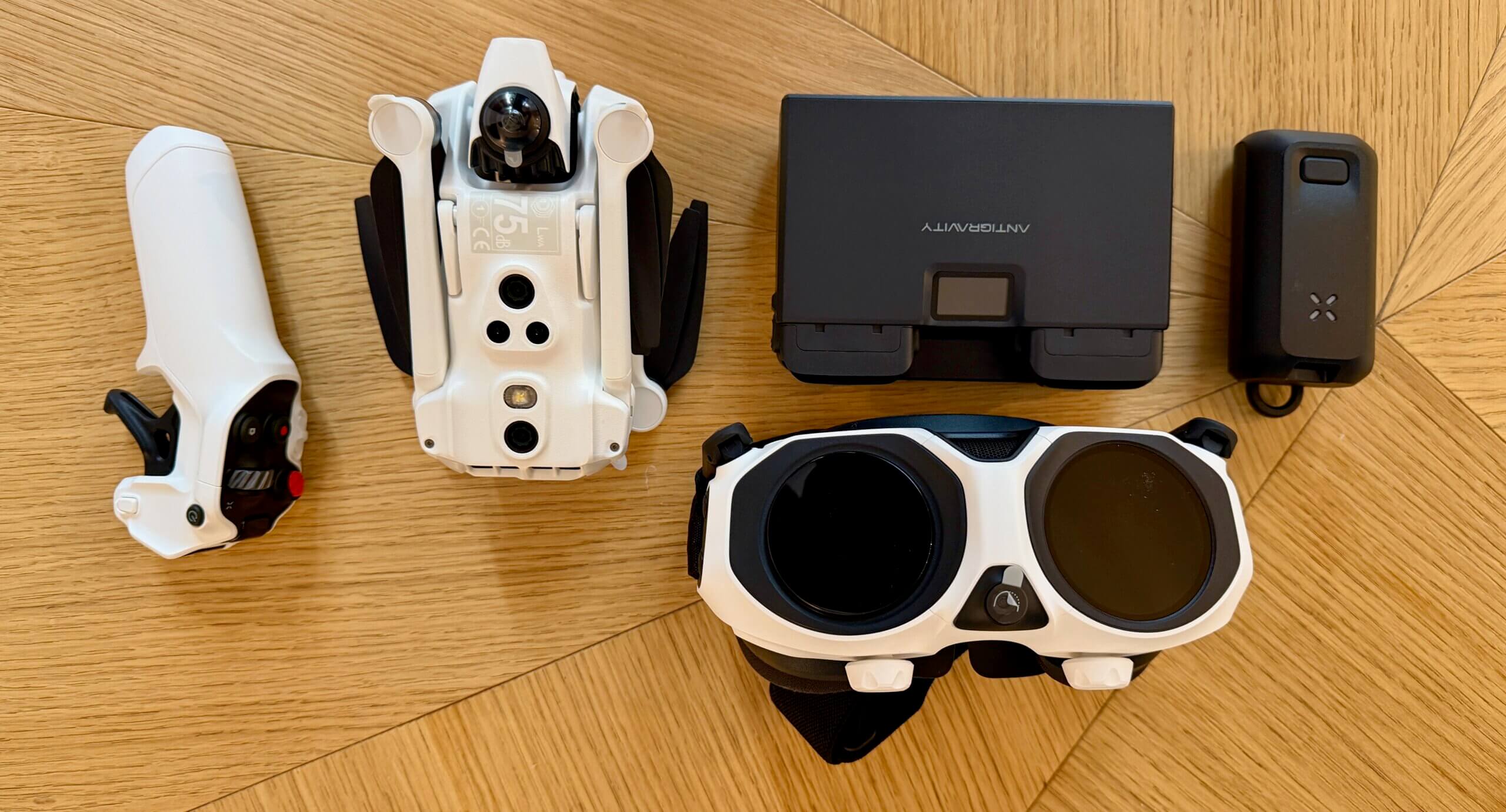
Beyond its regulatory advantage, the drone’s physical construction appears to be a significant point of consideration. The A1 utilizes a high-grade carbon-fiber-reinforced polymer, a material selection that provides a superior strength-to-weight ratio compared to the standard ABS plastics found in less expensive models. The folding mechanism has been described as precise and satisfying, with a tactile click that suggests long-term durability. When folded, the A1 is comparable in size to a large smartphone, albeit approximately three times its thickness, facilitating relatively convenient transport.
An Immersive Flight and Control Experience
The Antigravity A1 offers a distinct flight experience, significantly enhanced by its accompanying Vision Goggles and intuitive motion controller. The goggles are designed to be sleek and lightweight, featuring dual 4K micro-OLED displays with a 120Hz refresh rate. Latency is reported to be virtually non-existent, and the integrated head-tracking functionality is a standout feature. Because the drone records in 360 degrees, users are not confined to a fixed forward view. As the user turns their head, the goggle feed dynamically pans, allowing them to look left, right, up, or down, mirroring the drone’s perspective. This creates a profound sense of presence and spatial awareness, a level of immersion unattainable with conventional fixed-camera drones.
Control of the A1 is primarily managed through a single-handed motion controller. Users simply point the controller in the desired direction of travel and pull a trigger to accelerate. Banking is achieved by tilting the wrist, and climbing is initiated by raising the nose of the controller. This system is characterized as highly intuitive, enabling novice users to navigate complex environments effectively within minutes of initial operation. For experienced FPV pilots who prefer the precision of manual acrobatic flight, the A1 does offer compatibility with traditional "Mode 2" stick controllers. However, the fluid nature of the motion controls is so effective that many users may find little reason to revert to traditional methods.
A video demonstrating the drone’s capabilities in action further illustrates its operational fluidity and the immersive control system.
Advanced Camera Performance and Editing Capabilities
The marketing for the Antigravity 360 A1 prominently features "8K Resolution." It is important to clarify that in the context of 360-degree video, 8K resolution refers to the total number of pixels spread across the entire spherical capture. When this 8K sphere is reframed into a standard flat video format, the resulting output is effectively a "crop" of the total image. Therefore, the perceived resolution of the final exported video will depend on the degree of reframing applied.
The color science implemented in the A1 shows noticeable improvements over previous generations of 360-degree cameras. The drone offers a "Vivid" profile, designed for vibrant, social-media-ready colors, and a 10-bit "Log" profile for professional editors. The Log profile provides greater flexibility for color grading and matching footage with other professional cameras within a color-grading suite. Stabilization is powered by Antigravity’s proprietary "FlowState" algorithms, which are described as remarkably effective. Even when operating in winds of up to 20 mph, the footage remains exceptionally steady, comparable to that achieved with a stationary tripod.
Seamless Workflow with the Antigravity Studio App
Post-production is streamlined through the "Antigravity Studio" application. This app facilitates wireless footage download at speeds of up to 80MB/s and allows users to reframe their video content using their smartphone’s gyroscope. The reframing process is designed to be interactive: users can watch the video playback and physically move their phone to "film" the desired scene in real-time. Additionally, the app incorporates an AI-powered "Auto-Frame" feature. This tool is capable of identifying key subjects within the footage and automatically generating edits that maintain focus on those subjects. For solo creators, this AI functionality effectively functions as a virtual camera crew, ensuring that crucial moments are captured without being missed.
Battery Life and Flight Dynamics Considerations
Battery technology remains a significant constraint for miniaturized drone platforms. The A1’s standard Intelligent Flight Battery provides a theoretical flight time of 24 minutes. In practical, real-world conditions, factoring in moderate wind and continuous recording, users can expect closer to 19 to 20 minutes of flight.
While a 20-minute flight time may appear limited, the "work per minute" output is considerably higher than that of a traditional drone. Because the need to re-fly paths to capture different angles is eliminated, a single 20-minute flight with the A1 can yield an equivalent amount of usable footage as three flights with a drone like the DJI Mavic series. For users requiring extended flight durations, an optional "Pro Battery" is available. However, this battery addition pushes the drone’s weight over the 250-gram regulatory threshold. The Pro Battery offers a substantial 39 minutes of flight time but may slightly compromise the drone’s agility.
In terms of flight dynamics, the A1 is characterized as a "cinewhoop" style flyer. Its design prioritizes stability and predictability over aggressive, twitchy maneuvers. The drone achieves a top speed of approximately 36 mph, which is sufficient for following subjects like bicycles or cars. However, it is not designed to compete with the speed capabilities of professional racing drones. A valuable feature is the "Turtle Mode," which allows the drone to self-right itself if it lands upside down, enabling a restart without manual retrieval.
Target Audience and Market Positioning
The Antigravity 360 A1 drone represents a specialized product that appears poised to enter the mainstream market. Its primary appeal lies in its ability to simplify complex aerial cinematography, making advanced techniques accessible to a broader range of users.
The Antigravity 360 (A1) stands out as a particularly compelling new drone tested in recent times. By eliminating the necessity for a gimbal and alleviating the pressure of real-time framing, it empowers pilots to concentrate on the narrative aspect of their work. While its image quality may not precisely match that of high-end cinema drones, and the lenses are noted as potentially delicate, these are considered minor trade-offs for the significant creative freedom the A1 offers. The device effectively bridges the gap between conventional cinematography and the immersive potential of virtual reality. For creators who are seeking to move beyond conventional "drone shots" and explore new possibilities in aerial videography, the Antigravity 360 is positioned as an essential addition to their equipment arsenal.
The technological advancements embodied by the A1, particularly its dual-lens 360-degree capture and virtual camera control, signal a shift in how aerial footage will be conceived and executed. The implications for travel vlogging, documentary filmmaking, and even action sports coverage are substantial, offering creators unprecedented tools to tell stories from dynamic, all-encompassing perspectives.




 Anjar Salim
 Chandra Hamzah
 Tatiana Tantri Indah Sari
 Budi Mulyono

