
 Anjar Salim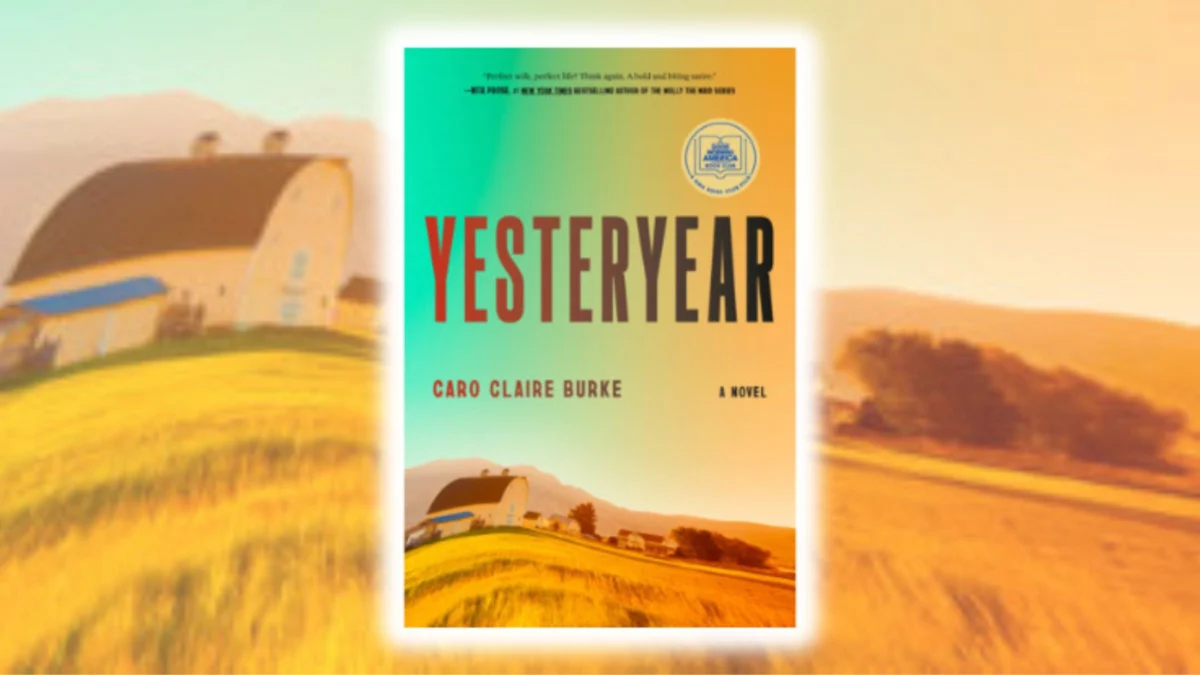
The literary landscape of 2026 has been significantly reshaped by the release of Caro Claire Burke’s novel Yesteryear, a work that has maintained a dominant position at the top of the New York Times hardcover bestsellers list for several consecutive months. The narrative follows Natalie Heller Mills, a high-profile "trad wife" influencer who suddenly finds herself transported from her curated, modern homestead into the authentic, grueling reality of 1855 pioneer life—the very era she had spent years aestheticizing for a digital audience. The novel’s resonance has been amplified by the announcement of a major film adaptation from Amazon MGM Studios, set to star Academy Award winner Anne Hathaway. This cultural moment has sparked a broader investigation into the "trad" movement, the economics of the creator economy, and the increasingly blurred lines between authentic lifestyle and performative marketing.
The Satirical Core of Yesteryear and the Rise of the Trad Wife Aesthetic
At its primary level, Yesteryear serves as a pointed critique of the "trad" (traditional) movement, specifically targeting the phenomenon of influencers who utilize 21st-century technology to promote 19th-century domesticity. Critics and readers have noted the novel’s parallels to real-world figures such as Hannah and Daniel Neeleman of Ballerina Farm. The Neelemans, who manage a massive digital empire and consumer brand from their Utah ranch, have often faced scrutiny regarding the contrast between their "simple" lifestyle and the sophisticated marketing machinery—and significant family wealth—that supports it.
The novel’s protagonist, Natalie Heller Mills, mirrors this duality. While she presents a life of hand-churned butter and homespun linen to her millions of followers, the narrative reveals the hidden infrastructures of her success: a wealthy father-in-law who bankrolls the operation and a team of off-camera laborers who maintain the "rugged" homestead. The central irony of the book—and the source of its viral popularity—is the "authenticity trap." It explores the hypocrisy inherent in influencers who use algorithmic optimization and modern consumer culture to sell an ideology that ostensibly rejects those very things.
A Chronology of the Digital Homesteading Movement (2010–2026)
To understand the context of Burke’s novel, it is necessary to trace the evolution of the digital homesteading movement over the past decade and a half:
- 2010–2012: The Blog Era Beginnings. Early creators like Jill Winger of The Prairie Homestead began documenting their transition to rural life. At this stage, the movement was a "fringe" interest, characterized by personal journals and low-production-value photography focused on self-sufficiency rather than aesthetic perfection.
- 2014–2018: The Rise of Visual Platforms. As Instagram became the primary medium for lifestyle influencers, the "homesteading" niche shifted toward high-contrast, aspirational imagery. Professional-grade photography began to replace the raw, candid documentation of the early blog era.
- 2019–2021: The Pandemic Surge. The COVID-19 pandemic catalyzed a massive interest in "slow living," sustainability, and gardening. Creators like Katie Boué, an outdoor industry veteran, moved to small-scale homesteads seeking a tangible connection to the land during a period of global digital saturation.
- 2022–2024: The Trad Wife Controversy. The movement took a political and ideological turn with the rise of "trad wife" content, which often merged homesteading with conservative gender roles. This period saw the meteoric rise of accounts like Ballerina Farm, leading to intense public debate over the authenticity of these portrayals.
- 2025–2026: The Cultural Reckoning. The publication of Yesteryear and subsequent media discourse marked a shift toward skepticism. Audiences began demanding more transparency regarding the financial and labor-intensive realities behind the "perfect" rural life.
Data and the Creator Economy: The Business of Being Real
The "trad" and outdoor influencer space is not merely a cultural trend but a significant sector of the global creator economy. According to 2025 market analysis reports, the creator economy is valued at approximately $480 billion, with "lifestyle and homesteading" representing one of the fastest-growing niches.
Data indicates that "authenticity" is the highest-valued commodity in this market. A 2025 consumer survey revealed that 76% of social media users are more likely to purchase products from influencers who show "behind-the-scenes" struggles or unedited content. This has created a paradox: influencers must now strategically "perform" authenticity—such as showing messy kitchens or failed harvests—to maintain the trust of an increasingly skeptical audience.
In Yesteryear, Burke illustrates this tension through a scene set in a Target store. Natalie, the protagonist, is confronted by a high school acquaintance while she is purchasing mass-produced goods—a stark violation of her online persona. This scene highlights the "versioning" of the self that defines the influencer era, where the "real" person is often a consumer of the very modern conveniences they publicly disparage.
Perspectives from the Field: The Reality of Modern Influence
To contrast the fictional Natalie Heller Mills with real-world practitioners, interviews with three prominent creators—Katie Boué, Jill Winger, and professional freeride mountain biker DJ Brandt—reveal a more nuanced picture of the industry.
Katie Boué emphasizes that true homesteading is often incompatible with content creation. Operating a half-acre homestead near Salt Lake City, Boué notes that the most labor-intensive tasks, such as cleaning chicken coops, rarely make it to the "feed" because the physical demand of the work precludes the use of a camera. "When you’re working, you’re sweating… you’re not really thinking about Instagram," Boué stated. Her approach involves a conscious effort to show "un-aesthetic" realities, such as mulch hauling, to bridge the gap between the digital persona and the physical laborer.
Jill Winger, a pioneer in the space since 2010, recently navigated a significant shift in her brand by publicly announcing her divorce. This move challenged the "happy clappy" homesteading narrative she had built over a decade. Winger noted that as her life evolved into running a restaurant and other entrepreneurial ventures, the narrow "homesteader" label felt increasingly disingenuous. Her experience highlights the risks of building a brand on a static identity, as the audience’s parasocial connection can turn hostile when the creator’s real-life circumstances deviate from the established "character."
DJ Brandt, whose career as a professional athlete is "half influencer and half mountain biker," provides insight into the commercial pressures of the industry. Unlike the "trad" influencers who may hide their financial backing, Brandt is transparent about his sponsorships. He maintains authenticity by only promoting products he uses, a strategy he describes as "walking a weird line" between satisfying the algorithm and maintaining personal integrity.
Broader Implications: The Convergence of Fiction and Reality
The success of Yesteryear suggests a growing public appetite for media that deconstructs the digital facades of the 2020s. The novel does not merely "damn" the influencer lifestyle; rather, it explores the human desires for self-sufficiency and minimalism that drive both the creators and their audiences.
The "trad" movement often taps into genuine anxieties about modern consumerism and the loss of traditional skills. However, when these values are commodified through social media, they risk becoming "anti-consumerist consumerism"—a brand of lifestyle marketing that encourages followers to buy expensive "simple" goods to achieve a look of rustic poverty.
Burke’s novel also addresses the political undertones of the movement. In the book, Natalie’s persona contributes to a toxic political discourse, fueled by her husband’s family’s political ambitions. This reflects real-world concerns about how "lifestyle" content can serve as a gateway to more radicalized traditionalist ideologies.
Conclusion: The Future of the Virtual Frontier
As Yesteryear moves toward its cinematic debut, the discourse surrounding it continues to evolve. The book has prompted a "reality check" within the influencer community. Creators are increasingly moving toward "radical transparency," acknowledging the labor, money, and modern conveniences that make their "yesteryear" lifestyles possible.
The novel’s enduring popularity lies in its refusal to offer easy answers. It acknowledges that while the portrayal of the lifestyle may be a caricature, the yearning for the values it represents—sustainability, connection to the earth, and a slower pace of life—is profoundly real. In the year 2026, as the digital world becomes ever more pervasive, the story of a woman who is forced to live the life she only intended to post serves as a cautionary tale for the "influencer" in everyone.
The impact of Yesteryear is expected to extend beyond the bestseller list, influencing how future creators balance the demands of the algorithm with the messy, un-aesthetic realities of being human. As Katie Boué suggested, the best way to consume such narratives is to "let the raw milk wash over you"—to enjoy the story while remaining acutely aware of the filter through which it is viewed.




 Budi Mulyono
 Chandra Hamzah
 Tatiana Tantri Indah Sari

 Lukman Taruna Persada Ramadan