
 Walid Sujud Trenggono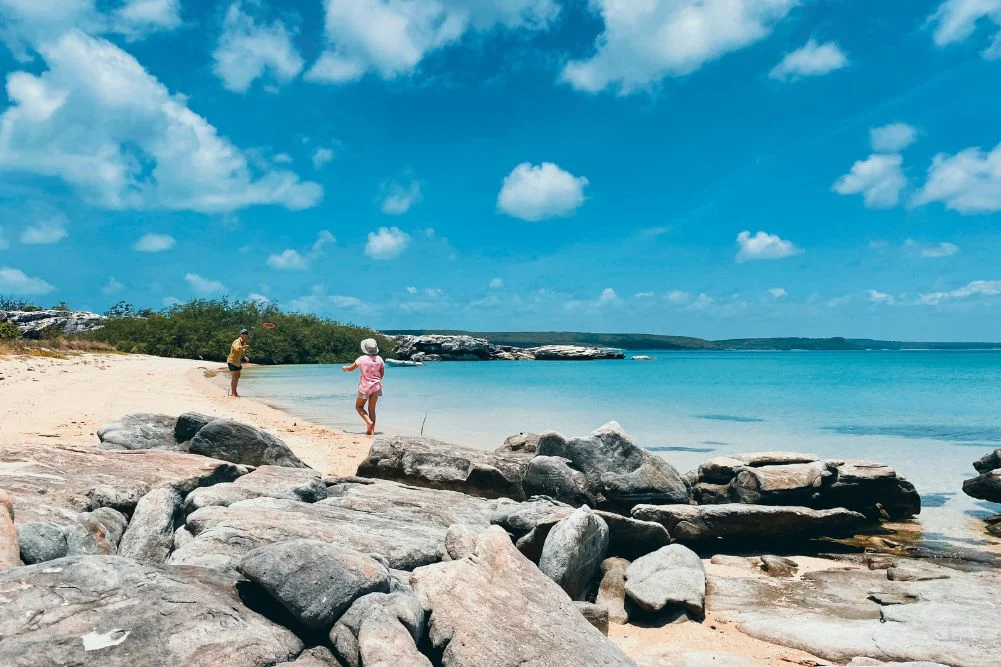
Located on the northeastern tip of Arnhem Land in the Northern Territory, Nhulunbuy serves as a critical focal point for understanding Australia’s complex pre-colonial history and the enduring resilience of Yolngu culture. While much of the Australian historical narrative focuses on European arrival in the late 18th century, the Gove Peninsula offers tangible evidence of extensive international maritime trade that predates British settlement by more than a century. Central to this narrative are the Wurrwurrwuy stone arrangements, a series of pictorial records laid out by Yolngu elders to document a sophisticated trading relationship with Makassan seafarers from present-day Indonesia. This relationship, which flourished between the mid-17th century and 1906, established a legacy of cultural exchange, linguistic influence, and shared genealogy that continues to define the region’s identity.
The Wurrwurrwuy Stone Arrangements and the Trepang Trade
The Wurrwurrwuy stone arrangements, situated at Garanhan (Macassan Beach) approximately 38 kilometers southeast of Nhulunbuy, represent one of the most significant archaeological and cultural sites in Northern Australia. Unlike many Indigenous stone arrangements used for ceremonial or astronomical purposes, the Wurrwurrwuy site functions as a historical archive. Through the careful placement of local bauxite stones, Yolngu ancestors recorded the infrastructure of the Makassan fishing camps that lined the shores of the Arafura Sea.
The trade was driven by the demand for trepang (sea cucumber or bêche-de-mer), a delicacy highly valued by Chinese merchants for its purported medicinal and culinary properties. Each year, following the northwesterly monsoon winds in December, fleets of up to 60 Makassan perahu (wooden sailing vessels) would arrive on the Australian coast. They remained for several months, processing the trepang in smokehouses and boiling them in large iron cauldrons before returning to Sulawesi with the change of the winds in April.
The stone arrangements at Garanhan vividly depict this industry. Visitors can identify outlines of the perahu, complete with rudders and masts, as well as stone-walled fireplaces used for processing the catch and traditional fish traps. These records confirm that the Yolngu were not passive observers but active participants in a global trade network. In exchange for access to their waters, the Yolngu received dugout canoes, metal tools, tobacco, and cloth. This exchange fundamentally altered Yolngu hunting and fishing practices, introducing more efficient technologies for harvesting dugong and sea turtles.
A Chronology of Maritime Exchange and Cultural Synthesis
The timeline of interaction between the Yolngu people and the outside world is marked by several key eras that have shaped the contemporary socio-political landscape of Arnhem Land.
- Circa 1640–1750: Early sporadic contact begins as Makassan fleets expand their search for trepang. Initial tensions give way to formal agreements between Yolngu clan leaders and Makassan captains.
- 1803: English navigator Matthew Flinders, during his circumnavigation of Australia, encounters a fleet of 60 Makassan vessels near Cape Wilberforce. Flinders’ journals provide some of the first Western documentation of this international trade, noting that the Makassan captain, Pobassoo, described a long-standing and peaceful relationship with the local Indigenous populations.
- Late 19th Century: Yolngu elders at Wurrwurrwuy construct the stone arrangements to ensure that the details of the trade and the layout of the camps are preserved for future generations, anticipating a period of significant change.
- 1906: The South Australian government, which then administered the Northern Territory, imposes high duties and restricts licenses for Makassan fishers to protect European commercial interests. This effectively ends over two centuries of international trade.
- 1960s: Anthropologists and historians, including Campbell Macknight, begin formal documentation of the site, interviewing Yolngu leaders like Mungurrawuy Yunupingu to correlate oral histories with physical evidence.
- 1963: The Yirrkala Bark Petitions are sent to the Australian Parliament, protesting the excision of land for a bauxite mine. This marks the birth of the modern land rights movement in Australia, rooted in the same cultural authority displayed at Wurrwurrwuy.
The Evolution of Yolngu Art: From Tradition to Political Agency
Nineteen kilometers from Nhulunbuy lies Yirrkala, home to the Buku-Larrnggay Mulka Centre. This institution is not merely a gallery but a repository of cultural sovereignty. The art produced here—ranging from traditional bark paintings and fiber weaving to contemporary digital media—serves as a primary vehicle for the transmission of Yolngu Law (Rom).
The center is world-renowned for its preservation of the Yirrkala Church Panels. Painted in 1962 by elders from the Dhuwa and Yirritja moieties, these two four-meter-high panels were originally placed in the local Methodist church. They represent a monumental assertion of Indigenous land ownership and spiritual connection, utilizing sacred clan designs to demonstrate that the land was already governed by a sophisticated legal system long before European contact.
The fiber art of Yirrkala also reflects the region’s environmental and cultural history. The use of gunga (pandanus spiralis) to create baskets and mats is a practice that has evolved from utilitarian necessity to high art. Traditionally, these items were essential for daily life—nganiyal (conical mats) served as protection against the elements and insects for infants. Today, these woven works are celebrated in major international art collections, representing a sustainable intersection of traditional ecological knowledge and modern aesthetics.
Environmental Conservation and the Role of the Dhimurru Aboriginal Corporation
The management of the Gove Peninsula’s natural assets is overseen by the Dhimurru Aboriginal Corporation, an Indigenous-owned organization that coordinates land and sea management. The region’s biodiversity is a significant draw for researchers and eco-tourists alike, but it requires rigorous protection to maintain its integrity.
A primary example of this conservation effort is found on Bremer Island (Dhambaliya). The island serves as a critical nesting site for four species of sea turtles: the Green, Flatback, Hawksbill, and Olive Ridley. These species are subject to international conservation treaties, and the Yolngu rangers play a vital role in monitoring nesting patterns and protecting eggs from feral predators.
Furthermore, the East Bremer Islets have been identified as the Higginson Important Bird Area (IBA). This site supports globally significant populations of Bridled Terns and Roseate Terns, and it is the only known breeding colony of Common Noddies in the Northern Territory. The management of these sites through a permit system allows for controlled tourism while ensuring that the "high-value, low-impact" model of the Banubanu Beach Retreat remains sustainable.
Socio-Economic Implications and the Post-Mining Transition
For decades, the economy of Nhulunbuy was dominated by the Gove Alumina Refinery. However, with the refinery’s closure in 2014 and the ongoing transition toward the full decommissioning of mining operations, the region is at a critical economic crossroads. The shift toward cultural tourism and specialized education is seen by many local leaders as the path forward.
"The history of this land didn’t start with the mine, and it won’t end with it," is a sentiment frequently echoed by local stakeholders. The focus is now on leveraging the region’s unique historical narrative—specifically the Makassan trade and the Yirrkala art movement—to create a resilient, diversified economy.
Data from Tourism Northern Territory indicates an increasing demand for "authentic cultural experiences," with Arnhem Land positioned as a premier destination for high-end, education-focused travelers. The challenge for Nhulunbuy is to balance this economic opportunity with the cultural privacy and environmental protection required by the Yolngu traditional owners. The permit system, which requires visitors to apply for access to specific recreational areas, remains a cornerstone of this balance, ensuring that tourism occurs on Yolngu terms.
Analysis of Regional Governance and Future Outlook
The governance model in Nhulunbuy is unique. Unlike many Australian towns, it was built as a company town on Aboriginal land. As the mining lease nears its conclusion, the legal and administrative structures are being renegotiated to return greater autonomy to the Yolngu people.
The legacy of the Makassan trade serves as a historical precedent for this autonomy. It proves that the Yolngu have a centuries-old tradition of managing international relations and commercial contracts. The Wurrwurrwuy stone arrangements are more than just a tourist attraction; they are a title deed and a diplomatic record.
As Nhulunbuy moves further into the 21st century, the integration of traditional knowledge with modern conservation and economic strategies offers a blueprint for other remote Indigenous communities. The preservation of sites like Wurrwurrwuy and the continued success of the Buku-Larrnggay Mulka Centre demonstrate that when Indigenous culture is the driver of regional development, the result is a robust and unique identity that attracts global attention. The future of the Gove Peninsula lies in its past—a history of openness, trade, and an unbreakable connection to the land and sea.



 Anjar Salim
 Chandra Hamzah
 Tatiana Tantri Indah Sari
 Budi Mulyono
 Lukman Taruna Persada Ramadan
