
 Anjar Salim
A coalition of Texas property owners and conservation advocates has launched a high-stakes legal challenge against the federal government, seeking to halt a controversial border security infrastructure project sweeping through the remote and ecologically fragile Big Bend region. Filed on Monday, September 14, 2026, in the U.S. District Court for the District of Columbia, the lawsuit directly targets the Department of Homeland Security (DHS), U.S. Customs and Border Protection (CBP), DHS Secretary Markwayne Mullin, and CBP Commissioner Rodney Scott.
The legal action represents an escalation in a mounting conflict between local residents, conservationists, and federal authorities over the Trump administration’s aggressive border wall expansion. Plaintiffs argue that the construction of 30-foot-high steel barriers, access roads, and surveillance infrastructure violates constitutional due process rights, bypasses foundational federal environmental protections, and threatens the economic livelihoods and cultural heritage of communities living along the Rio Grande.
As a temporary construction pause ordered by federal officials nears its expiration at the end of September, the lawsuit underscores a rare political and geographic alignment: rural Texas landowners, local ranchers, regional sheriffs, and environmentalists standing united against federal land seizures in defense of private property rights and regional sovereignty.
Main Facts of the Legal Challenge
The lawsuit, spearheaded by six individual landowners alongside the advocacy group Conserve Big Bend—which represents roughly 230 regional property owners—centers on the federal government’s aggressive maneuvers to secure easements and right-of-way access for border barrier construction across four West Texas counties.
According to the 75-page federal complaint, CBP officials have issued formal written notices to private landowners declaring that portions of their property are urgently required for national security infrastructure. Crucially, the plaintiffs allege that these notices came paired with heavy-handed ultimatums: property owners were informed that the federal government would pursue non-negotiable temporary or permanent easements, or mandatory land swaps, with explicit threats of referral to the U.S. Department of Justice for condemnation proceedings if voluntary agreements could not be reached.
Among the named plaintiffs is William Joseph Zuberbueler, a local rancher who reported receiving direct threats of federal legal action when he questioned the agency’s unannounced access demands. The lawsuit asserts that these coercive tactics violate the Fifth Amendment of the U.S. Constitution, which guarantees that private property shall not be taken for public use without due process of law and just compensation.
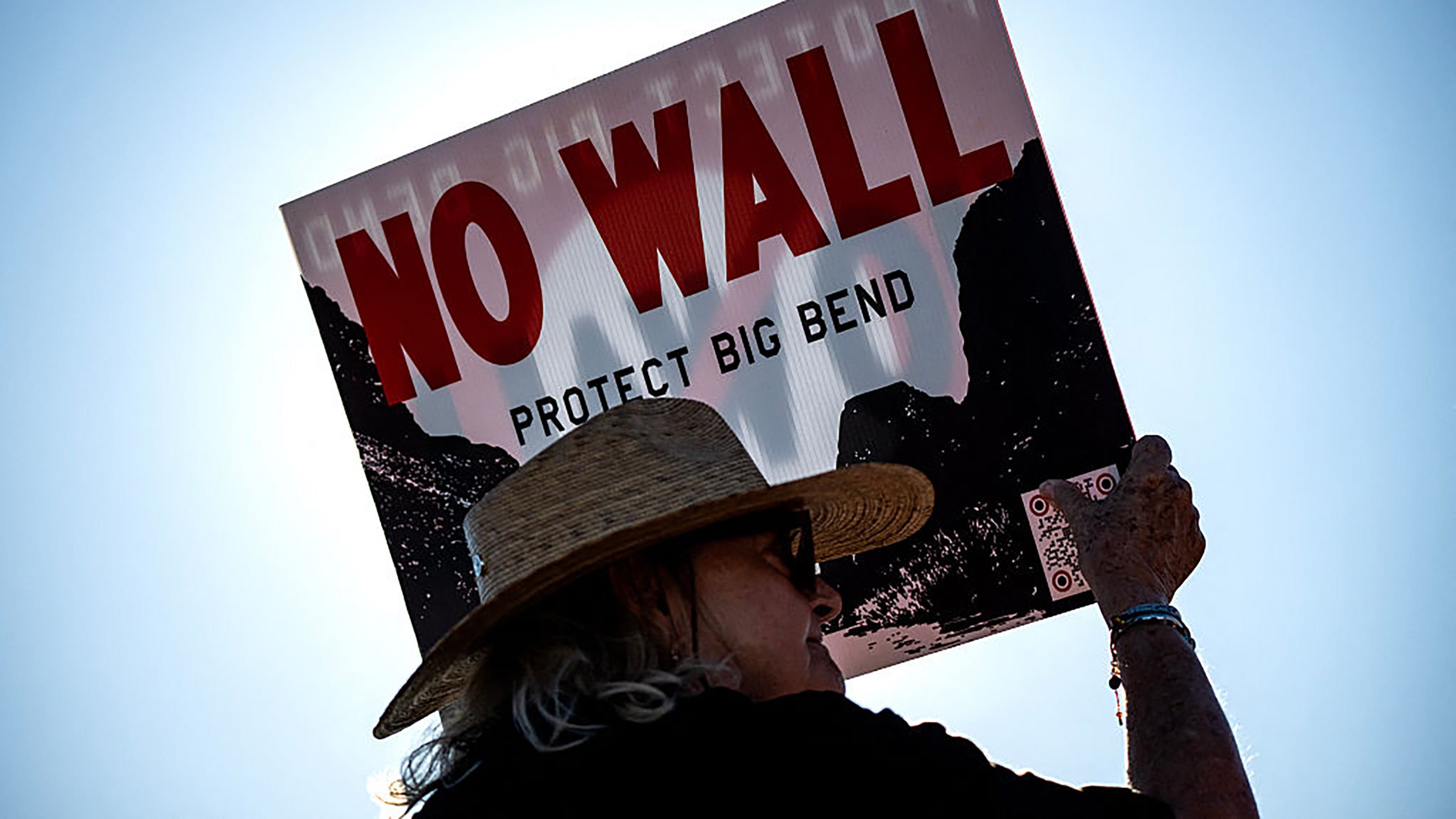
Furthermore, the legal challenge targets sweeping federal waivers issued earlier this year by the DHS. These waivers allowed the agency to bypass more than two dozen major federal statutes—including the National Environmental Policy Act (NEPA), the Endangered Species Act (ESA), and the Clean Water Act—which normally govern and regulate major construction projects on public and private lands. The plaintiffs argue that the administrative justification for these waivers, which relied on designating the Big Bend sector as a high-intensity zone of illegal immigration, is legally baseless and factually fabricated.
Chronology of the Big Bend Border Dispute
The legal confrontation is the culmination of months of escalating tension, shifting timelines, and contradictory federal directives that have fractured trust between West Texas communities and Washington.
- February 2026: The Department of Homeland Security quietly advances plans for the Big Bend barrier project, issuing broad environmental and statutory waivers to expedite the construction of walls and tactical infrastructure across a 150-mile stretch adjacent to Big Bend National Park. CBP publishes preliminary digital maps detailing a "smart wall" network composed of physical fencing and surveillance towers directly intersecting protected federal lands.
- March 2026: Public backlash ignites across Texas. A coalition of five regional border sheriffs publishes an open letter to federal officials, arguing from decades of tactical experience that a continuous physical wall is neither practical nor effective terrain-management for the rugged topography of the Big Bend. Grassroots protests and peaceful rallies begin drawing crowds in towns like Marfa, Austin, and Alpine.
- Spring to Early Summer 2026: The project appears to stall amid intense political pressure and conflicting statements from federal and state officials, leading many local residents to believe the initiative had been shelved.
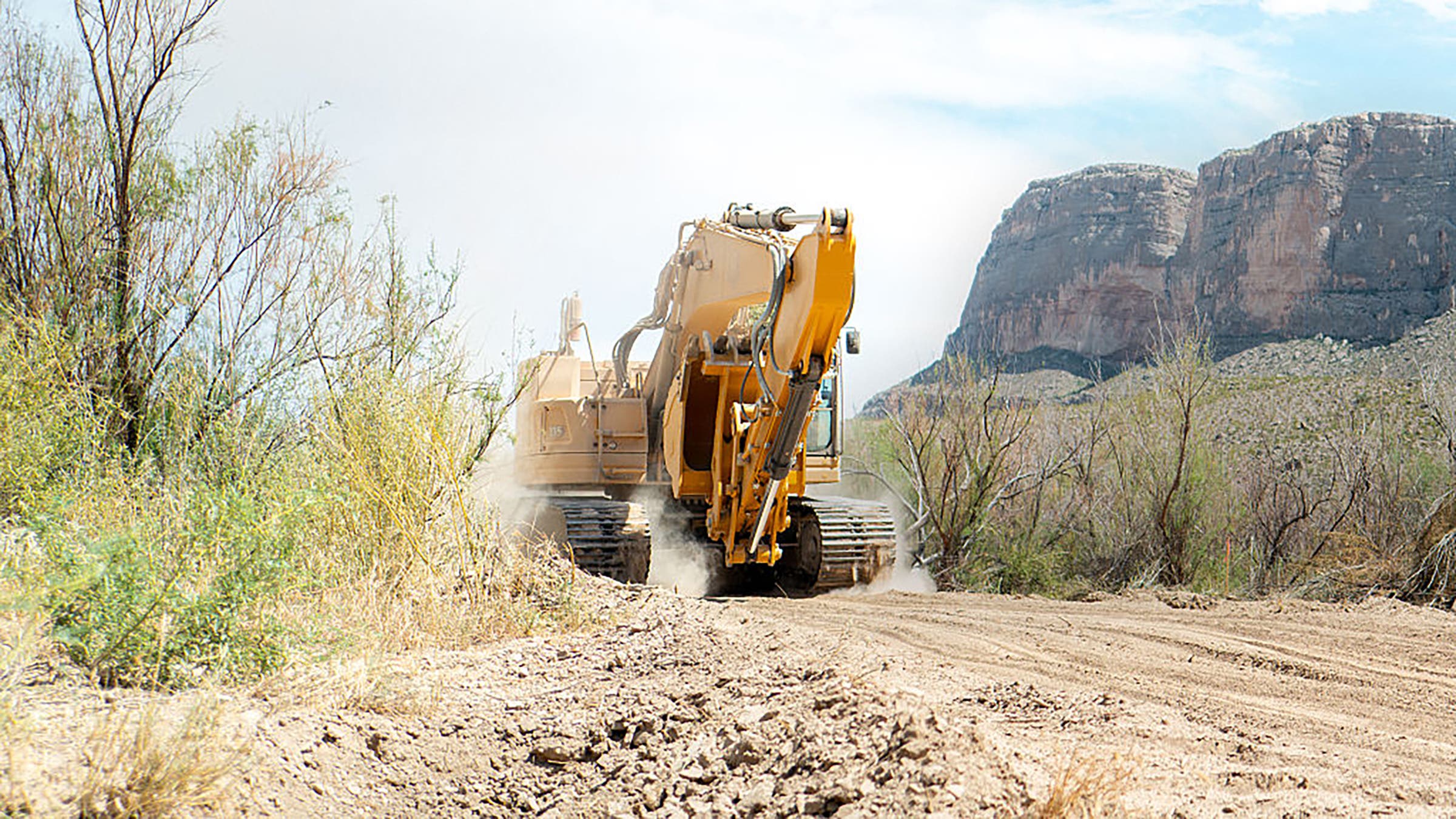
- August 2026: Federal plans materialize abruptly as heavy machinery, bulldozers, and construction crews arrive inside Big Bend National Park. Operations begin immediately, clearing old-growth brush and cutting wide scarring roads directly through pristine desert cliffs and river corridors along the Rio Grande. Aerial photographs documenting the environmental degradation spark widespread outrage across the political spectrum, drawing rare condemnation from prominent Texas state politicians, including Republican Governor Greg Abbott.
- August 27, 2026: Following a fierce wave of public outcry and mounting pressure from local and state stakeholders, CBP Commissioner Rodney Scott orders an abrupt halt to heavy machinery operations within the national park boundaries. Construction crews withdraw from the immediate park sector, entering a limbo period.
- September 14, 2026: Amid concerns that the construction pause is scheduled to expire on September 30, the coalition of landowners and Conserve Big Bend officially files its federal lawsuit in Washington, D.C. The legal action is publicly announced during a high-profile press conference in Marfa, Texas, attended by scores of regional residents, public officials, and local agricultural workers.
Supporting Data and Regional Context
To support their argument that the federal waivers and construction push are unjustified, plaintiffs point directly to empirical data collected and published by CBP itself.
While federal authorities have cited an urgent national security crisis to justify bypassing environmental laws in the Big Bend sector, CBP’s own five-year Southwest Land Border Encounters data paints a starkly different picture. According to the agency’s statistics, the 517-mile Big Bend Sector historically accounts for a tiny fraction of total border apprehensions—roughly 1.5 percent system-wide. Law enforcement and border security experts have long noted that the extreme topography of the region, characterized by treacherous canyons, vast desert expanses, and the winding Rio Grande, serves as a natural deterrent to large-scale unauthorized crossings.
The legal complaint underscores that the imposition of industrial-scale barriers in this environment will inflict permanent ecological damage on delicate riparian ecosystems, migratory corridors for endangered species such as the Mexican gray wolf and desert bighorn sheep, and vital historical and cultural landscapes. For many plaintiffs, the land is not merely real estate; it represents multi-generational family heritage, sustainable ranching acreage, and a burgeoning ecotourism economy that relies entirely on the pristine wilderness of the region remaining undisturbed.
Official Responses and Stakeholder Reactions
Federal authorities have offered limited communication regarding the trajectory of the project. Outside magazine reached out to CBP for official comment following the September 14 lawsuit filing, but the agency did not provide a response prior to publication.
Local stakeholders, however, have been vociferous in their condemnation of the federal government’s approach. Speaking at the Marfa press conference, rancher and coalition member Lico Miller encapsulated the prevailing sentiment of regional betrayal.
"We have to believe that Texas’ sovereignty is being impinged upon," Miller told Marfa Public Radio. "That all this tough guy Texas ‘don’t tread on me’ stuff at some point means something. We are the final line of people standing up against this."
Environmental advocates note that the federal government’s shifting positions have destroyed any remaining cooperative framework between agencies and local communities. Laiken Jordahl, an environmental advocate with the Center for Biological Diversity, emphasized the severe collapse of institutional trust in an interview with journalists.
"Even among the folks who support stronger border security and have sought to work with CBP, the trust with the agency has been burned," Jordahl said. "The constant reversals and changes and updates and contradictory statements have eroded people’s trust. A lot of people see this as an abuse of authority."
Broader Impact and Implications
The outcome of the lawsuit filed in the U.S. District Court in Washington, D.C., carries significant legal and political implications that extend far beyond the borders of West Texas.
At a legal level, the case tests the outer boundaries of executive power under the Illegal Immigration Reform and Immigrant Responsibility Act of 1996, which grants the DHS secretary broad authority to waive federal laws to expedite border barrier construction. If the plaintiffs successfully demonstrate that the administration abused this waiver authority by misrepresenting regional threat levels and violating Fifth Amendment property rights, it could establish a critical legal precedent limiting the federal government’s unilateral power to seize private and public conservation lands for infrastructure projects.
Politically, the conflict highlights the growing friction between federal enforcement mandates and local conservative landownership values in rural America. While federal border security remains a dominant national political priority, the execution of these policies in Big Bend has united an unusual coalition of environmentalists, ranchers, and state-level conservatives who view the federal land grabs as an existential threat to local autonomy.
As the September 30 expiration date for the current construction pause approaches, all eyes remain fixed on the federal judiciary. For the ranchers and preservationists standing watch along the Rio Grande, the lawsuit represents a historic constitutional defense of a landscape that many consider irreplaceable.



 Chandra Hamzah
 Tatiana Tantri Indah Sari
 Budi Mulyono
 Lukman Taruna Persada Ramadan