
 Gabriela Annisa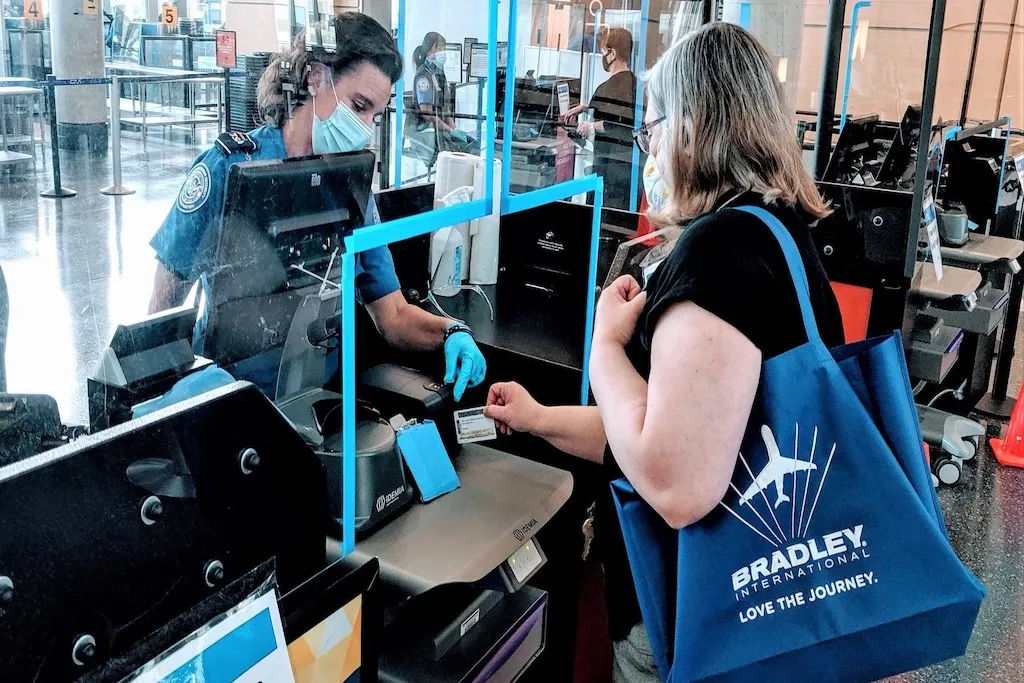
The global airline industry finds itself grappling with a potent combination of challenges, as a sudden and significant spike in jet fuel prices collides with escalating disruptions caused by a partial U.S. government shutdown, particularly impacting airport operations during the critical spring break travel season. This confluence of economic and operational pressures is creating a volatile environment for carriers and travelers alike, prompting close scrutiny from industry analysts and stakeholders.
Unprecedented Surge in Jet Fuel Costs
The most immediate and far-reaching concern for airlines globally is the recent, dramatic escalation in jet fuel prices. While the volatile nature of oil markets is well-understood, the current surge has been particularly sharp, catching many carriers off guard. According to data from Airlines for America (A4A), the advocacy group for major U.S. airlines, the average price paid for jet fuel by U.S. carriers jumped from $2.50 per gallon on February 27th to an astounding $3.67 per gallon just days later, representing an increase of nearly 50%. This spike is even more stark when looking back to mid-December, when prices hovered around $2.00 per gallon, effectively nearly doubling in a matter of weeks.
The International Air Transport Association (IATA), which tracks global jet fuel prices, reported an average increase of 58% in just one week, ending March 6th. The impact, however, is not uniformly distributed across the globe. Asia and Oceania, heavily reliant on complex shipping routes and regional supply dynamics, experienced an even more pronounced 77% increase, while the Middle East saw prices climb by 74%. Such regional disparities highlight the intricate global supply chains and geopolitical factors that influence energy markets, demonstrating how a global shock can manifest with varying intensity depending on local market conditions and logistical vulnerabilities, such as potential interruptions to crucial shipping lanes like the Straits of Hormuz.
Quantifying the Financial Impact on U.S. Carriers
To understand the potential financial repercussions for the U.S. airline sector, Skift’s Head of Research, Seth Borko, conducted a detailed analysis using mandated SEC disclosures from major carriers. Publicly traded companies are required to disclose sensitivities to key commodity inputs, such as fuel prices, in their 10-K and 10-Q filings. This allows for a granular assessment of how price fluctuations translate into real-dollar impacts on airline operating costs.
Borko’s analysis focused on eight prominent U.S. airlines: United Airlines, American Airlines, Delta Air Lines, Southwest Airlines, Alaska Airlines, JetBlue Airways, Allegiant Air, and Frontier Airlines, which collectively represent the vast majority of passenger air service in the United States. These airlines typically disclose how a one-cent change per gallon of jet fuel, or a one-dollar change per barrel of oil, would affect their financial performance. For instance, Delta Air Lines has publicly stated that a one-cent increase in jet fuel per gallon would result in an additional $40 million in costs.
By applying the recent $1.27 per gallon price increase (from an average baseline of $2.40 per gallon, as per airline disclosures for a recent past year) to the projected fuel consumption for their planned 2026 flight schedules (likely a forward-looking plan from a previous year’s filing, adjusted for current context), the analysis revealed a staggering potential additional cost. If these airlines were to fly their intended schedules at current fuel prices without any adjustments, they would incur an extra $24 billion in fuel expenses. American Airlines alone could face an additional $6.4 billion in fuel costs, while United Airlines would see an increase of just under $6 billion.
It is crucial to note that this figure represents a "sticker shock" scenario, not a forecast. Airlines are dynamic businesses and will undoubtedly react to such a significant cost surge. Potential responses include adjusting flight schedules, temporarily grounding less fuel-efficient aircraft, and, most critically, attempting to recover these costs through increased airfares and ancillary fees. The magnitude of this potential impact is underscored by comparing it to historical profitability; for example, American Airlines’ potential $6 billion in additional fuel costs dwarfs its recent operating profit of approximately $4.7 billion.
Airline Strategies and Historical Precedent
The industry’s response to fuel price volatility varies. Unlike many European and international carriers, most U.S. airlines largely operate unhedged against fuel price fluctuations. This means they are directly exposed to market price movements, making them more vulnerable to sudden spikes. In contrast, airlines like Lufthansa have adopted aggressive hedging strategies, which could position them at a competitive advantage during periods of high fuel prices, potentially allowing them to absorb costs more effectively and even undercut rivals who are forced to raise fares.
Historically, the airline industry has a long and often painful relationship with oil price shocks. The late 1990s, characterized by oil prices plummeting to as low as $8 per barrel in 1998, ushered in a period of unprecedented profitability for U.S. carriers. However, this bonanza was short-lived. A significant oil spike in 2000 marked the beginning of a challenging decade, contributing to a wave of major airline bankruptcies, including United Airlines in 2002 and Delta Air Lines in 2005.
The mid-2000s saw continuous pressure from rising oil prices, culminating in August 2008 when crude oil reached a nominal high of nearly $140 per barrel, just before the global financial crisis. This period was a watershed moment for the industry, as the immense financial strain forced airlines to introduce "radical" revenue strategies. Ancillary fees, such as charges for a first checked bag—a practice unthinkable prior to 2007-2008—became commonplace as carriers desperately sought to offset soaring fuel costs.
More recently, the 2022 fuel spike following the outbreak of the Ukraine War also presented a significant challenge. While the "revenge travel" phenomenon helped airlines maintain high demand and push through fare increases, the current environment is subtly different. Demand, while still robust, is not at the post-COVID peak levels seen in 2022 and 2023. This could make it more challenging for airlines to pass on the full extent of fuel cost increases to consumers without risking demand destruction, a scenario where higher prices lead to a significant drop in bookings. This "stagflation" risk—where costs rise while demand falls—is a serious concern for an industry that is often a "price taker" on both fuel supply and passenger demand.
The geopolitical context of the current spike also introduces unique demand-side implications. Unlike the Russia-Ukraine conflict, which primarily affected specific airspaces and niche markets, the current tensions in major global transit regions, such as the Middle East, have the potential to disrupt key connecting traffic flows. Flights between Europe and Asia, or leisure travel to destinations like the Maldives that often rely on Middle Eastern hubs, could see significant demand impacts if disruptions persist.
Despite these historical parallels, the U.S. airline industry today is arguably in a structurally healthier position. Decades of consolidation have resulted in fewer, larger players, which theoretically allows for greater pricing power and flexibility in managing capacity. This might reduce the likelihood of the most "radical" measures seen in past crises, such as the infamous "cattle class" standing-room-only concepts. However, analysts will be closely watching the upcoming JPMorgan Industrials Conference, where major airline CEOs are expected to provide updated guidance and insights into their strategies for navigating these turbulent times.
U.S. Government Shutdown: Compounding Operational Chaos
Adding another layer of complexity to the airline industry’s woes is the ongoing partial U.S. government shutdown, which has severely impacted the Department of Homeland Security (DHS) and its critical agencies, most notably the Transportation Security Administration (TSA). This shutdown, which began on February 14th, has left thousands of TSA agents working without pay, creating significant operational disruptions at airports nationwide.
TSA agents, deemed essential personnel, are required to report for duty despite not receiving their regular paychecks. While they received a partial paycheck at the end of February, the current period marks the first time many have entirely missed a paycheck, leading to understandable morale issues and increasing rates of absenteeism. This has translated directly into staffing shortages at security checkpoints, resulting in ballooning wait times and chaotic scenes at several major U.S. airports, particularly as the nation enters the busy spring break travel season.
Reports from various airports paint a grim picture:
- Houston Hobby Airport experienced wait times exceeding four hours on a recent Sunday, prompting officials to advise travelers to arrive three to four hours before their scheduled flights.
- George Bush Intercontinental Airport (Houston) also faced severe delays, with similar advisories issued.
- New Orleans’ Louis Armstrong International Airport saw security lines stretching all the way to the parking garages, indicating an unprecedented level of congestion.
The timing of this shutdown is particularly unfortunate, coinciding with what was anticipated to be a record-setting spring break travel season for airlines. The confluence of increased passenger volumes and reduced security staffing creates a perfect storm for travel disruptions, leading to missed flights, heightened passenger frustration, and potential economic repercussions for local economies reliant on tourism.
Furthermore, the shutdown has suspended Global Entry services, a program designed to expedite customs clearance for pre-approved, low-risk international travelers. With Global Entry kiosks non-operational, international arrivals are facing additional bottlenecks at customs checkpoints, further exacerbating the travel experience.
This is not the first time TSA agents have faced such circumstances. The last significant government shutdown, from October into November, was the longest on record and also saw TSA personnel working without pay. The recurring nature of these shutdowns takes a heavy toll on agent morale, recruitment efforts, and the long-term efficiency and reliability of airport security. While air traffic controllers (ATCs) are currently receiving pay, unlike in some previous shutdowns, there are ongoing discussions in Congress about legislation that would guarantee pay for ATCs during future shutdowns, raising questions about fairness to other essential workers like TSA agents who continue to bear the brunt of political impasses.
Broader Implications and Outlook
The dual challenges of soaring fuel costs and operational disruptions from the government shutdown present a formidable test for the airline industry. On the one hand, airlines must navigate the economic realities of significantly higher operating expenses, forcing them to consider price adjustments, capacity management, and potentially new revenue streams. On the other, they are confronted with a deteriorating operational environment at major U.S. airports, which directly impacts customer experience and could suppress demand if travel becomes too arduous.
The potential for the shutdown to extend into the summer, a peak booking period for many transcontinental and international routes, adds another layer of uncertainty. A prolonged period of airport chaos could deter travelers, further complicating airlines’ efforts to recover costs and maintain profitability.
As the industry moves forward, all eyes will be on how airlines adapt their strategies, how quickly fuel markets stabilize, and whether political leaders can resolve the government shutdown. The coming weeks will be crucial in determining the short-to-medium term trajectory for air travel, underscoring the delicate balance between geopolitical stability, economic pressures, and domestic policy decisions that define the modern airline landscape.



 Anjar Salim
 Chandra Hamzah
 Tatiana Tantri Indah Sari
 Budi Mulyono
 Lukman Taruna Persada Ramadan
