
 Anjar Salim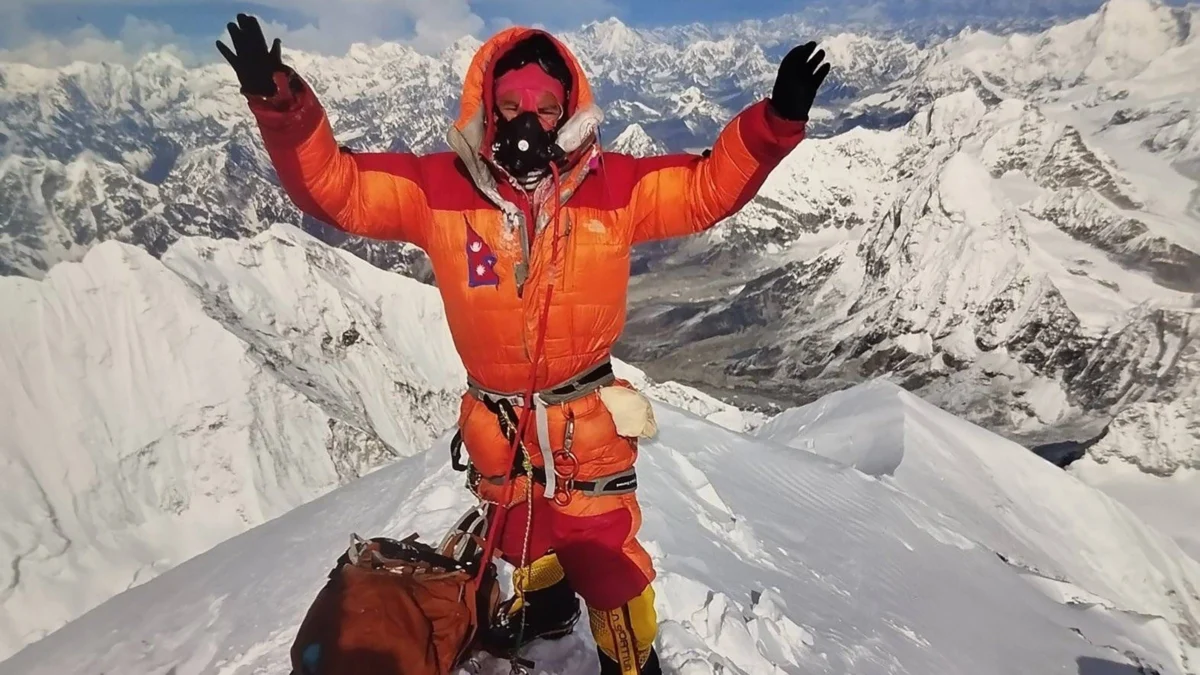
The mountaineering world is mourning the loss of Bijaya Ghimire, a pioneering high-altitude worker and the first member of Nepal’s Dalit community to reach the summit of Mount Everest, who died early in the morning on May 10, 2026. Ghimire, 35, was ascending through the treacherous Khumbu Icefall when he collapsed, marking a somber milestone in a climbing season already characterized by record-breaking permit numbers and challenging environmental conditions. While the specific medical cause of death remains under investigation, preliminary reports from local authorities and expedition officials suggest that altitude-related complications, rather than a physical accident or icefall collapse, were the primary factors in his passing.
Details of the Incident in the Khumbu Icefall
Ghimire was employed by the reputable Nepali outfitter TAG Nepal and was participating in a standard acclimatization rotation. This process is a critical component of high-altitude climbing, requiring workers and clients to move between Base Camp and higher camps to allow their bodies to adjust to the thinning oxygen levels. At the time of his collapse, Ghimire was en route to Camp I, situated at approximately 19,900 feet (6,065 meters).
The Khumbu Icefall, often described as the most dangerous stage of the South Col route, is a moving river of ice characterized by massive seracs and deep crevasses. However, unlike many fatalities in this section of the mountain which result from falling ice or ladder failures, Ghimire’s death appears to be physiological. Inspector Tul Bahadur Salami of the Lukla police department confirmed that the incident was likely related to the extreme physiological stress of high-altitude exertion. "We do not know the exact cause of death, but it is likely related to altitude sickness," Salami stated in a briefing with the Everest Chronicle.
Efforts were made by nearby climbers and rescue personnel to provide immediate assistance, but the rapid onset of his condition at nearly 20,000 feet made resuscitation impossible. His body was subsequently recovered and transported to lower elevations for further procedures and eventual return to his family.
Breaking the Bronze Ceiling: The Legacy of Bijaya Ghimire
Ghimire’s impact on the Nepali climbing community extended far beyond his technical skills as a guide. He was a symbol of social progress in a nation still grappling with the remnants of a centuries-old caste system. Born in the lower Solukhumbu district—a region that provides much of the labor for the Everest industry—Ghimire belonged to the Dalit community, historically referred to as "untouchables."
Despite the formal abolition of the caste system in Nepal in 1963, Dalits continue to face systemic marginalization and structural barriers to economic and social mobility. In the world of high-altitude mountaineering, which has long been dominated by the Sherpa ethnic group, Ghimire’s rise to the status of an elite guide was an anomaly that he fought hard to achieve.
Ghimire began his career at the very bottom of the industry’s hierarchy, working as a trekking porter carrying heavy loads for tourists. Through sheer persistence, he transitioned into the role of a kitchen assistant in base camps before eventually earning the certifications and trust required to become a high-altitude worker and guide. His crowning achievement came in 2016 when he became the first Dalit from Nepal to stand on the 29,032-foot summit of Mount Everest.
In a poignant 2019 interview, Ghimire reflected on the weight of his achievement. "Nepal is still a caste-dominated society," he said. "By being the first Dalit to summit Mount Everest, I showed society that we are humans, too. I saw many different types of people climbing Everest… setting records. But not a single person from the Dalit community had reached the top. So I made up my mind to be the first."
Ghimire would eventually summit Everest two more times, totaling three successful ascents of the world’s highest peak, solidifying his reputation as a professional of the highest caliber.
A Season of High Stakes and Rising Fatality Counts
Ghimire’s death marks the second fatality of the 2026 spring climbing season on Mount Everest. Earlier in the month, on May 3, the community lost Lakpa Dendi Sherpa, a 52-year-old guide who died while trekking between Gorak Shep and Everest Base Camp. These early-season deaths have cast a shadow over what is shaping up to be one of the busiest years in the mountain’s history.
According to the Nepal Department of Tourism, a record 492 permits have been issued for Mount Everest this spring. This surge in interest has placed immense pressure on the infrastructure of the mountain, from the "Icefall Doctors" who maintain the route through the glacier to the rope-fixing teams responsible for securing the path to the summit.
The 2026 season has been particularly difficult due to a delayed start. Dangerous conditions and shifting ice in the Khumbu Icefall forced teams to wait longer than usual to establish the route to the higher camps. This delay has compressed the climbing window, leading to concerns about potential "bottlenecks" at the Hillary Step and other narrow passages once the summit push begins in earnest.
Chronology of the 2026 Season and Current Progress
The timeline of the 2026 season highlights the rapid pace at which operations are now moving following the initial delays:
- Late March – Early April: Expedition teams arrive at Base Camp; Icefall Doctors begin the arduous task of finding a safe route through the Khumbu Icefall.
- April 15 – April 30: Initial acclimatization rotations begin for most commercial teams, though progress is slowed by unstable ice conditions.
- May 3: The season’s first fatality occurs as Lakpa Dendi Sherpa dies during a trek to Base Camp.
- May 8: Rope-fixing teams from the Expedition Operators Association of Nepal (EOAN) successfully reach Camp IV at the South Col (26,000 feet).
- May 10: Bijaya Ghimire dies in the Khumbu Icefall during an acclimatization rotation.
- May 10 (Evening): EOAN plans to send support teams to the South Col with oxygen, ropes, and survival supplies.
- May 13 – 14: Anticipated window for the first successful summits of the season, provided weather conditions remain stable.
The EOAN, which coordinates the logistical efforts of various guiding outfitters, reported that despite the tragedy, the mission to fix ropes to the summit is continuing. The teams are currently resting at Base Camp before making the final push to the apex, which will involve anchoring miles of nylon rope to provide safety for the hundreds of permit holders waiting below.
The Risks of High-Altitude Labor
The death of an elite worker like Ghimire underscores the inherent dangers faced by the Nepali staff who make Everest expeditions possible for international clients. While clients often receive the bulk of media attention, it is the high-altitude workers who perform the most dangerous tasks: carrying heavy loads of oxygen and gear, fixing ropes, and establishing camps in the "Death Zone" above 26,000 feet.
Medical experts note that high-altitude workers are not immune to the effects of the environment despite their experience. Conditions such as High-Altitude Pulmonary Edema (HAPE) and High-Altitude Cerebral Edema (HACE) can strike even the most seasoned climbers. The physical toll of multiple rotations through the Icefall—often referred to as a "game of Russian Roulette"—is immense. Workers like Ghimire frequently pass through the Icefall dozens of times in a single season, whereas a typical client may only pass through it four to six times.
Broader Implications for the Mountaineering Industry
Ghimire’s passing and the record number of permits issued this year have reignited debates regarding the sustainability and ethics of the Everest industry. With nearly 500 climbers (not including their support staff) aiming for the summit, the logistics of safety and waste management are being stretched to their limits.
The death of a prominent Dalit climber also highlights the ongoing need for diversity and inclusion within the mountaineering professional ranks. Ghimire was a vocal advocate for his community, and his success had begun to inspire other marginalized groups in Nepal to seek careers in the lucrative but high-risk tourism sector. His loss is not only a blow to his family and TAG Nepal but also to the broader movement for social equity in the Himalayas.
As the industry prepares for the first summit window of the year, the focus remains on the safety of the hundreds of individuals currently positioned at various camps on the mountain. Guiding officials have expressed a cautious optimism that if the current window of calm weather holds, the 2026 season could still see high success rates despite the tragic start.
Conclusion and Legacy
Bijaya Ghimire’s journey from a porter in Solukhumbu to a three-time Everest summiter serves as a testament to the resilience of the human spirit in the face of both natural and societal obstacles. His life story challenged the traditional hierarchies of Nepal and proved that the highest reaches of the earth are accessible to all, regardless of their birth.
As the rope-fixing teams move toward the South Col and the first summits of 2026 appear on the horizon, the climbing community will carry the memory of Ghimire’s contributions. His death is a stark reminder of the thin line between triumph and tragedy that defines Mount Everest. For now, the mountain remains a place of both immense beauty and unforgiving peril, claiming those who worked hardest to unlock its secrets.
Outside and the global mountaineering community extend their deepest condolences to the family, friends, and colleagues of Bijaya Ghimire. His legacy will remain etched in the history of the Himalaya, not just for the peaks he climbed, but for the barriers he broke.




 Chandra Hamzah
 Tatiana Tantri Indah Sari
 Budi Mulyono
 Lukman Taruna Persada Ramadan