
 Gabriela Annisa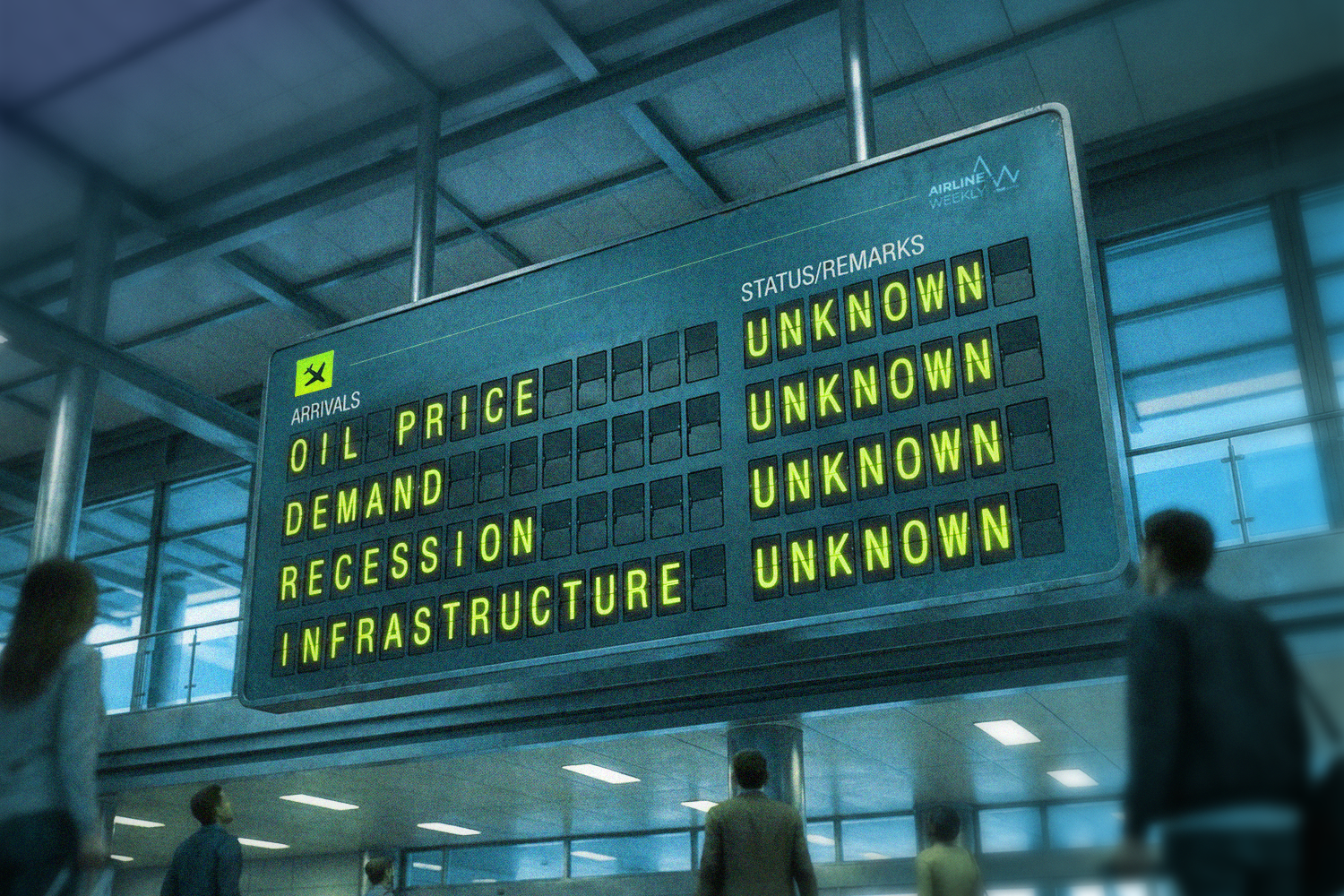
At the dawn of 2026, the global airline industry was buoyed by a widespread sense of optimism, anticipating a period of sustained recovery and growth. Passenger demand had shown robust signs of resurgence, consistently outstripping earlier projections as travelers rediscovered their desire for global connectivity. Fuel prices, while always a significant operational variable, had settled into a manageable range, allowing carriers to plan with greater certainty. Furthermore, the anxieties surrounding trade tariffs, which had cast a shadow over international commerce and cargo movements in the preceding year, appeared to have largely abated, fostering an environment conducive to global trade and, by extension, air freight. Strategic capacity expansions were underway, new routes were being announced, and profitability forecasts suggested a healthy year ahead, indicating that the sector was poised for a strong trajectory following several challenging periods. However, this promising outlook was abruptly and dramatically altered by an unforeseen geopolitical upheaval, fundamentally reshaping the operational landscape and introducing a complex convergence of critical challenges.
The Geopolitical Catalyst: Escalation in the Middle East
The primary driver behind this sudden shift was the rapid and severe escalation of a long-simmering conflict involving Iran, which erupted into full-scale regional hostilities in early 2026. What began as isolated maritime incidents and proxy skirmishes quickly broadened, drawing in key regional players and leading to direct military engagements. This conflict centered predominantly around critical maritime choke points and airspace over the Persian Gulf, a region vital for global energy supplies and international air traffic.
A Chronology of Disruption:
- Early January 2026: Initial reports emerge of increased naval activity and minor confrontations in the Strait of Hormuz, causing a slight uptick in crude oil prices. Shipping companies begin to issue advisories.
- Mid-January: The conflict intensifies, with reports of missile exchanges and targeted attacks on infrastructure within the Gulf region. Several commercial vessels are reportedly impacted, leading to immediate rerouting advisories for maritime traffic.
- Late January: Airspace over parts of the Persian Gulf and surrounding nations is declared hazardous by international aviation authorities. Key air traffic control centers in the region advise commercial flights to avoid specific flight corridors. Major airlines begin implementing precautionary diversions.
- Early February: With the conflict escalating further, several prominent Gulf states, citing immediate security concerns, announce the temporary closure of their primary international airport hubs. These include critical transit points like Dubai International (DXB), Hamad International (DOH) in Doha, and Abu Dhabi International (AUH), effectively shutting down major arteries of East-West air travel. This move triggers a cascade of flight cancellations and mass rerouting efforts globally.
- Mid-February: Global oil markets react violently to the sustained disruption of supply routes and heightened geopolitical risk. Brent crude prices surge dramatically, impacting jet fuel costs almost immediately. Simultaneously, passenger confidence begins to waver globally, with a noticeable dip in forward bookings, particularly for international long-haul routes.
- Late February: International aviation bodies, including ICAO and IATA, issue urgent recommendations and establish crisis task forces to address the unprecedented operational challenges and economic fallout. Airlines begin to publicly acknowledge the severity of the "quadruple shock" they are now confronting.
The Quadruple Shock: Four Converging Risks
The fallout from the Iran conflict has manifested into four distinct yet interconnected risks that are now collectively challenging the airline industry’s resilience and profitability:
1. Soaring Jet Fuel Prices and Escalating Operational Costs:
The most immediate and tangible impact has been the dramatic spike in jet fuel prices. The Strait of Hormuz, a crucial maritime passage for a significant portion of the world’s oil supply, has been severely disrupted by the conflict. This disruption, combined with reduced production capacity from affected regions and rampant market speculation, has driven crude oil benchmarks to levels not seen in over a decade. Jet fuel, a direct derivative of crude oil, has consequently experienced an exponential price increase. Analysts at Platts, a leading energy information provider, reported a staggering 35% surge in global jet fuel prices within a single month, pushing the average cost per barrel well above $150.
For airlines, fuel typically constitutes 25-35% of total operating expenses. Such an abrupt and sustained increase translates directly into immense financial pressure. Carriers are now faced with difficult choices: absorb the higher costs, thereby eroding profit margins, or pass them on to consumers through higher ticket prices and re-introduced fuel surcharges. Budget airlines, which often operate on tighter margins and rely on cost-sensitive travelers, are particularly vulnerable. The sudden rise in fuel expenses also complicates existing fuel hedging strategies, as many contracts may not fully insulate against such extreme and rapid price movements. This effectively negates the previously manageable fuel cost environment and threatens to push several airlines into the red.
2. Widespread Disruption of Global Air Traffic and Supply Chains:
The closure of major Gulf hubs and the declaration of hazardous airspace have fundamentally reconfigured global air routes. Dubai, Doha, and Abu Dhabi collectively served as vital East-West connectors, processing tens of millions of transit passengers and vast volumes of air cargo annually. Their closure forces airlines to undertake lengthy and costly rerouting. Flights between Europe and Asia, Europe and Australasia, and even parts of Africa and the Far East, which previously utilized efficient corridors over the Gulf, now face significantly longer flight times.
A typical London-Singapore flight, for example, might see an additional 2-3 hours added to its duration dueially bypassing Iranian airspace and the Persian Gulf. This extended flight time necessitates burning more fuel, often requiring additional fuel stops for aircraft that previously flew non-stop. It also increases crew duty times, potentially leading to additional crew requirements or forced layovers, incurring further accommodation and per diem expenses. Aircraft utilization rates decline, and the ripple effect on network scheduling is immense, causing delays and cancellations across intercontinental networks.
Furthermore, the disruption extends profoundly to global supply chains. Air cargo, often transporting high-value, time-sensitive goods, relies heavily on the efficiency and connectivity offered by the Gulf hubs. The rerouting adds significant delays and costs to cargo operations, impacting industries from electronics and pharmaceuticals to e-commerce. Logistics providers are scrambling to find alternative routes and modes of transport, exacerbating existing supply chain vulnerabilities.
3. Declining Passenger Demand and Heightened Economic Uncertainty:
Beyond the operational challenges, the conflict has cast a pall over global economic sentiment, leading to a noticeable softening in passenger demand. The specter of war, coupled with the rising cost of living due to soaring energy prices, has instilled a sense of caution among consumers and businesses alike. Discretionary travel, particularly for leisure, is often the first casualty in times of geopolitical instability and economic uncertainty.
A recent survey by the International Air Transport Association (IATA) indicated a 10-15% drop in international long-haul forward bookings for the upcoming quarter compared to pre-conflict projections. Business travel, while less sensitive to immediate price fluctuations, is also showing signs of contraction as corporations adopt a wait-and-see approach amidst fears of a global economic slowdown. Major economic forecasting bodies, including the IMF and the World Bank, have revised down their global GDP growth projections for 2026, citing the Middle East conflict as a primary contributing factor. This broader economic uncertainty directly impacts consumer confidence and corporate spending, translating into reduced propensity to travel by air. Airlines are now grappling with the difficult prospect of managing overcapacity on certain routes while simultaneously facing reduced yields due to weakened demand.
4. Skyrocketing Insurance Premiums and Increased Regulatory Scrutiny:
The heightened risk environment has directly impacted the cost of aviation insurance. War risk premiums for airlines operating in or near conflict zones, or even for those traversing rerouted airspace deemed less secure, have surged. Insurers are reassessing risk profiles, and the cost of hull war and liability coverage has reportedly increased by 50-100% for some carriers, adding another layer of significant operational overhead. This financial burden is unavoidable, as adequate insurance is a mandatory requirement for all commercial aviation operations.
Concurrently, international and national aviation regulators are intensifying their scrutiny of flight operations. The International Civil Aviation Organization (ICAO) has issued stricter guidelines regarding conflict zone overflights, and national bodies like the FAA (U.S.) and EASA (Europe) are expected to enforce more rigorous risk assessments and flight plan approvals. Airlines must demonstrate enhanced safety protocols, invest in real-time threat intelligence, and potentially re-equip aircraft with advanced communication or navigation systems to comply with evolving regulations. This increased regulatory burden adds complexity and cost, diverting resources from other critical areas of airline operations and potentially slowing down fleet modernization or network expansion plans.
Industry Reactions and Responses:
The airline industry has reacted with a mix of urgency and strategic reassessment. Major airline groups, including IATA and Airlines for America (A4A), have convened emergency meetings to coordinate responses and lobby governments for support. Willie Walsh, IATA’s Director General, stated in a recent press briefing, "This convergence of crises presents an unprecedented challenge. We are working closely with regulators and governments to ensure the safety and viability of air travel, but the financial strain on carriers is immense."
Individual airlines are implementing various measures:
- Network Adjustments: Extensive rerouting, temporary suspension of less profitable long-haul routes, and capacity cuts are widespread. Carriers like Lufthansa, Air France-KLM, and Singapore Airlines have publicly announced revised flight paths and schedule changes.
- Cost-Cutting Initiatives: Beyond fuel, airlines are scrutinizing all operational expenditures, including staffing levels, maintenance schedules, and non-essential capital investments.
- Hedging Strategies: While current hedges offer some protection, carriers are re-evaluating their long-term fuel hedging policies to better mitigate future volatility.
- Advocacy: Airlines are collectively advocating for government intervention, potentially in the form of tax relief, financial aid packages, or coordinated international efforts to de-escalate the conflict and stabilize energy markets.
- Technology Investment: There’s renewed interest in technologies that enhance fuel efficiency and provide real-time geopolitical threat intelligence for flight operations.
Governments, too, are responding. Several nations have issued enhanced travel advisories, warning citizens against non-essential travel to affected regions. Diplomatic efforts are reportedly underway to mediate the conflict, recognizing the profound global economic implications of sustained instability. Regulatory bodies are working to streamline approval processes for new flight paths while maintaining stringent safety standards.
Broader Impact and Long-Term Implications:
The "quadruple shock" is not merely an airline industry problem; its ramifications extend across the global economy. The disruption to air cargo impacts global trade, potentially leading to supply shortages and inflationary pressures on a wide range of goods. The decline in international travel significantly harms the tourism sector, a major contributor to GDP in many countries, particularly those reliant on long-haul visitors. Hotels, tour operators, and ancillary service providers face substantial revenue losses.
In the long term, this crisis could fundamentally reshape the aviation landscape. It may accelerate the shift towards more fuel-efficient aircraft, increase investment in sustainable aviation fuels (SAFs) as a hedge against fossil fuel volatility, and prompt a re-evaluation of global hub strategies, potentially favoring hubs less exposed to geopolitical hotspots. Weaker carriers, already struggling post-pandemic, may face insolvency, leading to further industry consolidation. The resilience of the aviation sector will be severely tested, demanding innovative operational strategies, robust financial management, and strong governmental and international cooperation to navigate what promises to be one of its most challenging periods in recent history. The optimistic start to 2026 has evaporated, replaced by an urgent focus on survival and adaptation in an increasingly unpredictable world.



 Anjar Salim
 Chandra Hamzah
 Tatiana Tantri Indah Sari
 Budi Mulyono

