
 Chandra Hamzah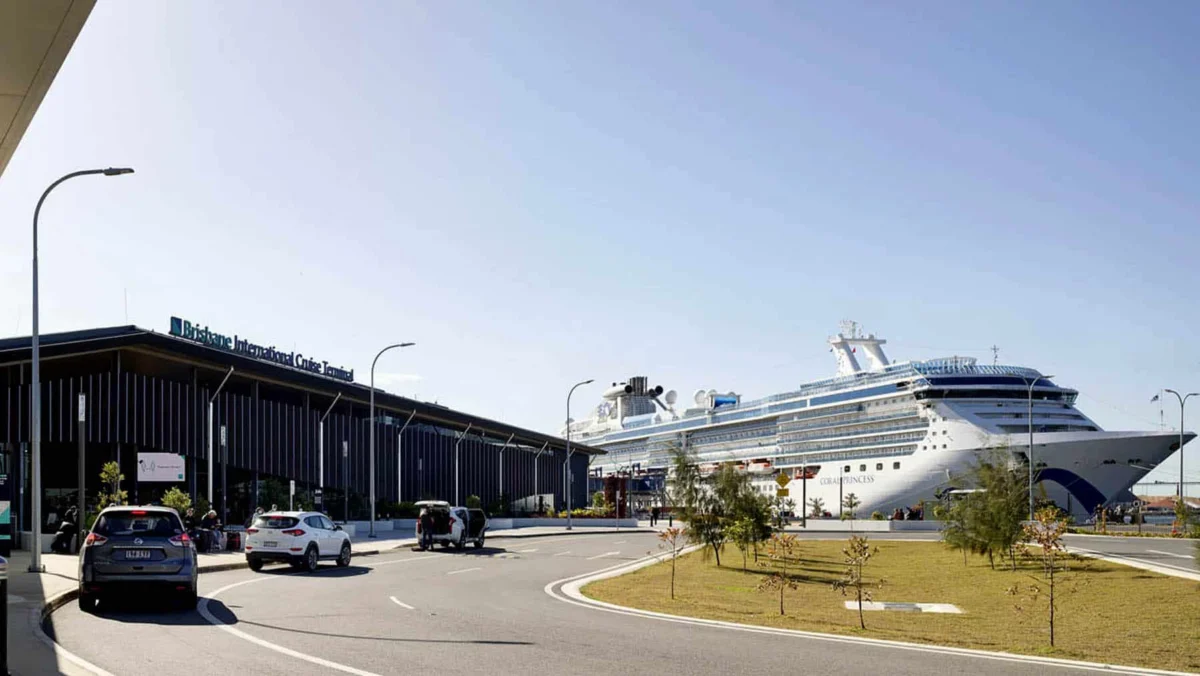
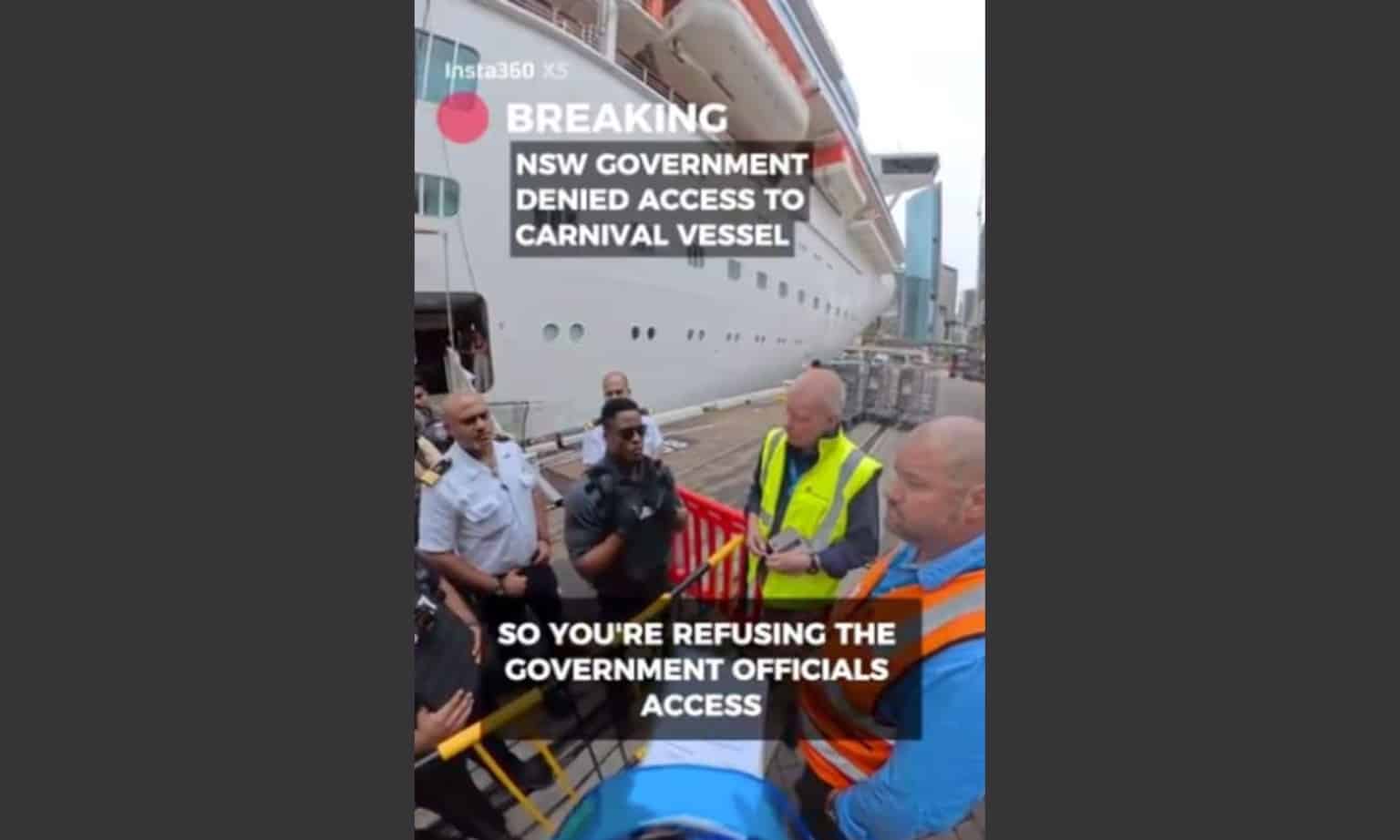
A highly publicized confrontation outside the cruise ship Carnival Adventure this past week, involving officials from the Maritime Union of Australia (MUA) and inspectors from SafeWork NSW, has amplified existing anxieties about the health of Australia’s cruise sector. The incident, captured on video and disseminated widely across social media and trade news outlets, saw union representatives demanding boarding access to the vessel. Carnival Australia strongly refuted the union’s authority to board, labeling the action a "stunt" designed for maximum exposure, and asserting that such actions violate security protocols and risk guest safety. This dramatic event has landed at a critical juncture, as the Australian cruise industry grapples with significant capacity decline and a projected billion-dollar loss in economic output.
Escalating Tensions and Industry Repercussions
The dramatic scene unfolded as Maritime Union officials, accompanied by SafeWork NSW inspectors, attempted to board the Carnival Adventure at the Overseas Passenger Terminal. While the MUA’s specific grievances remain subject to ongoing review, the visual of union representatives confronting cruise line officials and demanding access, amplified by immediate social media coverage, has undoubtedly cast a shadow over the industry’s efforts to rebuild momentum.
Carnival Australia issued a swift and firm statement condemning the union’s actions: "They have no authority to board our ship, bully our crew or violate security protocols that create risks for our guests." This direct rebuttal underscores the deep rift between the cruise line and the union, highlighting differing interpretations of authority and operational procedures within the maritime sector.
The repercussions of this public confrontation extend beyond the immediate visual spectacle. In industry hubs like Miami, the heart of global cruise operations, operators have been closely monitoring the Australian market. With aging fleets and an increasing number of ships worldwide, the search for viable and attractive destinations is intensifying. The emergence of the Middle East as a burgeoning cruise hub has further intensified this global competition for cruise itineraries. In this context, disruptions and negative publicity surrounding Australian ports can significantly influence deployment decisions.
The Widening Gap: Australia’s Cruise Capacity Crisis
This union-led action comes at a particularly sensitive time for Australia’s cruise industry. Recent years have seen a concerning trend of cruise lines reducing their local presence or withdrawing entirely. This exodus, as documented by Cruise Passenger’s in-depth analysis, has resulted in a substantial loss of cruise capacity.
A Steep Decline in Capacity and Economic Output
The data paints a stark picture:
- Capacity Reduction: From the 2023/24 season to the projected 2027/28 season, Australia’s cruise capacity is estimated to decline by a significant 31%. While there has been a marginal 2.5% increase projected from the 2025/26 season to 2027/28, this does little to offset the overall downward trend.
- Economic Impact: The economic output of the cruise industry has mirrored this decline. Following an all-time high of $8.43 billion in the 2023/24 season, output is projected to fall to $7.32 billion in the 2024/25 season, a 13% drop. Current projections suggest a further contraction, with the 2025/26 season potentially bringing in around $6.25 billion. This represents a cumulative loss of approximately $2.2 billion in three years.
- Ship Departures: Major cruise lines such as Cunard Cruises, Virgin Voyages, and Disney Cruise Line have completely withdrawn from Australian cruising in recent seasons. Royal Caribbean, Carnival Cruises, and Princess Cruises have each reduced their Australian deployments by at least one ship. While some lines like Celebrity Cruises, Norwegian Cruise Line, and Holland America have maintained a consistent presence with one ship each summer, this is insufficient to counteract the broader decline.
Factors Contributing to the Exodus
Carnival Australia’s decision to redeploy Carnival Adventure to sail half the year in America, rather than year-round in Australia, highlights a key driver of this capacity loss. The company explicitly cited "more favourable market conditions elsewhere and the uncertain regulatory environment in Australia and New Zealand" as reasons for this strategic shift. This sentiment is echoed by industry observers who point to a complex web of regulatory challenges and a perceived lack of strategic support from Australian authorities.
Port Initiatives and the Search for Year-Round Cruising
In an effort to bolster the industry and encourage year-round operations, ports like Sydney and Brisbane have been actively seeking to attract more ships during the traditionally slower winter months. Cruise Passenger exclusively reported on initiatives by NSW Ports to offer price incentives for shoulder and winter season cruising. Furthermore, there are growing indications that major players like Royal Caribbean might consider year-round deployments in Australia by 2028, contingent on the development of their private destination at Lelepa. These efforts, however, are being undermined by the current climate of uncertainty and negative publicity.
Calls for National Strategy and Government Action
The precarious state of the Australian cruise industry has prompted widespread calls for a coordinated national response. Many industry voices, including Cruise Passenger, have advocated for a national cruise summit to develop a comprehensive strategy. The Australian Cruise Association has formally incorporated this call into its executive strategy, emphasizing the need for government and industry collaboration and dedicated funding.
Despite repeated attempts by Cruise Passenger to solicit comment from Tourism Minister Don Farrell on the unfolding situation, no response has been received. This silence from the relevant government minister is perceived by many as a further indication of the industry’s low priority on the national agenda.
The Union’s Campaign and Broader Implications
The Maritime Union of Australia’s recent actions are understood to be part of a broader campaign against cruise companies, particularly as the Commonwealth reviews coastal shipping arrangements. Business Sydney’s Paul Nicolaou has voiced strong concerns that the union’s tactics could undo "years of work" to establish Sydney as a premier cruising destination.
"The NSW Government needs to explain why the Maritime Union of Australia and SafeWork NSW appeared to be working in collaboration to demand going on board Carnival Cruise Line’s Carnival Adventure at the Overseas Passenger Terminal," Nicolaou stated. "The negative impression conveyed could undermine years of work to build the economic contribution of cruising to Sydney, NSW and the nation. An explanation is needed."
Nicolaou further emphasized the long-standing relationship between cruise companies and local suppliers, noting that Carnival has historically home-ported its ships in Sydney, providing significant economic benefits. He stressed that the Australian Maritime Safety Authority (AMSA) is the designated government authority with oversight of the cruise industry and should be allowed to perform its duties without external interference.
A Critical Juncture for Australia’s Cruise Future
The confrontation on the Carnival Adventure has brought to the forefront the complex challenges facing Australia’s cruise sector. While the industry shows glimmers of potential growth through port incentives and future development plans, the persistent issues of regulatory uncertainty, capacity decline, and now public disputes threaten to derail any progress. Without a clear, unified national strategy and decisive government action, Australia risks further alienating cruise lines, leading to continued economic losses and job insecurity for the 22,000 individuals currently employed by the sector. The coming months will be crucial in determining whether Australia can navigate these turbulent waters and reclaim its position as a vibrant cruise destination.
Homeported Ships in Australia: A Snapshot of Capacity Trends
The following table illustrates the fluctuating number of large cruise ships homeported in Australia and their total passenger capacity across recent and upcoming seasons:
| Cruise Line | 23/24 Season (Ships/Capacity) | 24/25 Season (Ships/Capacity) | 25/26 Season (Ships/Capacity) | 26/27 Season (Ships/Capacity) | 27/28 Season (Ships/Capacity) |
|---|---|---|---|---|---|
| Royal Caribbean | Brilliance (2543), Ovation (4905), Quantum (4905) | Ovation (4905), Quantum (4905) | Anthem (4905), Voyager (3602) | Anthem (4905), Quantum (4905) | Anthem (4905), Voyager (3602) |
| Carnival + P&O | Splendor (3012), Luminosa (2826), Adventure (2636), Pacific Adventure (2636), Pacific Explorer (2000), Pacific Encounter (2600) | Splendor (3012), Luminosa (2826), Adventure (2636), Pacific Adventure (2636), Pacific Explorer (2000), Pacific Encounter (2600) | Splendor (3012), Luminosa (2826), Encounter (2600), Adventure (2636) | Splendor (3012), Luminosa (2826), Encounter (2600), Adventure (2636) | Splendor (3012), Luminosa (2826), Encounter (2600), Adventure (2636) |
| Celebrity Cruises | Edge (2908) | Edge (2908) | Edge (2908) | Edge (2908) | Edge (2908) |
| Princess Cruises | Majestic (3560), Royal (3600), Grand (2610), Coral (2000) | Royal (3600), Diamond (2670), Crown (2000) | Discovery (3600), Crown (2000) | Grand (2610), Royal (3600) | Grand (2610), Royal (3600), Sapphire (2670) (Oct-Jan only) |
| Norwegian Cruise Lines | Spirit (2002) | Spirit (2002) | Spirit (2002) | Spirit (2002) | Spirit (2002) |
| Cunard Cruise Line | Queen Elizabeth (2081) | Queen Elizabeth (2081) | No ship | No ship | No ship |
| Disney Cruise Lines | Wonder (2400) | Wonder (2400) | Wonder (2400) | No ship | No ship |
| Holland America | Westerdam (1964) | Westerdam (1964) | Noordam (1972) | Noordam (1972) | Westerdam (1964) |
| Virgin Voyages | Resilient Lady (2770) | No ship | No ship | No ship | No ship |
| Total Ships | 18 | 15 | 12 | 11 | 12 |
| Total Capacity | 51,322 | 42,509 | 34,463 | 33,976 | 35,343 |



 Tatiana Tantri Indah Sari
 Budi Mulyono
 Anjar Salim
