
 Walid Sujud Trenggono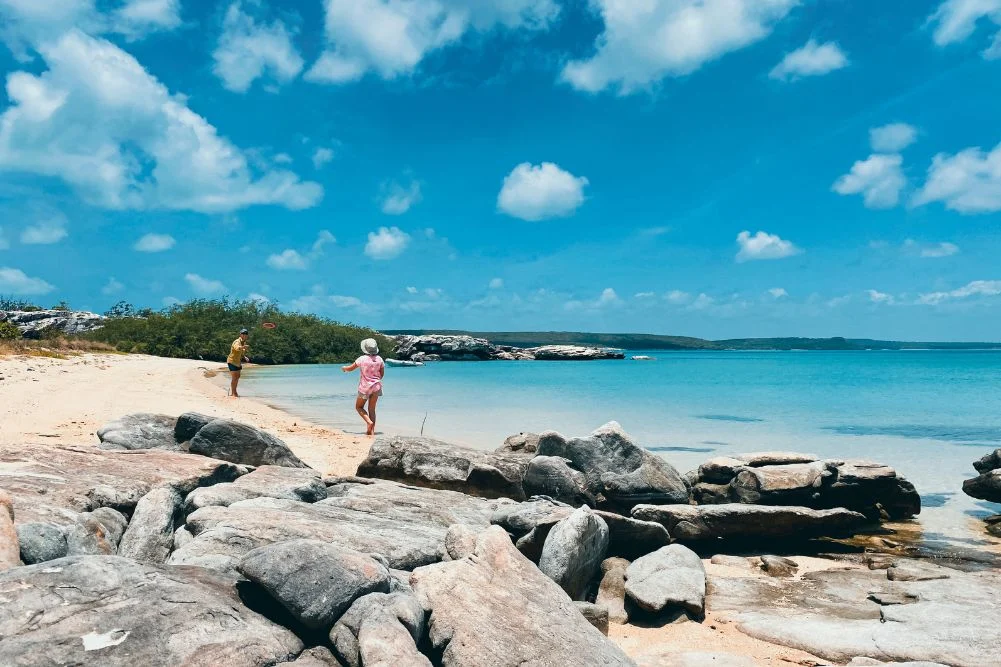
The Gove Peninsula, situated on the northeastern tip of Arnhem Land in the Northern Territory, serves as a profound repository of Australia’s pre-colonial history, characterized by centuries of international commerce and cultural exchange. At the heart of this narrative are the Wurrwurrwuy stone arrangements near Nhulunbuy, which provide tangible evidence of a sophisticated relationship between the Yolngu people and Makassan seafarers from present-day Indonesia. This historical nexus, dating back to at least the mid-17th century, predates British settlement by over 140 years, challenging conventional Eurocentric perspectives on Australian history. Today, the region is transitioning from an industrial hub toward a center for cultural tourism, driven by Indigenous-led initiatives that seek to preserve this unique heritage while fostering economic sustainability.
The Makassan Trade: A Century-Old Economic Partnership
The historical record indicates that as early as 1640, and certainly by the 1700s, fleets of wooden sailing vessels known as perahu departed from the port of Makassar in South Sulawesi. Guided by the northwesterly monsoon winds, these seafarers traveled approximately 1,600 kilometers across the Arafura Sea to reach the northern coast of Australia, which they called "Marege’." Their primary objective was the harvest of trepang (sea cucumber), a marine invertebrate highly prized in Chinese markets for its culinary and medicinal properties.
This annual migration was not merely an extractive enterprise but a structured diplomatic engagement. The Makassans sought permission from the local Lamamirri and broader Yolngu clans to fish in their ancestral waters. In exchange, they traded valuable commodities including cloth, tobacco, rice, knives, and iron axes. The introduction of metal tools and dugout canoes (lippa-lippa) fundamentally altered Yolngu hunting and fishing techniques, allowing for more efficient harvesting of large marine animals such as dugong and sea turtles.
The scale of this trade was significant. Historical estimates suggest that at the peak of the industry in the 19th century, up to 60 vessels and over 1,000 Makassan men visited the northern Australian coast annually. The cultural impact was reciprocal; many Yolngu men joined the return voyages to Makassar, some marrying local women and settling there, while others brought back new linguistic terms, musical influences, and artistic motifs that remain integrated into Yolngu culture today.
Wurrwurrwuy: History Set in Stone
The Wurrwurrwuy stone arrangements at Garanhan (Macassan Beach) represent a rare form of pictorial storytelling. Unlike traditional Indigenous rock art found in caves or on cliff faces, these arrangements consist of stones meticulously placed on the ground to depict the infrastructure of the Makassan trade. Visitors to the site can observe outlines of the perahu ships, including detailed representations of rudders and masts, as well as the stone hearths used for boiling and processing trepang.
These arrangements were largely curated by Yolngu elders in the late 19th century as a permanent historical record. The site gained broader national recognition in the 1960s when historian Campbell Macknight interviewed Mungurrawuy Yunupingu, a prominent Gumatj clan leader. Yunupingu, the father of legendary activists and musicians Mandawuy and Galarrwuy Yunupingu, detailed how his own father had traveled to Makassar and emphasized the importance of the stone works in preserving the memory of these "harmonious times."
In 1906, the South Australian government, which then administered the Northern Territory, imposed heavy duties and restricted licenses on Makassan fishers to protect domestic interests. This policy effectively ended centuries of maritime cooperation, but the physical and genealogical links between the two regions have endured through the Wurrwurrwuy site and the shared DNA of coastal families.
The Role of Buku-Larrnggay Mulka in Cultural Preservation
Located 19 kilometers from Nhulunbuy in the community of Yirrkala, the Buku-Larrnggay Mulka Art Centre stands as one of Australia’s most prestigious Indigenous-controlled cultural institutions. The name "Buku-Larrnggay" translates to the feeling of the first rays of sunlight on the face, symbolizing the center’s role as a beacon of Yolngu knowledge.
The center serves a dual purpose: as a contemporary gallery for world-class art and as the Mulka Museum, a "holding space" for sacred cultural objects. A primary focus of the center is the preservation of traditional weaving. Using gunga (pandanus spiralis) leaves, Yolngu women create intricate mats and baskets. Historically, these included nganiyal, conical mats used to protect infants from mosquitoes, with the natural scent of the pandanus acting as a repellent.
One of the museum’s most significant exhibits is the Yirrkala Church Panels. Painted in 1962, these two four-meter-high panels represent the Dhuwa and Yirritja moieties—the two fundamental halves of the Yolngu social and spiritual universe. Created at a time when the community was threatened by mining encroachment, the panels were a formal assertion of Yolngu sovereignty and land ownership. Though they were once discarded by missionary staff, they were later recovered and restored, now serving as a cornerstone of the region’s political and cultural history.
Sustainable Tourism and the Economy of Arnhem Land
The economic landscape of the Gove Peninsula is currently undergoing a significant shift. For decades, the region was defined by the Rio Tinto bauxite mine and alumina refinery. With the refinery’s closure and the eventual cessation of mining activities, the Dhimurru Aboriginal Corporation and local traditional owners are prioritizing low-impact, high-value cultural tourism.
Dhambaliya, also known as Bremer Island, exemplifies this new direction. Located a short boat ride from Nhulunbuy, the island is home to the Banubanu Beach Retreat, a Yolngu-managed eco-resort that operates entirely off-the-grid. This facility provides a model for sustainable development in remote areas, offering luxury accommodation while maintaining strict environmental protections.
The island and its surrounding waters are of immense ecological importance. The East Bremer Islets are designated as the Higginson Important Bird Area, supporting globally significant populations of bridled terns, roseate terns, and common noddies. Furthermore, the beaches serve as critical nesting grounds for four species of sea turtles: the Green, Flatback, Hawksbill, and Olive Ridley. The management of these areas by Indigenous rangers ensures that tourism does not compromise the delicate balance of the local ecosystem.
Regional Connectivity and Access
Despite its remote location, Nhulunbuy remains accessible to domestic and international visitors. Gove Airport is serviced by Air North and Qantas, with direct flights from Darwin typically costing between $300 and $450 each way. The town itself provides essential services, including the Gove Boat Club and the monthly community markets, which serve as a social hub for both the local population and transient yacht crews.
Travelers to the region must adhere to a strict permit system managed by the Dhimurru Aboriginal Corporation. As of 2024, a three-day visitor access permit costs $39 per adult. These permits are essential for visiting recreation areas like the Wurrwurrwuy stone arrangements and ensure that visitors respect the traditional laws and privacy of the Yolngu people. Additionally, the region is designated as a "restricted area" regarding alcohol, requiring visitors to obtain specific permits for takeaway purchases, a measure implemented to support community health and safety.
Broader Implications for Australian History
The story of the Gove Peninsula and the Makassan trade offers a critical counter-narrative to the "terra nullius" doctrine that once dominated Australian legal and historical discourse. The evidence of international treaties, shared economies, and linguistic exchange proves that northern Australia was part of a globalized trade network long before the arrival of the First Fleet in 1788.
Analysts suggest that the continued promotion of sites like Wurrwurrwuy and institutions like Buku-Larrnggay Mulka is vital for national reconciliation. By acknowledging the sophistication of pre-colonial Indigenous societies and their capacity for international diplomacy, Australia can move toward a more inclusive understanding of its heritage.
For the Yolngu people, the preservation of the stone arrangements and the continuation of traditional arts are not merely about tourism; they are acts of cultural survival. As the heat of the midday sun settles over the bauxite cliffs and turquoise waters of the Arafura Sea, the legacy of the Makassan perahus and the Yolngu elders who recorded their arrival remains etched into the landscape—a permanent reminder of a time when the world came to Australia’s northern shores, and the northern shores went out to the world.


 Anjar Salim
 Chandra Hamzah
 Tatiana Tantri Indah Sari
 Budi Mulyono

