
 Hendra Ismail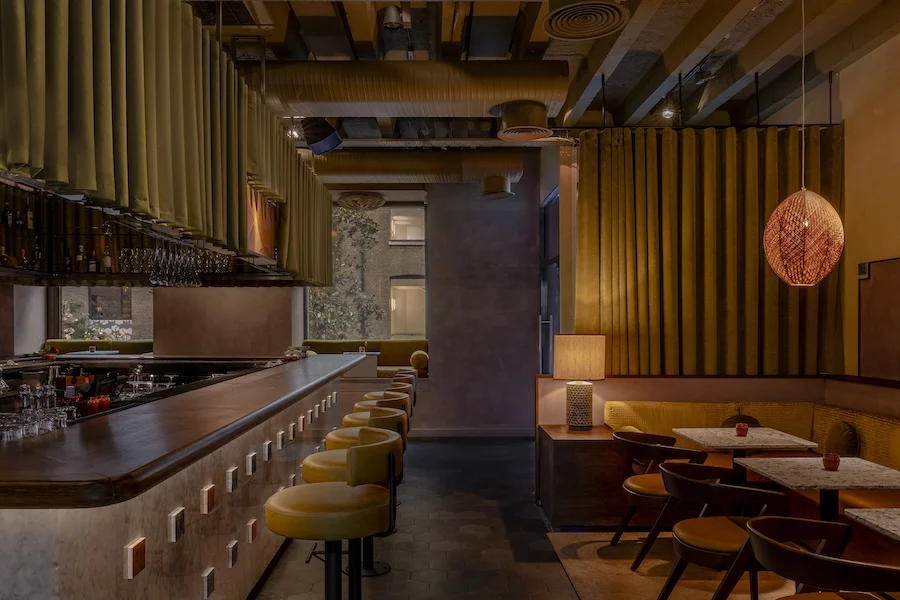
London-based interior architecture studio A-nrd has completed the transformative redesign of Anise, the 60-seat cocktail bar and lounge situated within Cinnamon Kitchen in Devonshire Square. This comprehensive renovation breathes new life into the historic warehouse setting, a space formerly belonging to the East India Trading Company, by infusing it with a sophisticated palette of warm spice hues and meticulously layered materials. The design narrative is deeply rooted in the vibrant chromatic language of Indian cuisine, translating the rich depth and nuanced complexity of spices into a refined tonal scheme and a tactile interplay of materials, fostering an atmosphere conducive to extended guest stays before and after their dining experiences.
The project, spearheaded by A-nrd, a studio recognized for its contemporary yet contextually sensitive design approach, represents a significant refurbishment of a well-established hospitality venue. Cinnamon Kitchen, known for its modern Indian cuisine, sought to elevate the adjoining Anise bar into a destination that complements its culinary offerings while standing as a distinct, inviting space. The selection of A-nrd for this task underscores the studio’s reputation for creating environments that are both aesthetically compelling and functionally superior, with a particular talent for working within historically significant architectural frameworks.
A Central Statement: The Monolithic Bar Design
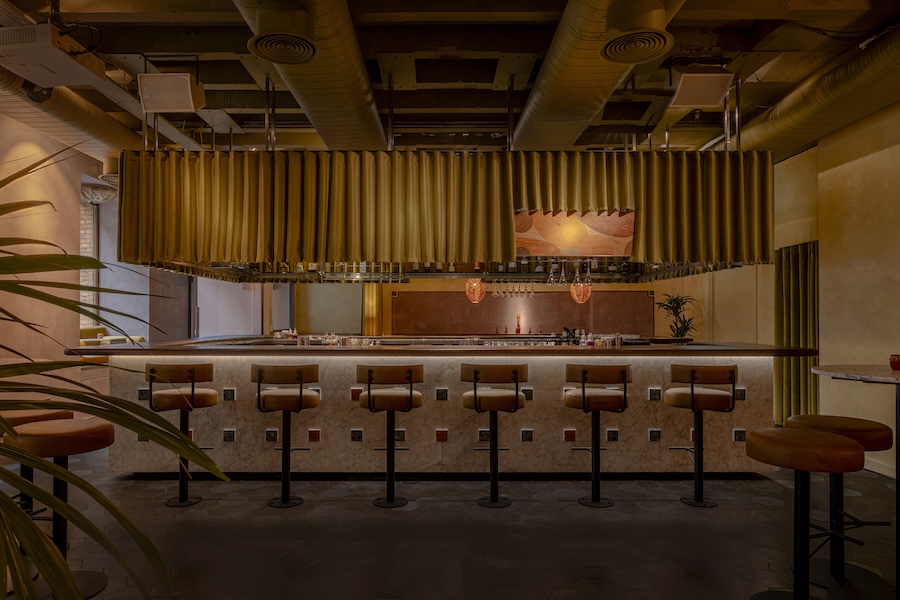
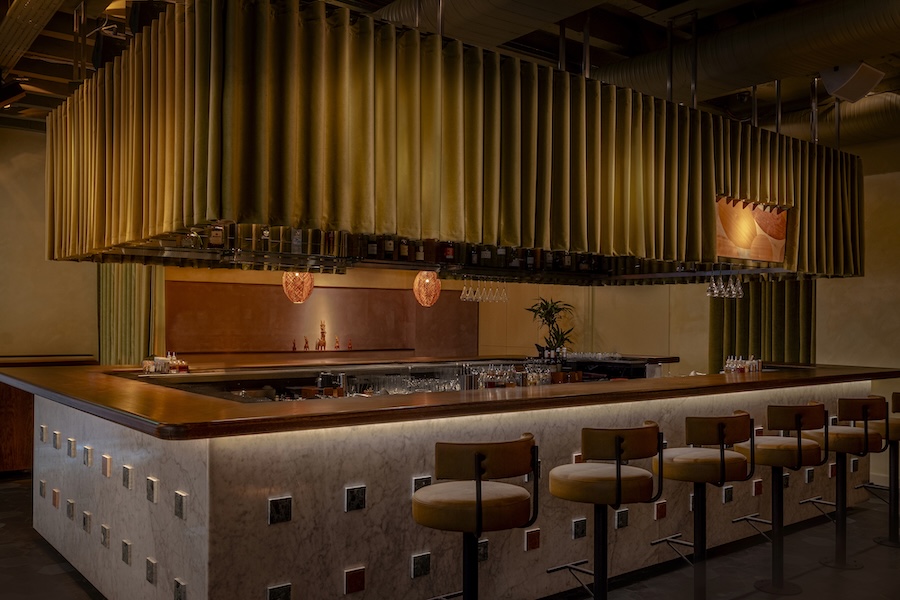
At the heart of Anise’s renewed identity is a striking, monolithic bar that serves as the interior’s anchoring element. This central feature is framed by 24 black swivel stools, each elegantly upholstered in a luxurious tarragon-toned leather, providing both comfort and a visual anchor. A-nrd astutely retained the existing marble-clad bar structure, recognizing its inherent quality and historical resonance. The studio’s intervention focused on refreshing and enhancing this core element. This was achieved through the strategic integration of embellished orange and green terrazzo tiles, which introduce a playful yet sophisticated burst of color and texture, and a new dark oak countertop. This dark oak element not only provides a practical surface but also softens the overall presence of the bar, creating a more approachable and inviting feel.
Adding a layer of subtle grandeur and acoustic softness, a deep green velvet curtain elegantly wraps the bar’s perimeter. This dramatic feature serves a dual purpose: it artfully conceals shelving, maintaining a clean and uncluttered aesthetic, while simultaneously introducing a sense of enclosure and plushness. Integrated seamlessly into this overhead velvet element is a bespoke marquetry artwork by Chelsea Vivash. Crafted from carefully selected off-cut veneers, this artistic addition injects a unique textural and visual narrative, celebrating sustainable design practices and artisanal craftsmanship. The interplay of the smooth marble, the textured terrazzo, the rich velvet, and the intricate marquetry creates a multi-sensory experience at the bar, inviting guests to engage with the space on multiple levels.
Unfolding into Relaxed Seating Zones
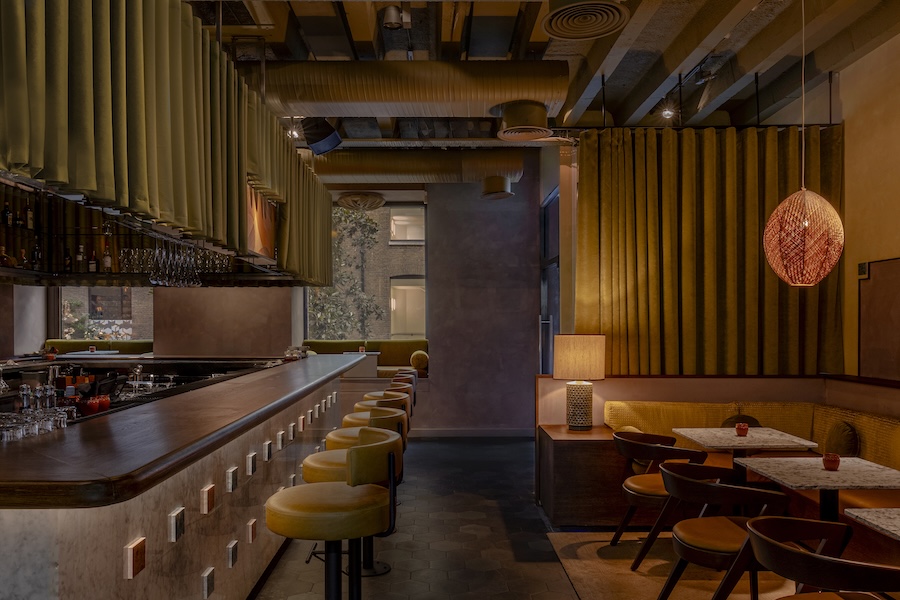
Beyond the immediate allure of the bar, the Anise lounge unfolds into a series of thoughtfully designed, relaxed seating zones, capable of accommodating an additional 30 guests. The perimeter of these areas is defined by custom banquettes, meticulously crafted from dark oak. These banquettes feature gracefully curved bases and extended armrests, offering a sense of both intimacy and generous comfort. The upholstery choices are a direct homage to the spice-inspired design concept. Geometric checks in rich cumin tones are juxtaposed with plush, green velvet cylindrical cushions, creating visual interest and textural variety. Perched atop the booth arms, tall glazed ceramic table lamps cast a warm, ambient glow, further enhancing the intimate mood. The space is punctuated by marble-topped tables, their cool, smooth surfaces providing a counterpoint to the softer seating elements. These tables are thoughtfully paired with rattan pendants, which artfully diffuse low, ambient light, contributing to the bar’s overall serene and inviting atmosphere. The careful curation of seating arrangements encourages guests to settle in, relax, and enjoy the sophisticated ambiance.
A Symphony of Layered Materials and Textures
The walls of Anise have been treated to a sophisticated dual limewash finish, employing soft sumac and muted saffron tones. This approach creates a depth and subtle variation in color, evoking the natural pigments found in spices. These walls are further enhanced by a framework of dark oak, which provides structure and a sense of grounding, and intricate terrazzo detailing that echoes the accents on the bar. A slim wall mirror, strategically placed, introduces rhythm and reflection, subtly expanding the perception of space and enhancing the play of light.
The existing encaustic floor tiles, a testament to the building’s historical character, were meticulously retained. This decision grounds the refurbishment in the venue’s heritage, providing a rich and authentic foundation. To further enhance comfort and define the various seating areas, carefully selected rugs have been introduced, their textures and patterns adding warmth and visual cohesion.
Along the windows, poseur tables have been thoughtfully updated with marble tops, complementing the material palette used elsewhere. These tables also feature upholstered details that artfully echo the banquettes, effectively transforming transitional edges into inviting seating nooks. This attention to detail ensures that every corner of Anise offers a comfortable and aesthetically pleasing experience.
Subtle Embeddings of Personal and Cultural Narratives
Throughout the redesign, A-nrd has woven in subtle yet meaningful personal and cultural narratives. A notable example is the inclusion of Indian ceramic figurines, personally collected by chef Vivek Singh, the culinary force behind Cinnamon Kitchen. These artifacts add a layer of authenticity and personal connection to the space, serving as gentle reminders of the restaurant’s Indian heritage and the chef’s personal journey. These elements contribute to a sense of place and history, elevating the bar beyond a mere drinking establishment to a curated experience.
Alessio Nardi, founder of A-nrd, articulated the studio’s guiding philosophy for the project: "We wanted to transform Anise by working with what was already there; keeping the bar, the floor and the spatial structure, then softening and rebalancing them through texture, color, and detail. The aim was to create a space that feels more intimate and more inviting, without over-designing it." This approach emphasizes a thoughtful evolution rather than a radical overhaul, respecting the existing architectural integrity while introducing contemporary comfort and style.
Context and Chronology of the Renovation
The renovation of Anise at Cinnamon Kitchen represents a strategic enhancement of the hospitality offering within Devonshire Square, a historic business district in London that has seen significant redevelopment in recent decades. The East India Trading Company warehouse, dating back to the 17th century, provides a rich historical backdrop for modern hospitality venues. Cinnamon Kitchen, established by acclaimed chef Vivek Singh, has been a prominent fixture in this area, known for bringing innovative Indian cuisine to London.
While specific dates for the commencement and completion of the Anise renovation are not publicly detailed in the initial report, such projects typically span several months, involving architectural planning, material sourcing, construction, and final styling. The decision to undertake this renovation likely stemmed from a desire to refresh the bar’s ambiance, align it more closely with the evolving culinary experience at Cinnamon Kitchen, and potentially attract a broader clientele seeking sophisticated yet relaxed pre- or post-dinner drinks. The careful selection of A-nrd suggests a deliberate choice to work with designers who understand how to marry historical context with contemporary design sensibilities, a crucial factor in preserving the character of a heritage building while modernizing its amenities.
Analysis of Implications and Broader Impact
The successful redesign of Anise has several implications for both Cinnamon Kitchen and the wider hospitality landscape in London. For Cinnamon Kitchen, the revitalized bar serves as a crucial element in its overall guest experience. A well-designed bar can significantly influence a diner’s perception of a restaurant, acting as a welcoming prelude and a sophisticated epilogue to the main dining event. By creating a more inviting and comfortable lounge area, Cinnamon Kitchen likely aims to increase dwell time, potentially leading to higher per-customer spending and enhanced customer satisfaction.
From a broader perspective, the Anise project exemplifies a growing trend in the hospitality industry: the thoughtful integration of design that honors historical context while embracing modern functionality and aesthetics. In a city like London, with its abundance of historic buildings, this approach is not just desirable but often essential for creating unique and memorable experiences. The use of spice-inspired color palettes and layered materials also reflects a continued appreciation for global influences in interior design, particularly those that evoke sensory richness and cultural depth.
Furthermore, the emphasis on sustainable design elements, such as the use of off-cut veneers for the marquetry, aligns with increasing consumer demand for environmentally conscious businesses. This subtle yet significant detail can resonate with a discerning clientele who are mindful of the impact of their choices. The Anise renovation, therefore, serves as a case study for how heritage venues can be revitalized to meet contemporary expectations without compromising their inherent character or their historical significance. The project underscores the power of interior design to transform a space, creating an atmosphere that is not only visually appealing but also deeply conducive to social interaction and relaxation, a core tenet of successful hospitality.


 Anjar Salim
 Chandra Hamzah
 Tatiana Tantri Indah Sari
 Budi Mulyono

