
 Gabriela Annisa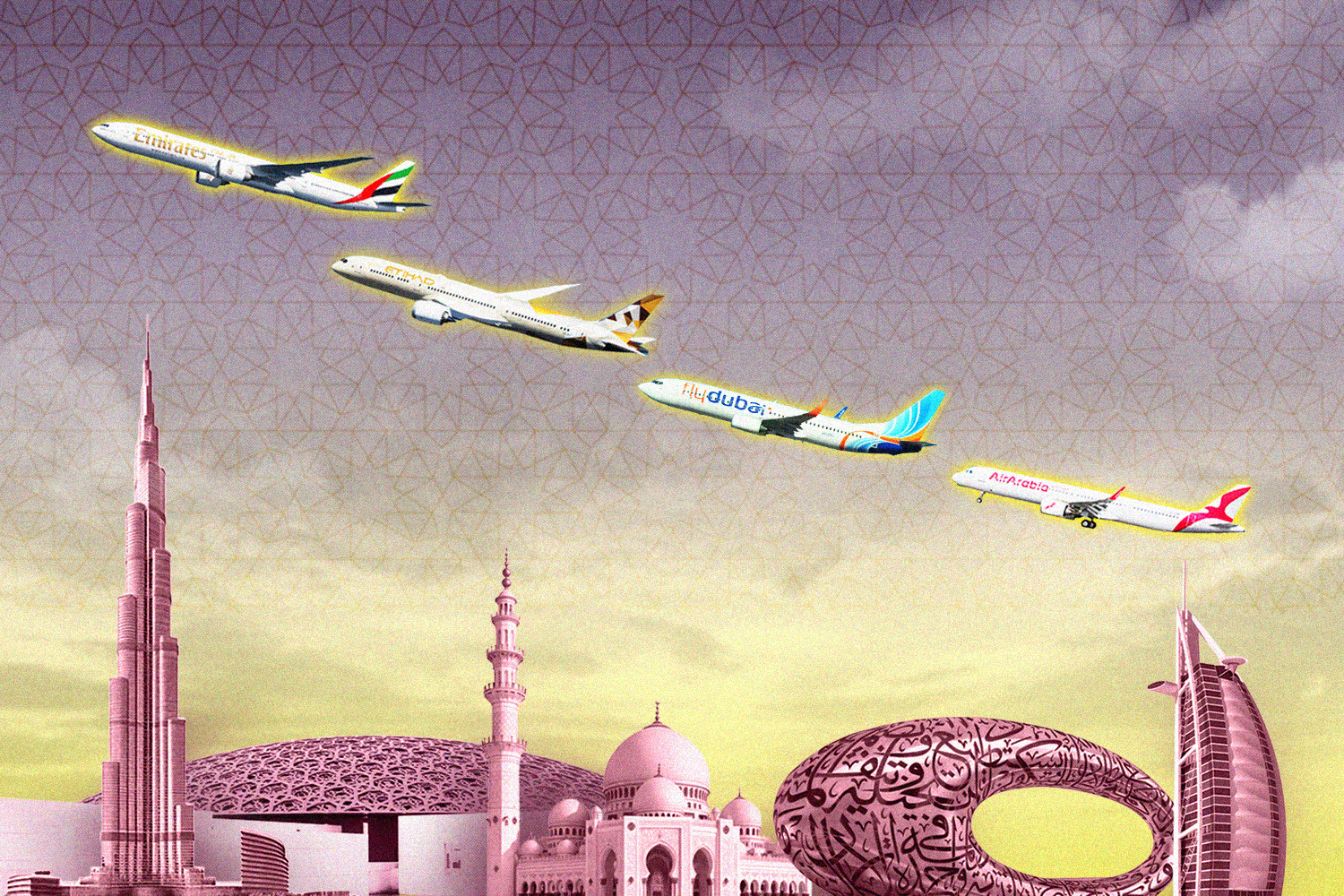
The United Arab Emirates’ aviation sector stands at a critical juncture, navigating a complex landscape of global economic shifts, burgeoning regional competition, and ambitious national development agendas. What began as a strategic initiative to diversify Dubai’s economy through Emirates airline has blossomed into a multi-faceted aviation powerhouse, now poised for its next chapter of evolution. While Emirates, the flagbearer, is adopting a more measured and strategic expansion, its sister airline FlyDubai and the Abu Dhabi-based Etihad Airways are aggressively charting new territories. Simultaneously, Air Arabia continues to solidify its position as a leading low-cost carrier, extending its reach further afield. With hundreds of next-generation aircraft on order, significant airport infrastructure developments underway, and a rapidly intensifying competitive environment across the Gulf, the narrative of UAE aviation is undergoing a profound transformation. This intricate dance of expansion, consolidation, and strategic realignment will define the trajectory of these carriers and their broader impact on global air travel.
The Genesis of a Global Hub: Dubai’s Vision and Emirates’ Ascent
The foundation of the UAE’s aviation dominance is inextricably linked to Dubai’s visionary leadership in the late 20th century. Recognizing the limitations of a solely oil-dependent economy, Dubai embarked on an ambitious strategy to transform itself into a global trade, tourism, and finance hub. Aviation was identified as a cornerstone of this transformation, leading to the establishment of Emirates airline in 1985. The mandate was clear: build a world-class airline that would connect the East and West, leveraging Dubai’s unique geographical position at the crossroads of continents.
Emirates’ early strategy was audacious. Instead of focusing on regional routes, it directly targeted long-haul international markets, a decision that initially raised eyebrows but ultimately proved to be a masterstroke. The airline invested heavily in modern wide-body aircraft, pioneering the use of the Boeing 777 and later becoming the largest operator of the Airbus A380 superjumbo. This fleet strategy allowed Emirates to offer direct connections to an ever-expanding global network, bypassing traditional European hubs and significantly reducing travel times for passengers traversing between Asia, Africa, and the Americas. By offering premium services, state-of-the-art inflight entertainment, and a relentless focus on passenger experience, Emirates quickly carved out a reputation for excellence.
The success of Emirates was not merely in passenger numbers but in its catalytic effect on Dubai’s economy. Aviation and tourism collectively contribute an estimated 28% to Dubai’s GDP, a testament to the integrated development strategy. Dubai International Airport (DXB) rapidly grew to become one of the world’s busiest airports by international passenger traffic, processing over 86 million passengers in 2019, cementing its status as a vital global transit point. This phenomenal growth transformed Dubai from a regional trading post into a global metropolis, attracting businesses, tourists, and talent from across the globe.
A Multi-Faceted Future: Divergent Strategies for Growth
As the UAE aviation market matures and faces new challenges, the strategies of its principal carriers are evolving, reflecting a diversified approach to sustained growth. The era of singular, unbridled expansion has given way to more nuanced, often complementary, strategies.
Emirates: Strategic Prudence and Refined Growth
After decades of aggressive expansion that saw its fleet swell and its network span over 150 destinations across six continents, Emirates is now adopting a more cautious and strategic approach. This shift is not a retraction but a refinement, focusing on yield management, operational efficiency, and the optimal deployment of its considerable assets. Post-pandemic recovery has seen Emirates prioritize restoring profitability and stabilizing its core network.
The airline’s future growth will be underpinned by a significant fleet modernization program. With orders for 50 Airbus A350-900s, 35 Boeing 787 Dreamliners, and 205 Boeing 777X aircraft, Emirates is preparing to replace its aging A380s and older 777s while simultaneously expanding capacity in a fuel-efficient manner. The A350s and 787s will enable Emirates to open new routes to secondary cities or operate existing routes with greater frequency and efficiency, complementing its ultra-long-haul 777X operations. Strategic partnerships, such as its deepening alliance with FlyDubai and codeshare agreements with other airlines, are also crucial for extending its reach without direct fleet investment. Emirates continues to emphasize its premium product, focusing on delivering an unparalleled travel experience that justifies its market positioning.
FlyDubai: Expanding Reach and Complementary Connectivity
FlyDubai, established in 2008 as a low-cost carrier, has grown to become a crucial strategic partner for Emirates, effectively creating a powerful dual-hub model at Dubai International. Operating a fleet primarily composed of Boeing 737 MAX aircraft, FlyDubai has aggressively expanded into underserved and secondary markets, particularly across Eastern Europe, Africa, the Indian subcontinent, and Central Asia. This strategy allows Emirates to concentrate on major global trunk routes, while FlyDubai feeds its hub with passengers from a broader array of destinations and offers direct point-to-point connections where Emirates does not operate.
FlyDubai’s hybrid model, offering both economy and business class options, caters to a diverse range of travelers. Its rapid network expansion, now covering over 120 destinations, has been instrumental in enhancing Dubai’s overall connectivity. The synergy between Emirates and FlyDubai, particularly through shared terminals and streamlined transfers at DXB, creates a seamless travel experience for passengers connecting between their respective networks, amplifying the hub’s overall attractiveness. The airline continues to place substantial orders for 737 MAX aircraft, signaling its intent for sustained, robust growth in its niche markets.
Etihad Airways: Resurgent Focus and Sustainable Profitability
Etihad Airways, based in Abu Dhabi, has undergone a significant strategic overhaul in recent years. After a period of ambitious but ultimately unsustainable "equity alliance" investments in carriers like Air Berlin and Alitalia, Etihad pivoted to a strategy focused on sustainable profitability, network optimization, and leveraging Abu Dhabi as a premium global hub. This involved divesting from loss-making ventures, streamlining its fleet, and rationalizing its route network.
The airline’s current trajectory emphasizes premium service, operational efficiency, and a refined global network. With a fleet including Boeing 787 Dreamliners and Airbus A350s, Etihad is targeting high-yield routes and strengthening its position in key markets across Europe, North America, Asia, and Australia. The recent opening of Abu Dhabi International Airport’s new Terminal A (formerly Midfield Terminal) provides a state-of-the-art facility designed to enhance the passenger experience, offering increased capacity and advanced amenities. Etihad’s strategy is now less about sheer volume and more about curated growth, ensuring each route contributes positively to the airline’s financial health and strengthens Abu Dhabi’s appeal as a destination and transit point.
Air Arabia: Low-Cost Dominance and Regional Expansion
Air Arabia, headquartered in Sharjah, holds the distinction of being the Middle East’s first and largest low-cost carrier. Since its inception in 2003, it has consistently adhered to a pure low-cost model, focusing on affordability, efficiency, and a straightforward service offering. Operating a modern fleet of Airbus A320 family aircraft, Air Arabia serves over 170 routes across the Middle East, North Africa, Asia, and Europe.
The airline’s expansion strategy includes establishing multiple hubs and joint ventures, such as Air Arabia Abu Dhabi (with Etihad) and operations in Morocco and Egypt. This multi-hub approach allows Air Arabia to tap into diverse regional markets and cater to a broader base of price-sensitive travelers. Its focus remains on short-to-medium haul routes, providing essential connectivity and stimulating air travel demand in underserved regions. Air Arabia’s substantial order book for Airbus A320neo and A321XLR aircraft underscores its commitment to continued growth and fleet modernization, aiming to further solidify its market leadership in the budget travel segment.
Infrastructure and Fleet Modernization: The Foundation for Future Capabilities
The ambitious growth plans of UAE carriers are underpinned by significant investments in both aircraft and airport infrastructure. These developments are critical for handling projected passenger growth, enhancing operational efficiency, and maintaining a competitive edge.
The collective order books of UAE airlines represent hundreds of new aircraft, totaling well over 500 firm orders. Emirates’ substantial orders for Boeing 777X, Airbus A350, and Boeing 787 aircraft, coupled with FlyDubai’s continued commitment to the Boeing 737 MAX, Etihad’s strategic deployment of Airbus A350s and Boeing 787s, and Air Arabia’s orders for Airbus A320neo family jets, demonstrate a clear vision for fleet renewal and expansion. These next-generation aircraft promise significant improvements in fuel efficiency, reducing operational costs and supporting the UAE’s broader sustainability objectives. They also offer enhanced passenger comfort, crucial for maintaining service standards.
On the ground, airport infrastructure is undergoing transformative upgrades. Dubai World Central (DWC), also known as Al Maktoum International Airport, remains the long-term vision for Dubai’s aviation future. While the full transition of Emirates to DWC is a multi-decade project, the airport is gradually expanding its cargo and limited passenger operations. Its eventual realization as a mega-hub capable of handling over 200 million passengers annually will be a monumental undertaking, designed to accommodate future generations of air travel demand. In Abu Dhabi, the recently inaugurated Terminal A at Abu Dhabi International Airport has dramatically increased capacity and improved the passenger experience, positioning the airport as a world-class gateway. Similarly, Sharjah International Airport continues its phased expansion to support Air Arabia’s growing operations. These infrastructure projects are not just about capacity; they are about creating seamless, efficient, and enjoyable travel experiences that reinforce the UAE’s status as a premier global aviation hub.
Intensifying Regional Rivalry: The Rise of New Powerhouses
The competitive landscape for UAE carriers is intensifying, primarily driven by the ambitious aviation strategies of neighboring countries, particularly Saudi Arabia. The Kingdom’s Vision 2030 plan includes massive investments in aviation, aiming to transform Saudi Arabia into a major global logistics and tourism hub.
Riyadh Air, a new national airline launched in 2023, is poised to become a formidable competitor, with plans to operate a significant fleet of wide-body aircraft and establish an extensive global network from its Riyadh hub. Alongside Riyadh Air, NEOM Airlines is emerging, focusing on connecting the futuristic NEOM megacity. These new entrants, coupled with the ongoing expansion of Saudi Arabian Airlines (Saudia), signal a direct challenge to the established dominance of UAE and Qatari carriers, particularly in the lucrative transit traffic segment between East and West. Saudi Arabia aims to attract 330 million passengers annually by 2030, a target that will undoubtedly lead to fierce competition for routes, market share, and talent.
Qatar Airways, based in Doha, remains a formidable rival, consistently ranked among the world’s top airlines for service quality and network connectivity. Its continuous expansion, supported by state-of-the-art infrastructure at Hamad International Airport, ensures ongoing competitive pressure. Beyond the Gulf, established players like Turkish Airlines and Ethiopian Airlines also vie for transit traffic, adding further layers of complexity to the regional aviation ecosystem. The evolving geopolitical dynamics and bilateral air services agreements will also play a crucial role in shaping market access and competitive advantages for these carriers.
Strategic Implications and Broader Impact
The strategic directions of UAE carriers have far-reaching implications, extending beyond the aviation industry itself to influence economic development, international relations, and environmental sustainability.
Economic Contribution and Diversification
Aviation remains a vital engine for the UAE’s economy, driving tourism, trade, and foreign investment. The continued expansion and strategic refinement of its carriers will sustain job creation across a multitude of sectors, from ground services and logistics to hospitality and retail. As the UAE seeks to further diversify its economy away from hydrocarbons, the aviation sector’s ability to connect it to global markets remains paramount. The ongoing investment in infrastructure and fleet modernization signals a long-term commitment to this economic pillar.
Global Connectivity and Soft Power
The robust networks of UAE airlines enhance the nation’s global connectivity, reinforcing its role as a strategic crossroads and a facilitator of international commerce and cultural exchange. This connectivity contributes significantly to the UAE’s soft power, projecting its image as a modern, forward-looking nation capable of bridging diverse cultures and economies. The ability to seamlessly connect distant regions fosters stronger bilateral ties and opens new avenues for collaboration.
Sustainability and Innovation
As the aviation industry faces increasing pressure to decarbonize, UAE carriers are investing in more fuel-efficient aircraft and exploring sustainable aviation fuels (SAF). While the transition to full sustainability is a long-term challenge, the adoption of newer technologies and operational efficiencies will be crucial for meeting environmental targets and maintaining a social license to operate. Furthermore, innovation in passenger experience, digital transformation, and operational technology will continue to differentiate these airlines in an increasingly competitive market. The development of AI-powered systems for route optimization, predictive maintenance, and personalized customer service will be key areas of focus.
Workforce Development
The ambitious growth plans necessitate a highly skilled workforce, from pilots and cabin crew to engineers and airport management. The UAE’s aviation sector will continue to invest in training and development programs to cultivate local talent and attract international expertise, ensuring a sustainable supply of human capital to support its expansion.
Conclusion
The UAE’s aviation story, born from a bold vision for economic diversification, is entering an exciting and complex new chapter. The days of singular, aggressive expansion have given way to a more nuanced, multi-faceted strategy across its carriers. Emirates, with its refined growth and premium focus, complements FlyDubai’s agile regional expansion. Etihad Airways, having navigated a period of recalibration, is now firmly set on a path of sustainable profitability from its Abu Dhabi hub. Meanwhile, Air Arabia continues its robust low-cost leadership, connecting an ever-broader base of travelers.
This strategic evolution is set against a backdrop of unprecedented infrastructure development and a dynamic competitive landscape, particularly with the emergence of powerful new players in Saudi Arabia. The hundreds of aircraft on order and the ongoing expansion of world-class airports underscore the UAE’s unwavering commitment to aviation as a core economic driver and a symbol of its global ambition. The challenges ahead are significant, ranging from intensifying regional rivalry to the imperative of environmental sustainability. Yet, the UAE’s proven track record of visionary leadership and its continuous pursuit of excellence suggest that its carriers are well-positioned not only to navigate these complexities but to continue shaping the future of global air travel for decades to come. The question is no longer if UAE carriers will continue to grow, but how their diversified strategies will redefine their roles in an increasingly interconnected and competitive world.




 Anjar Salim
 Chandra Hamzah
 Tatiana Tantri Indah Sari
 Budi Mulyono

