
 Anjar Salim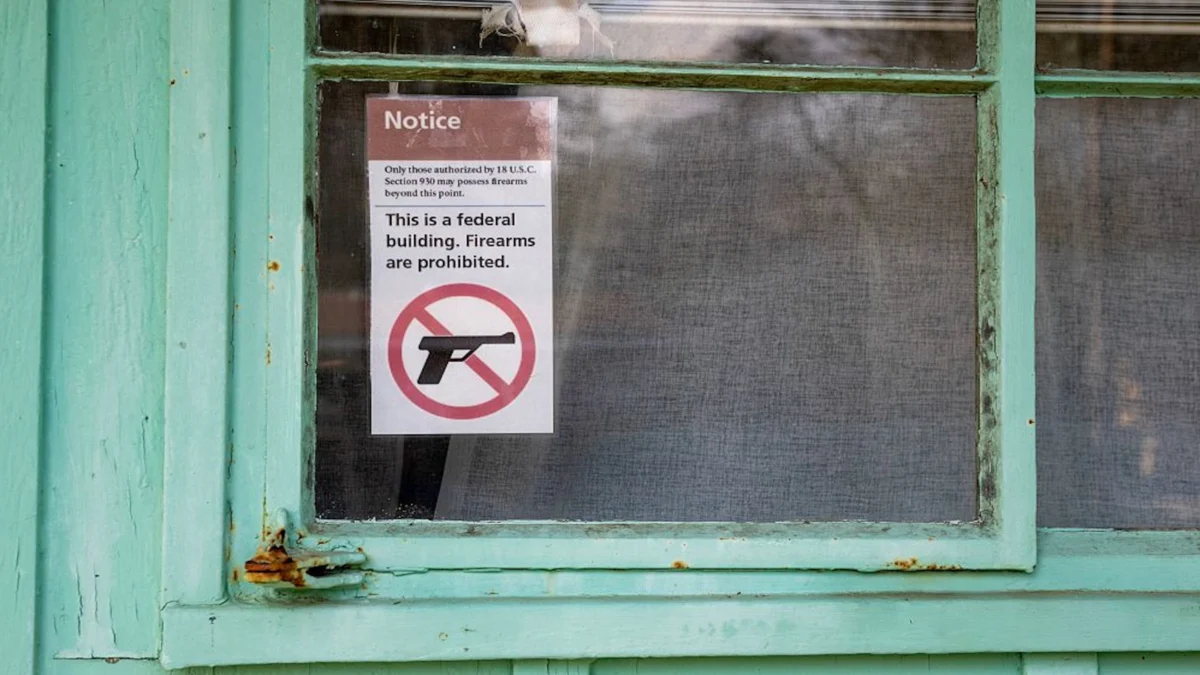
In a legal move that could significantly alter the landscape of public land management and Second Amendment rights, a coalition of gun rights organizations and a private citizen have filed a federal lawsuit aimed at overturning the long-standing ban on firearms inside National Park Service (NPS) facilities. The legal challenge, initiated on March 27, 2026, in a federal court in Texas, seeks to dismantle regulations that prohibit visitors from carrying weapons into visitor centers, administrative offices, gift shops, and restaurants located within the National Park System. The lawsuit, spearheaded by the Second Amendment Foundation (SAF) and joined by the Firearms Policy Coalition (FPC) and Gary Zimmerman, a private citizen, argues that the current restrictions are unconstitutional under the evolving interpretation of the Second Amendment.
The crux of the litigation targets 18 U.S.C. § 930(a), a federal statute originally enacted in 1988 as a component of the Undetectable Firearms Act. This law generally prohibits the possession of firearms or other dangerous weapons in federal facilities. While the National Park Service has allowed visitors to carry firearms in the outdoor areas of parks since 2010—provided they adhere to state and local regulations—the interior of every building managed by the NPS remains a "gun-free zone." The plaintiffs contend that this creates a legal minefield for law-abiding citizens who are forced to disarm frequently throughout their visit, potentially compromising their personal safety.
The Legal Argument: Historical Tradition and the Bruen Standard
The plaintiffs’ legal strategy relies heavily on the "historical tradition" test established by the U.S. Supreme Court in its 2022 landmark decision, New York State Rifle & Pistol Association, Inc. v. Bruen. In that ruling, the Court held that for a firearm regulation to be constitutional, the government must demonstrate that the regulation is consistent with the nation’s historical tradition of firearm regulation. Bill Sacks, the SAF director of legal operations, maintains that the ban on firearms in federal facilities within national parks fails this test.
According to Sacks, the ban is overly broad and lacks a historical analog from the founding era that would justify such a prohibition. The plaintiffs argue that while the government may have the authority to restrict firearms in truly "sensitive places" like courthouses or legislative chambers, the same logic should not apply to a gift shop or a public restroom in a remote national forest or park. The lawsuit posits that these facilities are essentially public accommodations where the right to self-defense should remain intact.
The "Trail to Table" loophole is a central theme of the complaint. Under current regulations, a visitor may legally carry a sidearm while hiking on a trail in Yellowstone or the Great Smoky Mountains. However, the moment that individual steps onto the porch of a visitor center or enters a restaurant to purchase a meal, they are technically in violation of federal law. This requires gun owners to either leave their firearms in their vehicles—which some argue increases the risk of theft—or avoid these facilities altogether.
A Chronology of Firearms Regulation in National Parks
The history of firearms in the National Park System is a complex tapestry of changing administrations and shifting legal philosophies. For much of the 20th century, the NPS maintained strict "poaching" regulations that essentially required firearms to be rendered inoperable (cased, broken down, or unloaded) while inside park boundaries.
- 1916: The National Park Service Organic Act is signed, creating the agency with a mandate to conserve the scenery and wildlife for the enjoyment of future generations.
- 1980s: Regulations under the Reagan administration largely prohibited the possession of operable firearms in parks, citing the need to protect wildlife and maintain a peaceful environment.
- 1988: Congress passes 18 U.S.C. § 930 as part of the Undetectable Firearms Act, establishing the baseline ban on weapons in federal facilities that is being challenged today.
- 2008: The Bush administration attempts to ease restrictions, but the move is initially blocked by a federal judge.
- 2010: A significant shift occurs when an amendment sponsored by Senator Tom Coburn is attached to the Credit Card Accountability Responsibility and Disclosure (CARD) Act. This law, signed by President Barack Obama, allows visitors to carry firearms in national parks in accordance with the laws of the state in which the park is located.
- 2022: The Supreme Court’s Bruen decision shifts the burden of proof to the government to justify firearm restrictions based on historical precedent.
- March 2026: The Second Amendment Foundation and its partners file the current suit in Texas, seeking to extend the 2010 "carry" rights into the interior of NPS buildings.
Safety Data and the Nature of National Park Risks
A primary point of contention in the debate is the necessity of firearms for self-defense within park facilities. Proponents of the lawsuit argue that the threat of violence is unpredictable and can occur anywhere. Sacks noted that a visitor might need protection not only from wildlife, such as a mountain lion on a trail, but also from human threats, such as "a meth addict" at a visitor center.
However, mortality and crime statistics within the National Park System suggest that the most prevalent dangers are environmental rather than criminal. According to a 2023 analysis of NPS mortality data, approximately 243 deaths occur annually across the more than 400 units of the National Park System. The leading causes of death are:
- Drowning: The most frequent cause of accidental death, often occurring in lakes, rivers, and coastal areas.
- Motor Vehicle Crashes: Significant due to the high volume of traffic on scenic drives.
- Suicide: A tragic but recurring statistic in public lands.
- Medical Events: Such as heart attacks brought on by physical exertion or extreme heat.
- Accidental Falls: Particularly in rugged terrain or at canyon overlooks.
Homicides and violent crimes involving firearms remain statistically rare within the National Park System compared to urban environments. Critics of the lawsuit argue that introducing more firearms into crowded visitor centers and restaurants could escalate minor conflicts or lead to accidental discharges in confined spaces.
Responses from Gun Violence Prevention Groups
Gun reform organizations have expressed strong opposition to the lawsuit, arguing that the plaintiffs are misinterpreting the "sensitive places" doctrine. Shira Feldman, senior director of constitutional law at Brady United, emphasized that national parks were conceived as "natural sanctuaries of respite and repose."
Feldman argued that the government has a compelling interest in maintaining the safety of these sanctuaries. "Most park rangers do not carry weapons, and this Park Service rule exists to protect safety across the board—for park staff, for visitors, and for wildlife," she stated. The concern among these groups is that if the ban on firearms in federal buildings is overturned, it could lead to a "slippery slope" where firearms are eventually permitted in other sensitive federal areas, such as the Smithsonian museums or the U.S. Capitol’s public galleries.
Adam Skaggs, vice president of the Giffords Law Center to Prevent Gun Violence, reinforced this view, noting that the judiciary has historically recognized the government’s right to regulate firearms in its own buildings. "National parks and government facilities are sensitive places that should be protected from gun violence," Skaggs said. He suggested that the safety of the millions of families who visit parks annually should take precedence over the desire of a few individuals to carry weapons into a gift shop.
Broader Implications and Potential Legal Outcomes
The outcome of this lawsuit could have far-reaching implications for federal property management. If the court rules in favor of the SAF and FPC, the decision could potentially invalidate 18 U.S.C. § 930(a) not just for the National Park Service, but for other federal agencies as well. This could include Social Security offices, post offices, and federal administrative buildings nationwide.
Legal analysts suggest that the choice of a Texas federal court is strategic. The Fifth Circuit, which oversees federal cases in Texas, is widely regarded as one of the most conservative and Second Amendment-friendly appellate courts in the United States. A favorable ruling at the district or appellate level would likely be appealed to the Supreme Court, providing the conservative majority another opportunity to define the limits of "sensitive places."
Furthermore, the lawsuit raises questions about the operational burden on the National Park Service. Currently, the NPS manages over 400 sites, ranging from vast wilderness areas like Denali to urban historic sites like the Statue of Liberty. If the ban is lifted, the agency may be forced to implement new security protocols, such as metal detectors or increased security personnel at visitor centers, to manage the presence of firearms. This comes at a time when the NPS is already facing budgetary constraints and a significant maintenance backlog.
Current Regulatory Environment
As the litigation proceeds through the court system, the current rules remain in effect. Visitors are reminded that:
- Firearms are permitted in the outdoor areas of national parks if the carrier is in compliance with state and local laws.
- Possession of firearms is strictly prohibited inside any building owned or leased by the federal government, including those within national parks.
- Federal law prohibits the discharge of a firearm within a national park except in very specific circumstances, such as authorized hunting where permitted.
- Signage reading "No Firearms" or "Federal Facility: Possession of Firearms Prohibited" is posted at the entrances of all restricted buildings.
The National Park Service has declined to comment specifically on the lawsuit, citing its policy on ongoing litigation. However, the agency continues to emphasize its commitment to visitor safety through education, ranger patrols, and the maintenance of its facilities as safe environments for all. The legal world now waits to see if the "sanctuaries of repose" will remain gun-free or if the doors of federal visitor centers will soon open to those carrying sidearms.



 Chandra Hamzah
 Tatiana Tantri Indah Sari
 Budi Mulyono
