
 Budi Mulyono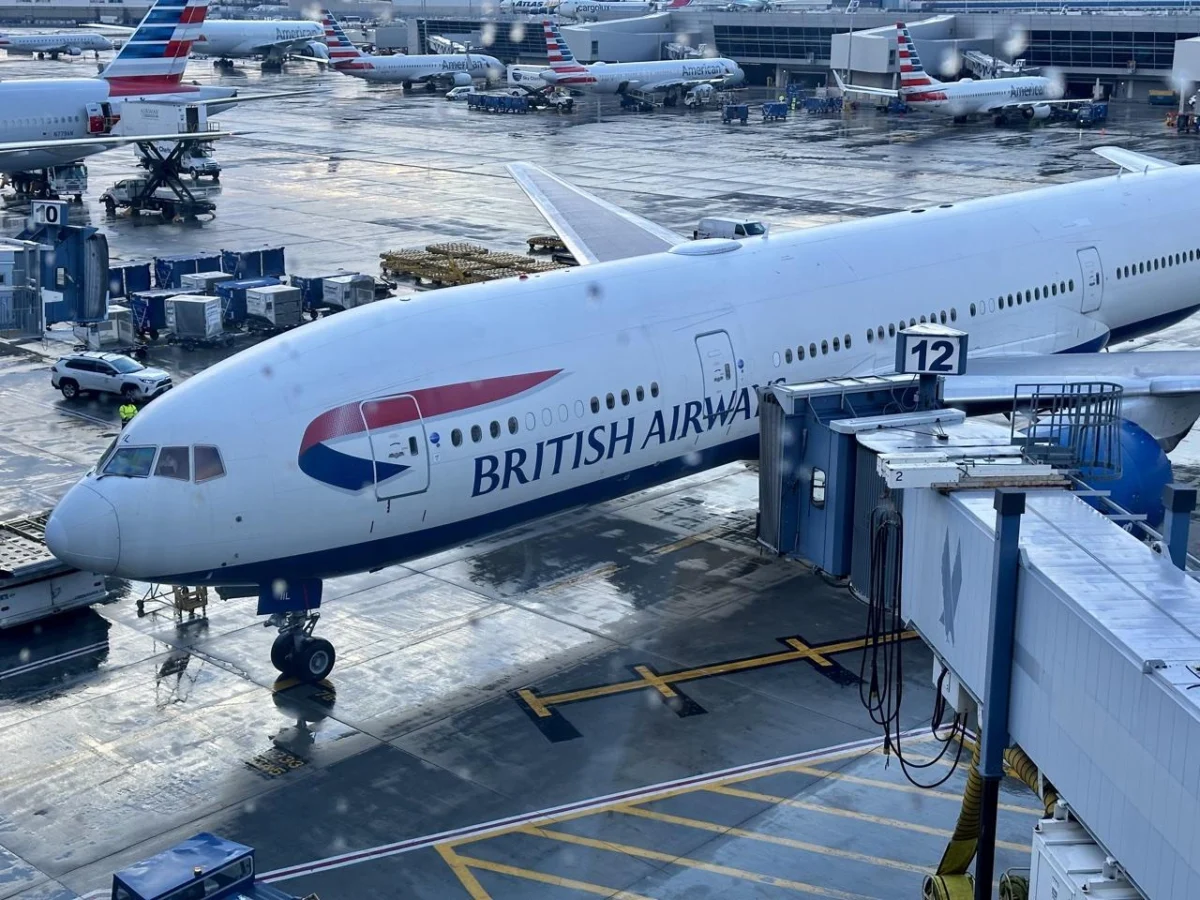
The landscape of transatlantic aviation is undergoing a significant transformation this month as two major carriers execute divergent but equally consequential growth strategies. On April 28, Alaska Airlines is scheduled to cross the Atlantic Ocean for the first time in its history, marking its transition from a dominant regional player into a global contender. Simultaneously, on April 19, British Airways officially restored nonstop service between London Heathrow and St. Louis Lambert International Airport, ending a 22-year hiatus for the Missouri gateway. While the aviation industry has focused heavily on Alaska’s high-profile entry into the European market, the return of British Airways to the American Midwest signals a broader shift in how international carriers are targeting mid-market cities that were largely abandoned during the era of domestic hub consolidation.
The Milestone Launch of Alaska Airlines’ Transatlantic Service
Alaska Airlines’ inaugural flight from Seattle-Tacoma International Airport (SEA) to Rome Fiumicino (FCO) represents a watershed moment for the carrier. Traditionally known for its stronghold along the West Coast and its robust domestic network, Alaska is utilizing its flagship Boeing 787-9 aircraft to compete directly in the lucrative long-haul market. This move is more than a simple route expansion; it is a declaration of intent. By connecting its primary hub in Seattle to a premier European capital, Alaska is challenging the established dominance of Delta Air Lines and other legacy carriers in the Pacific Northwest.
The competitive response was immediate. Upon Alaska’s announcement of the Seattle-Rome service, Delta Air Lines countered by matching the route and adding Seattle-Barcelona service. This "tit-for-tat" scheduling underscores the high stakes of the Seattle market. For Alaska, the success of the Rome route is a prerequisite for further global expansion. The airline has already signaled its next move: a long-haul service to Iceland using the Boeing 737, which will test the limits of narrow-body operations across the Atlantic. This dual-pronged approach—using wide-body aircraft for flagship routes and single-aisle jets for "long and thin" routes—positions Alaska as a versatile player in the evolving international market.
The Restoration of the St. Louis Gateway
While Alaska Airlines captures headlines with its new "flag carrier" status, British Airways’ arrival in St. Louis on April 19 is arguably more indicative of the future of transatlantic travel. Flight BA221, departing London Heathrow (LHR) at 16:25 and arriving at St. Louis Lambert International (STL) at 19:30, marks the first time in over two decades that the city has enjoyed a direct link to the United Kingdom. The return flight, BA220, departs St. Louis at 22:00, arriving back at Heathrow at 12:05 the following day.
The service is operated by the Boeing 787-8 Dreamliner, a mid-sized wide-body aircraft specifically designed for routes where demand is high enough for a wide-body but not sufficient to fill a larger Boeing 777 or 747. The aircraft features a three-cabin configuration: World Traveller (Economy), World Traveller Plus (Premium Economy), and Club World (Business Class). For St. Louis, a metropolitan area of 2.8 million people and the 21st largest metro area in the United States, this flight represents a vital reconnection to the global economy.
A Chronology of St. Louis’ Transatlantic Connectivity
To understand the significance of British Airways’ move, one must look at the historical trajectory of St. Louis as an aviation hub. The city’s history with London began in 1980 with service from British Caledonian. By the mid-1980s, the route was assumed by Trans World Airlines (TWA), which maintained a massive hub in St. Louis. During this period, St. Louis was a primary gateway to Europe, with TWA offering several international frequencies.
The decline began with the acquisition of TWA by American Airlines in 2001. Following the industry-wide downturn after the events of September 11, 2001, American Airlines began a process of "rationalizing" its hubs. In October 2003, American Airlines terminated the St. Louis to London Gatwick route, effectively ending the city’s status as a major international hub. For the next 22 years, St. Louis was largely orphaned from the European market. Aside from a short-lived experiment by the low-cost carrier Wow Air to Reykjavik in 2018 and the launch of Lufthansa’s Frankfurt service in 2022, the city’s 2.8 million residents were forced to connect through secondary hubs like Chicago, Dallas, or Atlanta.
The Strategy of Capturing Suppressed Demand
The return of British Airways to St. Louis is part of a deliberate pattern. Over the last three years, the airline has systematically restored or added service to mid-market U.S. cities, including Portland (PDX), Pittsburgh (PIT), and Nashville (BNA). These cities share a common history: they were once served by U.S. legacy carriers but lost their direct international links during rounds of hub consolidation.
British Airways’ planners have identified that the demand in these cities did not disappear; it was merely suppressed by the "friction" of connecting flights. By offering a nonstop product, the airline can tap into a loyal base of business travelers and Oneworld alliance members who prefer the convenience of a direct flight over the complexity of navigating a massive hub like Chicago O’Hare. In Pittsburgh, for instance, the success of the initial four-times-weekly service led British Airways to increase frequency to daily service during the summer months.
This strategy also highlights a divergence in philosophy between British Airways and its joint-venture partner, American Airlines. While American has focused its long-haul growth on its primary hubs in Philadelphia, Dallas, and Charlotte, British Airways is increasingly willing to venture into "orphaned" markets. The British carrier currently serves 28 gateways in the United States, a testament to its belief in the depth of the American market beyond the primary coastal hubs.
Economic Implications and Local Support
The launch of the St. Louis-London route was not a purely commercial decision by British Airways; it was the result of intense lobbying and financial incentives provided by the local business community and municipal government. Like many mid-market cities, St. Louis recognized that direct international connectivity is a prerequisite for attracting global investment and corporate headquarters.
Local organizations, including Greater St. Louis, Inc., worked for years to secure the route, offering subsidies and marketing guarantees to mitigate the airline’s initial financial risk. For British Airways, these incentives provide a safety net while the route matures. For the city, the return on investment is measured in increased trade, tourism, and the prestige of being a "nonstop" international destination.
Technical and Loyalty Analysis: The Passenger Perspective
For travelers, the new services offer a mix of modern convenience and legacy products. The Alaska Airlines Boeing 787-9 is expected to offer a state-of-the-art cabin experience, essential for a route as long as Seattle to Rome. Meanwhile, the British Airways 787-8 used on the St. Louis route features the older Club World business class configuration. While this 2-3-2 or 1-2-1 layout is not "category-leading" compared to the newer Club Suites found on the airline’s 787-10s and refurbished 777s, it remains a significant upgrade for a market that previously had no direct service at all.
From a loyalty perspective, both routes provide significant opportunities for frequent flyers. The St. Louis-London service is redeemable via American Airlines AAdvantage miles, British Airways Avios, and other Oneworld currencies. However, passengers should be aware of the substantial fuel surcharges typically applied to British Airways award bookings. Availability at launch is reportedly tight, with only four weekly frequencies limiting the number of available award seats.
The Future of Transatlantic Aviation
The next 24 months are expected to see a continuation of this trend toward "de-hubbing" the Atlantic. Aer Lingus, another IAG-owned carrier, is aggressively pursuing a similar strategy using the Airbus A321XLR. By deploying long-range, narrow-body aircraft, Aer Lingus has successfully launched routes from Dublin to Minneapolis, Nashville, and Indianapolis.
If the British Airways experiment in St. Louis proves successful—which early demand indicators suggest it will—it is likely that other mid-market cities like Kansas City or San Antonio will be next on the list. The logic is clear: the Boeing 787 and the Airbus A321XLR have made "long, thin" routes economically viable in a way that was impossible during the era of the Boeing 747.
Conclusion
The simultaneous moves by Alaska Airlines and British Airways represent two different visions of aviation’s future. Alaska is attempting to break the mold of a regional carrier, leveraging its Seattle hub to become a true international player. British Airways, conversely, is looking past the major hubs to find value in the mid-sized American cities that the domestic industry left behind.
While Alaska’s Rome service is a landmark achievement for the airline, British Airways’ return to St. Louis may be the more significant indicator of where the industry is headed. As aircraft technology continues to evolve, the necessity of funneling every international passenger through a handful of massive "fortress hubs" is diminishing. For the residents of cities like St. Louis, Pittsburgh, and Nashville, the return of the nonstop wide-body is more than just a convenience; it is a restoration of their place on the global stage.



 Chandra Hamzah
 Gabriela Annisa
 Tatiana Tantri Indah Sari
 Anjar Salim