
 Anjar Salim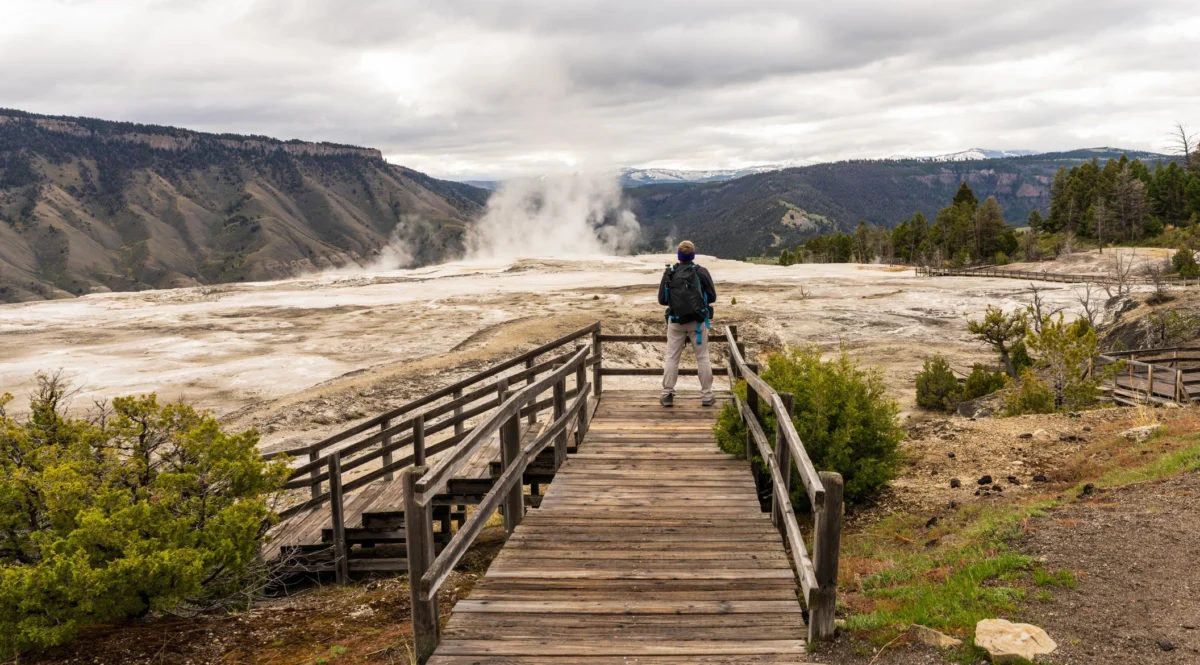
A federal judge in Wyoming has sentenced a 50-year-old Texas man to five days in jail following a deliberate excursion off the designated boardwalks at Yellowstone National Park’s Mammoth Hot Springs, an act that federal prosecutors described as both ecologically devastating and life-threatening. Eric Bedient, a resident of Texas, pleaded guilty to charges related to thermal trespass after investigators discovered a trail of footprints etched into the delicate travertine formations that define one of the world’s most unique hydrothermal systems. The sentencing, handed down on March 31, 2026, serves as a stark reminder of the escalating tensions between record-breaking national park attendance and the preservation of irreplaceable natural wonders.
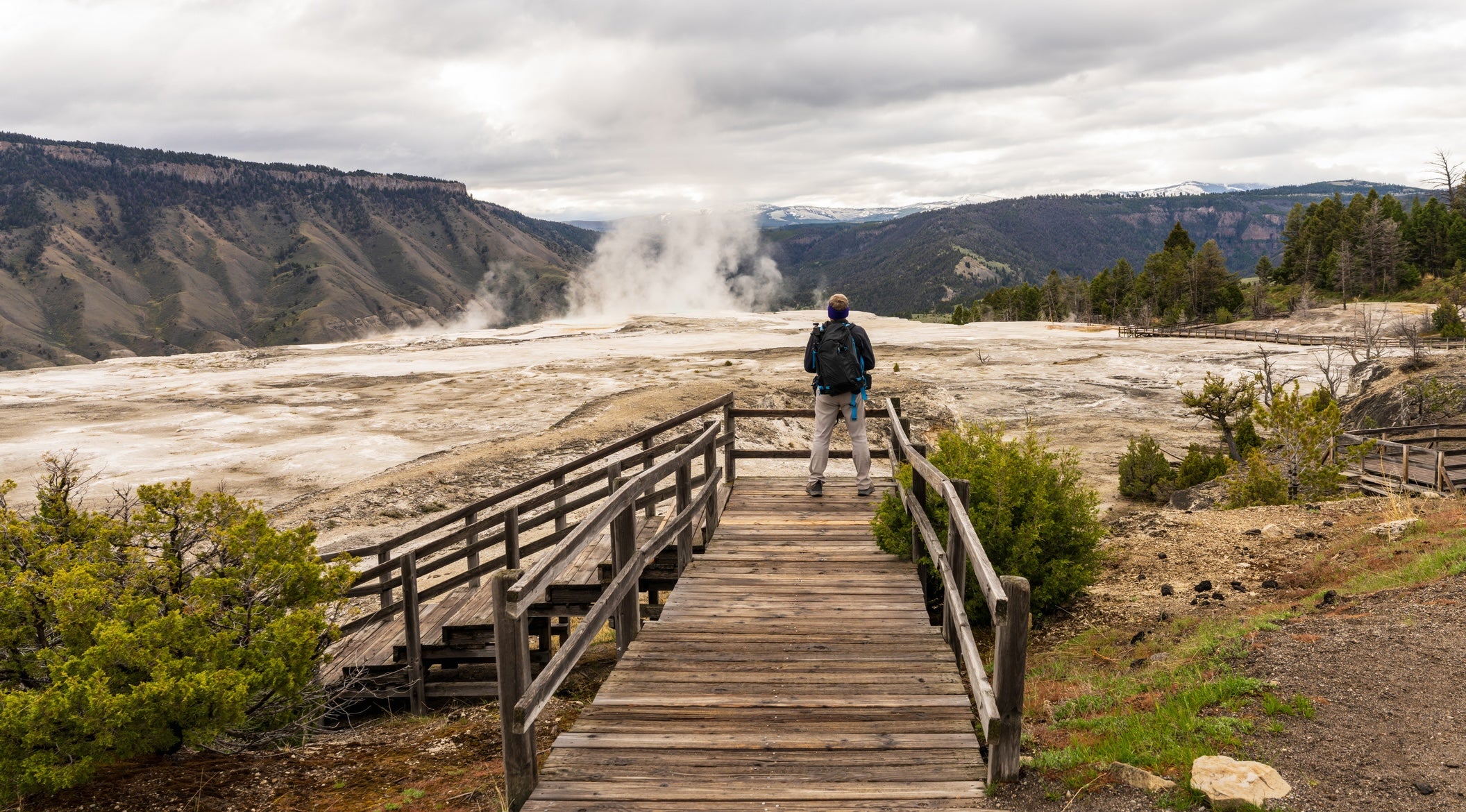
According to court documents filed in the U.S. District Court for the District of Wyoming, Bedient was observed walking directly upon the fragile crust of the Mammoth Hot Springs terraces. These formations are not merely rock but are living geological structures created over millennia by the deposition of calcium carbonate. U.S. Attorney Darin Smith, representing the prosecution, noted that Bedient’s actions displayed a profound disregard for both federal law and personal safety. Smith emphasized that the thin crusts of thermal areas often conceal reservoirs of boiling water and acidic mud, stating that the defendant’s conduct could have easily resulted in him becoming "thermal soup."
The Geological and Biological Impact of Thermal Trespass
The Mammoth Hot Springs area is distinct from the geyser basins found elsewhere in Yellowstone. While sites like Old Faithful are characterized by rhyolite—a volcanic rock high in silica—Mammoth is built upon limestone. As hot, carbon-dioxide-rich water rises through the limestone, it dissolves the calcium carbonate and carries it to the surface. Upon reaching the air, the carbon dioxide is released, and the calcium carbonate is deposited as travertine. This process creates the "cascading" appearance of the terraces.
The damage caused by Bedient is considered permanent by park geologists. Unlike traditional soil or sand, travertine is a brittle, mineralized structure. Footprints crushed into these terraces do not "wash away" with rainfall; instead, they alter the delicate flow of water across the surface. Because the growth of the terraces is dictated by the precise path of mineral-rich water, a single set of footprints can divert water flow, causing entire sections of the terrace to dry up and die while forcing new growth in unintended areas.
Furthermore, these thermal features are home to thermophiles—microorganisms that thrive in extreme heat. These bacteria and archaea create the vibrant oranges, yellows, and greens seen in the pools. Walking on these microbial mats kills the organisms instantly, stripping the terraces of their color and biological integrity. The prosecution argued that the five-day jail sentence was necessary to reflect the gravity of this environmental "vandalism," which undermines decades of natural formation.
A Timeline of Escalating Misconduct in Yellowstone
The sentencing of Eric Bedient is the latest in a string of high-profile legal actions taken against visitors who violate the National Park Service (NPS) regulations regarding thermal areas. As social media continues to drive "encounters" with nature, park officials have seen a rise in "thermal trespass" cases, leading to a stricter "zero-tolerance" policy from the Department of Justice.
In early 2024, the park gained international attention when actor Pierce Brosnan was cited for walking in a restricted thermal area at Mammoth Hot Springs. Brosnan eventually pleaded guilty, receiving a $500 fine and an order to pay $1,000 to a non-profit organization dedicated to park preservation. While Brosnan’s case did not result in jail time, legal experts suggest that the judiciary is increasingly leaning toward incarceration for non-celebrity offenders to provide a stronger deterrent.
Later in 2024, a 21-year-old man from Washington was sentenced to seven days in jail and banned from Yellowstone for two years after trespassing on the thermal crust at Steamboat Geyser in the Norris Geyser Basin. Similarly, in 2021, a Connecticut woman served seven days in jail for walking on the thermal ground at Norris. Perhaps the most egregious recent case occurred in 2020, when two men were sentenced to ten days in jail and banned from the park for five years after they were caught standing on the cone of Old Faithful Geyser, one of the most iconic and protected features in the United States.
The Lethal Reality of Yellowstones Hydrothermal Features
The insistence on staying on boardwalks is not merely a matter of environmental protection; it is a critical safety requirement. Yellowstone’s hydrothermal features have claimed more lives than any other natural hazard in the park, including grizzly bear attacks and lightning strikes. Since the park’s inception, more than 20 people have died due to thermal burns.
One of the most harrowing reminders of these dangers occurred in 2016. Colin Scott, a 21-year-old from Portland, Oregon, wandered off the boardwalk at the Norris Geyser Basin in search of a place to "hot pot," or soak in the thermal waters. Scott slipped and fell into a boiling, acidic spring. By the time recovery teams could attempt to reach him the following day, his body had been completely dissolved by the highly acidic, near-boiling water.
Federal prosecutors referenced the Scott case implicitly when discussing Bedient’s sentencing. The "thermal soup" comment by U.S. Attorney Darin Smith highlights the reality that the crust in thermal areas can be as thin as a sheet of ice, masking a lethal environment beneath. When visitors step off the boardwalk, they are gambling with a death that is both instantaneous and agonizing.
Enforcement and the Role of the U.S. Attorney’s Office
The prosecution of Eric Bedient was handled by the U.S. Attorney’s Office for the District of Wyoming, which oversees federal crimes committed within the park’s boundaries. Because Yellowstone is federal land under exclusive jurisdiction, offenses are tried in federal court rather than state court.
"We will continue to hold individuals accountable to protect lives and preserve this unique, irreplaceable landscape," Smith stated following the sentencing. "When actions threaten these national treasures for future generations, the legal system must intervene."
The penalties for breaking park rules are determined by federal judges and vary based on the severity of the damage, the intent of the individual, and their prior record. While fines are common, the shift toward jail time reflects a growing frustration among park rangers and federal officials regarding the "touron" phenomenon—a portmanteau of "tourist" and "moron" used by locals and park enthusiasts to describe visitors who engage in dangerous or disrespectful behavior.
National Park Service Regulations and Visitor Guidelines
Yellowstone National Park encompasses over 2.2 million acres and hosts nearly 5 million visitors annually. Managing this volume of people requires strict adherence to safety protocols, particularly in the 10,000 thermal features scattered throughout the park. The National Park Service has issued clear, non-negotiable mandates for all visitors entering thermal basins:
- Strict Boardwalk Adherence: Visitors must remain on designated boardwalks and paved trails at all times. The ground in thermal areas may look solid but is often a fragile crust over boiling water.
- Prohibition of Touching: It is illegal to touch thermal runoff or the features themselves. The minerals and bacteria are easily contaminated by human oils and chemicals, and the water temperatures are frequently high enough to cause third-degree burns instantly.
- No Swimming or Soaking: Swimming in any water that is entirely of thermal origin is strictly prohibited. Beyond the danger of scalding, many of these pools are highly acidic or contain toxic levels of chemicals.
- Pet Restrictions: Pets are prohibited in all thermal areas, even if they are carried. The unpredictable nature of steam vents and the proximity of boiling water pose a fatal risk to domestic animals.
Broader Implications for National Park Conservation
The Bedient case highlights a broader struggle facing the National Park Service: the balance between public access and resource preservation. As Yellowstone approaches its 154th anniversary, the pressure on its infrastructure is at an all-time high. The "Living Sculptures" of Mammoth Hot Springs are particularly vulnerable because they are constantly changing; unlike a granite canyon, a travertine terrace is a "soft" geological feature.
Environmental analysts suggest that the cost of Bedient’s five-day jail stay to the taxpayer is a necessary investment in the park’s future. By making an example of those who ignore the rules, the Department of Justice hopes to shift the culture of tourism toward one of stewardship rather than consumption.
As the 2026 summer season approaches, Yellowstone officials are expected to increase patrols in high-traffic areas like Mammoth and the Norris Geyser Basin. The message from the federal government is clear: the boardwalks are not suggestions, and the "fragile crust" of the park is a boundary that no visitor should cross. For Eric Bedient, the five days spent in a jail cell serve as a costly lesson in the value of a few steps taken where they did not belong.



 Chandra Hamzah
 Gabriela Annisa
 Tatiana Tantri Indah Sari
 Hendra Ismail
 Walid Sujud Trenggono
 Budi Mulyono