
 Budi Mulyono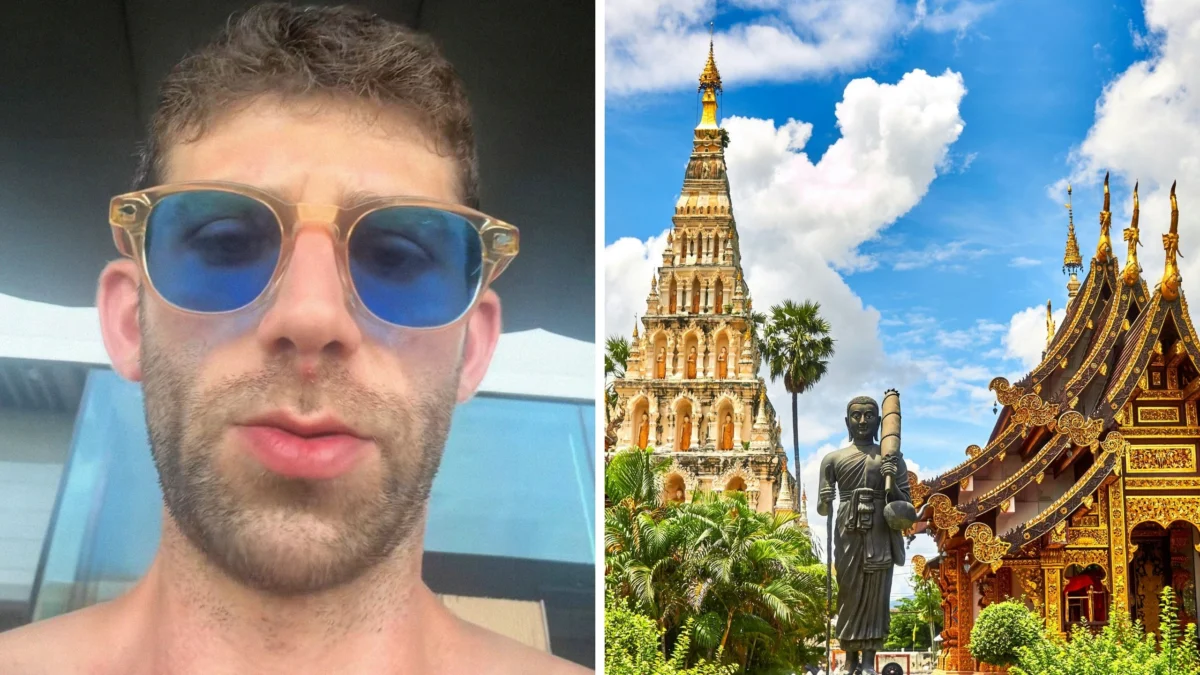
A honeymooning American couple’s celebratory trip to Thailand took an expensive and distressing turn after they were targeted by a sophisticated, multi-layered tourist scam in the heart of Bangkok. Logan Miller and his wife, who documented their experience on the social media platform TikTok, revealed how a series of seemingly chance encounters with friendly locals led them into a coordinated trap involving a "private" temple visit, a discounted tuk-tuk tour, and a high-pressure custom suit fitting. The ordeal resulted in an unauthorized $1,000 charge on their credit card for goods that were never delivered, highlighting a resurgence of long-standing predatory practices targeting international visitors in Southeast Asia.
The incident gained significant public attention after Miller, posting under the handle @loganmiller489, shared a detailed video recounting the chronology of the scam. The post has since garnered over 125,000 views and hundreds of comments from other travelers who reported nearly identical experiences. The narrative serves as a cautionary tale regarding the "closed temple" or "special holiday" scam, a fraudulent scheme that has plagued Bangkok’s tourism sector for decades despite repeated warnings from local authorities and international travel guides.
A Chronology of the Deception
The sequence of events began while the couple was exploring Bangkok’s vibrant Chinatown district. According to Miller, they were approached by a man who appeared knowledgeable and spoke fluent English. Upon learning the couple was on their honeymoon, the man exhibited an enthusiastic response, claiming they were in luck because a specific sacred site—which he described as the "oldest temple in Thailand"—was open to the public for only one day that month.
In a move that Miller later described as appearing "out of thin air," a tuk-tuk driver immediately appeared and offered to transport the couple to the temple for the nominal fee of 60 baht, approximately $1.70 USD. This low-cost transportation is a hallmark of the scam, designed to make the tourist feel they have secured an exclusive deal. Miller noted that at the time, the experience felt surreal, comparing the perceived luxury and hospitality to a scene from the television series The White Lotus.
Upon arrival, the couple found the temple entirely empty, a stark contrast to the crowded tourist hubs elsewhere in the city. At this location, a second individual approached them, reinforcing the narrative of exclusivity and directing them toward a specific tailor shop. This individual claimed the shop offered world-class quality at negligible prices and provided international shipping, further entrenching the couple in the scripted journey.
The situation escalated at the suit shop, where Miller describes being met by a charismatic salesman he characterized as a "Thai Jordan Belfort." The salesman employed high-pressure sales tactics, offering a package of three custom-tailored suits for $100 each. Influenced by the curated atmosphere and the offer of free beverages, the couple agreed to the purchase and underwent measurements. Following the fitting, the tuk-tuk driver transported them to a pre-arranged boat tour, which Miller later described as a substandard experience through polluted waterways.
Discovery of Financial Fraud
The realization that they had been deceived occurred during the boat tour. Miller reported that the "too good to be true" nature of the day’s events began to settle in, prompting him to conduct an immediate search on his mobile device. The search results confirmed his fears, detailing the exact scenario they had just experienced as one of Bangkok’s most notorious tourist traps.
The situation moved from a high-priced sales tactic to outright financial fraud when the couple reviewed their credit card statement via a mobile banking app. While they believed they had agreed to a total of $300 for the suits, the shop had processed a transaction for $1,000. "They added an extra zero," Miller stated in his video. Despite immediate attempts to address the issue, the transaction remained in a "pending" status, preventing an instantaneous chargeback through their financial institution. In subsequent updates, Miller confirmed that the promised suits were never shipped and no tracking information was provided, suggesting the entire retail front may have been a facade for credit card skimming or unauthorized overcharging.

The Mechanics of the Bangkok "Tuk-Tuk Scam"
The experience described by the Millers is a textbook example of a commission-based fraud system that has operated in Bangkok for over thirty years. The scam relies on a network of "shills" (individuals who pose as helpful locals), tuk-tuk drivers, and unethical business owners.
The primary components of the scam include:
- The Misinformation Hook: Tourists are told that a major attraction, such as the Grand Palace or Wat Pho, is closed for a "cleaning day" or a "royal ceremony."
- The Alternative Suggestion: The shill suggests a "Secret Buddha" or "Lucky Buddha" temple that is allegedly only open for a limited time.
- The Subsidized Transport: Tuk-tuk drivers offer services for 20 to 60 baht. In reality, these drivers are compensated by tailor shops and gem stores with fuel coupons or cash commissions for every tourist they deliver to the storefront.
- The High-Pressure Sale: Once inside the shop, tourists are subjected to sophisticated sales techniques. In the case of tailors, the "high quality" fabrics shown are often replaced with cheaper synthetics during production, or, as in the Millers’ case, the items are never manufactured at all.
Data from travel security firms indicates that while violent crime against tourists in Thailand remains low, white-collar "nuisance" scams and credit card fraud are the most common negative experiences reported by Western visitors. The Tourism Authority of Thailand (TAT) has frequently issued advisories, but the decentralized nature of the scam networks makes them difficult to eradicate entirely.
Viral Response and the "Canon Event" Narrative
The reaction to Miller’s TikTok post highlights the staggering prevalence of this issue. Commenters from around the globe shared their own accounts of the scam, with some dating back to the early 2010s. One user, identified as Kelly, referred to the experience as a "canon event for every young couple who goes to Thailand," suggesting that the scam is so common it has become an unofficial, albeit unfortunate, rite of passage for inexperienced travelers.
While many commenters expressed sympathy, others provided practical advice on how to mitigate the damage. Several users urged the couple to initiate a "Section 75" claim (under UK law) or a standard credit card dispute, noting that major providers like Visa and American Express often side with the consumer in cases of documented international fraud. One commenter recounted a 2016 incident where they successfully charged back $1,300 after a similar encounter, though they noted that in their case, subpar suits did eventually arrive.
Official Guidance and Preventative Measures
For international travelers, the Millers’ experience underscores the necessity of maintaining a high level of skepticism regarding unsolicited advice in high-traffic tourist zones. The Royal Thai Police and the Tourist Police Bureau (accessible via the emergency number 1155) offer the following guidelines to avoid falling victim to similar schemes:
- Verify Site Closures: Never take the word of a stranger regarding the closure of a public landmark. Check official websites or speak directly to uniformed staff at the entrance gates.
- Be Wary of "Too Cheap" Transport: A tuk-tuk ride offered for less than the standard market rate (usually 100-200 baht depending on distance) almost always involves a hidden agenda, typically involving stops at shops where the driver receives a commission.
- Inspect All Receipts: When using a credit card, always check the physical receipt and the digital notification from your bank before leaving the premises. Ensure the currency conversion and the number of zeros are correct.
- Use Reputable Tailors: If seeking custom clothing, travelers are advised to research established shops with long-standing reputations and physical storefronts that have been verified by multiple independent review sources.
Broader Implications for Thailand’s Tourism Recovery
This incident comes at a sensitive time for Thailand’s tourism industry, which is striving to return to pre-pandemic visitor levels. In 2023, Thailand welcomed over 28 million international visitors, and the government has set an ambitious goal of 35 million for 2024. However, the viral nature of scam reports on platforms like TikTok and Instagram poses a reputational risk.
Industry analysts suggest that the "White Lotus effect"—a term used to describe the surge in luxury tourism following the popularity of the HBO show—has made some travelers more susceptible to scams that play on the desire for "exclusive" or "hidden" experiences. When scammers use language that suggests a tourist is getting a "local secret," they bypass the victim’s natural defenses.
As of the latest update, Logan Miller and his wife have moved on to Khao Sok in Southern Thailand, attempting to salvage the remainder of their honeymoon. While the financial loss is significant, the couple indicated they are focusing on the future, with Miller jokingly commenting, "At this point, what suits?" Their story remains a stark reminder that in the world of international travel, if an opportunity seems too good to be true, it almost certainly is.



 Anjar Salim
 Chandra Hamzah
 Tatiana Tantri Indah Sari
 Lukman Taruna Persada Ramadan
