Tatiana Tantri Indah Sari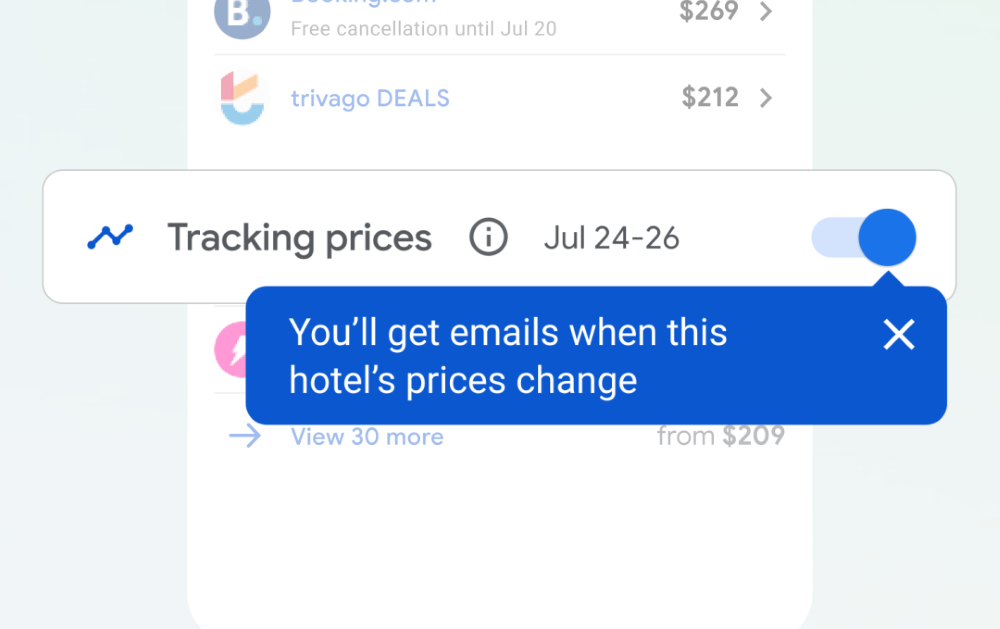
Google has significantly expanded its travel planning toolkit by introducing price-drop alerts for individual hotels, a move that allows travelers to monitor specific properties for rate changes rather than just entire cities. This enhancement, rolled out on a Friday, represents a crucial evolution in Google’s ongoing strategy to embed itself more deeply into every stage of the travel booking journey, effectively creating another critical touchpoint where the tech giant sits between the traveler and their ultimate booking decision. The new feature enables users to toggle on price tracking for a chosen hotel directly through Google Search or the dedicated google.com/hotels platform. Once activated, signed-in users will receive email notifications if the rates for their selected dates undergo a significant change, offering a valuable tool for price-sensitive consumers. This functionality is now globally available in both English and Spanish, underscoring Google’s commitment to providing a consistent and comprehensive user experience across its vast international user base.
Deepening Google’s Travel Footprint: A Strategic Evolution
This latest update is not an isolated development but rather a calculated step in Google’s sustained effort to become the unequivocal starting point for travel planning. For over a decade, Google has incrementally built out a robust suite of travel-related services, transitioning from a mere search engine to a comprehensive travel aggregator and planner. Its ambition is clear: to capture user intent early in the decision-making process and guide them through research, comparison, and ultimately, booking, all within its own ecosystem or through partners facilitated by its platform.
The travel industry, a multi-trillion-dollar global market, is a prime target for Google’s expansive ambitions. With high average transaction values and complex decision-making processes, travel offers numerous opportunities for advertising revenue and data collection. By providing tools like individual hotel price alerts, Google not only enhances user convenience but also gathers invaluable data on consumer preferences, specific travel intentions, and price elasticity. This data, in turn, can be leveraged to refine its search algorithms, personalize recommendations, and optimize its advertising products for hotels and online travel agencies (OTAs) that rely on Google for visibility.
A Decade of Travel Innovation: Google’s Chronology in the Travel Sphere
Google’s journey into the travel sector began in earnest long before the current feature. Its initial forays involved integrating basic flight and hotel search results directly into its main search engine. However, the pivotal moment arrived in 2010 with the acquisition of ITA Software, a highly sophisticated flight information and pricing system, for approximately $700 million. This acquisition laid the groundwork for Google Flights, which launched in 2011, quickly becoming a dominant force in flight search due to its speed, accuracy, and intuitive interface.
Following the success of Google Flights, the company turned its attention to hotels. What began as ‘Google Hotel Finder’ eventually evolved and integrated seamlessly into the broader Google Travel platform, accessible via google.com/hotels and directly through Google Search results. This integrated platform allows users to search for hotels, compare prices across various providers (including OTAs and direct hotel websites), view photos, read reviews, and explore amenities.
Over the years, Google has consistently added layers of functionality. It introduced "Things to do" features, destination guides, and itinerary planning tools, all aimed at keeping users within its environment for the entirety of their trip planning. The introduction of city-level price tracking was an important precursor to the current individual hotel alerts, signaling Google’s intent to offer more granular price monitoring. This progression demonstrates a clear strategic roadmap: start broad, then refine and specialize, offering increasingly personalized and actionable insights to travelers. Each new feature serves to solidify Google’s position as a one-stop shop, reducing the need for users to navigate to competitor sites.
The Mechanics of the New Feature: Precision Price Tracking
The individual hotel price-drop alert system is designed for simplicity and effectiveness. When a user searches for a specific hotel on Google Search or google.com/hotels, an option to "Track prices" or similar prompt will appear. Upon activation, the system monitors the rates for the user’s chosen check-in and check-out dates. The "significant change" threshold, while not explicitly defined in precise percentage terms by Google, typically implies a noticeable reduction in price that would be genuinely appealing to a budget-conscious traveler. This prevents users from being inundated with alerts for minor, inconsequential fluctuations.
The alerts are delivered via email to the signed-in Google account associated with the tracking request. This reliance on email ensures that users receive timely notifications even when they are not actively browsing Google’s travel platforms, bringing them back to Google when an attractive deal emerges. The global rollout and multilingual support (English and Spanish at launch) indicate a broad strategic deployment, targeting a significant portion of the online travel market from day one.
The Shifting Sands of Traveler Behavior: Supporting Data
The introduction of individual hotel price alerts is directly responsive to prevailing trends in traveler behavior. In today’s digital age, consumers are highly price-sensitive and increasingly adept at comparison shopping. Research consistently shows that price is a primary determinant in booking decisions for a vast majority of travelers. A 2023 survey, for instance, indicated that over 70% of travelers prioritize finding the best deal. The average traveler visits multiple websites – often 20 or more – and spends weeks researching before making a significant booking decision.
Furthermore, cart abandonment rates in the online travel sector can be high, often exceeding 80%, with price being a leading factor. Many users abandon a booking not because they’ve found a better deal elsewhere immediately, but because they are waiting for a price drop or want to continue researching. Google’s new tool directly addresses this behavior by proactively notifying users of favorable price movements, potentially converting hesitant browsers into confirmed bookers.
Email marketing remains a powerful channel, with average open rates for travel-related emails often exceeding 20% and click-through rates proving robust for personalized, value-driven content. A price-drop alert, being highly relevant and actionable, is likely to command even higher engagement, driving users back to Google’s platform to complete their booking. This reinforces Google’s position not just as a search engine, but as a critical engagement platform.
Implications for the Travel Ecosystem
The ramifications of Google’s enhanced price-drop alerts are far-reaching, impacting travelers, Google itself, online travel agencies, direct hotel booking channels, and metasearch engines.
For Travelers: The most immediate benefit is increased convenience and potential cost savings. Travelers can save time and effort previously spent manually checking hotel rates across various platforms. The alerts empower them to make more informed decisions, confident that they are not missing out on better deals. This reduces booking anxiety and enhances the overall travel planning experience.
For Google: This feature significantly strengthens Google’s competitive advantage. By offering more granular and proactive tools, Google further solidifies its position as the de facto starting point for travel research. This leads to increased user engagement, longer dwell times on Google properties, and more frequent returns to its ecosystem. Critically, it provides Google with even richer data on user intent, preferences, and booking triggers, which can be monetized through its highly sophisticated advertising platform. Hotels and OTAs pay Google to appear prominently in search results and hotel ads, and by facilitating more bookings, Google enhances the value proposition of its ad products.
For Online Travel Agencies (OTAs) and Metasearch Engines: The impact here is likely to be a mixed bag, leaning towards increased competition. OTAs like Booking.com and Expedia, which traditionally rely on extensive marketing and comprehensive inventory to attract users, will face stiffer competition at the top of the funnel. Google’s direct notification system could potentially disintermediate some of the comparison shopping steps that travelers might previously have performed on OTA or metasearch sites. Metasearch engines such as Kayak and Trivago, whose core value proposition is price comparison across multiple providers, are in direct competition with Google’s increasingly robust offerings. They will need to innovate further, perhaps focusing on unique value adds, loyalty programs, or niche travel segments to maintain their relevance. OTAs will also need to re-evaluate their advertising spend on Google versus direct marketing efforts, as Google increasingly becomes a direct competitor for customer attention.
For Hotels (Direct Bookings): For hotels, the impact is nuanced. On one hand, Google provides immense visibility and traffic. Hotels that optimize their Google Business Profiles and invest in Google Hotel Ads can benefit from increased exposure to highly motivated travelers. On the other hand, Google’s platform acts as an intermediary. While it may drive bookings, those bookings still originate through Google, potentially increasing reliance on the platform and making it harder to drive truly direct bookings that bypass commissions entirely. Hotels will need to strategically balance their distribution channels, leveraging Google for reach while simultaneously investing in their own direct booking incentives and loyalty programs to cultivate direct customer relationships.
Industry Reactions and Future Outlook
While Google has not released specific statements from competitors, industry analysts generally view this move as a natural progression for the tech giant. "Google’s strategy is clear: own the user journey from inspiration to booking," stated a leading travel industry analyst, who requested anonymity due to client relationships. "Each new feature, like these price alerts, is designed to reduce friction for the user while simultaneously increasing Google’s stickiness and data capture capabilities. It’s a win for Google and often for the consumer, but it puts immense pressure on other players in the ecosystem."
Representatives from some OTAs, speaking off the record, acknowledge Google’s growing influence but emphasize their own strengths. "We continue to focus on providing a curated experience, comprehensive customer service, and loyalty programs that Google doesn’t offer," said a marketing director at a major OTA. "While Google excels at search, we excel at facilitating the entire booking experience and supporting travelers throughout their trip."
Looking ahead, Google is expected to continue refining its travel products. This could include integrating more artificial intelligence for personalized recommendations, predictive analytics for optimal booking times, or even exploring direct booking capabilities for certain inventory. The future of travel planning appears increasingly integrated with powerful tech platforms, and Google is clearly positioning itself at the forefront of this evolution, continuously innovating to make travel planning as seamless and efficient as possible, while simultaneously strengthening its formidable market position.




 Chandra Hamzah
 Gabriela Annisa
 Budi Mulyono
 Anjar Salim