Tatiana Tantri Indah Sari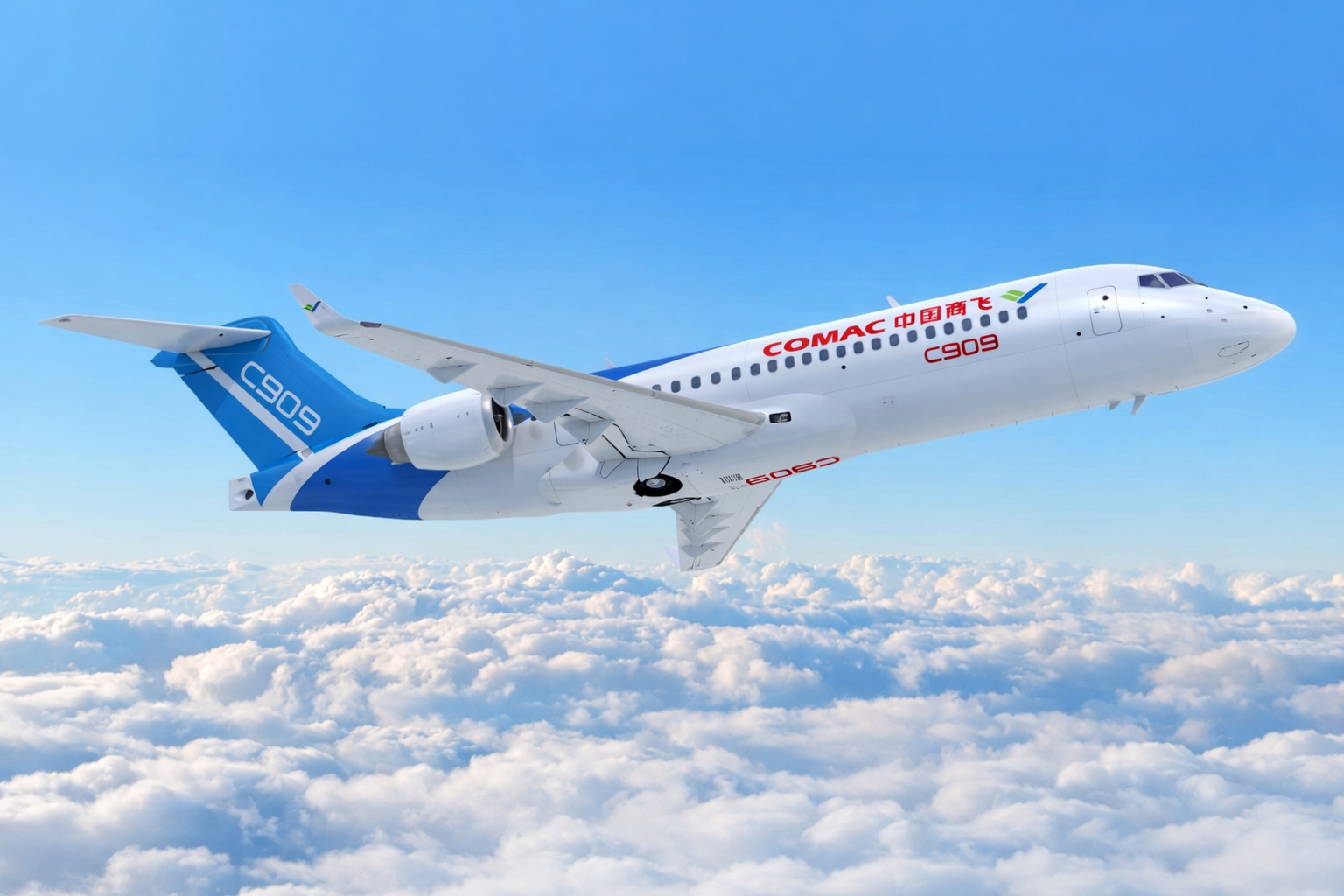
Vietnam’s largest airline, Vietjet, has formally entered into an agreement to lease ten Chinese-built Comac C909 regional jet aircraft, a transaction that, while seemingly modest in scale, carries significant implications for the global aviation industry and the evolving dynamics of international aerospace competition. The deal represents a pivotal moment for China’s state-owned aircraft manufacturer, Comac, as it secures a notable international customer for its regional jet, potentially paving the way for broader acceptance of Chinese-made passenger aircraft beyond its domestic market.
Vietjet, renowned for its aggressive expansion and low-cost carrier model, currently operates a substantial fleet exceeding 130 aircraft, predominantly comprising Airbus A320 and A321 family jets, with hundreds more on order from both Airbus and Boeing. The introduction of Comac aircraft into such a fleet, historically dominated by Western manufacturers, signifies a strategic diversification for the Vietnamese carrier. According to Vietjet, this agreement is designed to facilitate the gradual deployment of Comac aircraft on routes connecting Vietnam and China, building upon an existing operational arrangement that has seen a pair of C909s (previously marketed as the ARJ21) flown in partnership with China’s Chengdu Airlines.
Comac’s Journey: From State Mandate to Market Player
Commercial Aircraft Corporation of China (Comac), founded in 2008, emerged as a direct manifestation of China’s ambitious strategy to develop indigenous passenger airliners and challenge the long-standing duopoly of Boeing and Airbus. This state-owned enterprise was established with the explicit mandate to foster China’s self-reliance in aerospace manufacturing, a cornerstone of the nation’s "Made in China 2025" industrial policy. The development of the ARJ21 (Advanced Regional Jet for the 21st Century), later rebranded as the C909, was a critical early project for Comac, preceding the more ambitious narrow-body C919.
The ARJ21 project itself has a protracted history, with its origins tracing back to the late 1990s under the former Aviation Industry Corporation of China (AVIC). The aircraft’s first prototype rolled out in 2007, followed by its maiden flight in November 2008. However, its path to commercial service was notably extended, marked by extensive testing and a rigorous certification process by the Civil Aviation Administration of China (CAAC), which lasted several years. This extended development period underscored the complexities and challenges of designing and certifying a modern passenger aircraft, particularly for a nation seeking to establish its credibility in a highly regulated global industry. The ARJ21 finally received its type certificate in December 2014 and commenced commercial operations with Chengdu Airlines in June 2016.
The C909: China’s Regional Aviation Flagship
The C909, or ARJ21, is designed to serve the regional jet segment, offering a seating capacity typically ranging from 78 to 97 passengers. Its specifications position it as a direct competitor to established Western regional jets such as the Embraer E-Jet family (E170/E175) and the Bombardier CRJ series (now under Mitsubishi Heavy Industries). The aircraft is powered by two General Electric CF34-10A engines, a widely used and reliable turbofan engine, which helps address concerns about reliability and maintenance for a new airframer. It boasts a standard range of approximately 2,225 kilometers (1,200 nautical miles), with an extended range variant capable of around 3,700 kilometers (2,000 nautical miles), making it suitable for short to medium-haul regional routes.
Since its entry into service, the C909 has primarily been operated by Chinese domestic carriers, including Chengdu Airlines, China Eastern Airlines, Air China, and China Southern Airlines. As of late 2023, Comac had delivered over 100 ARJ21/C909 aircraft, with the vast majority serving routes within China, particularly connecting smaller cities and supporting hub-and-spoke networks. Its operational performance within China has provided Comac with invaluable data and experience in aircraft support, maintenance, and reliability, essential for building a reputation that could attract international buyers.
Vietjet’s Fleet Strategy: Diversification and Regional Connectivity
Vietjet’s decision to integrate the C909 into its fleet represents a strategic pivot for the low-cost carrier. While its existing fleet of Airbus A320s and A321s efficiently serves its high-density domestic and international routes, the C909 offers a different operational profile. Regional jets are particularly well-suited for routes with lower passenger demand, shorter distances, or where airport infrastructure might be more constrained. This allows airlines to open new markets or increase flight frequencies without oversaturating routes with larger aircraft.
For Vietjet, the C909’s role is clearly defined: enhancing regional connectivity, particularly between Vietnam and China. China represents an enormous and growing outbound tourism market, and Vietnam is a favored destination. By deploying the C909, Vietjet can service a wider array of secondary cities in China and Vietnam, fostering direct connections that might not be economically viable with larger A320-family aircraft. This move aligns with Vietjet’s broader strategy of aggressive expansion and market penetration across Southeast Asia and beyond.
The current agreement to lease 10 aircraft follows a preceding "arrangement" where Vietjet collaborated with Chengdu Airlines to operate C909s. This earlier phase, likely a trial or partnership initiated around 2022-2023, would have provided Vietjet with firsthand experience regarding the aircraft’s operational characteristics, maintenance requirements, and passenger acceptance. This practical exposure would have been crucial in building confidence in the C909 before committing to a larger lease deal. Such partnerships are common in the industry for introducing new aircraft types or entering new markets.
Strategic Rationale: Tapping the China Market
The primary rationale behind Vietjet’s C909 acquisition extends beyond mere fleet diversification. It is deeply intertwined with the carrier’s ambition to deepen its footprint in the lucrative China market. Vietnam and China share a long border and significant economic ties, making air travel a critical component of bilateral trade and tourism. Post-pandemic, the resumption of travel between the two nations has been a priority for both governments and airlines.
By operating Chinese-made aircraft, Vietjet could potentially benefit from closer relationships with Chinese aviation authorities, lessors, and maintenance providers. This could translate into more favorable route allocations, streamlined operational approvals, or even financial incentives. From a geopolitical standpoint, the deal could be seen as a gesture of goodwill and economic cooperation, enhancing bilateral relations despite occasional historical complexities. For Vietjet, it’s a pragmatic business decision aimed at optimizing its network and capturing market share in a strategically vital region.
Industry Reactions and Future Outlook
The Vietjet-Comac deal has garnered significant attention from industry analysts and competitors. For Comac, it represents a crucial validation of its products and a significant step in its long-term ambition to become a global aerospace player. Securing an international customer, especially one as dynamic and growth-oriented as Vietjet, lends credibility to the C909’s performance and commercial viability. This success could serve as a powerful marketing tool, potentially influencing other airlines in Southeast Asia, Africa, or Latin America that are considering regional jet acquisitions.
However, challenges remain. Integrating a new aircraft type from a different manufacturer presents operational complexities for Vietjet. This includes establishing new supply chains for spare parts, training pilots and maintenance crews on a new platform, and ensuring commonality with existing systems where possible. While Comac has made strides in its support infrastructure within China, extending this globally will be a key test. Analysts will be closely watching the C909’s operational reliability and cost-effectiveness within Vietjet’s fleet.
For Western manufacturers like Embraer and ATR, the deal signals increased competition in the regional jet market. While Embraer has a dominant position globally, Comac’s entry into the international market, backed by state support, could lead to aggressive pricing and financing options that could entice other carriers.
Geopolitical Undercurrents in the Skies
Beyond commercial considerations, the Vietjet-Comac agreement carries geopolitical undertones. It underscores China’s persistent drive for technological self-sufficiency and its ambition to project its industrial power globally. The aerospace sector is not just an economic enterprise but also a symbol of national prestige and strategic capability. A successful export of the C909 helps solidify China’s position as a capable aircraft manufacturer.
For Vietnam, a nation that carefully balances its relationships with major global powers, this deal could be interpreted as a pragmatic economic decision that also diversifies its strategic partnerships. While maintaining strong ties with Western aerospace giants, engaging with Comac allows Vietnam to tap into China’s burgeoning aviation industry and potentially secure more favorable terms for fleet expansion, especially for specific regional needs. It reflects a multi-alignment strategy, leveraging opportunities from various sources to fuel its economic growth and connectivity.
Challenges and Opportunities Ahead
The road ahead for both Comac and Vietjet will involve navigating several challenges. For Comac, sustained operational performance, robust after-sales support, and continuous product improvement will be critical to building long-term trust and expanding its international customer base. The C909’s success in Vietnam will be a litmus test for the more globally ambitious C919, which aims to compete directly with the Airbus A320 and Boeing 737. Any issues experienced by Vietjet could significantly impact Comac’s reputation.
For Vietjet, the opportunity lies in successfully integrating the C909 into its network, optimizing its operational efficiency, and capitalizing on the enhanced connectivity with China. If the aircraft performs well, it could provide a cost-effective solution for regional expansion and solidify Vietjet’s position as a leader in Southeast Asian aviation. The deal also opens doors for future cooperation, potentially including orders for the C919 as Vietjet continues its rapid growth trajectory.
In conclusion, the lease agreement between Vietjet and Comac for ten C909 regional jets transcends a simple commercial transaction. It is a strategic move that reflects Vietjet’s innovative approach to fleet management and market expansion, while simultaneously marking a significant milestone for Comac’s international aspirations. This deal signals a gradual but undeniable shift in the global aviation landscape, where new players, particularly from Asia, are beginning to challenge established norms and redefine the contours of aerospace manufacturing and air travel. The skies over Southeast Asia are poised to witness a new chapter in aviation competition and cooperation, with the Comac C909 playing an increasingly visible role.




 Chandra Hamzah
 Gabriela Annisa
 Budi Mulyono
 Anjar Salim