
 Anjar Salim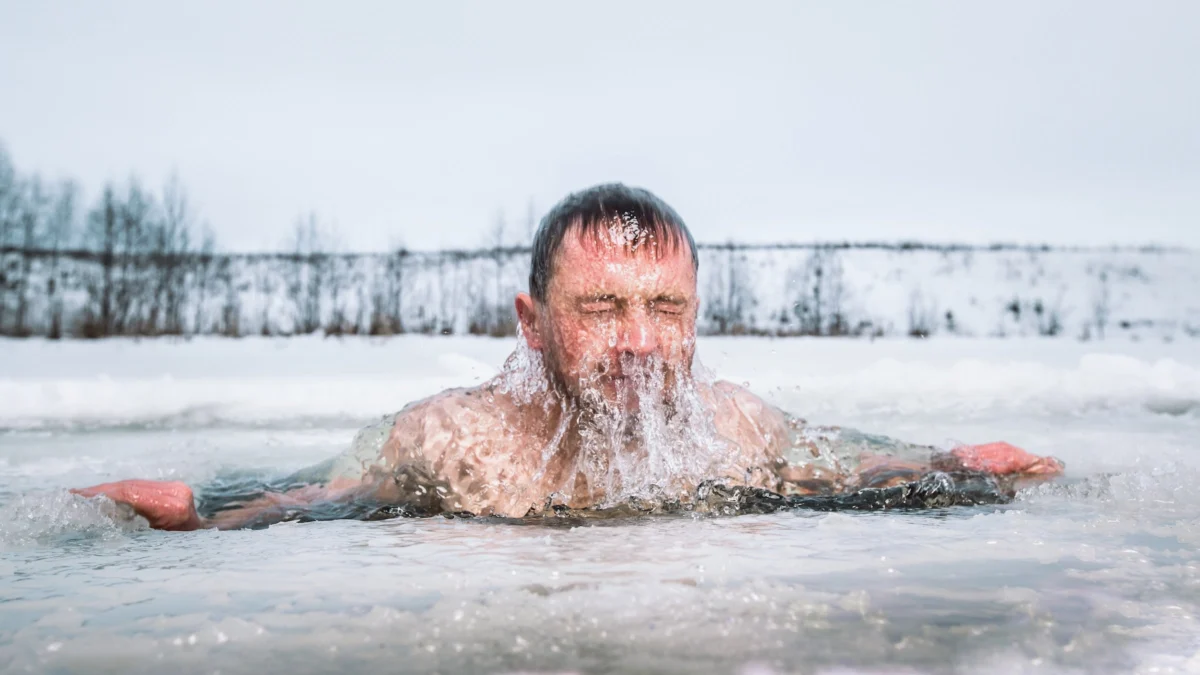
The global wellness market, currently valued at over $1.8 trillion, has seen few segments grow as rapidly or as visibly as cold water immersion. What was once the domain of elite athletes and eccentric "ice men" has transformed into a $300 million industry, fueled by social media imagery of individuals hacking through frozen lakes or submerging themselves in high-tech, temperature-controlled tubs. However, as the practice moves from the fringes of biohacking into the mainstream, a growing body of scientific evidence suggests that the enthusiasm for cold plunging is frequently outpacing our understanding of its physiological effects. While proponents claim benefits ranging from metabolic boosts to enhanced mental clarity, researchers are sounding a note of caution regarding the common mistakes that can negate these benefits or, in some cases, pose significant health risks.
The Evolution of the Cold Plunge Phenomenon
The practice of using cold water for health—often referred to as cryotherapy or hydrotherapy—has roots stretching back to ancient civilizations, including the Greeks and Romans. However, the modern iteration of the "cold plunge" gained significant cultural momentum in the early 2020s. This surge was driven by a combination of high-profile influencers, a burgeoning interest in "hormetic stress" (the concept that brief exposures to stressors can strengthen the body), and the accessibility of specialized equipment.
By 2026, the market for at-home ice baths has matured, transitioning from DIY chest freezer conversions to sophisticated systems integrated with filtration and precision cooling. Despite this commercial success, the scientific foundation remains complex. "Cold plunging’s been used for a long time, but really the systematic studies have been quite few," notes Chris Minson, PhD, a professor at the University of Oregon and co-director of the Exercise and Environmental Physiology Lab. The disconnect between marketing claims and clinical data has created a landscape where consumers often follow protocols that are either ineffective or counterproductive.
The Scientific Spectrum: Known Benefits vs. Hyped Claims
To understand where enthusiasts go wrong, it is necessary to establish what the current literature actually supports. Research conducted at institutions such as the University of Ottawa and the University of Oregon has identified several potential physiological responses to cold immersion.
Key documented benefits include:
- Reduced Muscle Soreness: Particularly after high-intensity aerobic exercise, cold water can mitigate the perception of Delayed Onset Muscle Soreness (DOMS).
- Enhanced Alertness: The immediate release of noradrenaline and dopamine provides a sharp, albeit temporary, boost in cognitive focus and mood.
- Metabolic Stimulation: Cold exposure triggers "non-shivering thermogenesis," which can lead to a slight increase in metabolic rate as the body works to maintain its core temperature.
- Cellular Repair: Emerging research into mitophagy—a form of cellular "cleanup" of damaged mitochondria—suggests that specific durations of cold exposure may support longevity markers.
However, Kelli McCormick, PhD, a postdoctoral researcher at the University of Ottawa, warns that the literature is often contradictory. "There are some studies that are saying, ‘Yes, it’s helpful,’ and some that say the exact opposite in the same scenario," she explains. This inconsistency is often due to the "mistakes" in application that researchers are now beginning to categorize.
Mistake 1: The "Colder is Better" Fallacy
One of the most prevalent errors in the cold plunge community is the belief that lower temperatures automatically yield superior results. Social media often rewards the most extreme displays—plunging into water near 0°C (32°F). However, experts suggest that water that is too cold can be counterproductive.
McCormick’s research indicates that ultra-cold temperatures often prevent the participant from remaining submerged long enough to achieve deep tissue cooling. "If the water is 5°C (41°F), you’re only going to be getting skin cooling," she notes. "You’re not going to have that deeper muscular cooling." To achieve benefits like mitophagy or sustained metabolic shifts, studies often utilize water temperatures between 13°C and 15°C (55°F to 59°F), allowing for longer durations of 10 to 30 minutes.
Furthermore, starting with extreme cold without a "ramp-up" period can lead to a dangerous cold shock response, characterized by involuntary gasping and hyperventilation, which increases the risk of drowning or cardiovascular strain.
Mistake 2: Blunting Hypertrophy and Strength Gains
For the bodybuilding and strength-training community, the "post-workout ice bath" has become a staple ritual. However, this may be one of the most significant strategic errors in athletic recovery. While cold immersion is effective at reducing inflammation, inflammation is actually a necessary signaling mechanism for muscle growth (hypertrophy).
Shawn Arent, PhD, CSCS, chair of the Department of Exercise Science at the University of South Carolina, highlights that multiple studies have shown cold plunges "blunt" the increases in muscle size and power when performed immediately after resistance training. By suppressing the natural inflammatory response, the body fails to receive the signals required to repair and enlarge muscle fibers. For those whose primary goal is strength or size, the current consensus suggests avoiding cold immersion for at least six to twenty-four hours post-lifting.
Mistake 3: The Danger of the "Lone Wolf" Protocol
The cultural branding of cold plunging often emphasizes solitary mental toughness. Yet, from a safety perspective, plunging alone is highly discouraged by the medical community. Cold exposure significantly impacts peripheral dexterity and cognitive function.
"Hypothermia affects how you think," McCormick explains, citing military research where officers made poor tactical decisions due to cold exposure. A participant may become too disoriented to climb out of a high-walled tub or may suffer from "hypocapnia"—a drop in blood dioxide levels caused by hyperventilation—which can lead to dizziness and fainting. Having a spotter or partner is a critical safety requirement that is frequently ignored in home settings.
Mistake 4: Disregarding Gender and Physiological Differences
The majority of cold immersion research has historically focused on male subjects, leading to a "one-size-fits-all" approach to timing and temperature. However, physiological differences between men and women play a significant role in cold tolerance and response.
Women generally possess different distributions of subcutaneous fat and muscle mass. While higher body fat can act as insulation, lower muscle mass can lead to a faster drop in core temperature. Researchers like Minson emphasize that women may cool at different rates than men, making it dangerous to adhere to "influencer-standard" durations. The "competition component," where individuals try to match the times of others, ignores the unique surface-area-to-mass ratios that dictate how fast a specific body loses heat.
Mistake 5: Cardiovascular Risks and the Cold Shock Response
Perhaps the most serious mistake is the failure to screen for underlying cardiovascular conditions. When the body enters cold water, it undergoes an acute stress response. Vasoconstriction occurs instantly, sending blood rushing to the core and causing a dramatic spike in blood pressure.
For individuals with undiagnosed heart conditions or hypertension, this sudden load on the cardiovascular system can trigger arrhythmias or even cardiac arrest. "For people with existing cardiovascular conditions, this can have a massive impact," Arent warns. The medical community recommends that anyone over the age of 40 or those with a family history of heart disease consult a physician before beginning a cold immersion regimen.
Mistake 6: Miscalculating the Impact on Sleep
While some studies suggest that a cold plunge can improve sleep quality by lowering core body temperature, the timing is crucial. Taking a cold plunge too close to bedtime can be stimulatory rather than sedative. The release of noradrenaline and cortisol—hormones associated with alertness and stress—can keep the nervous system in a "high-alert" state, making it difficult to transition into deep sleep. Experts recommend a buffer of at least three hours between a cold plunge and bedtime to allow these hormone levels to stabilize.
Broader Implications: Is the Cold Plunge Necessary?
As the wellness industry continues to push the ice bath as a "must-have" tool for longevity, a critical analysis suggests that many of its benefits can be achieved through safer, more accessible means. For fat burning, Minson points out that a 20-minute walk or a weightlifting session provides a significantly higher caloric expenditure than the metabolic shiver response of a cold plunge. For inflammation, easy cycling has been shown to be just as effective as ice baths in some recovery scenarios.
The "Instagram effect" has elevated cold plunging to a status symbol, but for many, it may simply be an unpleasant hurdle with marginal gains. "If you don’t like it, don’t do it," Minson concludes. The true value of the practice may lie less in the physical "hacks" and more in the psychological discipline of doing something difficult—provided it is done with a respect for the science and safety protocols that govern human physiology.
As the trend moves toward 2027, the focus is expected to shift from "how cold" to "how smart," with more personalized protocols based on individual health markers, gender, and specific fitness goals. For now, the "cold, hard truth" remains: the ice bath is a powerful tool, but like any tool, it requires an understanding of the manual to avoid self-inflicted harm.




 Chandra Hamzah
 Tatiana Tantri Indah Sari
 Budi Mulyono

