
 Chandra Hamzah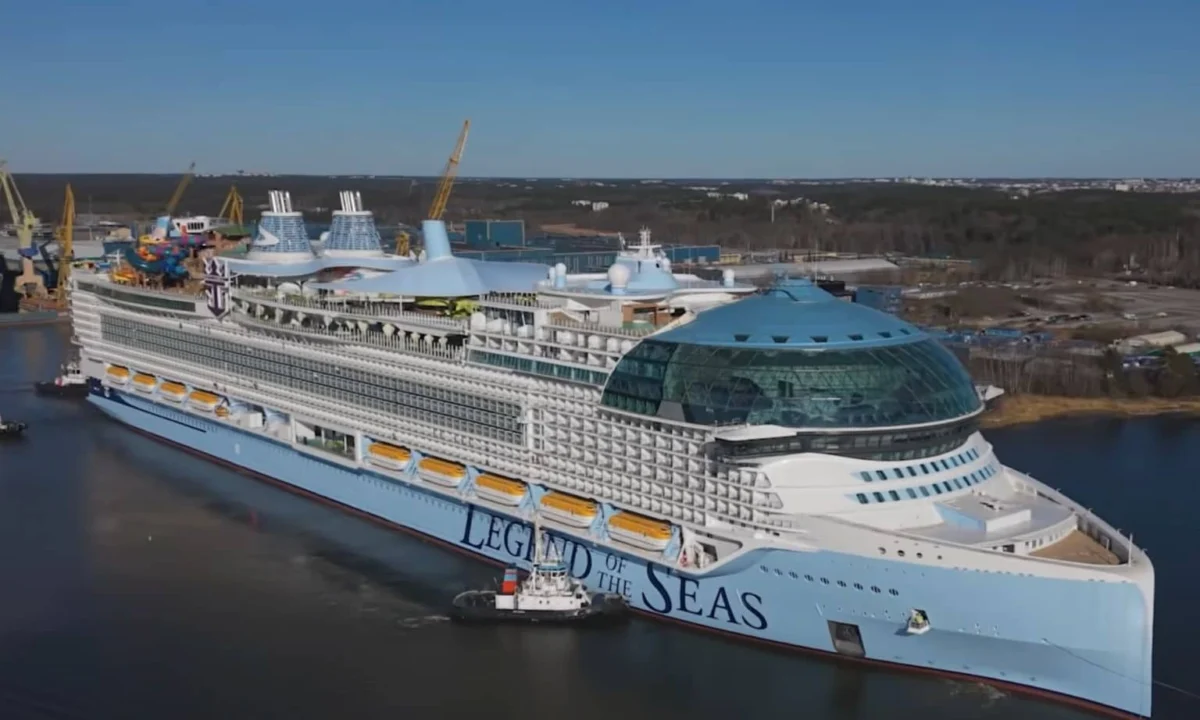
Royal Caribbean’s newest mega-ship, Legend of the Seas, has successfully completed its initial sea trials, marking a significant milestone in its journey towards entering service. The state-of-the-art vessel, poised to join the ranks of Icon of the Seas and Star of the Seas as one of the world’s largest cruise ships, departed from the Meyer Turku shipyard in Finland for its inaugural voyage at sea. Aboard were over 2,000 engineers and specialists tasked with meticulously testing the ship’s advanced systems as it navigated international waters for the first time. This critical phase of testing is fundamental to ensuring the ship meets stringent safety and performance standards before its public debut.
The successful completion of sea trials comes just months before Legend of the Seas‘s first scheduled sailings. The ship is set to commence its inaugural season with a Mediterranean cruise departing from Barcelona in July. Following this initial European itinerary, Legend of the Seas will offer a series of Mediterranean voyages before repositioning to the Caribbean in November. This transatlantic movement will differentiate its operational model from other Icon-class ships, such as Icon of the Seas and Star of the Seas, which are primarily based year-round in the Caribbean. The upcoming addition of Hero of the Seas in 2027, also slated to sail from Florida, further underscores Royal Caribbean’s commitment to expanding its ultra-large cruise ship fleet and its dominance in this segment of the market.
Genesis of a Mega-Ship: The Icon Class Development
The Icon class represents a new benchmark in cruise ship design and capacity, with each vessel pushing the boundaries of what is possible at sea. Icon of the Seas, the lead ship of the class, officially commenced operations in January 2024, after its own rigorous sea trials and delivery from the Meyer Turku shipyard. It boasts a gross tonnage of approximately 250,800 GT, a length of 1,198 feet, and a capacity for over 7,600 passengers in addition to 2,350 crew members. Star of the Seas, the second ship in the class, is expected to debut in August 2024, followed by Legend of the Seas in 2025, and Hero of the Seas in 2026, though the provided text indicates a 2027 debut for Hero of the Seas. These ships are not merely larger; they are engineered with cutting-edge technologies aimed at enhancing guest experience and operational efficiency.
The development of the Icon class signifies a strategic move by Royal Caribbean to cater to evolving consumer preferences, particularly for families and multi-generational travel groups seeking comprehensive onboard entertainment and amenities. The ships are designed to be destinations in themselves, featuring innovative onboard neighborhoods, extensive dining options, and a wide array of activities, from water parks and surf simulators to live entertainment and themed zones. The construction process, undertaken at the Meyer Turku shipyard, a leading European shipbuilding facility known for its technological prowess, involves a complex orchestration of thousands of workers and intricate engineering processes. Each phase, from initial design and hull construction to the installation of advanced propulsion systems and interior outfitting, is meticulously managed to ensure timely delivery and adherence to the highest quality standards.
Legend of the Seas Takes to the Water: Sea Trials and Beyond
The sea trials for Legend of the Seas are a crucial undertaking, involving comprehensive testing of all shipboard systems under real-world maritime conditions. This includes evaluating the performance of the propulsion and navigation systems, testing emergency procedures, assessing the functionality of all guest-facing amenities, and ensuring the seamless operation of life-saving equipment. The presence of over 2,000 engineers and specialists highlights the complexity and scale of these trials. They meticulously monitor every aspect of the ship’s performance, from speed and maneuverability to energy consumption and waste management systems. Data collected during these trials is vital for making any final adjustments and certifications before the ship is deemed ready for passenger service.
The footage released by Royal Caribbean offers a glimpse into this significant moment, showcasing the sheer scale of Legend of the Seas as it maneuvers away from the shipyard. Such visual documentation not only serves as a marketing tool but also as a testament to the engineering marvel that these vessels represent. The culmination of years of design, engineering, and construction efforts is embodied in these initial movements at sea, signaling the transition from a shipyard project to a fully operational cruise liner.
Navigating Diverse Markets: Itinerary Strategy
The planned itinerary for Legend of the Seas reflects a strategic approach to leveraging different market demands throughout the year. Its initial Mediterranean season, commencing in July, will capitalize on the peak summer travel period in Europe, attracting passengers seeking a blend of cultural exploration and onboard luxury. The Mediterranean offers a rich tapestry of historical sites, vibrant coastal cities, and picturesque islands, making it a perennially popular cruise destination.
The subsequent repositioning to the Caribbean in November is a well-established practice in the cruise industry, allowing ships to take advantage of favorable weather conditions and high demand during the winter months in North America and Europe. The Caribbean is a primary market for Royal Caribbean, and the addition of another large-capacity ship like Legend of the Seas will enhance its offering in the region. However, its seasonal presence in both regions, rather than a year-round commitment to a single geographical area, suggests a strategy aimed at maximizing its appeal across diverse passenger segments and seasonal travel trends. This flexible deployment allows Royal Caribbean to adapt to market dynamics and offer a wider range of cruising experiences to its global customer base.
Public Perception: A Divide on Mega-Ship Value
The advent of these colossal vessels has ignited considerable discussion among cruise enthusiasts, particularly regarding their value proposition and overall appeal. A recent online forum thread on Reddit highlighted a spectrum of opinions, revealing a nuanced view of Royal Caribbean’s mega-ships.
One recurring theme is the sheer magnificence and the unparalleled array of activities available on ships like the Icon and Oasis classes. A user recounted their teenage son’s description of a week aboard Star of the Seas as "the best week of his entire life," underscoring the immense appeal these ships hold for younger demographics. This sentiment was echoed by another user whose 10-year-old son had a "blast" on an Oasis-class ship, thoroughly enjoying the slides, shows, arcade, and mini-golf. The diving show was particularly noted as amazing, reinforcing the idea that these vessels are expertly designed to captivate children and the young at heart.
However, this enthusiastic endorsement is tempered by differing perspectives from adult passengers. While acknowledging the impressive scale and entertainment offerings, some seasoned cruisers expressed that these mega-ships do not necessarily equate to a superior experience compared to smaller, more intimate vessels. One user stated that while they enjoyed cruises on Royal Caribbean’s largest ships, they found more personal fulfillment on smaller ships that allowed for exploration of more diverse and interesting ports. This preference often stems from a desire for a more immersive travel experience, where the journey itself and the destinations visited are prioritized over the sheer volume of onboard attractions.
A significant factor influencing passenger decisions is the cost. Several users noted that they only chose to sail on these mega-ships when the price difference compared to other options was negligible. While recognizing the value for money when prices are competitive, many expressed reluctance to incur substantial additional costs, especially during peak seasons, to experience these vessels. The consensus among this group is that the premium pricing of Icon-class ships may not always align with the perceived value, particularly for travelers who do not fully utilize the extensive onboard amenities or prioritize different aspects of a cruise vacation.
Architectural Innovations and Operational Efficiency
Beyond sheer size, the Icon class introduces significant advancements in ship design and operational efficiency. Passengers on Star of the Seas reported being "blown away" by the improvements in ship design compared to the Oasis class, noting that despite carrying more people, the ship felt less crowded. This suggests a more intelligent use of space and layout, a critical consideration for passenger comfort on such large vessels.
The entertainment and dining experiences have also been lauded. The Back to the Future musical on Star of the Seas was described as "legitimately great," a significant endorsement given that many passengers typically find cruise ship entertainment mediocre. The quality of specialty dining, particularly venues like Lincoln Park, was highlighted as being among the best in the industry. Furthermore, the inclusion of new themed dining events, such as the Disney-like railway-themed experiences planned for Legend of the Seas and Hero of the Seas, indicates a continued commitment to innovative and engaging guest experiences.
The Icon class also incorporates more sustainable technologies. While specific details for Legend of the Seas are still emerging, Icon of the Seas utilizes a liquefied natural gas (LNG) fuel system, which is considered a cleaner-burning fuel than traditional marine fuels, and also features advanced onboard waste management and energy efficiency systems. These advancements reflect the broader industry trend towards more environmentally conscious cruising, a factor that is increasingly important to consumers and regulators alike.
Economic Implications and Future Outlook
The continued expansion of Royal Caribbean’s mega-ship fleet carries significant economic implications. The construction of these vessels represents billions of dollars in investment and supports thousands of jobs in shipbuilding and associated industries. For the destinations these ships visit, the increased passenger capacity translates to a greater influx of tourists, boosting local economies through spending on excursions, dining, and retail.
However, the concentrated arrival of mega-ships can also present logistical challenges for ports, potentially leading to overcrowding and increased environmental impact. Cruise lines are increasingly working with port authorities to manage these challenges, investing in infrastructure upgrades and implementing strategies to mitigate negative externalities.
The debate over the value and appeal of mega-ships is likely to continue. While they undeniably offer a unique and comprehensive vacation experience, particularly for families and those seeking constant entertainment, they may not resonate with all travelers. Royal Caribbean’s strategy of deploying different classes of ships and diverse itineraries suggests an understanding of this market segmentation. As Legend of the Seas prepares to set sail, its performance and reception will be closely watched, providing further insights into the enduring appeal and future direction of ultra-large cruise ship operations in the global travel industry. The continued investment in and development of such colossal vessels underscores Royal Caribbean’s confidence in this segment of the market and its ambition to remain at the forefront of cruise innovation.



 Anjar Salim
 Tatiana Tantri Indah Sari
 Budi Mulyono
