
 Anjar Salim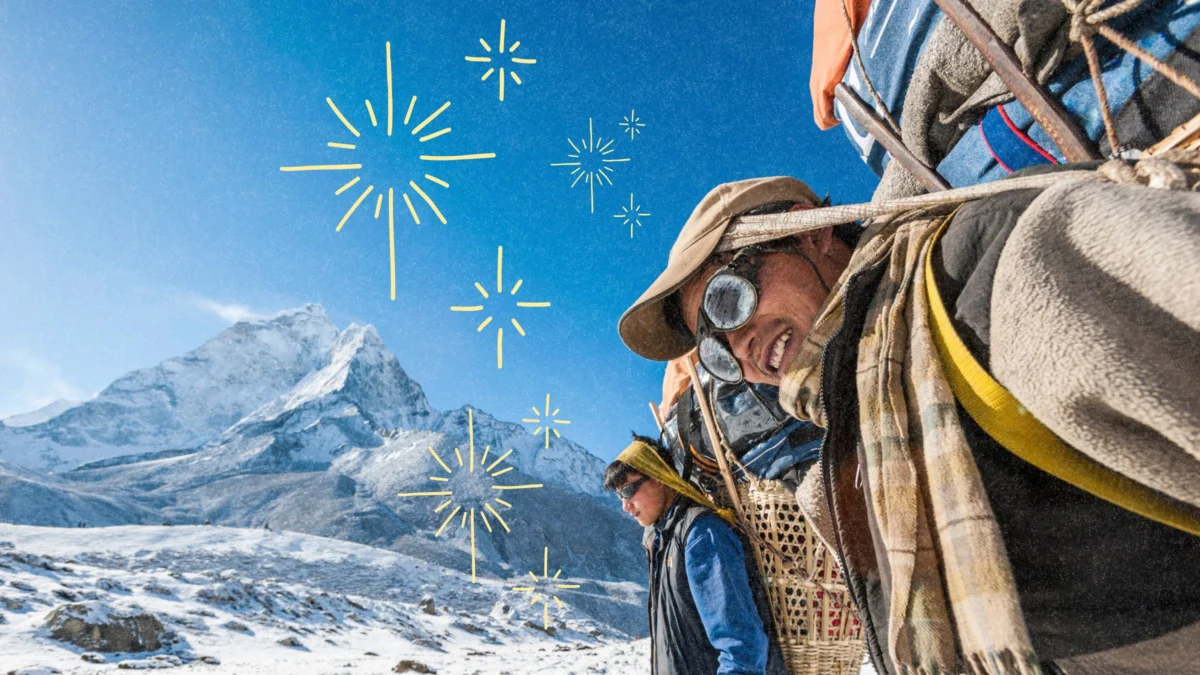
Mount Everest is often described by mountaineers as a grand stage, a vertical theater where the final act—the summit push—captures the world’s attention. Yet, the spectacle of the world’s highest peak relies entirely on a vast, invisible infrastructure. Behind the scenes, a workforce of local Nepalese, primarily from the Sherpa ethnic group, performs the grueling labor required to make these expeditions possible. While Western climbers often dominate the headlines, the success of any season on Chomolungma is dictated by those who carry the loads, fix the ropes, and manage the logistics of Base Camp. For these workers, the mountain is not merely a challenge of the spirit, but a high-stakes economic engine that provides a lifetime of income at the risk of a lifetime’s end.
The labor of the Sherpa is a tradition passed down through generations. Young men often begin their careers as porters or kitchen staff as early as 18 or 19 years old, following in the footsteps of their fathers and grandfathers. This career path is born of necessity as much as tradition. In the Khumbu region, the average annual salary for a subsistence farmer is approximately $500. In contrast, an Everest staffer can earn upwards of $2,000 in a single three-month spring season. For many families, this income is transformative, funding education, healthcare, and modern housing that would otherwise be unattainable.
The Chronology of a High-Altitude Season
The operational rhythm of Mount Everest is dictated by the narrow weather windows of the spring. Each year, the cycle begins in late February and early March, as the "icefall doctors"—a specialized team of Sherpas—begin the perilous task of navigating the Khumbu Icefall. This shifting glacier is one of the most dangerous sections of the climb, requiring the installation of ladders and ropes over deep crevasses.
By mid-March, Mount Everest Base Camp (EBC) begins its transformation from a desolate glacial moraine into a sprawling temporary city. Located at approximately 5,300 meters (17,388 feet), EBC serves as the logistical hub for hundreds of climbers and staff. During this phase, an army of porters and yaks moves tons of equipment up the valley. This includes everything from high-tech communication arrays and medical supplies to basic necessities like kitchen stoves, dining furniture, and thousands of pounds of food.
Throughout April, the focus shifts to acclimatization. While Western clients hike to lower camps to prepare their bodies for the thin air, Sherpa staffers are in constant motion. They perform "rotations" that are far more taxing than those of the clients, ferrying oxygen bottles, tents, and fuel to Camp II (6,400m), Camp III (7,100m), and Camp IV (7,950m). By the time the summit window opens in May, the average Sherpa guide may have climbed the equivalent height of Everest several times over in cumulative gain.
The Statistical Reality of Risk and Mortality
The rewards of the mountain are balanced against a grim statistical reality. According to the Himalayan Database, a comprehensive record of all expeditions in the Nepal Himalaya, there have been 42 staff deaths on Everest over the last decade. While high-altitude climbing accidents—such as falls or exhaustion in the "Death Zone" above 8,000 meters—are the most publicized, a significant portion of fatalities occur at lower altitudes.
Data indicates that nearly 30% of staff deaths in the last ten years were caused by environmental hazards at or below 6,000 meters, including avalanches, rockfall, and ice collapses. Furthermore, illness plays a silent but deadly role. Acute Mountain Sickness (AMS), High-Altitude Pulmonary Edema (HAPE), and High-Altitude Cerebral Edema (HACE) are constant threats. Even for the Sherpa, who possess genetic adaptations for high-altitude oxygen processing, extended stays at 5,300 meters take a toll on the cardiovascular system and the body’s ability to recover from physical exertion.
Beyond the physiological risks, the "Non-AMS" category of deaths often masks the cumulative exhaustion of the work. Long-term exposure to extreme cold and thin air can exacerbate underlying conditions, leading to sudden cardiac events or strokes. For the local workforce, the mountain is a workplace where the safety margins are razor-thin, and a single mistake or a bout of bad luck can be fatal.
Cultural Friction and Professional Challenges
The relationship between Western clients and local staff is often characterized by a profound power imbalance. Many clients pay between $45,000 and $160,000 for a guided expedition, creating an environment of high pressure where the Sherpa are expected to provide "concierge" levels of service in the world’s most hostile environment.
One of the most persistent issues is the language barrier. While some senior guides are fluent in English, many younger porters and Base Camp staffers have limited formal education. Miscommunications regarding gear, safety protocols, or personal preferences can lead to friction. Reports of "mountain rage," where frustrated clients have been known to verbally or even physically abuse staff, are a recurring dark side of the industry. This is often exacerbated by "hypoxic irritability"—a documented psychological effect of low oxygen levels that can lead to poor impulse control and heightened aggression.
Furthermore, the "disposable man" narrative—a term used by critics of the commercial mountaineering industry—suggests that Western media and expedition companies have historically undervalued Sherpa lives. While insurance payouts for staff deaths have increased due to pressure from the Nepal Mountaineering Association (NMA), the compensation often remains a fraction of what a Western guide’s life might be valued at in a similar context.
The Human Face of the Industry: A Profile in Management
To understand the daily reality of the mountain, one must look at the mid-level managers who bridge the gap between the glacier and the office. One such individual, a man in his 40s who requested anonymity to protect his employment prospects, has spent 20 years on the mountain. Currently serving as a Base Camp Manager, his career reflects the typical trajectory of a Sherpa worker.
Starting at age 25, he worked as a trekking porter, carrying loads weighing between 65 and 100 pounds for weeks at a time. Through university courses in Kathmandu and years of practice with clients, he mastered English, eventually moving into management. Today, his role involves overseeing the logistics of a Western-led camp: managing food supplies, coordinating laundry and cleaning services, and ensuring the dining tents are prepared for clients.
"It is prestigious to be on Everest," he says. "The money is good, and it is work I’m proud of." For his three months of work, he earns $2,000, plus tips that can occasionally reach $700 from satisfied clients. This income supports his parents, his wife, and his siblings, and far exceeds the $600 he earns annually from his potato and vegetable farm.
However, the psychological weight is heavy. "I’m afraid of getting sick or having an accident," he admits. "Some people fall or get caught in rockfall or an avalanche, even if they are not very high on the mountain. My parents worry about my safety. I do, too." Despite the risks, the economic necessity remains the primary driver. He plans to continue until his physical health fails or his family insists he stop, noting that he "cannot stop yet" because of the financial dependence of his extended family.
Regulatory Responses and Broader Implications
The government of Nepal and various mountaineering bodies have faced increasing pressure to improve conditions for local workers. In recent years, the Ministry of Tourism has implemented stricter insurance requirements, mandating that expedition organizers provide higher levels of life and medical insurance for all local staff. There have also been discussions regarding "minimum experience" requirements for climbers to reduce the burden on Sherpas who are often forced to perform dangerous rescues for inexperienced clients.
The broader implications of the Everest labor economy are also being shaped by climate change. The Khumbu Icefall is becoming increasingly unstable as temperatures rise, making the work of the "icefall doctors" and porters more perilous. Some expedition companies have begun using helicopters to ferry equipment to Camp I to bypass the icefall, a move that increases costs but potentially saves lives. However, this shift also threatens the traditional portering jobs that serve as the entry point for young Sherpas into the industry.
As the 2026 season approaches, the debate over the ethics of high-altitude tourism continues. The "rehearsed play" of an Everest summit remains a feat of human endurance, but it is one that is staged on the backs of a local workforce that operates in the shadows. The future of the mountain will depend on whether the industry can evolve to provide not just a paycheck for the Sherpa, but a standard of safety and respect that matches the height of the peak they serve. For now, the cycle remains: the spring thaw begins, the heavy loads are hoisted, and the invisible army returns to the slopes of Chomolungma.




 Budi Mulyono
 Chandra Hamzah
 Tatiana Tantri Indah Sari

 Lukman Taruna Persada Ramadan