
 Gabriela Annisa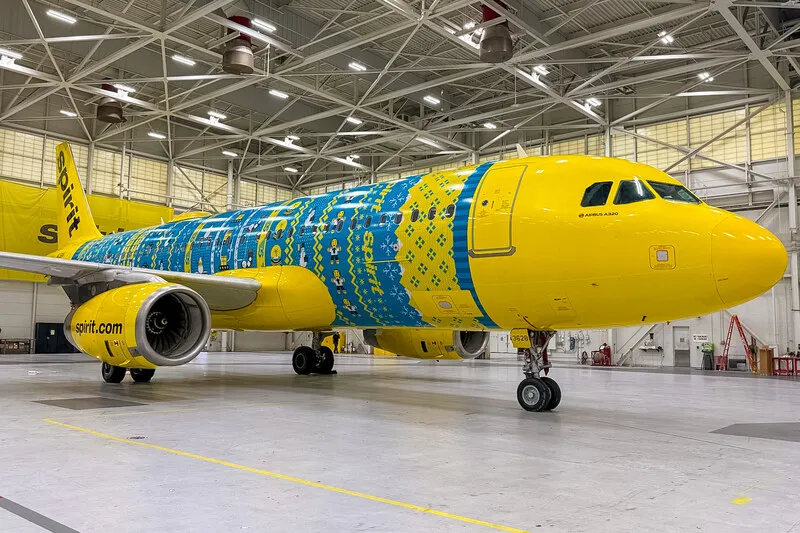
Spirit Airlines, a prominent ultra low-cost carrier (ULCC) in the United States, is grappling with an acute financial crisis, prompting its creditors to initiate a liquidation analysis and drawing an unexpected suggestion of government intervention from former President Donald Trump. This comes as the airline industry experiences heightened volatility, with other carriers like Alaska Air Group reporting challenging first-quarter financial results driven largely by surging fuel prices and shifting demand dynamics.
Spirit Airlines’ Precarious Financial State
The financial distress at Spirit Airlines has reached a critical juncture, characterized by substantial and sustained operating losses. Over the past four fiscal years, encompassing actual results and projections through 2025, Spirit has accumulated a staggering $2.1 billion in operating losses. The severity of its situation is underscored by a projected operating loss of $896 million for the fiscal year 2025, translating to a negative 24% operating margin. This places Spirit at the very bottom of global airline performance rankings, highlighting its unique and profound challenges.
Spirit’s business model, heavily reliant on low fares and high ancillary revenue, is particularly vulnerable to external shocks such as dramatic fuel price increases. While ULCCs thrive in stable economic environments by maximizing aircraft utilization and minimizing operational costs, they possess less flexibility to absorb sudden escalations in core expenses. The current surge in fuel prices has proven catastrophic for Spirit, invalidating its existing turnaround strategy which was predicated on significantly lower fuel cost assumptions – reportedly around $2.20 per gallon, far below current market rates exceeding $4.00 per gallon in some regions.
The airline’s creditors, who hold significant sway in its ongoing restructuring process, have reportedly conducted a liquidation analysis. This grave step indicates that stakeholders are seriously evaluating the possibility that Spirit’s assets might be worth more if sold off individually in a "garage sale" scenario rather than continuing as a going concern. While a liquidation analysis does not guarantee that this path will be chosen, it signals the depth of the crisis and the limited viable options remaining for the carrier. The ultimate decision rests with the creditors, who are legally bound to pursue the option that maximizes their recovery.
The Unexpected Call for Government Intervention
In a surprising development that injected a political dimension into Spirit’s financial woes, former President Donald Trump publicly suggested that the U.S. federal government should consider assisting the troubled airline. Speaking on CNBC’s Squawk Box, Trump stated, "I don’t mind mergers. I would love someone to buy Spirit, for example. Spirit’s in trouble. It’s 14,000 jobs. Maybe the federal government should help that one out." This remark immediately sparked debate about the role of government in propping up struggling private enterprises, particularly given the traditionally conservative stance against such interventions.
The suggestion draws parallels to previous instances of federal aid, most notably the comprehensive support packages extended to the airline industry during the COVID-19 pandemic. However, critics argue that Spirit’s current predicament differs significantly from the systemic, unforeseen crisis of COVID-19. Spirit’s challenges, while exacerbated by fuel prices, predate the current spike and are partly attributable to its business model’s inherent sensitivities and operational inefficiencies. A government bailout for Spirit would set a precedent, potentially opening the door for other financially distressed companies to seek federal assistance, challenging the principles of free-market capitalism.
Beyond a direct bailout, other potential scenarios for Spirit include acquisition by another airline. While major carriers like American Airlines have reportedly distanced themselves from such discussions, a smaller, strategically aligned carrier like Allegiant or Sun Country Airlines might find value in acquiring Spirit’s assets, particularly its aircraft fleet, pilot resources, and strategic slots in key markets like Fort Lauderdale and Orlando. Such an acquisition would likely occur at a significantly distressed valuation, offering a lifeline to Spirit’s employees while providing the acquiring entity with immediate capacity and market presence. Alternatively, creditors could still opt to proceed with the original bankruptcy plan, banking on a future decline in fuel prices, though this carries substantial risk given current market volatility.
Impact on Consumer Confidence and Spirit’s Operations
The public discourse surrounding Spirit’s potential demise, particularly statements from high-profile figures like President Trump, carries significant implications for consumer confidence. The mere suggestion of liquidation can create a "self-fulfilling prophecy," where prospective travelers hesitate to book flights with Spirit, fearing cancellations or being stranded. Although Spirit maintains a "business as usual" stance on its dedicated restructuring website (spiritrestructuring.com), assuring customers that flights will operate as scheduled and that credit card payments offer some protection, the reputational damage and uncertainty are undeniable. A decline in bookings would further exacerbate Spirit’s cash drain, accelerating its path toward potential insolvency. The human cost is also considerable, with 14,000 jobs at stake, creating immense anxiety for employees and their families.
Alaska Air Group Navigates Economic Headwinds
In contrast to Spirit’s existential struggle, Alaska Air Group, which recently announced its Q1 financials, is navigating challenging economic headwinds from a position of relative strength. While its first quarter was described as "lousy" with a negative 7.5% operating margin, it’s crucial to distinguish this from Spirit’s deep structural crisis. Alaska, with its robust balance sheet and strong market position, is experiencing a difficult period, not an imminent threat to its existence.
Fuel Costs: A Significant Differentiator
A primary factor impacting Alaska’s Q1 performance was exceptionally high fuel costs. The airline paid an average of $2.98 per gallon, significantly higher than competitors like Delta, which reported paying $2.62 per gallon during the same period. This disparity highlights regional variations in fuel pricing and supply chain dynamics. Alaska’s fuel sourcing strategy, with approximately 55% from the West Coast, 20% from Singapore, and 25% from other regions including the Gulf Coast, has exposed it to particular vulnerabilities.
The West Coast refining margins have historically been volatile and among the highest globally due to limited refinery capacity and pipeline infrastructure. More dramatically, Singapore, traditionally a low-cost fuel source, has seen prices surge over 400% since early February levels. This unexpected spike has severely impacted Alaska’s Hawaiian operations, which relied heavily on Singapore-sourced jet fuel, turning a previous advantage into a significant cost burden.
Capacity Adjustments and Rising Non-Fuel Costs
In response to the elevated fuel prices, Alaska Air Group, like many other global carriers, has begun trimming its capacity. This strategic reduction, while necessary to mitigate losses on uneconomical routes, has an inverse effect on non-fuel unit costs. Airlines typically leverage growth and increased capacity to achieve economies of scale, thereby lowering per-unit operating expenses. With domestic capacity projected to shrink in the second quarter, Alaska will face upward pressure on its non-fuel unit costs, further complicating its path to profitability. The airline has also suspended its full-year financial and capacity guidance, a clear indicator of the extreme volatility and uncertainty in the current operating environment, making reliable long-term forecasts impractical.
Strategic Bets on International Expansion
Despite domestic capacity adjustments, Alaska is pursuing growth through its new long-haul international routes. The airline is launching new services to Rome, London, and Iceland in the coming days and weeks, building on its recently inaugurated flights to Tokyo and Seoul. These intercontinental routes, operated by wide-body aircraft, inherently add substantial available seat miles (ASMs) to the network.
Initial commentary on these international ventures has been cautiously optimistic. Alaska reported that international booking trends are "building in line with expectations," and specifically, the Seattle-Narita route was profitable in March, achieving load factors above 90% for both Tokyo-Narita and Seoul-Incheon. While a reported profit, even for a single month, is a positive sign, the vague nature of "in line with expectations" and the fact that high load factors don’t automatically guarantee strong yields or overall profitability raise questions. Trans-oceanic routes are highly competitive and capital-intensive, carrying significant risks alongside potential rewards. The long-term profitability of these new routes remains a key area of scrutiny for analysts.
Strengths in Corporate Travel and Loyalty
Alaska Air Group’s financial performance benefits significantly from its strong corporate travel segment and its lucrative loyalty program. Headquartered in Seattle, Alaska enjoys a strategic advantage in serving major corporate clients, particularly in the tech and aerospace sectors. Companies like Amazon, the world’s largest corporate spender on air travel, and Boeing, another major Seattle-based entity, are key revenue drivers for Alaska. This robust corporate demand, which appears to be rebounding strongly after a period of uncertainty, provides a stable revenue stream that helps offset challenges in other segments.
Furthermore, Alaska’s rebranded "Atmos Rewards Program" has shown "incredible loyalty growth." Its partnership with Bank of America is highly lucrative, and the recent merger with Hawaiian Airlines is expected to further enhance its loyalty offerings and expand its network appeal, particularly for leisure travelers seeking Hawaiian destinations. This strong loyalty ecosystem provides a valuable buffer against market fluctuations and contributes significantly to the airline’s overall financial health.
However, Alaska is not immune to all demand-side pressures. The airline has acknowledged experiencing some demand challenges in Mexico, attributed to civil unrest in certain regions, and in Hawaii, where natural disasters such as flooding and heavy rains have deterred some travelers. These localized issues underscore the complex interplay of factors influencing airline demand.
Broader Industry Context and Outlook
The contrasting situations of Spirit and Alaska Air Group highlight the divergent paths within the U.S. airline industry amidst a volatile global economic landscape. While Spirit faces an existential threat, potentially leading to a significant contraction or disappearance of a major ULCC, Alaska is leveraging its strengths to navigate a challenging period marked by high fuel costs and strategic, albeit risky, international expansion.
The broader regulatory environment also continues to shape the industry. President Trump’s explicit opposition to a potential merger between American Airlines and United Airlines – stating, "I don’t like having them merge. It’s just like those aerospace and defense companies. Now we have a very small number, and then you get one bid and it makes them lazy" – signals a continued governmental skepticism towards consolidation among the largest carriers. This stance suggests that while government intervention might be considered for a struggling carrier like Spirit, further concentration among market leaders remains a contentious issue.
As the U.S. airline industry moves deeper into earnings season, with Southwest and American Airlines yet to report, the coming weeks will provide further insights into how carriers are adapting to the prevailing high-cost, high-volatility environment. The outcomes for Spirit Airlines, whether it be a government bailout, liquidation, or acquisition, will undoubtedly reshape the competitive landscape, particularly within the low-cost segment, and potentially set new precedents for government involvement in corporate crises.



 Anjar Salim
 Chandra Hamzah
 Tatiana Tantri Indah Sari
 Budi Mulyono

