
 Anjar Salim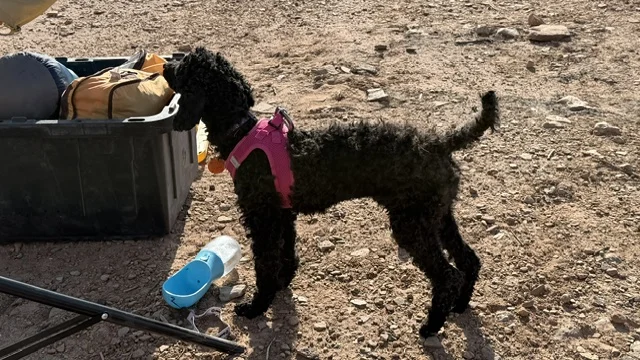
A routine technical descent in the remote San Rafael Swell of Emery County, Utah, nearly turned fatal on Saturday, May 9, when a specialized anchor system failed, sending a 33-year-old canyoneer and his pet poodle plummeting 30 feet to the canyon floor. The incident, which occurred in the notoriously difficult Buckeyes Canyon, has highlighted the inherent risks of "marginal" anchoring techniques and the growing trend of high-stakes rescues in Utah’s backcountry. Despite the significant fall, both the man and his dog survived with non-life-threatening injuries, a result authorities attribute to a combination of safety gear and fortunate landing conditions.
The Emery County Sheriff’s Office (ECSO) responded to the emergency call at approximately 2:30 P.M. according to official incident reports. The victim, whose identity has been withheld by authorities, was canyoneering with his wife in a section of the canyon known for its sheer walls and lack of natural anchor points. At the time of the accident, the man was attempting to rappel down a vertical drop of approximately 20 to 30 feet. He was carrying his pet poodle, which was secured to his chest in a specialized harness—a practice that is increasingly common but remains a point of contention among outdoor enthusiasts.
Chronology of the Buckeyes Canyon Accident
The day began as a standard excursion into Buckeyes Canyon, a deep slot canyon located within the San Rafael Swell, a massive geological feature in south-central Utah known for its rugged beauty and technical challenges. The couple, described as experienced in outdoor recreation, reached a vertical pitch that required a rappel to proceed.
The man’s wife completed her descent first, successfully reaching the bottom of the 30-foot drop. She then waited for her husband to follow. As the 33-year-old began his descent, he utilized a "sandtrap" or "potshot" anchor system—a specialized tool used in canyons where traditional anchors like bolts, trees, or large boulders are unavailable.
Witness reports and the ECSO investigation indicate that as the man transitioned his weight onto the rope and began to move over the edge, the anchor system failed catastrophically. The failure caused the man to lose all tension on the line, resulting in a backward fall over the cliff. He landed at the bottom near his wife.
Immediate assistance was provided by another group of canyoneers who happened to be descending the canyon ahead of the couple. This group was able to provide initial first aid and helped stabilize the victim while emergency services were contacted. Given the remote location and the nature of the injuries, the ECSO coordinated with the Utah Department of Public Safety (DPS) to dispatch a helicopter for an aerial extraction.
Technical Analysis of the Anchor Failure
The failure centered on the use of what canyoneers call a "retrievable anchor." In Buckeyes Canyon, the geological composition often lacks the cracks for cams or the sturdy vegetation required for traditional anchoring. Christopher Hagedorn, a veteran guide and owner of the Hanksville-based guiding company Get in the Wild, noted that Buckeyes is considered an advanced canyon specifically because of these limitations.
"Buckeyes is a very technical, advanced canyon, primarily due to the lack of anchor placements," Hagedorn explained. "Often you’re able to use natural materials to build anchors, like rock cairns, trees, or bushes, but not in Buckeyes."
To navigate such terrain, canyoneers often employ "ghosting" techniques, which leave no trace of their passage. This involves using tools like the "sandtrap"—a reinforced fabric bag filled with sand or rocks that uses weight and friction to hold the climber’s weight. Once the climber reaches the bottom, a secondary pull-cord allows them to dump the weight and retrieve the bag.
However, these systems are classified as "marginal anchors." They require precise placement and a specific amount of weight to function safely. If the angle of the pull is incorrect, or if the internal weight shifts during the transition over the edge, the friction can drop below the threshold required to hold a human load. Authorities have not specified the exact mechanical reason for the failure in this instance, but Hagedorn emphasized that such systems "have to be backed up with some type of redundant system" during the initial testing phase of the rappel.
Survival Factors and Injury Report
The fact that the 33-year-old survived a 30-foot fall onto a canyon floor is being described by rescuers as miraculous. Several factors likely contributed to the mitigation of his injuries. The ECSO report noted that the man was wearing a high-quality climbing helmet and a large, padded backpack. When he fell backward, the backpack likely acted as a shock absorber, protecting his spine and internal organs from the primary impact.
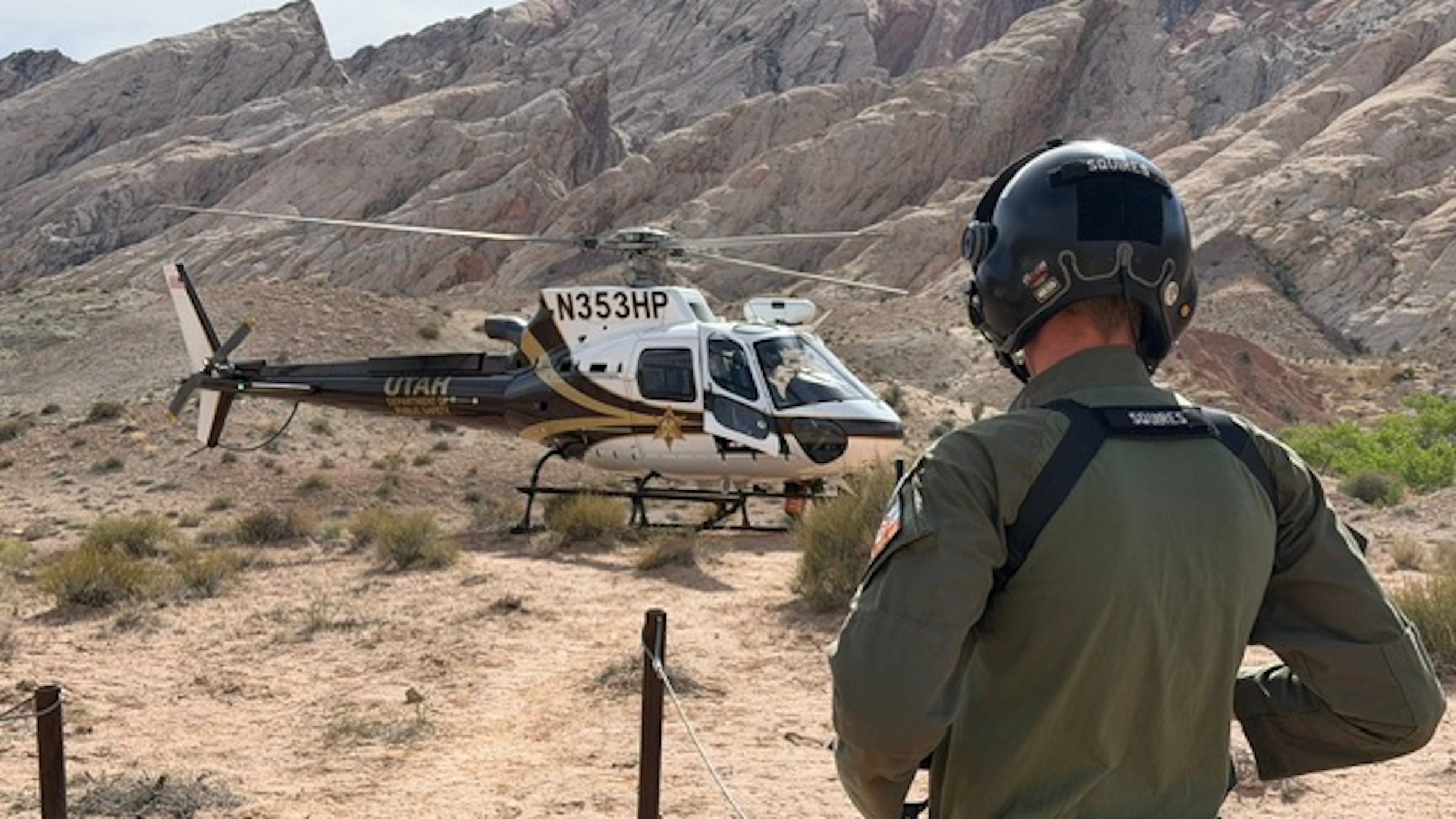
The man sustained injuries to his wrist and ankle, which are consistent with an attempt to brace for impact or landing on uneven terrain. He was hoisted from the canyon by the DPS helicopter and transported to a regional medical facility for treatment.
The poodle, which was strapped to the man’s chest, also survived the ordeal. Rescuers found the dog to be alert following the fall. "The dog sustained minor injuries to one of its legs, but appears to be doing well," the ECSO stated. The harness used to secure the dog likely kept the animal from being thrown clear of the man’s body, which, while risky, prevented a secondary impact against the canyon walls.
The San Rafael Swell: A High-Risk Environment
The San Rafael Swell is a 75-by-40-mile geological dome (an anticline) that has become a premier destination for technical canyoneering. However, its remoteness poses significant challenges for Search and Rescue (SAR) operations. Cell service is virtually non-existent in the deep slots, and the terrain is so jagged that even a short distance can take hours for ground teams to traverse.
Data from the Utah Department of Public Safety indicates a steady rise in SAR missions over the last five years, coinciding with the post-pandemic boom in outdoor recreation. In 2026, Utah’s desert regions have seen a "rash of rescues," according to local experts.
"It’s been an incredibly busy season out here," Hagedorn said. "Search and rescue teams have a lot of work on their hands."
The cost of these operations is significant. A single helicopter extraction can cost taxpayers and agencies upwards of $3,000 to $5,000 per hour of flight time. While Utah does not typically bill rescued individuals for SAR services—unless negligence or intentional law-breaking is involved—the strain on volunteer-heavy sheriff’s departments is a growing concern for state legislators.
Ethical and Safety Debates Regarding Pets in Canyons
The presence of a poodle in a technical canyon like Buckeyes has sparked debate within the outdoor community. While many pet owners utilize specialized harnesses designed for rappelling and hoisting, critics argue that the unpredictable nature of technical canyoneering puts animals at unnecessary risk.
Hagedorn remained neutral on the specific ethics but acknowledged the divide. "There are quite a number of folks out there who enjoy bringing their dogs into canyons and rappelling with their dogs in specialized harnesses," he said. "There are other groups who don’t like that and say it’s wrong."
From a safety perspective, carrying a pet adds "dead weight" to a climber’s center of gravity and can complicate the use of retrievable anchors, which are sensitive to weight distribution. Furthermore, in the event of an accident, the presence of an animal can complicate medical treatment and evacuation logistics for rescue teams.
Implications for Canyoneering Safety Protocols
This incident serves as a critical case study for the canyoneering community regarding the use of marginal anchors. Safety organizations, such as the American Canyoneering Association (ACA), frequently warn that retrievable anchors should only be used by those with advanced training and that "meat anchors" (where one person holds the weight of another before descending last) should be used to test the system’s integrity for every member of the party except the final person.
The ECSO and local guides are using this event to remind the public that "technical" canyons are not mere hiking trails. They require a mastery of knots, physics, and gear management. The successful rescue in Buckeyes Canyon was a result of a rapid response and the presence of other prepared individuals in the canyon, but authorities warn that such a positive outcome is never guaranteed in the "Swell."
As of May 13, 2026, the 33-year-old victim is reported to be in stable condition, and the poodle is expected to make a full recovery. The Emery County Sheriff’s Office continues to urge all backcountry users to carry satellite communication devices, such as a Garmin inReach or Zoleo, as these are often the only way to summon help in the deep "slots" of the Utah desert.



 Chandra Hamzah
 Tatiana Tantri Indah Sari
 Budi Mulyono
 Lukman Taruna Persada Ramadan