Tatiana Tantri Indah Sari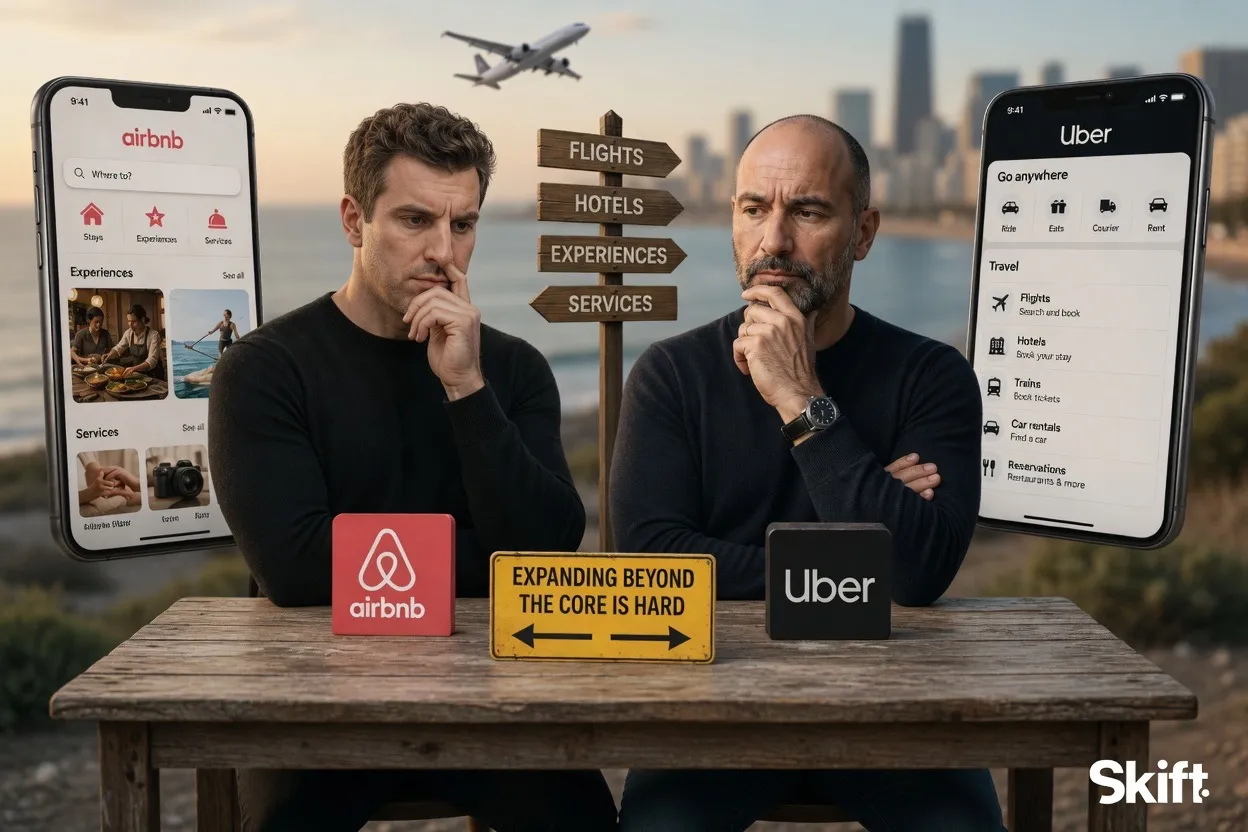
The ambitious expansion strategies of tech giants Airbnb and Uber into adjacent travel and experience sectors are facing intense scrutiny, with industry observers questioning whether these companies can successfully transition beyond their foundational services. For Airbnb, the challenge lies in convincing travelers who book accommodations to also book hyper-local activities, such as a pasta-making class or a wellness massage, through its platform. Similarly, Uber is investing heavily in efforts to transform its ride-hailing application into a comprehensive travel portal, aiming for passengers who use its services for airport transfers to also book flights, hotels, and train tickets directly within the app. Both companies are pouring significant capital into these diversification initiatives, yet neither has definitively proven the financial viability of these ventures. History offers a stark cautionary tale, underscoring the formidable difficulty of altering deeply ingrained consumer behaviors in how they research and book travel components.
Background: The Imperative to Diversify for Tech Unicorns
Airbnb and Uber emerged as quintessential disruptors, each fundamentally reshaping their respective industries. Airbnb, founded in 2008, revolutionized the hospitality sector by enabling individuals to rent out spare rooms or entire homes, quickly growing into a global platform boasting millions of listings and challenging traditional hotel chains. Uber, established in 2009, similarly upended urban transportation with its on-demand ride-hailing service, rapidly expanding worldwide and transforming personal mobility.
However, as these companies matured and achieved massive scale, they began to confront the inherent limitations of relying solely on their core businesses. Market saturation in primary urban centers, intense competition, regulatory hurdles, and the constant pressure from investors for sustained growth necessitated a strategic pivot. For both, the natural evolution pointed towards expanding their total addressable market (TAM) by offering a broader suite of services that leverage their existing user bases, brand recognition, and technological infrastructure. The goal is clear: increase customer lifetime value, reduce churn, and capture a larger share of the consumer’s spending across various facets of their lives.
For Airbnb, the expansion into "Experiences" – curated activities led by local hosts – was a logical extension aimed at enriching the travel journey and differentiating its offering from mere accommodation booking. It sought to move beyond transactions to provide transformative experiences, fostering deeper engagement with its brand and hosts. Uber’s motivation to enter the broader travel booking arena, encompassing flights, hotels, and trains, stems from its vision to become a "super-app" – a single platform for all aspects of a user’s daily mobility and lifestyle needs. By integrating more services, Uber aims to reduce reliance on ride-hailing revenue, which can be volatile due to external factors, and create a sticky ecosystem that keeps users within its app for longer periods.
Chronology of Expansion Efforts
Airbnb’s Journey into Experiences:
- November 2016: Airbnb officially launched "Experiences" as part of its "Trips" platform, initially offering hundreds of activities in 12 cities worldwide, including Los Angeles, San Francisco, London, Paris, and Tokyo. This marked a significant shift from a pure accommodation provider to a more holistic travel company.
- Subsequent Years (2017-2019): The company steadily expanded the number of available experiences and geographic reach, emphasizing unique, local-led activities that traditional tour operators might not offer. This period saw the introduction of "Adventures," multi-day immersive trips, further pushing the boundaries of its offerings.
- Early 2020 (COVID-19 Pandemic): With global travel grinding to a halt, Airbnb pivoted rapidly, launching "Online Experiences." This initiative allowed hosts to offer virtual activities (e.g., cooking classes, meditation sessions, virtual tours) to a global audience from their homes, demonstrating the platform’s adaptability and maintaining host engagement during a crisis.
- Post-COVID Resurgence (2021-Present): As travel resumed, Airbnb renewed its focus on in-person experiences, integrating them more prominently within the booking flow and continuously iterating on discovery and curation to enhance user engagement.
Uber’s Foray into Travel Booking:
- Early Diversification (2014-2020): While primarily known for ride-hailing, Uber began its diversification journey much earlier with Uber Eats (food delivery), Uber Freight (logistics), and investments in micromobility (bikes and scooters), laying the groundwork for a broader mobility platform.
- Mid-2021: Uber signaled its intent to move deeper into travel booking, announcing partnerships and pilot programs to integrate flights, hotels, and train travel into its app in select markets. This initiative, often branded as "Uber Travel," aimed to leverage its vast user base and frequent travel patterns.
- June 2022: Uber officially launched its "Uber Travel" feature in the UK, allowing users to book intercity train and coach tickets directly through the app. This was quickly followed by integrations for flights and hotel bookings, often facilitated through partnerships with established online travel agencies (OTAs) and metasearch engines like Hopper for flights and Expedia Group/Booking.com for hotels.
- Ongoing Expansion (2023-Present): Uber continues to roll out and refine its travel offerings in various markets, aiming for seamless integration and a personalized booking experience, often leveraging user travel history from ride-hailing.
Supporting Data and Market Dynamics
The global travel and tourism market is a colossal industry, valued at trillions of dollars annually, with various segments contributing to this immense economic activity. The "experiences" sector alone, which includes tours, activities, and attractions, is estimated to be a multi-hundred-billion-dollar market. Similarly, the online travel agency (OTA) market, dominated by players like Expedia Group and Booking Holdings, commands hundreds of billions in bookings annually, demonstrating the scale of the transactional travel market Uber is attempting to penetrate.
Both Airbnb and Uber possess formidable assets: massive, active user bases. Airbnb reported over 150 million active users in 2023, while Uber boasts over 130 million monthly active platform consumers globally, facilitating billions of trips and deliveries each year. These extensive networks provide a compelling foundation for cross-selling and upselling additional services.
However, despite these advantages, the new ventures currently represent a relatively small portion of their overall revenue. While specific revenue breakdowns for "Experiences" and "Travel" are not always explicitly detailed by the companies, general consensus among analysts indicates that accommodation bookings remain the overwhelming revenue driver for Airbnb, and ride-hailing/food delivery for Uber. This underscores the significant investment required to scale these new segments and the long runway before they become material contributors to the companies’ bottom lines. The challenge isn’t merely attracting users to browse but converting that browsing into completed transactions that generate substantial revenue and profit.
The Cautionary Tale: Lessons from Metasearch
The original article aptly references the historical difficulty of changing consumer booking habits, citing the example of metasearch sites. In 2011, Kayak, a pioneer in travel metasearch, embarked on an effort to offer direct hotel bookings, partnering with entities like Travelocity. This strategy made intuitive sense: Kayak already attracted a massive audience searching for flights and hotels. If travelers were already on their platform, why wouldn’t they complete the transaction there, instead of navigating away to another site? Google (with Google Flights and Hotels), Skyscanner, and Tripadvisor soon followed suit, integrating direct booking options into their popular search interfaces.
Despite their large audiences and the promise of convenience, direct booking on metasearch sites never achieved the widespread adoption or market share commanded by traditional Online Travel Agencies (OTAs) like Expedia.com, Booking.com, or directly with airlines and hotels. Several factors contributed to this outcome:
- Brand Trust and Loyalty: Consumers often exhibit strong brand loyalty to established OTAs, perceiving them as more reliable for transactional support, customer service, and loyalty programs. The act of booking is often separated from the act of searching.
- Price Parity and Value Proposition: Metasearch sites primarily aggregate prices. When they moved into direct booking, they often struggled to offer significantly better deals or unique inventory that would compel a user to book through them instead of a trusted OTA or directly with the provider.
- Customer Service Responsibility: When a booking is made through a metasearch site acting as an intermediary, the lines of customer service responsibility can become blurred, potentially complicating issue resolution for consumers.
- Complexity and Fragmentation: For multi-component trips, consumers often prefer to book flights on one platform, hotels on another, and activities on a third, optimizing for price, loyalty points, or specific features of each platform. A single "super-app" or metasearch that tries to do it all might not always offer the best experience for each component.
- Lack of Differentiation at Transaction Point: If the metasearch site merely redirects or acts as a white-label intermediary without adding substantial unique value at the point of transaction (e.g., exclusive inventory, unparalleled customer support, unique bundled deals), consumers revert to platforms they already know and trust for the final purchase.
Inferred Statements and Expert Reactions
From Company Executives (Inferred):
Airbnb CEO Brian Chesky has consistently articulated a vision for the company to become an "end-to-end travel platform," emphasizing the importance of "Experiences" in deepening traveler engagement and creating unique, local value that differentiates Airbnb from traditional booking sites. "Our goal is not just to provide a place to stay, but to offer an entire journey," an executive might state, underscoring the strategic imperative of experiences. "We believe that by curating unique activities, we can foster a deeper connection between travelers and local communities, ultimately enhancing the entire travel ecosystem."
Uber executives, including CEO Dara Khosrowshahi, have framed the expansion into "Travel" as a natural extension of the company’s mission to simplify mobility and connect users to every aspect of their journey. "We want Uber to be the single operating system for your everyday life, whether it’s getting a ride, ordering food, or planning your next trip," a company spokesperson might remark, highlighting the ambition to build a comprehensive "super-app" that consolidates various services for user convenience. "Our existing user base already relies on us for getting to airports and train stations; it’s a logical next step to help them book the rest of their journey."
From Industry Analysts and Experts (Inferred):
Analysts from leading financial firms often point out that while the Total Addressable Market (TAM) for these expansions is indeed vast, the competitive landscape is incredibly fierce. "Entering the general travel booking market means going head-to-head with entrenched behemoths like Booking Holdings and Expedia Group, which have decades of experience, deep supplier relationships, and massive marketing budgets," observes a senior travel tech analyst. "For Airbnb, the challenge with experiences is not just supply but also curation and demand generation for a highly fragmented product category."
Consumer behavior experts frequently suggest that breaking deeply ingrained booking habits requires not just convenience but a truly compelling and differentiated value proposition that goes beyond mere aggregation or slightly better user interface. "Consumers are creatures of habit, especially when it comes to high-value transactions like travel," notes a professor of marketing specializing in digital platforms. "To shift their loyalty, Airbnb and Uber need to offer something truly unique – exclusive inventory, significantly better pricing, or unparalleled integrated customer service – that current players aren’t providing."
Veterans of the online travel industry often recall the significant capital and time required to build trust and market share in transactional travel. "Building a robust travel booking engine, managing complex inventory, and providing 24/7 global customer support is a monumental undertaking," comments a former executive from a major OTA. "Aggregation alone is rarely sufficient; you need to own a significant piece of the value chain or offer a truly disruptive model to succeed."
Broader Impact and Implications
The success or limited success of Airbnb and Uber’s diversification strategies carries significant implications for the companies themselves, the broader travel industry, and consumers alike.
For Airbnb and Uber:
- Success: A successful expansion would mean diversified revenue streams, increased user stickiness, higher customer lifetime value, and a stronger competitive moat against emerging disruptors. It would validate their "super-app" ambitions and solidify their positions as dominant tech platforms that transcend their original niches. This could lead to higher valuations and sustained investor confidence.
- Failure or Limited Success: Conversely, if these ventures fail to gain substantial traction, they could become significant capital drains, diverting resources and focus from their core, profitable businesses. It could lead to investor skepticism regarding their long-term growth strategies and potentially dilute their brand focus, making them appear less specialized and potentially less effective.
For the Travel Industry:
- Increased Competition: The entry of these tech giants intensifies competition across the travel ecosystem, putting pressure on existing OTAs, tour operators, and experience providers to innovate, differentiate, and potentially consolidate.
- New Partnership Models: It could foster new strategic partnerships and alliances between tech platforms and traditional travel providers, leading to novel distribution channels and integrated offerings.
- Innovation and Consolidation: The competitive pressure could accelerate innovation in booking technology, personalization, and customer service. It might also drive further consolidation in a fragmented market as smaller players struggle to compete with the resources of Airbnb and Uber.
For Consumers:
- Enhanced Convenience: Potentially, consumers could benefit from more integrated and convenient booking experiences, managing multiple aspects of their travel from a single, familiar app.
- Wider Range of Offerings: Access to a broader and potentially more curated range of experiences and travel options, especially local and authentic activities.
- Platform Lock-in vs. Choice: While convenience is a draw, there’s also the risk of platform lock-in, where users become overly reliant on one app, potentially limiting their ability to compare prices or find specialized deals elsewhere. Conversely, the increased competition could lead to more competitive pricing and better overall service.
In conclusion, while the ambition of Airbnb and Uber to expand beyond their core services is clear, and the total addressable market for these new ventures is immense, the path to sustained success is fraught with historical difficulties. Overcoming deeply ingrained consumer behaviors in how they book travel, building trust in new transactional categories, and competing with established players with decades of expertise requires more than just a large user base and significant investment. The coming years will be crucial in determining if these tech giants can truly redefine how people plan and book their entire journeys, or if they will merely add to the long list of companies that underestimated the inertia of consumer habits in the complex world of travel.


 Chandra Hamzah
 Gabriela Annisa
 Budi Mulyono
 Anjar Salim