Tatiana Tantri Indah Sari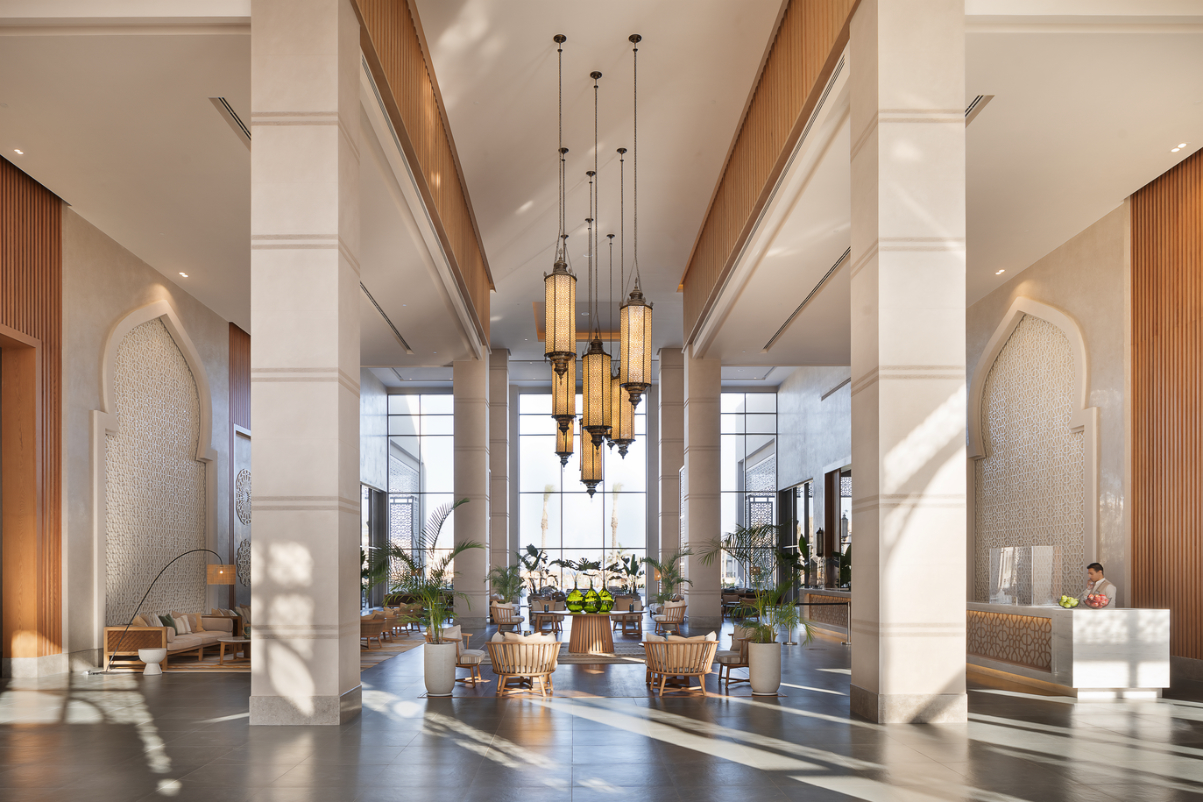
Chinese hotel conglomerate H World Group, one of the world’s largest multi-brand hotel operators, announced a significant strategic pivot during its recent earnings call, signaling a renewed focus on Tier 1 and Tier 2 cities, particularly in their premium business districts. This marks a notable shift from its long-standing growth model, which has historically centered on extensive penetration of lower-tier cities where the branded hotel supply remained fragmented. CEO Hui Jin articulated this new direction, emphasizing the company’s intent to leverage the prevailing weakness in China’s commercial real estate markets to secure prime locations for its expanding portfolio of upper-midscale and premium brands.
For over two decades, H World, formerly known as Huazhu Hotels Group, cultivated an impressive empire by meticulously mapping the burgeoning demand in China’s vast network of lower-tier cities. Its strategy was predicated on an asset-light model, primarily through franchising and management contracts, allowing for rapid scaling. This approach enabled H World to establish a dominant presence with brands like HanTing Express and JI Hotel, catering to a burgeoning domestic travel market that increasingly sought standardized, reliable accommodation outside of the major metropolitan hubs. By the end of 2023, H World boasted a staggering footprint of over 9,000 hotels and more than 870,000 rooms across 18 countries, with the vast majority concentrated within China. Its success in these markets was largely due to capturing first-mover advantage and catering to a demographic that was experiencing rising disposable incomes and a growing propensity for domestic travel. The fragmentation of the independent hotel market in these regions provided fertile ground for H World’s standardized, branded offerings, which were perceived as offering better value and quality assurance.
The strategic reorientation articulated by CEO Jin represents an opportunistic response to profound macroeconomic shifts within China, particularly the prolonged downturn in its property sector. Beginning in late 2020 with the introduction of the "three red lines" policy, designed to deleverage highly indebted property developers, China’s real estate market has experienced an unprecedented period of stress. This policy, which imposed strict limits on developers’ debt levels, triggered a liquidity crisis across the sector, leading to defaults by major players like Evergrande and Country Garden. The ripple effects have been widespread, impacting construction activity, property sales, and critically, the commercial real estate market.
Commercial property, including office buildings, retail spaces, and mixed-use developments, has faced significant headwinds. According to data from various real estate consultancies, vacancy rates in prime office spaces in Tier 1 and Tier 2 cities have trended upwards, while rental growth has stagnated or even declined in many areas. For instance, reports indicate that prime office vacancy rates in cities like Shanghai and Beijing reached multi-year highs in 2023, with similar trends observed in major Tier 2 cities. This oversupply and reduced demand from businesses, coupled with developers facing financial distress, has created an environment where landlords are more amenable to negotiate favorable lease terms, offer incentives, and consider new types of tenants to fill vacant spaces.
It is precisely this weakened commercial real estate landscape that H World is now looking to exploit. "Given the current supply cycle of the real estate market," Jin told analysts during the recent earnings call, "the company is actively grabbing emerging opportunities in core and premium business districts." This statement underscores a tactical shift from a volume-driven expansion in less competitive markets to a value-driven acquisition of prime assets in highly sought-after, yet currently undervalued, locations. These "emerging opportunities" include securing sites at more attractive rental rates or acquiring distressed properties at significant discounts, something that would have been financially unviable or highly competitive during the pre-downturn boom years.
This new strategy aligns seamlessly with H World’s broader, ongoing push into higher-end segments of the hospitality market. While its foundation was built on economy and midscale brands, H World has systematically diversified its portfolio to include upper-midscale and upscale offerings. Notable moves include the acquisition of Deutsche Hospitality (now H World International) in 2020, bringing brands like Steigenberger Hotels & Resorts and IntercityHotel under its umbrella. Domestically, H World has also been developing and promoting its own upscale brands, such as Grand Mercure (through its partnership with Accor) and its localized premium brands designed for the Chinese market.
Deploying these upper-midscale brands into prime Tier 1 and Tier 2 city locations is a calculated move. These cities, including Beijing, Shanghai, Guangzhou, Shenzhen, Chengdu, Hangzhou, and Nanjing, are characterized by high disposable incomes, robust business travel, and significant inbound tourism. They also represent a demographic shift among Chinese consumers who, with increasing affluence, are prioritizing quality, experience, and brand reputation over mere affordability. The demand for well-located, professionally managed hotels with superior amenities and service in the upper-midscale segment remains strong, even as economic growth moderates. These segments typically offer higher average daily rates (ADR) and revenue per available room (RevPAR) compared to economy hotels, contributing more significantly to the company’s overall profitability and "high-quality growth."
The move also positions H World to directly compete with international hotel giants such such as Marriott International, Hilton Worldwide, InterContinental Hotels Group (IHG), and Accor, which have traditionally dominated the upscale and luxury segments in China’s Tier 1 and Tier 2 cities. While these global players boast strong brand recognition and extensive loyalty programs, H World’s deep understanding of the Chinese consumer, its vast operational network, and its ability to leverage domestic supply chains could provide a significant competitive edge, especially when combined with newly accessible prime locations. Domestic rivals, including Jin Jiang International and BTG Homeinns, are also actively pursuing growth in these segments, suggesting an intensifying battle for market share in China’s most lucrative urban centers.
From an investor perspective, this strategic shift is likely to be viewed positively, contingent on successful execution. Analysts have long tracked H World’s impressive growth trajectory, but questions about the sustainability of perpetual lower-tier city expansion and the potential for market saturation have occasionally surfaced. By targeting premium segments in Tier 1 and Tier 2 cities, H World is signaling a move up the value chain, which can lead to more resilient earnings, higher margins, and an enhanced brand perception. The ability to secure prime real estate at favorable terms during a market trough could significantly de-risk the initial investment and accelerate the return on capital for new projects.
However, the strategy is not without its challenges. While the commercial real estate market presents opportunities, it also entails risks. The pace of economic recovery in China, consumer confidence, and the duration of the property downturn remain factors that could influence the success of these new ventures. Competition for the truly prime sites, even in a down market, will still be fierce, and integrating new hotels into highly competitive urban landscapes requires sophisticated marketing and operational excellence. Furthermore, H World will need to ensure that its upper-midscale brands resonate effectively with the discerning clientele of Tier 1 and Tier 2 cities, delivering a consistent experience that justifies their premium positioning.
In conclusion, H World’s pivot represents a calculated and timely response to evolving market dynamics. By strategically leveraging the vulnerabilities in China’s commercial real estate sector, the company aims to accelerate its expansion into the higher-value segments of the hospitality market within its most important urban centers. This bold move underscores H World’s adaptability and ambition, setting the stage for a new chapter of "high-quality growth" that could redefine its competitive standing and further solidify its position as a leading force in the global hospitality industry. The coming years will reveal the extent to which this opportunistic expansion in China’s premier cities translates into sustained financial performance and market leadership.



 Chandra Hamzah
 Gabriela Annisa
 Budi Mulyono
 Anjar Salim