
 Lukman Taruna Persada Ramadan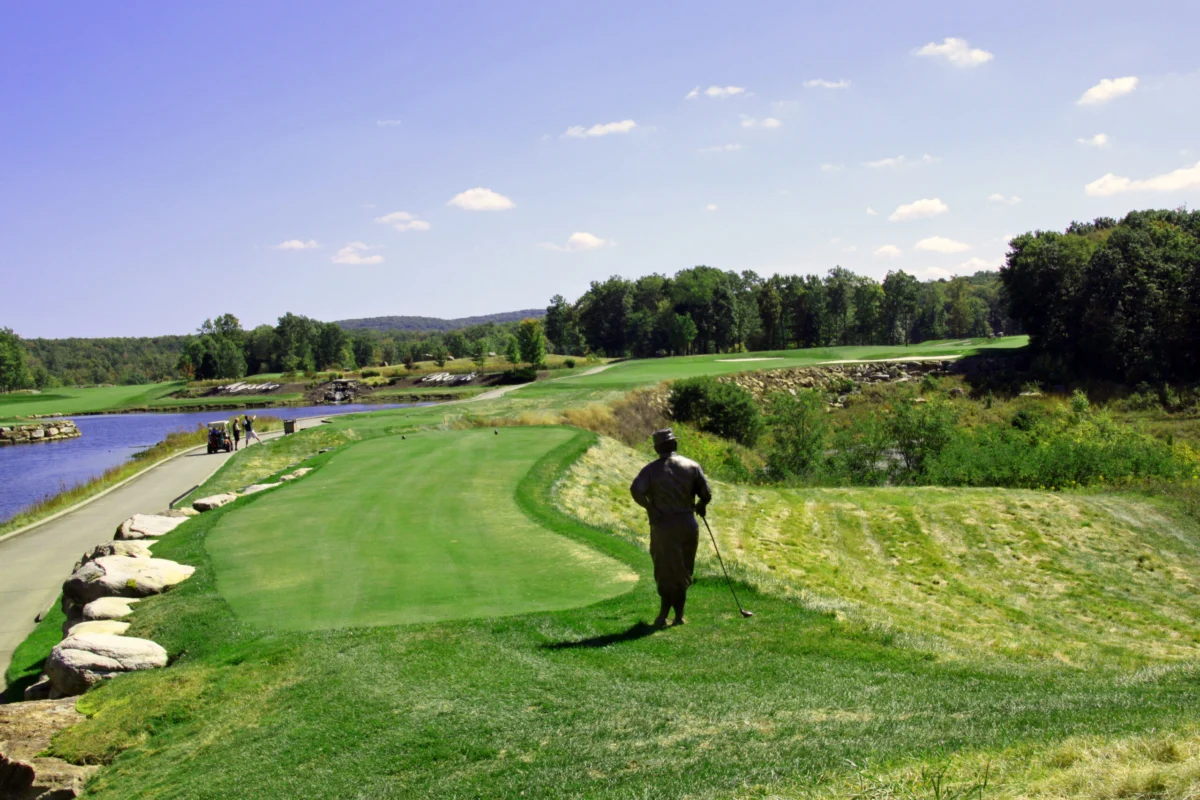
The transformation of a rugged, unyielding landscape into one of the nation’s most revered golf courses stands as a monumental achievement in sports architecture and visionary development. When legendary golf course designer Pete Dye first surveyed the designated site for a new golf course at the nascent Nemacolin resort, a project championed by its late founder Joe Hardy, his initial assessment was stark: "The property was an unbelievable rock pile." This candid observation underscored the profound challenge that lay ahead, yet it was a challenge Dye would meet with characteristic ingenuity and an unwavering commitment to Hardy’s dream. The resulting course, Mystic Rock, not only became one of the most demanding designs of Dye’s illustrious career but also, by many accounts, one of his most exquisite.
The Genesis of a Golfing Dream: Joe Hardy’s Vision and Pete Dye’s Herculean Task
Joe Hardy, a self-made billionaire and the founder of 84 Lumber, harbored an ambitious vision to transform his private hunting reserve in Farmington, Pennsylvania, into a world-class luxury resort. A cornerstone of this vision was a championship golf course that would draw enthusiasts and professional tournaments alike. Hardy’s choice of Pete Dye, renowned for his innovative, often controversial, and always memorable designs, was a testament to his desire for a truly exceptional and challenging layout. Dye, a member of the World Golf Hall of Fame, was known for his ability to sculpt dramatic landscapes, often employing railroad ties, pot bunkers, and visual trickery to create courses that tested both skill and nerve.
The scale of the undertaking at Nemacolin was immense. Dye famously recounted the colossal effort required to tame the terrain: "We blasted for six months before we even started on the doggone thing, then filled in the ravines with what we had removed." This preliminary phase alone involved the relocation of an astonishing 21,000 tons of rock. Such an operation highlights the profound engineering and earthmoving capabilities brought to bear, transforming an inhospitable "rock pile" into a playable canvas. Despite the extensive excavation, Dye noted, "Sure, you still see a lot of rock when you’re playing it, but we probably buried 10 times as much rock as you can see." This speaks to the sheer geological challenge and Dye’s design philosophy of working with, rather than entirely obliterating, the natural contours of the land. The initial construction phase laid the groundwork for a course that would quickly gain a reputation for its difficulty and dramatic aesthetics.
Mystic Rock’s Evolution: From PGA Tour Venue to Player-Friendly Masterpiece
Mystic Rock’s challenging design quickly caught the attention of the professional golf world. From 2003 to 2006, it proudly hosted the PGA Tour’s 84 Lumber Classic, a significant event that brought elite professional golf to southwestern Pennsylvania. The tournament attracted top talent, with notable champions including Vijay Singh (2003, 2004), Jason Gore (2005), and Robert Allenby (2006). The event not only showcased Mystic Rock’s demanding layout to a global audience but also significantly boosted the resort’s profile and the regional economy, generating considerable tourism revenue and local employment opportunities during its tenure. The 84 Lumber Classic was a testament to Joe Hardy’s commitment to golf and his resort’s capacity to host high-caliber events.
Following its run as a PGA Tour venue, Mystic Rock underwent significant refinements to enhance its playability for resort guests while retaining its championship character. Before his passing in 2020, Pete Dye collaborated with designer Tim Liddy on a comprehensive redesign project. A key objective of this transformation was the removal of numerous sand bunkers, a signature feature of Dye’s original, more penal designs. This strategic adjustment aimed to make the course "more user-friendly" without compromising the strategic integrity or the visual drama that defined it. The work successfully recalibrated the balance, offering a more accessible experience for a wider range of golfers, from seasoned professionals to enthusiastic amateurs.
Today, Mystic Rock maintains its formidable statistics, stretching to 7,526 yards from the championship tees, boasting a formidable rating of 77.0 and a slope of 149. These figures place it among the most challenging courses in the United States, indicating a high degree of difficulty for even scratch golfers. However, the redesign ensured that while the challenge remains, the landing areas are now more generous, and the greens, though still demanding, are not overtly penal. Christopher Anderson, Director of Golf and Ground Operations at Nemacolin, elaborates on the course’s intrinsic appeal: "The course is special for many reasons. There are so many environmental features — rock outcroppings, rock walls, streams, ponds, waterfalls and native areas — and the layout itself provides great shot variety and angles off the tee and into the greens." This blend of natural beauty and strategic design ensures an engaging and memorable round for every player.

Shepherd’s Rock: Expanding Nemacolin’s Golfing Horizon
Nemacolin’s commitment to offering diverse and exceptional golf experiences led to the development of a second 18-hole championship course. Opened in 2017, Shepherd’s Rock was also a collaborative effort, with Tim Liddy teaming up with Pete and Alice Dye. This course, while distinct from Mystic Rock, echoes the Dye philosophy of integrating the natural landscape into a challenging yet visually stunning layout. Shepherd’s Rock measures 7,290 yards with a rating of 74.7 and a slope of 138, confirming its own formidable character.
However, it offers a different aesthetic and strategic experience. Known for its expansive mountain views, tall fescue grasses, serene lakes, and distinct wood-lined bunkers, Shepherd’s Rock provides an immensely entertaining round. The presence of grazing sheep on portions of the course adds a unique, pastoral charm, enhancing the resort’s immersive experience. While the article’s author expresses a personal preference for Mystic Rock, the existence of Shepherd’s Rock significantly enhances Nemacolin’s appeal as a premier multi-course golf destination, offering variety and depth to its golfing portfolio. The addition solidified Nemacolin’s position among the elite luxury resorts offering dual championship courses, attracting golfers seeking diverse challenges and breathtaking scenery.
A Deep Dive into Mystic Rock’s Signature Holes
Mystic Rock is characterized by a collection of holes that are as visually stunning as they are strategically demanding. Each hole presents unique challenges and memorable features, contributing to the course’s overall acclaim.
Hole 2: The Inspirational Dogleg Right (473 yards, Par 4)
Hole 2 immediately engages golfers with a blend of inspiration and strategic complexity. A statue of golf legend Gene Sarazen, the first of several art pieces scattered across the course, greets players on the tee, offering a symbolic nod to golf’s rich history. This 473-yard par 4 is a dogleg right, demanding precision and power from the tee. The ideal drive requires carrying a ravine and a well-placed bunker on the right side of the fairway. Successfully executing this shot rewards the golfer with an unobstructed approach to the right-angled green. Conversely, a drive landing on the left side of the fairway introduces a formidable bunker complex, significantly complicating the second shot. Christopher Anderson notes the escalating difficulty with tee placement: "The farther back your tees are, the tougher the landing area. The fairway narrows at the front and is guarded by bunkers on both sides." This strategic design ensures that while the hole is fair, it heavily penalizes errant tee shots.
Hole 5: The Scenic Eagle Opportunity (598 yards, Par 5)
As the track’s longest par 5 at 598 yards, Hole 5 presents a dramatic downhill journey filled with strategic choices and breathtaking views. Water guards the left side, while a series of bunkers line the right, demanding careful shot placement throughout the hole. One of its most distinctive features is the presence of two greens, offering varied approach options. The right-side green provides a more direct path, while the left-side green is nestled beside a significant water hazard, dramatically fed by a 30-foot-tall waterfall. On a rock island within this hazard stands a statue of John Daly, a friend of the Hardy family, adding a personal touch and a nod to the resort’s deep connections within the golf community. Anderson identifies this as the most memorable hole, primarily due to its unparalleled views from the tees. He emphasizes the strategic advantage offered by the dual greens: "The two greens provide a different feel and shot selection for your approach. You have a good opportunity to go for the green in two and putt for eagle." This hole perfectly encapsulates Mystic Rock’s blend of natural beauty, strategic design, and high-stakes reward.
Hole 12: The Watery Par 3 Challenge (185 yards, Par 3)
Hole 12 is a visually intimidating 185-yard par 3, another instance where Mystic Rock offers dual greens to vary the challenge. One green demands an unforgiving carry over water, with its front and right sides edged by a steep drop into the hazard. The left and back portions of this green dish down into a grassy depression, making recovery shots particularly challenging. The second green, while offering a smaller target, wisely eliminates the direct water carry, providing a slightly less daunting option for golfers. This design philosophy allows the course to cater to different skill levels or preferred levels of risk, a subtle nod to the redesign’s goal of enhanced user-friendliness while maintaining championship-level strategic choices.
Hole 16: The Peninsula Green (525 yards, Par 5)
Hole 16 initiates a dramatic trio of finishing holes, where the presence of water becomes particularly pronounced and intimidating. While water comes into play on eight holes throughout the course, its strategic impact here is paramount. The fairway gradually narrows, leading to a perilous peninsula green that dramatically juts left into a shimmering lake. For long hitters, the temptation to "go for it in two" and potentially reach the green in regulation is strong. However, Christopher Anderson advises a more prudent approach: "The wiser approach… is a layup that leaves a short wedge into the green for a birdie putt." This strategic dilemma encapsulates the Dye design philosophy, forcing players to weigh risk against reward, particularly as the round draws to a close.

Hole 18: The Grand Finale (468 yards, Par 4)
The finishing hole, a 468-yard par 4, is ranked as the second-hardest on Mystic Rock, ensuring a challenging conclusion to the round. This dogleg right culminates at a green majestically overlooked by Nemacolin’s iconic Falling Rock hotel and the historic scoreboard used during PGA tournaments, creating a sense of grandeur and professional legacy. The tee shot demands precision: long, deep bunkers line the landing area on the left, but staying left is critical for an unobstructed view and approach to the tabletop green. Conversely, big bunkers sprawl along the right side of the fairway all the way to the green, partially obscuring the front. The tabletop green itself is notoriously difficult to hold, with balls frequently feeding off into surrounding bunkers or grassy depressions left and rear. Hole 18 is a fittingly dramatic and demanding closer, demanding both power and finesse to secure a par and conclude a memorable round at Mystic Rock.
The Broader Nemacolin Experience: Beyond the Fairways
Nemacolin’s allure extends far beyond its championship golf courses. The resort offers a comprehensive luxury experience, making it a premier destination for travelers seeking diverse activities and opulent accommodations. Guests can choose from a selection of four distinct hotels, including the architectural marvel Falling Rock and the grand Chateau Lafayette, alongside numerous private cottages and villas, each offering unique aesthetics and amenities. The culinary scene is equally impressive, with more than a dozen restaurants and bars catering to every palate, from casual dining to fine dining experiences.
The resort’s commitment to providing an impressive array of activities for every season further enhances its appeal. These include a world-class spa, equestrian facilities, a wildlife academy, zip-lining, off-road adventures, and winter sports, among many others. The golf courses, particularly Mystic Rock and Shepherd’s Rock, serve as a cornerstone of this expansive offering, drawing a significant segment of the resort’s clientele. The presence of such high-caliber golf is a major economic driver for Nemacolin, contributing significantly to its overall revenue and its reputation as a leading luxury resort. Moreover, its operations create substantial employment opportunities for the local community, from golf course maintenance staff and caddies to hospitality professionals and resort management, thereby having a measurable positive economic impact on the region of southwestern Pennsylvania.
The Enduring Legacy of Pete Dye and Nemacolin
Mystic Rock stands as a profound testament to the collaborative vision of a passionate owner, Joe Hardy, and the unparalleled genius of a legendary designer, Pete Dye. What began as an "unbelievable rock pile" was painstakingly sculpted into a golfing masterpiece, overcoming immense geological challenges through sheer will and innovative engineering. The course’s evolution, from a demanding PGA Tour venue to a refined, player-friendly layout, showcases Nemacolin’s commitment to continuous improvement and delivering exceptional guest experiences.
The addition of Shepherd’s Rock further solidifies Nemacolin’s position as a premier golf destination, offering variety and depth that few resorts can match. The resort as a whole, with its diverse accommodations, world-class dining, and extensive array of activities, creates a holistic luxury experience that complements its golfing prowess. The legacy of Pete Dye, characterized by dramatic landscapes and strategic brilliance, is vividly alive at Nemacolin, particularly through Mystic Rock. It remains a powerful symbol of how audacious dreams, combined with extraordinary talent and unwavering dedication, can transform the most challenging environments into enduring landmarks of sport and leisure. Nemacolin continues to thrive as a beacon of luxury and an indispensable destination for golf enthusiasts worldwide, a fitting tribute to the visionaries who brought it to life.



 Anjar Salim
 Chandra Hamzah
 Tatiana Tantri Indah Sari
 Budi Mulyono

