
 Anjar Salim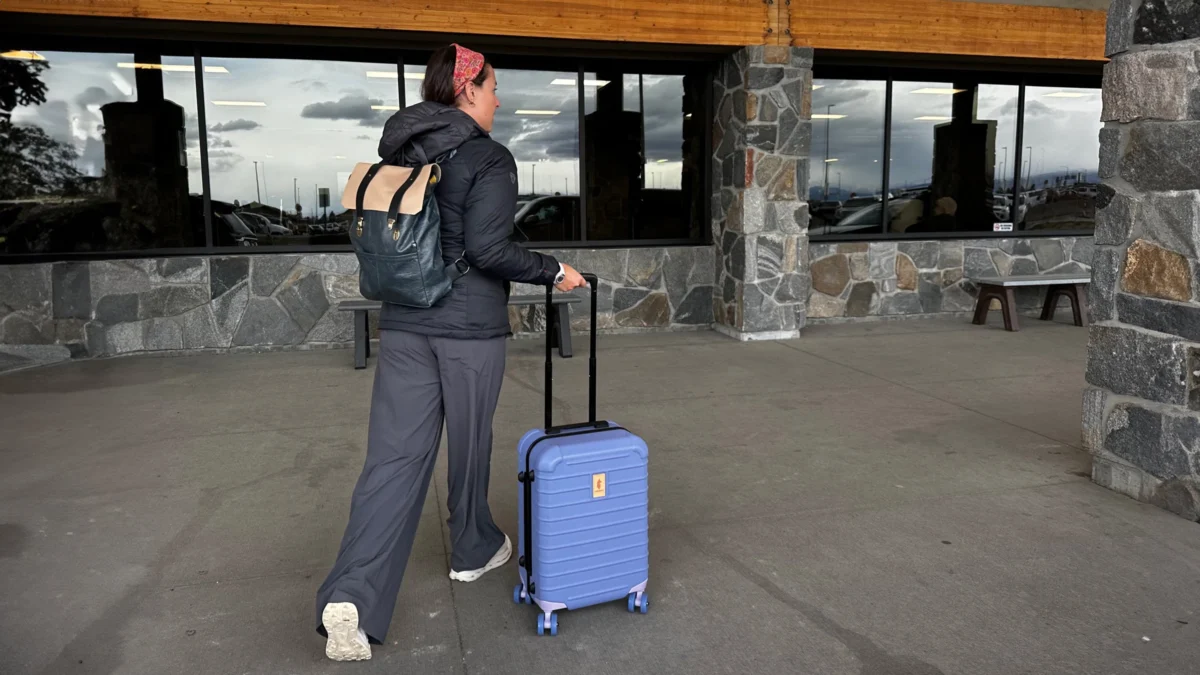
Salt Lake City-based outdoor brand Cotopaxi has officially expanded its product ecosystem with the release of the Coraza Suitcase, marking the company’s first significant venture into the hardshell rolling luggage market. Known predominantly for its vibrant, color-blocked soft-sided gear—most notably the Allpa travel backpack series—Cotopaxi’s move into rigid luggage represents a strategic pivot toward the premium lifestyle travel segment. The Coraza Carry-On, constructed from recycled polycarbonate and featuring a zipperless latch system, seeks to translate the brand’s reputation for durability and "Gear for Good" philosophy into a category traditionally dominated by legacy manufacturers like Samsonite and modern disruptors like Away and Monos.
The Strategic Evolution of Cotopaxi’s Travel Architecture
Since its founding in 2014, Cotopaxi has carved out a unique niche in the outdoor industry by blending high-performance technical specifications with a disruptive aesthetic. The Allpa backpack, which became a staple for digital nomads and "one-bag" travelers, set the standard for the company’s design principles: high-visibility interiors, intuitive pocketing, and rugged external materials. However, as the travel market has shifted toward hybrid models of transit—combining air travel with urban commuting—the demand for wheeled luggage has remained resilient.
The development of the Coraza Suitcase represents a multi-year engineering effort to move from pliable textiles to molded structures. For Cotopaxi, the challenge lay in maintaining its signature visual identity while meeting the mechanical requirements of a hardshell suitcase. This transition involves a shift from sewing-heavy manufacturing to injection molding and precision hardware assembly. The Coraza is positioned not merely as a suitcase, but as a protective "shell" (the name Coraza translates from Spanish as "shell" or "armor"), designed to withstand the rigors of automated baggage handling systems and varied urban terrains.
Technical Specifications and Design Parameters
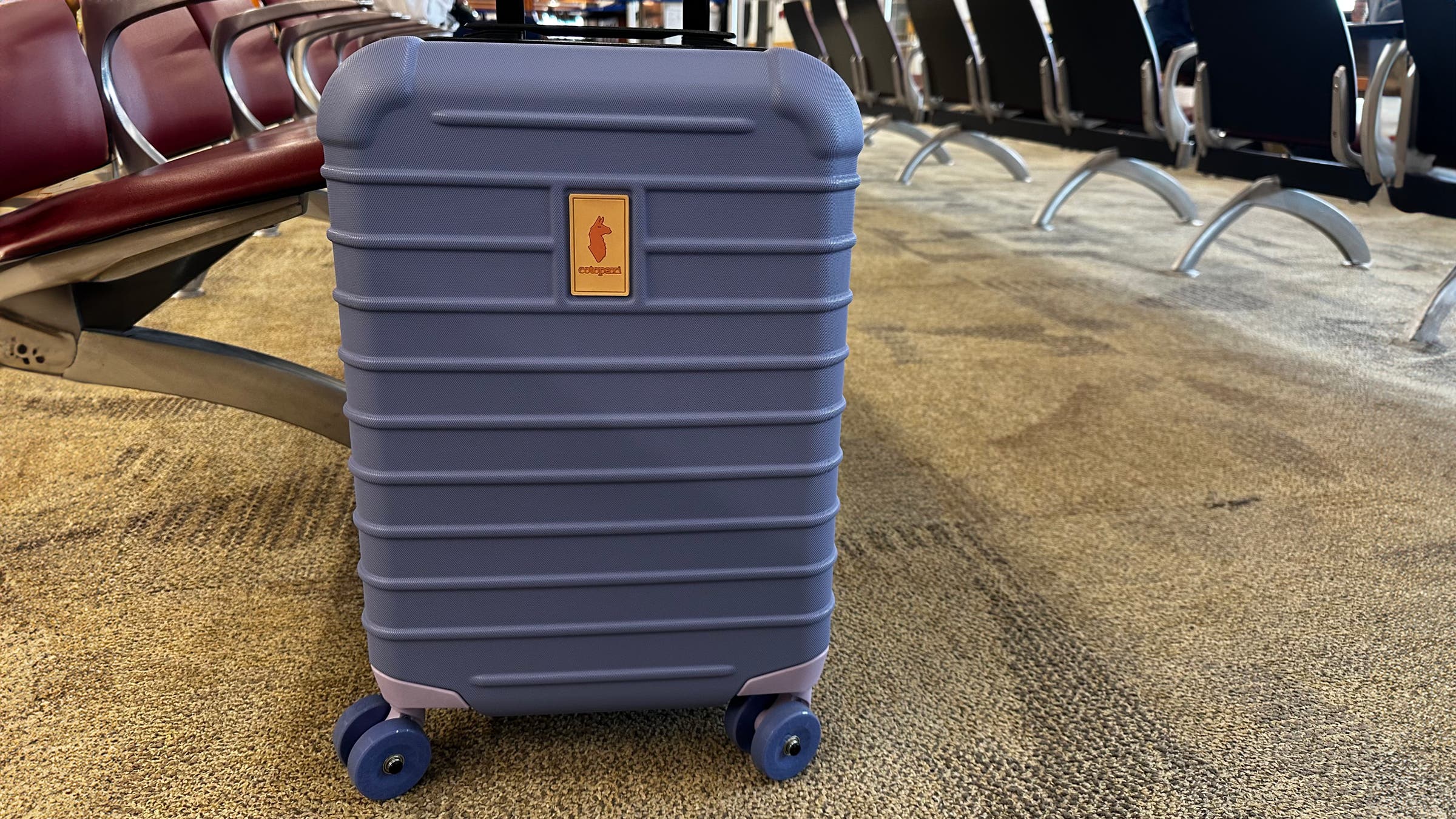
The Coraza Carry-On is built around a recycled polycarbonate shell, a material chosen for its high impact resistance and weight-to-strength ratio. Unlike traditional ABS plastic, which can crack under extreme pressure, polycarbonate is designed to flex and absorb energy, returning to its original shape after impact.
The suitcase adheres to the following core specifications:
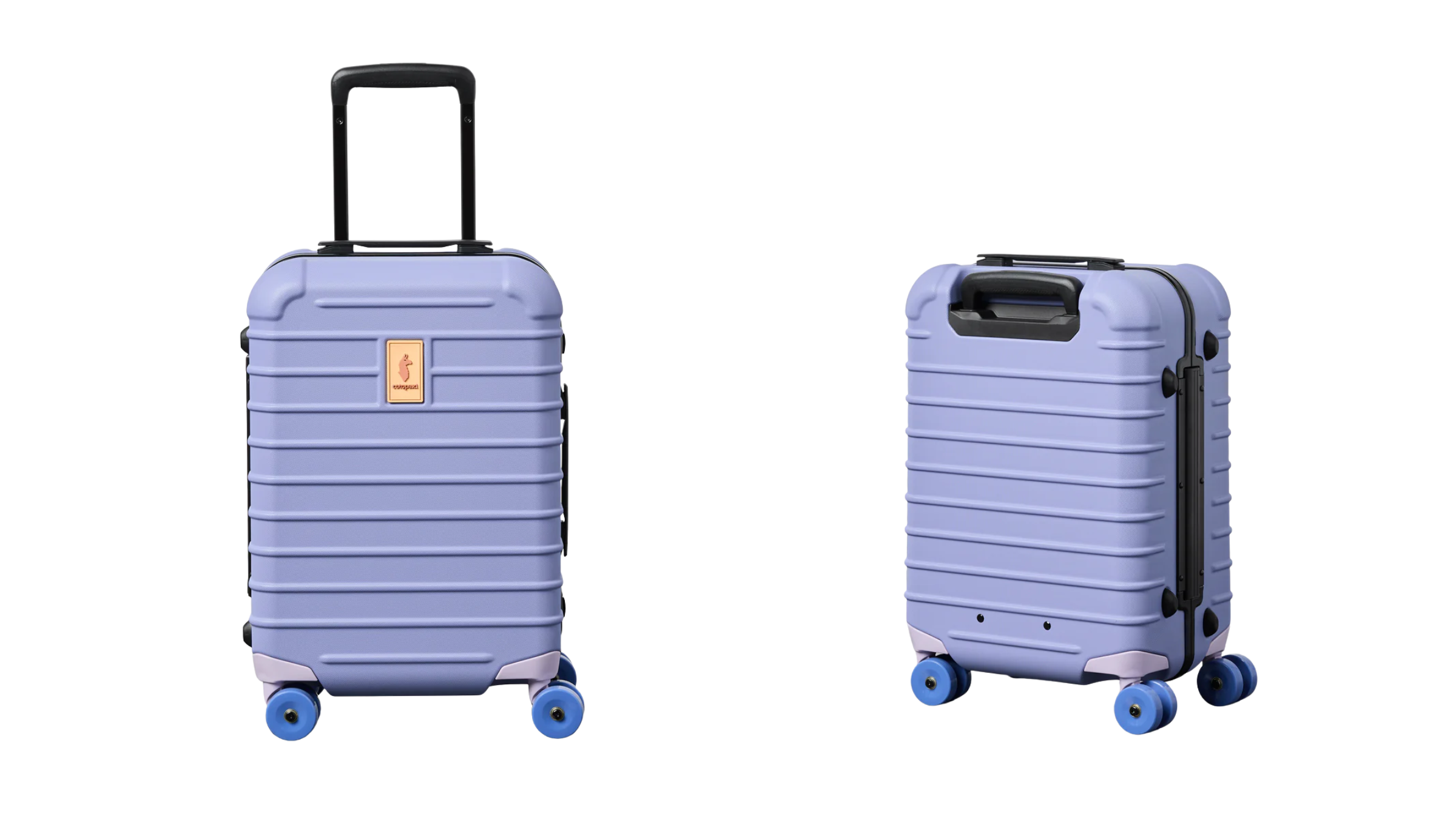
- Dimensions: 22 x 14.5 x 9.5 inches
- Capacity: 36 Liters
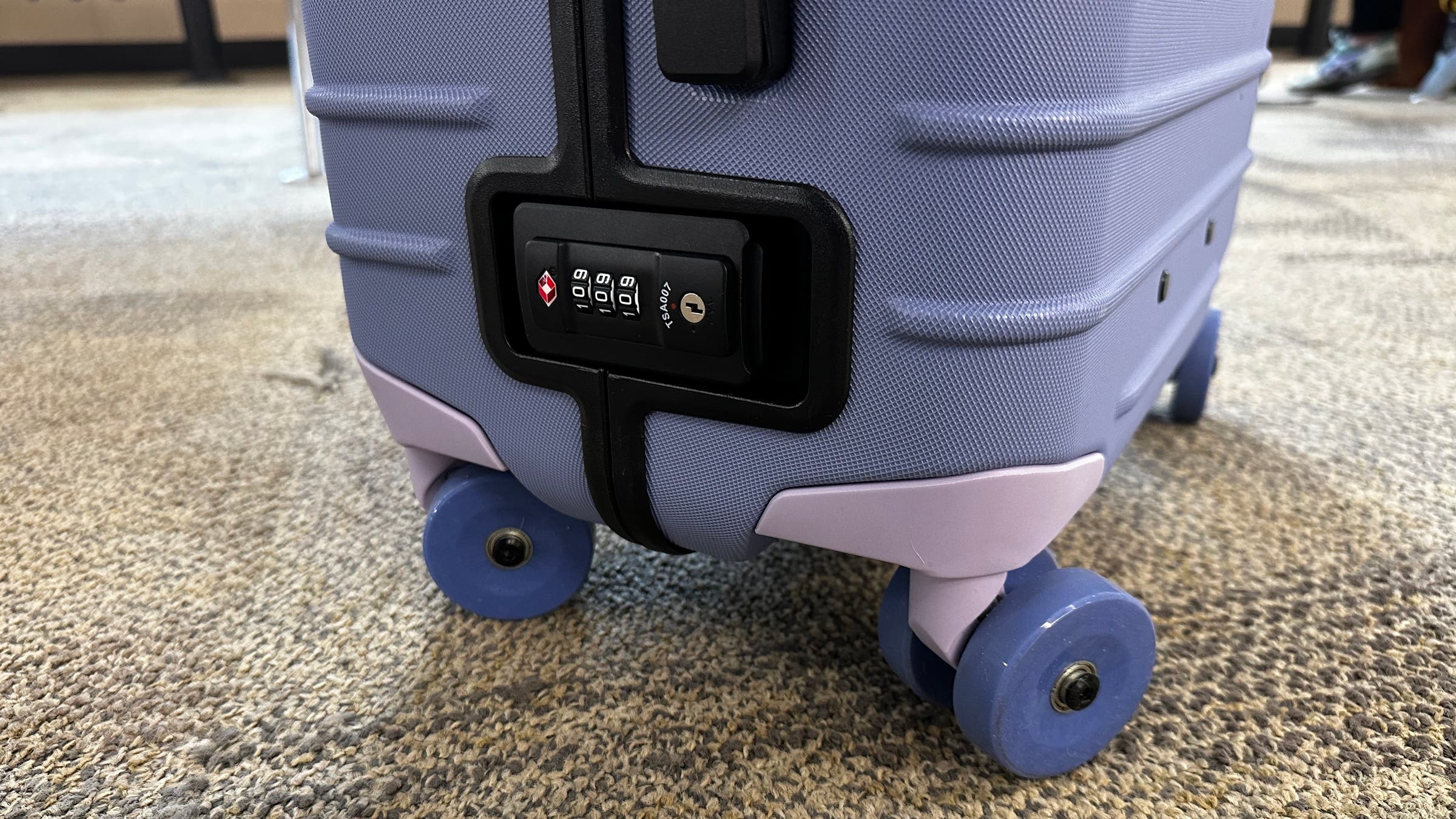
- Closure System: Dual-locking mechanical latches with integrated TSA-approved combination locks
- Mobility: Four 360-degree spinner wheels with interchangeable hubcaps
- Internal Organization: Two removable, hanging mesh organization sacks
A critical point of analysis for the Coraza is its volume-to-dimension ratio. While the exterior dimensions are standard for North American domestic carry-on limits (typically 22 x 14 x 9 inches), the 36-liter internal capacity is notably more conservative than competitors. For comparison, many soft-sided carry-ons and even some "plus-sized" hardshells offer between 40 and 45 liters of packing space. This discrepancy is largely due to the thickness of the recycled polycarbonate and the internal architecture required to support the latch-and-frame system.
The Transition to Zipperless Latch Technology
One of the most polarizing features of the Coraza is its departure from the industry-standard zipper closure. The suitcase utilizes a gasket-sealed frame held shut by two heavy-duty latches. This design choice is rooted in two primary objectives: security and longevity. Zippers are often the "single point of failure" in travel gear; they can be punctured with a ballpoint pen to gain entry or can burst under the pressure of overpacking.
The Coraza’s mechanical latches eliminate these risks but introduce a new set of operational requirements. The locking mechanism involves a multi-step process: the user must depress a primary button, slide the latch upward to clear the catch, and then swing the arm open. Closing the bag requires precise alignment of the two halves of the frame to ensure the gasket creates a weather-resistant seal.
While this system offers superior protection against "smash-and-grab" theft and environmental elements, field testing indicates a steeper learning curve. The necessity for perfect frame alignment means that even a small piece of fabric caught in the rim can prevent the latches from engaging. This "all-or-nothing" closure system contrasts with zippers, which can often be forced past minor obstructions or "self-heal" if the teeth become misaligned.
Internal Organization and the Hanging Mesh System
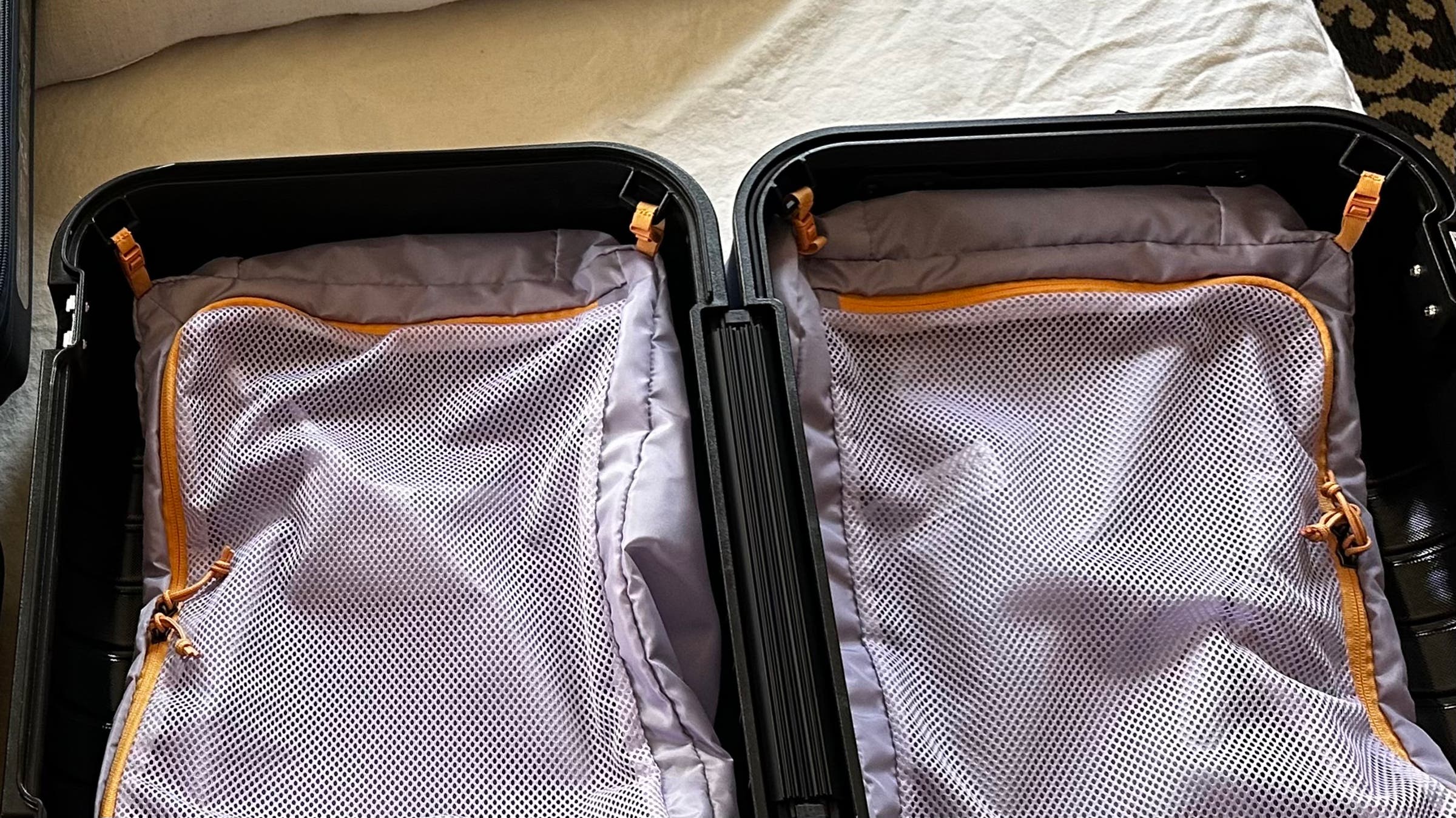
Internally, Cotopaxi has attempted to reinvent the packing cube by including two removable hanging mesh sacks. These sacks are suspended from the center spine of the suitcase, allowing them to swing or be removed entirely for use as independent organizers in a hotel closet.
Data from consumer travel patterns suggests that organization is a top priority for 72% of frequent flyers. However, the Coraza’s execution of this feature has met with mixed reviews. Because the sacks hang from the center rather than fitting flush into the corners of the shell, they create "dead space" around the edges. For travelers who utilize the "rolling method" or traditional compression cubes, these integrated sacks may actually hinder the total volume of gear that can be transported.
To maximize the 36-liter capacity, many users find it necessary to remove the hanging sacks and revert to standard packing configurations. This highlights a classic design tension: the balance between providing "out-of-the-box" organization and maintaining the raw volume required for bulkier items like winter coats or hiking boots.
Mobility and Infrastructure Compatibility
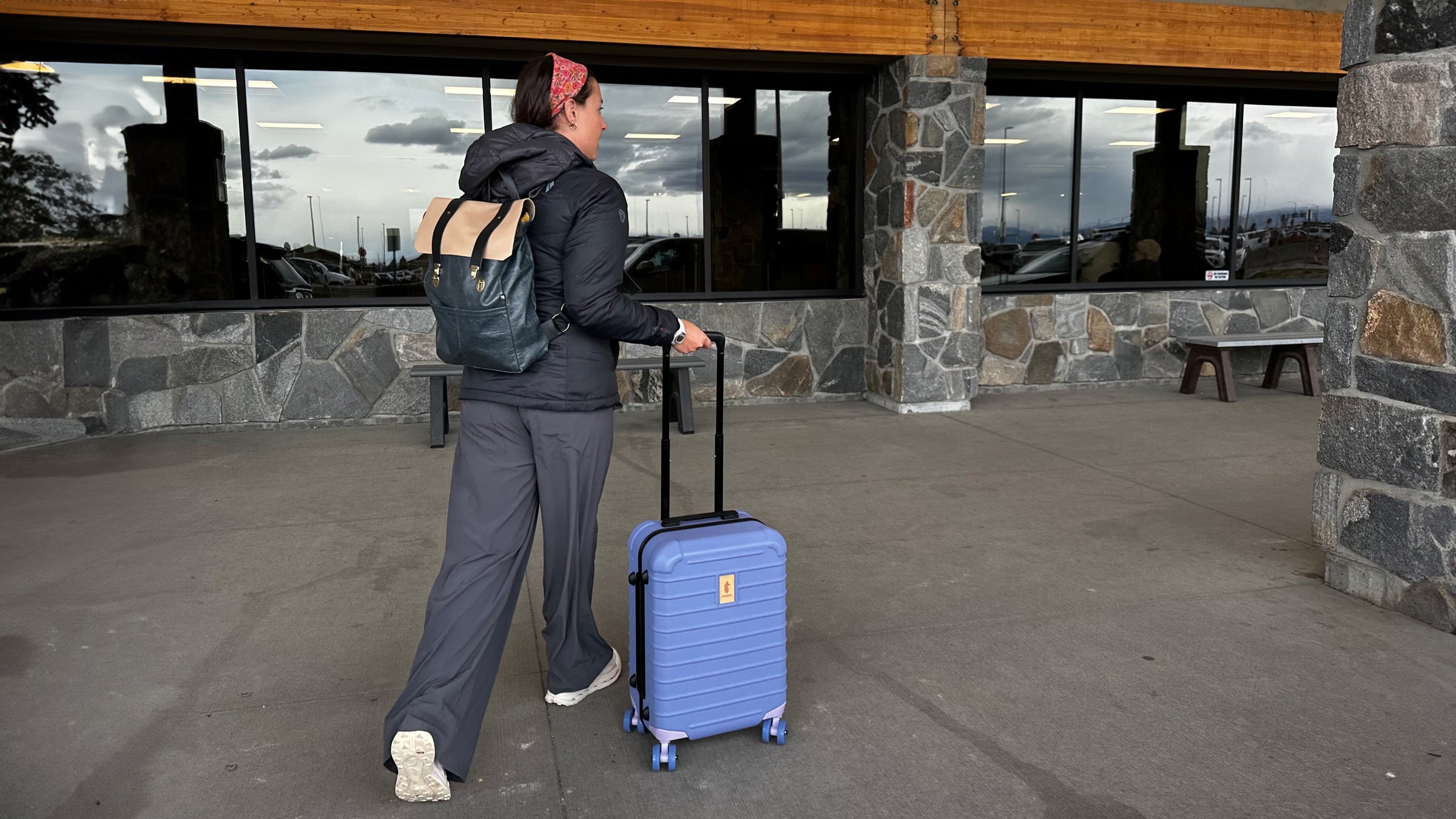
A suitcase is only as effective as its wheels, and Cotopaxi has invested heavily in the Coraza’s mobility suite. The four spinner wheels are designed with high-grade bearings to minimize friction and noise. In urban environments, where travelers must navigate cracked sidewalks, cobblestones, and transit platform gaps, the Coraza demonstrates high stability.
The wheels are also modular, allowing users to swap out colors or replace damaged units easily. This modularity is a growing trend in the luggage industry, led by brands seeking to increase the lifespan of their products and reduce the number of suitcases that end up in landfills due to a single broken wheel.
The retractable handle features multiple height settings to accommodate different user statures, and the top grab handle is integrated into the frame for maximum durability. During testing across various modes of transport—including aircraft overhead bins, Amtrak luggage racks, and metropolitan subway systems—the Coraza’s exterior remained resilient against scuffing, a common complaint with high-gloss polycarbonate finishes.
Chronology of Product Development and Launch
The journey of the Coraza from concept to consumer began in early 2024, following the massive success of the Allpa 35L and 42L backpacks.
- Q1 2024: Cotopaxi’s R&D team initiated the "Project Hardshell" initiative to address the needs of travelers who required more protection than a soft-sided bag could provide.
- Q3 2025: Prototype testing was conducted across various climates, focusing on the performance of the recycled polycarbonate in sub-zero temperatures (where plastics often become brittle).
- April 2026: Pre-production units were sent to long-term testers and outdoor journalists to evaluate the latch system in real-world "stress" scenarios.
- June 2, 2026: The Coraza Carry-On officially debuted on the global market, accompanied by a marketing campaign emphasizing the use of 100% recycled materials in the shell.
Market Analysis and Broader Implications
The introduction of the Coraza occurs at a time when the luggage industry is undergoing a significant transformation. According to market research, the global travel bag market is projected to grow by 6.5% annually through 2030, with "sustainable materials" being the fastest-growing sub-segment.
Cotopaxi’s entry into this space challenges established luxury brands by offering a high-spec, zipperless suitcase at a mid-range price point. However, the Coraza faces stiff competition from:
- The "Minimalist" Brands: Companies like Monos and Away have perfected the aesthetic of the "smooth shell" and offer slightly higher internal volumes.
- The "Legacy" Brands: Samsonite and Tumi have recently launched their own recycled lines, leveraging massive global distribution networks.
- The "Technical" Brands: Osprey and Patagonia continue to dominate the "rugged" wheeled luggage category with oversized wheels and water-resistant fabrics.
The "implication" of the Coraza is that Cotopaxi is no longer content being a "niche" outdoor brand. By tackling the hardshell suitcase—the quintessential tool of the business traveler and the casual tourist—Cotopaxi is signaling its intent to become a full-spectrum lifestyle brand.
Official Stance and Corporate Responsibility
As a certified B-Corp, Cotopaxi’s official stance on the Coraza emphasizes the product’s lifecycle. "Our goal wasn’t just to make another suitcase; it was to make a suitcase that reflects our commitment to the planet," a company spokesperson stated during the product’s launch event. The use of recycled polycarbonate is part of a broader corporate goal to ensure that 100% of their products use recycled, repurposed, or responsibly sourced materials by the end of the decade.
The company also offers a "Guaranteed for Good" warranty, which covers repairs for the lifetime of the product. This is particularly relevant for the Coraza’s latch system and wheels, which are the components most likely to require maintenance after years of international travel.
Conclusion: Assessing the Coraza’s Place in Travel Gear
The Cotopaxi Coraza Carry-On is a sophisticated, if occasionally complicated, addition to the hardshell luggage market. Its strengths lie in its robust construction, exceptional wheel performance, and the security of its zipperless design. For the "aesthetics-minded gearhead" who prioritizes durability and brand values over raw packing volume, the Coraza is a compelling option.
However, the suitcase also serves as a case study in the trade-offs of modern design. The very features that make it secure—the mechanical latches and the rigid frame—also make it less forgiving for the "over-packer" or the traveler in a hurry. As Cotopaxi continues to iterate on this design, the industry can expect to see further refinements in the balance between internal capacity and external protection. For now, the Coraza stands as a bold, colorful, and environmentally conscious first step into the future of rigid travel gear.




 Chandra Hamzah
 Tatiana Tantri Indah Sari
 Budi Mulyono
