
 Lukman Taruna Persada Ramadan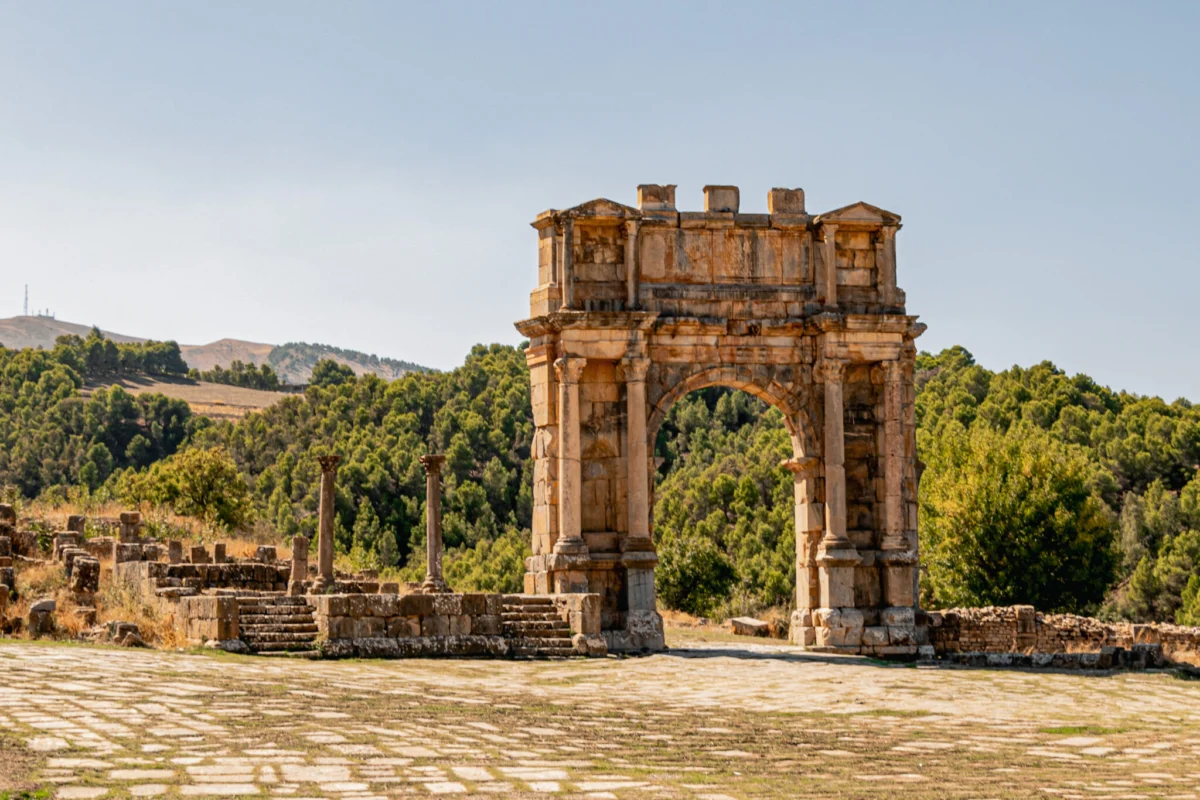
For enthusiasts already anticipating the celestial spectacle of a total solar eclipse in North Africa, August 2027 presents an unparalleled opportunity, and premium travel organizer Geographic Expeditions (GeoEx) is offering an exclusive, small-group expedition designed to immerse participants in both the astronomical event and Algeria’s rich cultural and historical tapestry. This meticulously curated 10-day journey promises not only a prime viewing experience of the rare solar phenomenon but also an in-depth exploration of a nation still largely off the beaten path for many international travelers.
The Astronomical Phenomenon: A Rare Spectacle
The total solar eclipse of August 2, 2027, is poised to be one of the most significant astronomical events of the decade, notable for its exceptional duration of totality. While the global average for a total solar eclipse is around 2-3 minutes, this particular event will boast a maximum totality exceeding 6 minutes and 23 seconds in certain locations, primarily in Upper Egypt. The path of totality will sweep across a broad swathe of North Africa, including parts of Spain, Morocco, Algeria, Tunisia, Libya, Egypt, Saudi Arabia, Yemen, and Somalia. Algeria, strategically positioned within this path, offers optimal viewing conditions, particularly in its western regions, making cities like Oran prime destinations for observers.
A total solar eclipse occurs when the Moon passes directly between the Sun and Earth, completely obscuring the face of the Sun. This alignment transforms day into a twilight-like darkness, allowing observers within the narrow path of totality to witness the Sun’s ethereal corona – its outermost atmosphere – which is usually hidden by the Sun’s bright disk. As Professor Zach Berta-Thompson, an astrophysics and planetary science expert from the University of Colorado Boulder and a key member of the expedition’s expert team, explains, "The strange fact that our Moon appears almost exactly the same size as our much larger, much more distant Sun is likely a rare coincidence, even amongst the countless possible eclipses in the Universe." This unique cosmic geometry on Earth creates a profoundly visceral experience, described by many as a once-in-a-lifetime event that transcends mere visual observation. The August 2027 event’s extended totality is particularly significant, providing a longer window to observe the intricate structures and dynamic streams of the solar corona, offering both profound aesthetic pleasure and valuable scientific observation opportunities.
Algeria: An Undiscovered Gem Along the Path of Totality
GeoEx’s expedition leverages Algeria’s position within the eclipse path while simultaneously showcasing the country’s vast historical and cultural wealth. Often overlooked by mainstream tourism, Algeria boasts a wealth of UNESCO World Heritage Sites and pristine archaeological ruins that offer a deep dive into ancient civilizations and vibrant contemporary culture. The 10-day itinerary is structured to provide a comprehensive cultural immersion leading up to the main event.
The journey commences with an exploration of Algiers, the capital city, where travelers will navigate the charming, whitewashed alleys and maze-like byways of the Casbah. A UNESCO World Heritage site, the Casbah is a historic medina that epitomizes Ottoman-era architecture and urban planning, with its labyrinthine streets, traditional houses, and ancient mosques telling tales of centuries past. Understanding Algiers serves as a crucial prelude, connecting participants to the country’s rich heritage before venturing to other significant locations.

The expedition then extends to Algeria’s coastal regions, revealing well-preserved Roman and Phoenician ruins. Travelers will visit Tipasa, another UNESCO World Heritage site, renowned for its spectacular coastal ruins overlooking the Mediterranean Sea. Founded by the Phoenicians and later conquered by the Romans, Tipasa offers a vivid glimpse into ancient urban life with its amphitheater, basilicas, and thermal baths. Nearby Cherchell, once a significant Roman port and capital of the Mauretanian kingdom, presents further archaeological wonders, including a Roman theatre and a museum housing an impressive collection of mosaics and sculptures.
A highlight of the historical exploration is the visit to Djemila, arguably one of the finest examples of Roman architecture in North Africa and a UNESCO World Heritage site. Situated at an altitude of 900 meters, Djemila, originally named Cuicul, is a remarkably preserved Roman city adapted to mountainous terrain. Its forum, temples, basilicas, triumphal arches, and houses with intricate mosaics provide an extraordinary testament to Roman urban planning and artistic achievement in a North African context. The expedition offers an intimate encounter with these sites, often in serene settings far removed from mass tourism.
Expert-Led Immersion and Scientific Insight
The "Algeria Eclipse Itinerary" is distinguished by its leadership, combining GeoEx’s professional trip management with the expertise of leading astrophysicists and planetary scientists. This interdisciplinary approach ensures that participants gain not only a prime viewing spot for the eclipse but also a deep scientific understanding of the phenomenon and its broader astronomical context.
Professor Zach Berta-Thompson, whose research focuses on exoplanet atmospheres and planetary eclipses, brings a unique perspective to the expedition. His insights into the thousands of exoplanets orbiting other stars in the Milky Way, and the hypothetical eclipses that might occur on those distant worlds, underscore the rarity and special nature of Earth’s own celestial alignments. His quote, "We imagine many of those planets might have moons and eclipses. Yet, eclipses on Earth probably still stand out as particularly spectacular," frames the experience within a cosmic perspective, making the terrestrial event even more profound.
Joining Professor Berta-Thompson are two other distinguished scholars: Professor Emerita Erica Ellingson, a veteran leader of eclipse expeditions and a respected astrophysicist, and Professor Nick Schneider, a planetary scientist renowned for his work with NASA’s MAVEN mission to Mars, where he leads the Imaging UltraViolet Spectrograph Team. Professor Schneider is also celebrated for his engaging lectures at major eclipse events worldwide. Their collective expertise will provide participants with unparalleled access to scientific knowledge, offering context on solar physics, planetary science, and the mechanics of eclipses through lectures, discussions, and direct observation guidance. This ensures a rich educational component, elevating the trip beyond mere tourism to a genuine learning experience.
The Grand Event: Total Solar Eclipse in Oran
The culmination of the expedition is the experience of the total solar eclipse in the city of Oran. As Algeria’s second-largest city, Oran offers a vibrant backdrop for the main event, combining historical charm with modern amenities. Located on the northwestern Mediterranean coast, Oran is known for its Spanish-influenced architecture, the majestic Santa Cruz Fort overlooking the city, and its lively cultural scene. The choice of Oran as the viewing location is strategic, positioning the group within an optimal zone for observing the eclipse’s long totality.

Professor Berta-Thompson emphasizes the profound nature of witnessing totality: "Witnessing a total solar eclipse is a once-in-a-lifetime experience, a rare celestial alignment you observe not with your eyes but viscerally with your entire body." He elaborates on the scientific and aesthetic marvel of observing the solar corona directly when the Sun’s main disk is completely hidden by the Moon. The August 2027 eclipse, with its "especially long totality," presents an exceptional opportunity for this direct observation, allowing for a more extended study and appreciation of this remarkable but fleeting sight. The experts will guide participants through safe viewing practices and explain the various phenomena associated with totality, such as Baily’s Beads and the diamond ring effect.
Logistics and Inclusions of an Exclusive Expedition
This unique GeoEx expedition is designed for a highly exclusive group, with a maximum of 22 guests, ensuring an intimate and personalized experience. The pricing for this 10-day journey begins at $11,850, based on double occupancy. This comprehensive rate covers a wide array of services and amenities, reflecting GeoEx’s commitment to high-quality, worry-free travel.
Inclusions encompass all hand-picked accommodations, selected for their comfort, authenticity, and strategic location. All ground transportation within Algeria, including airport transfers, is provided, ensuring seamless transitions between sites. The expedition also includes guided sightseeing at all major attractions, led by experienced local guides who offer deep cultural and historical insights. All itinerary events and experiences, from archaeological site visits to cultural encounters, are covered. Furthermore, the price includes all gratuities for local guides, drivers, and support staff (excluding the GeoEx Trip Leader), most meals featuring local and international cuisine, emergency evacuation services, and secondary medical expense insurance, providing peace of mind for travelers. Dedicated support from GeoEx travel professionals and an in-house air reservations team further streamlines the planning and execution of the trip. Given the limited capacity and the unique nature of the event, early booking is strongly advised for those wishing to secure their place on this extraordinary journey.
Broader Implications: Tourism, Science, and Experiential Travel
The August 2027 total solar eclipse in Algeria carries significant implications beyond the individual traveler’s experience. For Algeria, it presents a golden opportunity to boost its profile as a burgeoning destination for niche tourism. Events of this magnitude attract a specialized segment of travelers – astronomers, eclipse chasers, and cultural explorers – who are often keen to explore less-traveled regions. This could stimulate local economies, encourage investment in tourism infrastructure, and provide a platform to showcase Algeria’s unique blend of natural beauty, ancient history, and vibrant culture to a global audience. The focus on high-value, low-impact tourism, as exemplified by GeoEx’s small-group approach, aligns with sustainable tourism principles.
From a scientific perspective, total solar eclipses, especially those with long durations, are invaluable for solar research. While space-based telescopes provide continuous monitoring of the Sun, ground-based observations during totality offer unique perspectives, particularly for studying the lower corona and phenomena that are difficult to observe otherwise. The presence of leading scientists on the GeoEx expedition highlights the scientific community’s interest in such events, underscoring the potential for both professional and citizen science contributions. Data collected during these brief moments of totality can help scientists better understand solar flares, coronal mass ejections, and space weather, which have direct impacts on Earth’s technology and environment.
Finally, this expedition reflects a broader trend in the travel industry towards experiential and educational journeys. Travelers are increasingly seeking out trips that offer more than just sightseeing; they desire immersive experiences that provide deeper learning, cultural exchange, and unique perspectives. Combining a rare astronomical event with an in-depth exploration of a culturally rich, historically significant, and largely undiscovered country like Algeria perfectly encapsulates this evolving demand. GeoEx’s offering demonstrates how specialized travel can foster both personal enrichment and a greater appreciation for the wonders of our planet and the cosmos beyond.



 Anjar Salim
 Chandra Hamzah
 Tatiana Tantri Indah Sari
 Budi Mulyono

