
 Hendra Ismail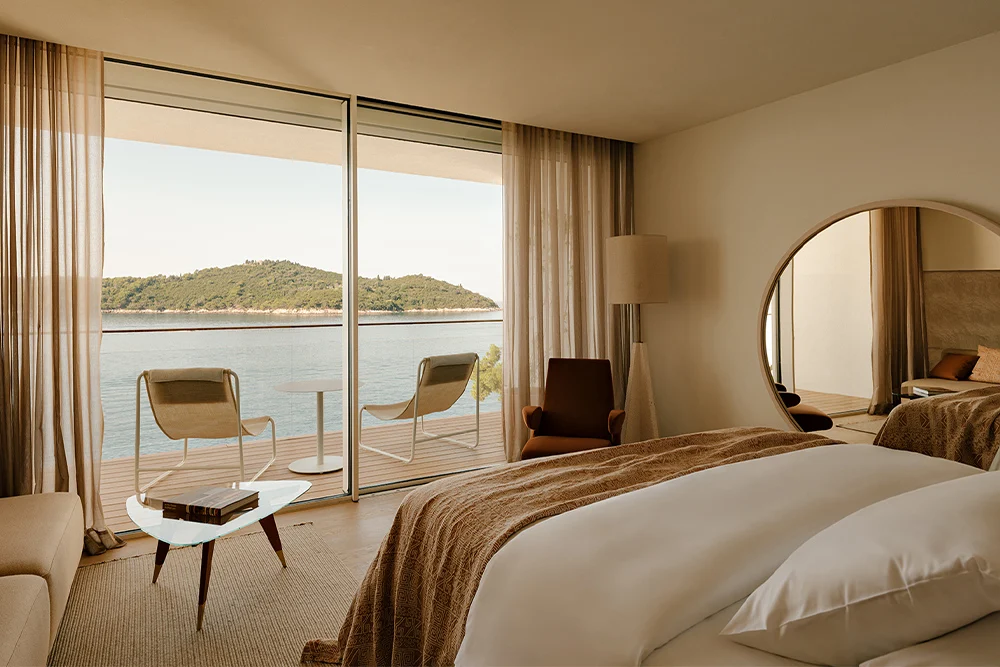
Dubrovnik, a jewel of the Adriatic, once shone as a beacon of design and glamour during the mid-20th century. In the vibrant decades of the 1950s and 1960s, this Croatian coastal city, nestled along the picturesque Dalmatian Coast, was a magnet for sophistication, drawing inspiration from Italy’s rich artistic heritage, from the Renaissance masters to the chic sensibilities of Italy’s midcentury Golden Age. This historical allure has been masterfully recaptured and reimagined in the recent unveiling of Villa Dubrovnik, a property that pays homage to its storied past while embracing a forward-looking design ethos.
A Legacy Reborn: The Architectural Journey of Villa Dubrovnik
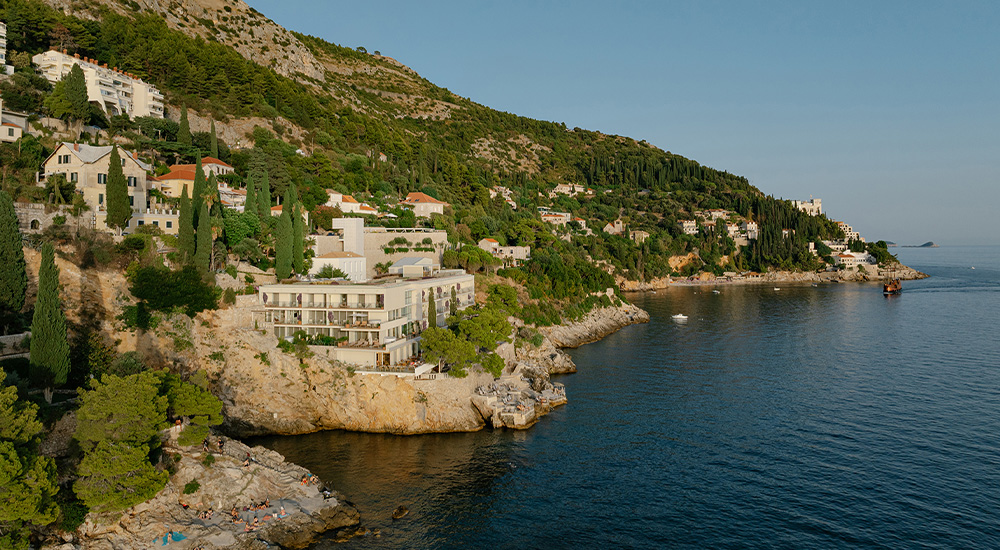
Originally erected in 1961 by the visionary architect Mladen Frka, Villa Dubrovnik was conceived as a prestigious residential enclave for the political elite of the era. Its strategic location and modernist design positioned it as a symbol of prosperity and international connection. Now, after a comprehensive revitalization, the villa has been transformed into an exquisite hospitality destination, meticulously curated to celebrate the multifaceted eras of its existence. The project was entrusted to the renowned Brazilian architect Arthur Casas, whose distinctive approach has infused the property with a unique blend of local authenticity and global sophistication.
Casas’s philosophy for the renovation centered on a profound respect for the villa’s history and its breathtaking natural setting. “Brazilian design carries a certain freedom in its relationship with landscape and materiality,” Casas explained in an interview. “That sensibility allowed us to reinterpret Croatian identity with freshness rather than repetition. The result feels rooted locally, but with a distinct and cosmopolitan perspective.” This intercontinental dialogue is evident in every facet of the villa’s design, from its material choices to its artistic collaborations.
Materiality and Design: A Fusion of Heritage and Modernity
The foundation of Villa Dubrovnik’s renewed aesthetic is its deliberate and evocative materiality. Casas opted for a palette that speaks to both the natural landscape and the region’s historical building traditions. Croatian limestone, a material deeply embedded in the region’s architectural vernacular, forms a significant part of the interior and exterior design. This is complemented by oak, one of Croatia’s most significant exports, lending a sense of grounded, earthy luxury that harmonizes with the villa’s cliffside perch. This careful selection of materials creates a pared-down elegance, ensuring the architecture serves as a graceful backdrop to the stunning coastal vistas.
The guest experience at Villa Dubrovnik begins with an unconventional entry point: the Galanto, the city’s sole rooftop bar. From this elevated vantage point, guests descend to the reception area, where a thoughtfully curated design narrative unfolds. Here, neutral-toned artworks by Croatian artist Dubravka Tullio share space with iconic Gio Ponti-designed chairs, a nod to Italy’s midcentury design prowess. Bespoke oak millwork features a reinterpreted motif of Croatian lace, a craft with deep roots stretching back to the Renaissance, subtly weaving historical artistry into the contemporary design.
Public Spaces: A Cultural Tapestry
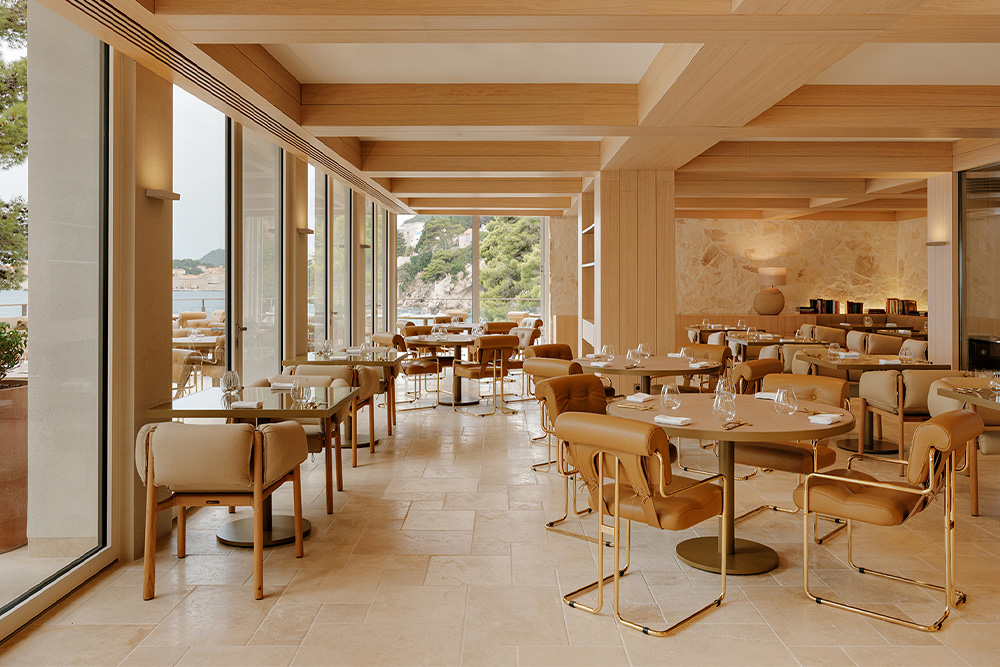
Further descending into the villa reveals the main public spaces, a hub of culinary and cultural experiences. This level houses two distinct dining establishments: the Michelin-starred restaurant Pjerin and the more relaxed indoor-outdoor Libero Bar. An expansive library space also offers a tranquil retreat for guests. Within these areas, cultural references are elegantly integrated through a collection of sculptures, artifacts, custom carpets, and meticulously crafted mannequins adorned in exquisite local attire by designer Duška Nešić Dražić.
“The goal was not to recreate the past, but to anchor the interiors in a cultural lineage that feels authentic and enduring,” Casas stated, emphasizing the project’s commitment to genuine cultural expression over mere replication. The Pjerin restaurant, in particular, embodies this ethos, exuding sophistication through its bespoke millwork and subtle references to Italy’s midcentury Golden Age, creating an intimate atmosphere that invites guests to feel embraced by the spirit of the Old Town.
Guest Accommodations: A Symphony of Comfort and Local Charm
The villa’s 56 guestrooms and suites are designed as sanctuaries of refined comfort, each meticulously appointed to reflect a harmonious blend of influences. Midcentury and contemporary pieces, inspired by Italian design sensibilities, are artfully combined with custom furnishings from the esteemed Croatian furniture brand Prostoria. The intention was to imbue each space with a distinct local flair, ensuring a deep connection to the Croatian identity.
This local resonance is further expressed through unique artistic touches. Column capital sculptures, inspired by the architectural details found in Dubrovnik’s Old Town, were created by the Zagreb-based Atelier Ekipa Kipara. Bed throws feature motifs drawn from archival Croatian drawings and patterns, adding a layer of historical depth and artistic narrative to the private spaces. Even the guest bathrooms, bathed in an earthy color palette, are punctuated by the striking vibrancy of Brazilian Via Appia quartzite, which forms monolithic vanities, introducing a bold yet natural element.
Navigating Challenges: The Precision of Necessity
The realization of Villa Dubrovnik was not without its significant logistical and architectural hurdles. Arthur Casas acknowledged the complexities inherent in the project, particularly the site’s challenging access. “The site is accessed by a narrow, one-way road only [about 10 feet] wide, ending in a cul-de-sac,” he recalled. “Many materials had to arrive by sea. Installing large elements required precise coordination, sometimes cranes, and constant adaptation to local construction limitations.”
The extended construction timeline, spanning nearly four years, became a testament to the meticulous planning and adaptive problem-solving required. “Limitations forced precision, but that strengthened the project,” Casas reflected. This painstaking process, while demanding, ultimately contributed to the flawless execution of the design, resulting in an assemblage that masterfully balances modern Italian sharpness, the richness of local art, and the enduring materiality of medieval traditions.

A Timeless Destination: The Broader Impact
The reopening of Villa Dubrovnik signifies more than just the revitalization of a historic property; it represents a broader cultural and economic contribution to the region. By celebrating Croatian heritage through contemporary design and international collaboration, the villa positions itself as a unique destination that appeals to discerning travelers seeking authentic experiences.
Timeline of Villa Dubrovnik’s Transformation:
- 1961: Original construction of Villa Dubrovnik as a residential building for political elites by architect Mladen Frka.
- Early 2000s: Property acquisition and initial planning for extensive renovation.
- Mid-2010s: Commencement of the comprehensive revitalization project, led by Brazilian architect Arthur Casas.
- Circa 2022-2026: Period of intensive construction, facing logistical challenges due to site access and material transport.
- 2026 (April Issue): First public announcement and feature in Hospitality Design magazine, detailing the design philosophy and execution.
- 2026 (Current): Official unveiling and opening of the refreshed Villa Dubrovnik, welcoming guests.
The success of Villa Dubrovnik underscores the growing trend in luxury hospitality towards immersive cultural experiences and design-led narratives. The project serves as a compelling case study for heritage regeneration, demonstrating how contemporary architectural interventions can honor and elevate historical contexts. The investment in local artisans, materials, and cultural motifs not only enriches the guest experience but also supports the preservation of regional craftsmanship and traditions.
Supporting Data and Context:
- Dubrovnik’s Tourism Growth: Dubrovnik has consistently been a top-tier tourist destination in Croatia. Pre-pandemic figures often saw visitor numbers exceeding the local population significantly, highlighting the importance of high-quality hospitality infrastructure. The city is a UNESCO World Heritage site, attracting millions annually.
- Midcentury Design Influence: The midcentury period (roughly 1945-1969) was a significant era for design globally, characterized by optimism, innovation, and a blend of modernism with organic forms. Italy, in particular, became a powerhouse of furniture design, architecture, and industrial design during this time, influencing trends across Europe and beyond.
- Croatian Craftsmanship: Croatia boasts a rich tradition of artisanal crafts, including lacemaking, stone carving, and woodworking, which have been passed down through generations. The integration of these crafts into modern hospitality projects provides economic viability and cultural preservation.
Official Responses and Expert Analysis:
While specific official statements from local tourism boards or heritage organizations regarding the Villa Dubrovnik project were not available at the time of this report, the general sentiment within the Croatian tourism and design communities is one of appreciation for such high-caliber developments. Experts in architectural heritage often highlight the delicate balance required when renovating historic structures. The approach taken by Arthur Casas, focusing on respectful integration rather than replication, is widely seen as the most successful strategy for preserving the essence of a place while modernizing its functionality and appeal.
The implications of Villa Dubrovnik’s successful transformation are far-reaching. It sets a benchmark for future heritage hotel developments in Croatia and potentially across the Adriatic region. It demonstrates that sensitive, design-led renovations can not only preserve architectural legacies but also create economically viable and culturally enriching destinations. The project’s emphasis on local sourcing and collaboration also contributes to sustainable tourism practices, fostering a deeper connection between visitors and the host community.
In conclusion, Villa Dubrovnik stands as a triumphant fusion of past and present, a testament to the enduring allure of the Dalmatian Coast and the power of thoughtful design. Arthur Casas’s vision has transformed a building steeped in history into a contemporary masterpiece, offering guests an unparalleled experience that resonates with the soul of Dubrovnik. The villa is not merely a place to stay; it is a curated journey through time, a celebration of Croatian identity, and a sophisticated homage to the design traditions that have shaped this magnificent coastal city.


 Anjar Salim
 Dwi Wanna
 Budi Mulyono
 Lukman Taruna Persada Ramadan
 Chandra Hamzah
 Gabriela Annisa