
 Hendra Ismail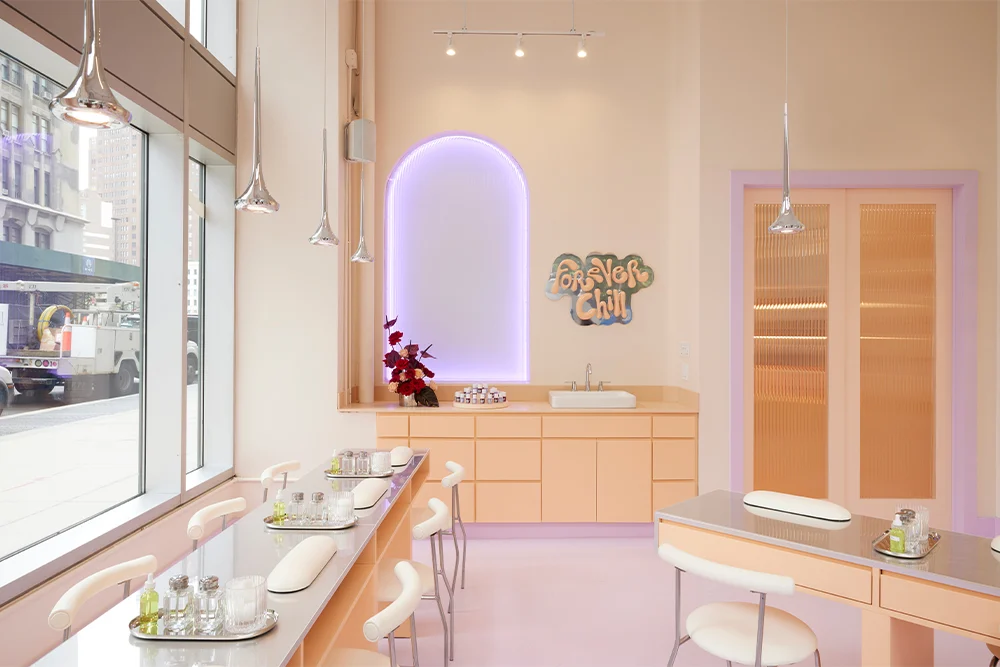
In a significant evolution of design philosophy, a new wave of visionary designers is reshaping the landscapes of hospitality, retail, and mixed-use environments. Their work, characterized by a profound emphasis on emotion, community, and human connection, moves beyond mere aesthetics to create spaces that resonate deeply with their occupants. These innovators are championing adaptive reuse projects, crafting immersive experiential storefronts, curating intimate boutique hotels, and developing holistic wellness concepts. This shift signals a broader redefinition of design, one that prioritizes engagement, authenticity, and a lasting, positive impact on individuals and communities alike.
Nora Gharib: Cultivating Social Infrastructure Through Human-Centric Design
Nora Gharib, founder of Gharib Studio, exemplifies this forward-thinking approach. Her formative experiences at the transdisciplinary firm Snøhetta, particularly her involvement in a post-occupancy analysis of the Bibliotheca Alexandrina in Egypt, fundamentally altered her perspective on the built environment. The nearly 25-year-old institution, a beacon of knowledge and culture, revealed the enduring power of public spaces. Gharib witnessed firsthand how this architectural landmark served as more than just a building; it was a vital hub for literacy, education, and community ownership.
A pivotal moment occurred during a period of civil unrest when locals formed a human chain to protect the library. This act of collective safeguarding underscored the deep emotional and social connection people had with the space. "Understanding its impact on the people—even years after it was built—showed me how this library influenced literacy, education, community ownership," Gharib reflects. "Architecture is more than just a visual; it’s the social infrastructure for a lot of cities. It taught me how to design for people inside the spaces, not just for the ones looking from the outside." This profound realization has become a guiding principle in her work.
Gharib’s fascination with the interplay between physical environments and human behavior began in her youth in Egypt. Her early interest in behavioral psychology fueled a curiosity about how spaces influence movement, interaction, and gathering. This led her to pursue studies at Parsons before earning a bachelor’s in interior design from the New Jersey Institute of Technology and a master’s in architecture from the University of Miami.
Following her tenure at Snøhetta, Gharib refined her technical and project management skills at various boutique firms. A significant collaboration emerged when she connected with Adriana Carrig, the founder of the customizable jewelry brand Little Words Project. Gharib’s task was to translate the brand’s vibrant digital identity into a tangible, physical retail experience. Her conceptualization centered on creating interactive elements, such as a bead bar where customers could design their own bracelets, fostering engagement beyond mere transaction. "People needed a space that was more of a hybrid," Gharib notes. "How can we design for interaction rather than just transaction?"

This innovative approach proved highly successful, leading to Gharib being commissioned to design all future Little Words stores starting in 2023, with the Austin location being the first. The following year, she established Gharib Studio, operating full-time. Today, her six-person team, spanning Miami, New York, and Egypt, focuses on a retail-centric portfolio driven by human-centered design principles. Gharib articulates a compelling philosophy: "We have created such ease and convenience everywhere, the whole part that makes humans human is the friction in between. That’s where the connection grows." This perspective highlights the value of thoughtful design that encourages genuine human interaction and builds community.
Madelynn Ringo: Weaving Narrative and Emotion into Experiential Spaces
Madelynn Ringo, the driving force behind Ringo Studio, brings a rich background in storytelling and creative expression to her design practice. Her earliest exposure to the power of design came from creating a wine label for her father’s vineyard during high school, an experience that illuminated the narrative potential of visual arts. Growing up in a home filled with art and color, fostered by her artist mother, Ringo developed a deep appreciation for creative exploration and diverse making processes. "Creative expression was very much a part of our upbringing," she recalls, "which allowed me to be curious and find different ways of making things."
This intrinsic freedom now defines Ringo Studio’s work, which consistently seeks to evoke emotion and foster memorable experiences. A recent standout project is the Kuona optical boutique and clinic, situated adjacent to the Beekman hotel in Lower Manhattan. In this space, natural linen wallcoverings provide a soft backdrop for warm walnut millwork and rich chocolate flooring, creating an atmosphere that transcends the typical clinical setting. "When people walk into that space, they have no idea that it’s an optometry clinic," Ringo observes, highlighting the successful integration of aesthetic appeal with functional purpose.

Ringo’s academic journey began at the University of Kentucky’s School of Architecture. Upon relocating to New York, she honed her professional skills through various design roles, eventually landing an internship at André Balazs Properties, where she contributed to special projects for the Standard Hotels. This period instilled in her a strong work ethic and adaptability. "I mastered my hustle mentality," she says of her early New York days. "I was super immersed. I had the energy to work until four in the morning every day—whatever it took."
Her architectural education continued with a master’s degree from Yale University. Subsequently, Ringo served as a senior retail designer at Glossier, where she played a key role in translating the brand’s distinct identity into engaging experiential pop-ups. This experience proved transformative, demonstrating the profound impact of architecture and interiors as mediums for brand storytelling. "I was able to use architecture and interiors as a medium for [brand storytelling]," she notes. "It opened my eyes to how much more it could be."
In 2020, Ringo founded Ringo Studio, quickly establishing a reputation for her vibrant and innovative designs. Early successes included a colorful concept store for the fitness brand Bala and a serene Fifth Avenue flagship for the wellness company Modern Age. Her four-person team continues to build momentum, with current projects including the oral wellness boutique Sama, Lore Bathing Club, and the redesign of the nail spa Chillhouse. Notable upcoming projects include the fitness studio Soto Method; Entermezzo, a screen-free social sanctuary; and the first U.S. flagship for Canadian furniture brand Cozey.

Ringo’s core mission is to create spaces that evoke strong emotional responses. "Our mission is to create spaces that inspire emotion," she states. "Whether getting your nails done or going to an optometry checkup, you’re confronted with a space that makes you stop and notice. We call that the ‘heartbeat moment.’" This concept underscores her commitment to designing environments that are not only functional but also deeply engaging and memorable.
Carmen Cárdenas + Nicky Kyrtsis: Bridging Theatricality and Tactility in Design
Carmen Cárdenas and Nicky Kyrtsis, the co-founders of New York-based interior design practice Studio MaRō, bring a unique perspective shaped by over a decade in the demanding world of the entertainment industry. Their extensive experience on Broadway, film, and television sets, where they met and developed their skills, has profoundly influenced their approach to creating immersive and evocative spaces.
Kyrtsis began her career in costume design, collaborating with prominent figures and contributing to high-profile productions. Her early work as an associate designer for Broadway productions, alongside creating avant-garde pieces for artists like Beyoncé and Lady Gaga during her time at Izquierdo Studio, provided an intensive immersion in creative problem-solving and execution. "I was baptized by fire," Kyrtsis recalls. "Everything I made there had never been made before." This baptism by fire forged a resilience and a deep understanding of material possibilities.

Cárdenas, who immigrated to the U.S. from Peru at the age of seven, pursued film and art studies at Columbia University and New York University. She then established a successful career in film production, rising through the ranks as an art director and production designer. Her work graced notable productions such as "You," "Inventing Anna," and "Succession," demonstrating her ability to craft compelling visual narratives.
Despite their successes in the entertainment industry, the relentless pace and demanding schedules of production began to impact their work-life balance, particularly as they started families. This led them to seek a more sustainable career path. Kyrtsis began a transition into interior design in 2018, balancing both fields until 2021. A pivotal opportunity arose with a hospitality project in Philadelphia—the Artisan Hotel. In 2024, she invited Cárdenas to collaborate, and together they launched Studio MaRō a year later.
The Artisan Hotel, housed in an early-20th-century Philadelphia warehouse, is an apartment-style hotel featuring 16 units, each thematically inspired by traditional crafts like the Cobbler, the Potter, and the Book Binder. Drawing directly from their entertainment backgrounds, Cárdenas and Kyrtsis embraced the ethos of creating bespoke elements from scratch. They custom-built some fixtures, hand-weaving leather and thread to achieve the precise aesthetic for each space. "The ethos in theater and film is just because it doesn’t exist in the world doesn’t mean we can’t make it," says Cárdenas, emphasizing their commitment to unique, handcrafted solutions.

Studio MaRō’s current project, the Diplomat, also in Philadelphia, further showcases their dedication to shaping guest experiences through artisanal craft. Kyrtsis reflects on their journey: "I’m excited for us, as working moms, to have taken control of our own destiny, and have the ability to build this into what we want it to be." This statement highlights their entrepreneurial spirit and their commitment to building a practice that aligns with their personal and professional values.
Leah + Nathan Warkentin: Harmonizing Music, Art, and Interiors for Evocative Environments
Nathan Warkentin, founder of Warkentin Associates, discovered his passion for design through a trajectory that began in music. He recognized that the creative processes involved in both disciplines shared a common thread: the art of synthesis. "I love putting it all together in a compelling way," he states, underscoring his holistic approach to design.
Raised in Fresno, California, Warkentin pursued studio arts at a liberal arts university. His early career was remarkably diverse, encompassing touring in a band, designing album covers, merchandise, and menswear. This multifaceted experience eventually led him to Los Angeles, where he established his first design studio, focusing on branding and interiors for the food and retail sectors. His subsequent pivot to interior architecture was largely self-directed, augmented by studies at UCLA and further refined during his tenure as a senior designer in Studio Shamshiri’s hospitality department.

In 2023, Warkentin launched his eponymous studio, splitting his time between Los Angeles and New York. The firm quickly gained momentum, securing notable projects including a ground-up hotel in Brooklyn and the Lighthouse, a creative campus with locations in Venice, California, and Greenpoint, Brooklyn. In the past year alone, his five-person team has successfully delivered six major projects, spanning residential and retail, including spaces for Credo Beauty.
The studio’s expansion and operational efficiency are significantly supported by Nathan’s wife, Leah Warkentin, who serves as studio director. Bringing a decade of corporate experience from the luxury brand Aesop, she manages operations, finances, and project management. Leah’s perspective on the design process emphasizes adaptability and resilience: "The life of a project is truly unpredictable. More often than not, the final product is better and more interesting than the original intent when you allow the obstacles to shape it." This philosophy acknowledges that challenges can often lead to unforeseen creative breakthroughs.
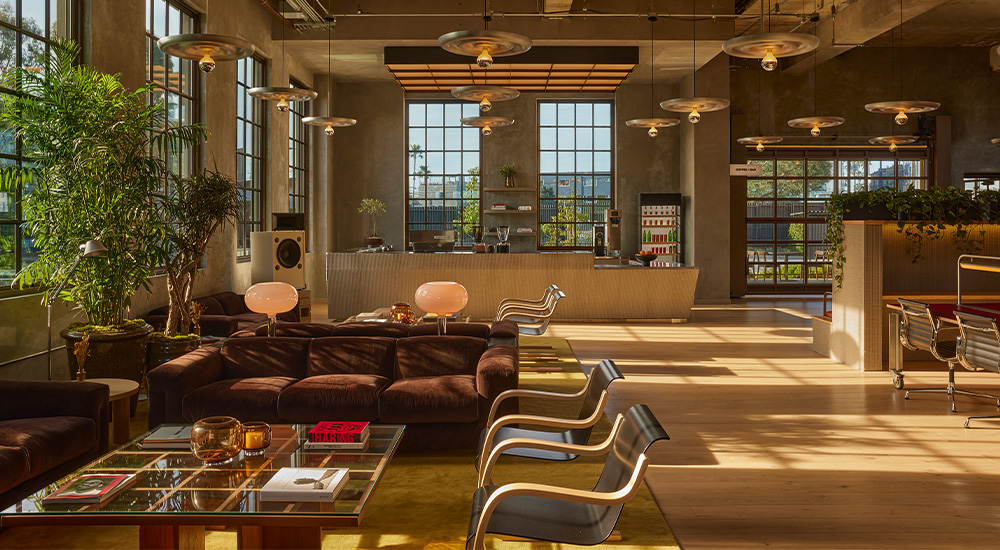
At the heart of Warkentin Associates’ design philosophy is the creation of environments that evoke positive feelings and a sense of comfort. "I’m always exploring how to create spaces that feel warm and inviting," says Nathan. This principle is vividly illustrated in projects such as Noun Café in Marina del Rey. Here, an industrial shell is transformed through a layered aesthetic that combines chrome, vintage furniture, painters’ drop cloths, and abundant greenery, creating a nostalgic homage to 1990s coffeehouses.

Nathan’s approach is deeply rooted in the belief that authentic human connection is paramount. "The best interactions are with real people in real rooms," he asserts. "That thought is core to our practice—how we make a space have substance and a soul for people to linger, explore, and feel creative." This commitment to fostering genuine human experience and a sense of place defines the studio’s impactful work.
Rachael Gowdridge: Embracing Chromatic Boldness and Experiential Journeys
Rachael Gowdridge, founder of her eponymous London studio, launched her practice in 2021 with a transformative project involving a Georgian townhouse in St. John’s Wood. Her portfolio is marked by a daring approach to color and materiality, consistently aiming to create memorable and emotionally resonant spaces. Last year, she completed Netty, a unique project that reimagined two hotel suites within a Victorian public toilet in Oxford, incorporating vintage furniture and high-gloss ceilings. Her latest endeavor, the 81-room Dean Berlin, exemplifies her signature style by harmonizing vivid hues with an experimental exploration of materials.
Encouraged by her stepfather, a British architect, Gowdridge pursued art studies at the University of Leeds before completing a graduate interior design program at Chelsea College of Arts. Her early academic work, which embraced chalk and charcoal, evolved into a profound interest in spatial design. This culminated in an experiential maze for a final project, designed to guide participants through a series of engaging discoveries. "As you walked through," she shares, "every time you turned a corner there was something that drew your eye toward the end."

Gowdridge’s initial exposure to the hospitality sector came through an internship at David Collins Studio in London, where she contributed to the design of the timeless Colbert café in Chelsea’s Sloane Square. Her passion for hospitality design deepened through subsequent roles at Martin Brudnizki Design Studio and Ennismore. At Ennismore, she was part of the design teams for renowned establishments like The Hoxton and Gleneagles. A particularly formative experience was contributing to the transformation of the historic bank-turned-Gleneagles Townhouse in Edinburgh, Scotland. This project demanded a precise vision for guiding guests through a complex, higgledy-piggledy building.
For the Dean Berlin, situated in the elegant Charlottenburg district of Berlin, Gowdridge meticulously photographed the surrounding architecture to capture the unique character of the area. "What jumped out at me was there would be a bright orange building next to a bright green one. You don’t think that these acid tones go together, but it feels so emotive," she explains. This observation about the unexpected yet powerful interplay of bold colors became a central theme for the hotel’s design.
This chromatic intrigue fueled Gowdridge’s design for the Dean Berlin. Within the guestrooms, oxblood hues envelop the timber-floored vestibule, creating a moody transition to boldly striped bespoke carpeting and swathes of mauve. Bouclé headboards are juxtaposed with chandeliers playfully crafted from latex, while lamps with striking red cube bases rest atop turquoise plywood nightstands finished in grain-amplifying linolie. "It was about interesting colors, in unusual places," says Gowdridge, highlighting her deliberate and experimental use of color to create a distinctive and emotive atmosphere. Her work consistently pushes boundaries, demonstrating a profound understanding of how color and texture can shape perception and create unforgettable experiences.


 Anjar Salim
 Dwi Wanna
 Budi Mulyono
 Lukman Taruna Persada Ramadan
 Chandra Hamzah
 Gabriela Annisa