
 Budi Mulyono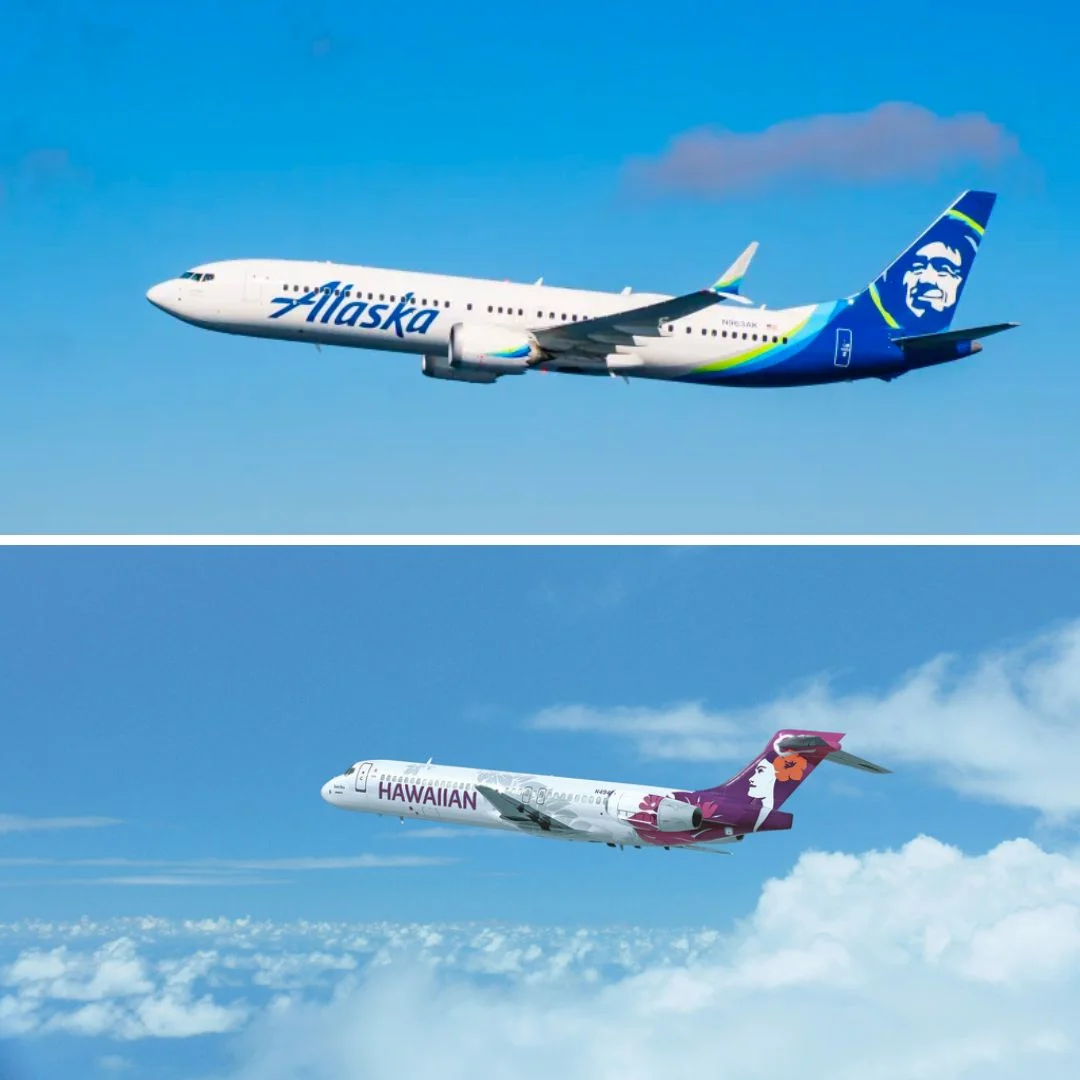
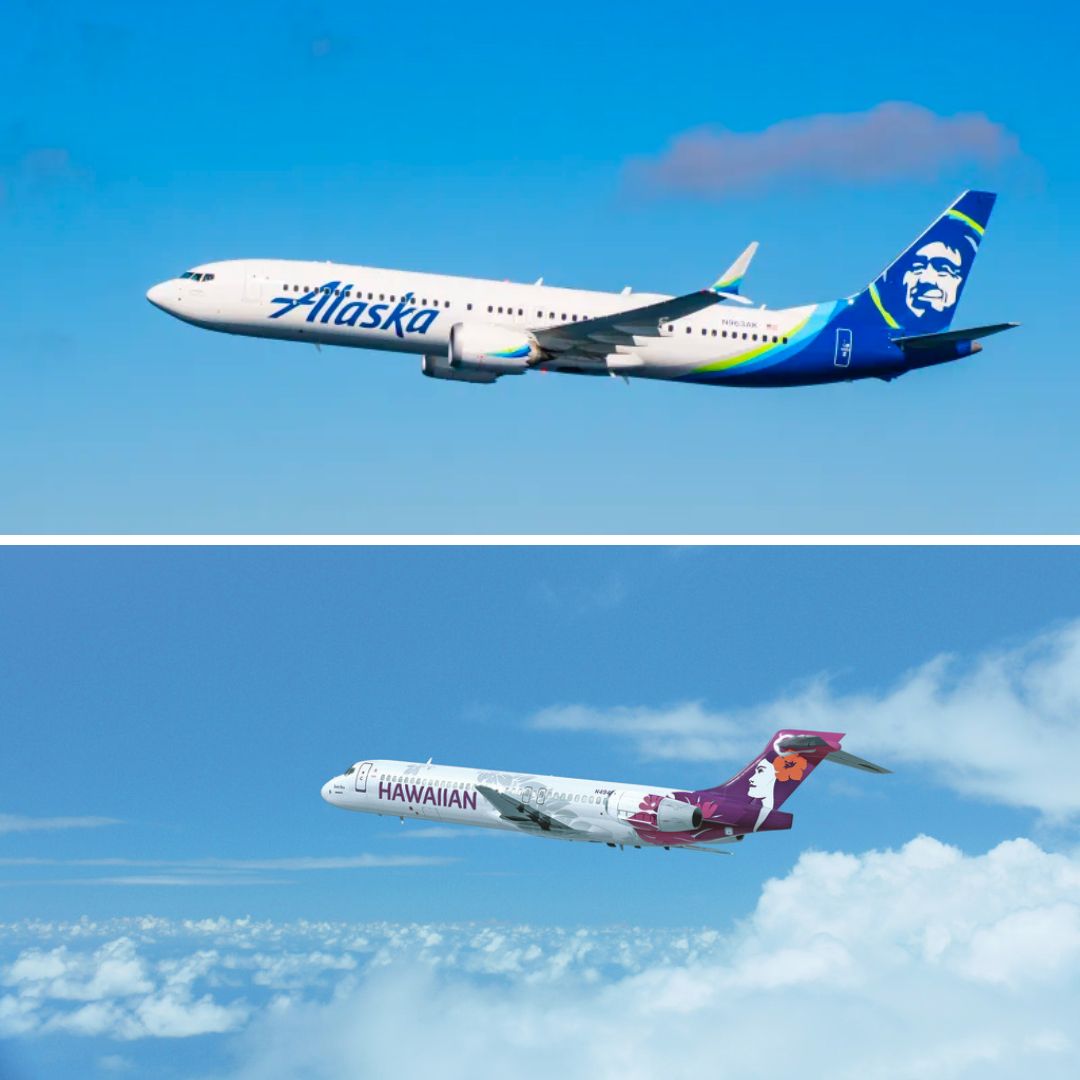
The landscape of North American aviation is undergoing a significant pricing shift as Alaska Airlines and its recently acquired subsidiary, Hawaiian Airlines, officially synchronized their checked baggage fee structures. This move, which took effect for tickets purchased on or after April 10, represents a substantial increase in the cost of travel for passengers flying between Hawaii and the continental United States, as well as on broader North American routes. The adjustment brings both carriers into alignment with a growing industry standard that prioritizes ancillary revenue to offset rising operational expenditures.
Under the updated policy, the fee for a traveler’s first checked bag has risen to $45, while the second bag now commands a $55 fee. For those requiring three or more checked items, the cost escalates sharply to $200 per bag. These changes apply specifically to North American flights, including those connecting the mainland U.S. to the Hawaiian Islands. While inter-island flights within the state of Hawaii have historically maintained a separate pricing tier to accommodate local commuters and residents, the integration of Alaska and Hawaiian’s fee schedules marks a definitive step toward operational unity following Alaska Air Group’s $1.9 billion acquisition of Hawaiian Airlines.
A Chronology of Integration and Adjustment
The alignment of baggage fees is a logistical milestone in the merger between Alaska Airlines and Hawaiian Airlines. The acquisition, first announced in late 2023, was designed to create a more robust competitor in the Pacific market while maintaining the distinct brand identities of both carriers. However, as the integration process moved through regulatory scrutiny and into the implementation phase, the synchronization of revenue-generating policies became an operational priority.
Historically, baggage fees remained relatively stagnant for several years following the 2008 financial crisis, which saw the initial widespread adoption of "unbundled" pricing. However, the post-pandemic era has seen a rapid acceleration in fee hikes. Alaska Airlines last adjusted its baggage fees in early 2024, and the extension of these rates to Hawaiian Airlines ensures that the two brands operate under a single financial framework. This timeline reflects a broader trend where legacy and hybrid carriers are moving away from the lower fee structures that once characterized the mid-tier market.
Supporting Data and Industry Comparisons
The decision to raise fees to $45 for a first checked bag does not exist in a vacuum. It is a reaction to a wave of similar increases across the U.S. aviation sector. In early 2024, American Airlines, United Airlines, and JetBlue Airways all announced increases to their checked bag fees, often incentivizing customers to pay online in advance to avoid even higher airport-counter rates.
Data from the Bureau of Transportation Statistics (BTS) reveals that baggage fees have become an indispensable revenue stream for major carriers. In 2023, U.S. airlines collected over $7 billion in baggage fees alone. By increasing the first-bag fee by roughly 30%—from the previous industry standard of $30–$35 to the new $45 benchmark—airlines are attempting to capture higher margins per passenger to mitigate the volatility of jet fuel prices and the rising costs of labor.
For a family of four traveling from Seattle to Honolulu, the financial impact is immediate. Under the previous $30 fee structure, a round-trip journey with one bag per person added $240 to the total travel cost. Under the new $45 fee, that same family must now budget $360 for baggage alone, representing a $120 increase in the total cost of the vacation.
Official Rationales and Economic Pressures
Alaska Airlines has cited rising operational costs as the primary driver for the fee adjustment. In statements regarding the changes, the airline emphasized the increasing expenses associated with fuel, baggage handling equipment, and workforce compensation. The aviation industry has faced significant inflationary pressure, particularly in the realm of maintenance and ground operations.
Industry analysts point out that baggage fees serve two strategic purposes. First, they allow airlines to keep "base fares" appearing lower in search engine results, which are often sorted by price. Second, they provide a hedge against fuel price fluctuations. Unlike ticket prices, which are subject to a 7.5% federal excise tax, ancillary fees like baggage charges are not subject to the same tax burden, allowing the airline to retain a larger portion of the revenue.
The Department of Transportation (DOT) has recently increased its oversight of "junk fees" in the travel industry, but baggage fees remain a standard, disclosed part of the contract of carriage. As long as these fees are clearly communicated to the consumer at the time of booking, carriers maintain the legal latitude to adjust them based on market conditions.
Broader Impact on the Hawaii Travel Market
The implications of these fee increases are particularly acute for the Hawaii travel market. Unlike domestic travel within the contiguous United States, where road trips or rail travel may serve as alternatives, travel to Hawaii is almost exclusively dependent on aviation. This makes travelers to the islands more sensitive to changes in airline pricing structures.
There is also ongoing speculation regarding the future of inter-island flight pricing. Currently, the $45 fee applies to North American routes, leaving inter-island baggage fees at their existing, lower rates for the time being. However, as Alaska Air Group continues to streamline the Hawaiian Airlines operation, observers suggest that a "trickle-down" effect is possible. Inter-island travel is a vital lifeline for residents of Maui, Kauai, and the Big Island who must travel to Oahu for medical appointments or business. Any future increase in these fees would likely meet with significant local opposition and potential legislative scrutiny within the state of Hawaii.
Strategic Shifts: The Rise of the Co-Branded Credit Card
One of the most significant consequences of rising baggage fees is the increased value proposition of airline-branded credit cards. For both Alaska and Hawaiian Airlines, their respective co-branded credit cards offer "first bag free" perks for the primary cardholder and a set number of companions on the same reservation.
As the cost of checking a bag nears $50, the annual fees for these credit cards—typically ranging from $75 to $99—can be recouped in a single round-trip flight for a couple. This has led to a strategic shift in consumer behavior, where travelers are increasingly opting for "loyalty ecosystems" to bypass ancillary costs. This trend benefits the airlines by providing a steady stream of high-margin revenue from credit card partnerships, even if it reduces the direct collection of baggage fees at the airport.
Analysis of Future Trends in Ancillary Revenue
The alignment of Alaska and Hawaiian’s fees is likely not the ceiling for the industry. Aviation consultants suggest that the industry is moving toward a "dynamic pricing" model for baggage, similar to how ticket prices and seat assignments are currently handled. In such a model, the cost to check a bag could fluctuate based on the length of the flight, the weight of the aircraft, or the time of year.
Furthermore, the "unbundling" of services is expanding beyond baggage. Airlines are increasingly charging for carry-on bags on "Basic Economy" fares and implementing stricter enforcement of personal item dimensions. The goal is to maximize the revenue generated from the physical space on the aircraft.
For the consumer, the primary takeaway is the necessity of calculating the "all-in" price of a flight before purchase. A ticket that appears $50 cheaper on one carrier may ultimately be more expensive once the $90 round-trip baggage fee is factored in. This reality is fundamentally changing how travelers plan their budgets, particularly for long-haul destinations like Hawaii where packing light is not always an option for families or those staying for extended periods.
Conclusion
The synchronization of baggage fees between Alaska Airlines and Hawaiian Airlines is a clear indicator of the post-merger reality for the two carriers. By adopting a $45 first-bag fee, they have joined the ranks of the largest U.S. carriers in a move to stabilize revenue amid a high-cost operating environment. While this transition is a logical step from a corporate integration standpoint, it places a new financial burden on travelers and reinforces the importance of loyalty programs and strategic packing. As the industry continues to evolve, the "base fare" will likely become an even smaller fraction of the total cost of air travel, with ancillary fees such as baggage, seating, and boarding priority becoming the primary drivers of airline profitability.



 Chandra Hamzah
 Gabriela Annisa
 Tatiana Tantri Indah Sari
 Anjar Salim