
 Budi Mulyono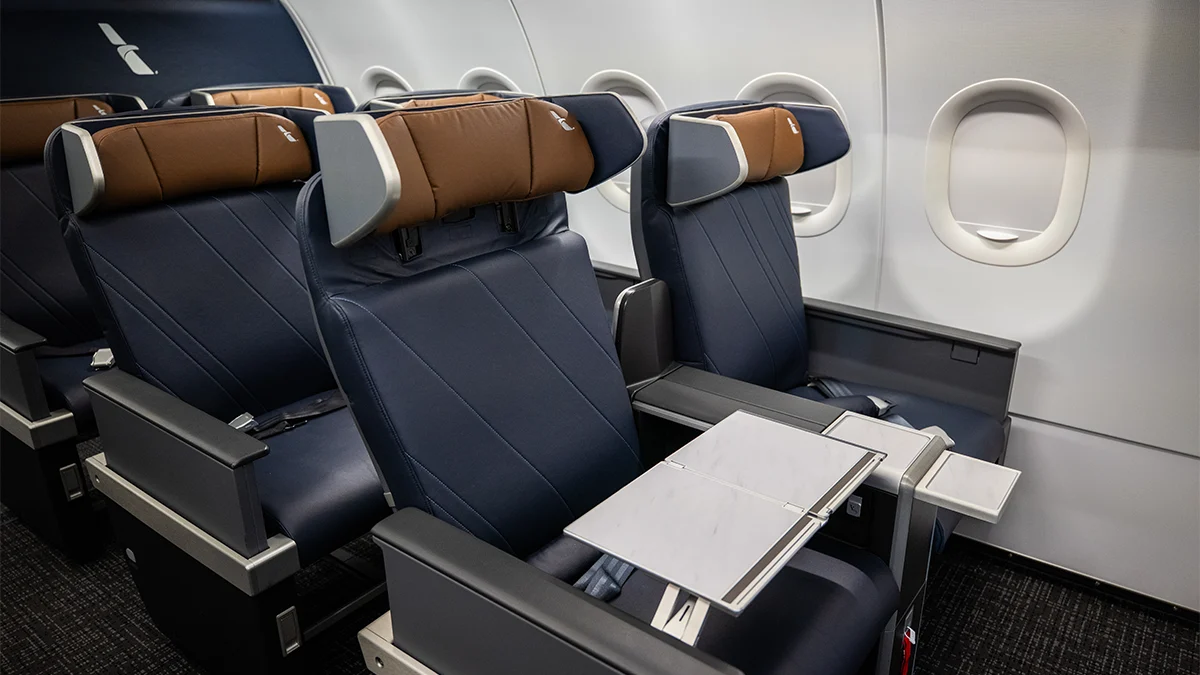
American Airlines has officially commenced the next phase of its narrowbody fleet renewal, introducing the first retrofitted Airbus A320 into commercial service following the successful rollout of updated Airbus A319 interiors. This initiative, which was first announced in March 2024, represents a comprehensive effort to standardize the passenger experience across the carrier’s legacy Airbus fleet. The project focuses on increasing premium cabin capacity, updating interior aesthetics, and improving functional amenities such as overhead storage and power availability. While the upgrades offer modern conveniences, they also signal a shift toward higher-density configurations that prioritize revenue-generating premium space and operational efficiency.
The first of the retrofitted A320s entered service in June 2026, following the February 2026 debut of the newly configured A319s. This multi-year project is designed to bring American’s older short-to-medium-haul aircraft in line with the "Oasis" and "Kodak" interior standards found on its newer Boeing 737 MAX and Airbus A321neo aircraft. By 2027, the airline intends to further enhance these cabins with the integration of high-speed Starlink Wi-Fi, though the current retrofit focus remains primarily on seating, storage, and power infrastructure.
Strategic Shift Toward Premium Cabin Expansion
The most significant change in the retrofit program is the expansion of the First Class cabin. American Airlines is responding to a sustained increase in demand for premium seating, a trend that has accelerated across the domestic U.S. market. By adding an additional row of First Class seats to both the A319 and A320, the airline is positioning itself to capture more high-yield revenue, whether through direct ticket sales or paid upgrades.
For the Airbus A319, the First Class seat count is increasing from eight to 12 seats, representing a 50% increase in premium capacity. The Airbus A320 is seeing an increase from 12 to 16 First Class seats, a 33% expansion. This move aligns American’s A319 configuration with that of its primary competitor, Delta Air Lines, which also operates the A319 with 12 First Class seats.

The new First Class seats utilize a design language consistent with the airline’s newest long-haul products, including the Boeing 787-9 Flagship Suite and the Airbus A321XLR. These seats feature updated trim and finishes, improved padding, and dedicated power ports. While the seats themselves are physically similar to premium economy products found on international fleets, they represent a significant aesthetic upgrade over the aging interiors previously found on these legacy aircraft.
Fleet Composition and Historical Context
The aircraft undergoing these transformations are among the oldest in American’s fleet. The airline currently operates 132 Airbus A319s and 48 Airbus A320s. The vast majority of these jets were inherited during the 2013 merger with US Airways. The A319 fleet maintains an average age of approximately 21 years, while the A320 fleet is even older, averaging over 24 years.
Historically, these aircraft have served as the workhorses of American’s hubs in the Northeast and Midwest, particularly in Charlotte, Philadelphia, and Washington D.C. Given their age, the decision to invest in comprehensive interior retrofits rather than immediate retirement suggests that American intends to keep these airframes in service for the foreseeable future. The retrofits provide a "mid-life" refresh that extends the competitive viability of the aircraft in a market where passengers increasingly expect modern amenities like in-seat power and high-speed connectivity.
The rollout strategy prioritizes the 32 legacy American Airlines A319s before moving to the legacy US Airways airframes. This sequence is notable because the legacy American A319s were the only narrowbody aircraft in the fleet to feature seatback In-Flight Entertainment (IFE) screens. As part of the retrofit, these screens are being removed in favor of a "Bring Your Own Device" (BYOD) model, where passengers stream content to their personal phones or tablets.
Cabin Density and the "Space-Flex" Configuration
While the addition of First Class seats is a positive development for premium travelers, the overall cabin density is increasing, leading to a more compact environment in the Main Cabin. To accommodate more seats without lengthening the fuselage, American is utilizing a "Space-Flex" style galley and lavatory reconfiguration.

On the Airbus A319, total capacity is increasing from 128 seats to 132 seats. This is achieved by reducing the pitch (the distance between seat rows) throughout the aircraft and significantly shrinking the rear galley. The two rear lavatories, which previously occupied space ahead of the galley, are being moved into the very back of the aircraft, integrated into the galley complex itself. This allows for an additional row of seats but results in a significantly more cramped working environment for flight attendants and a narrower aisle in the aft of the plane.
On the Airbus A320, American has made the strategic decision to maintain a total capacity of 150 seats. This is a calculated operational move designed to comply with Federal Aviation Administration (FAA) regulations, which require one flight attendant for every 50 passenger seats. By capping the capacity at 150, American can operate the A320 with a crew of three flight attendants. If the airline were to match Delta’s A320 configuration of 157 seats, it would be required to staff a fourth flight attendant, significantly increasing labor costs. To maintain the 150-seat count while adding four First Class seats, the airline has reduced the number of economy seats and utilized seat-blocking strategies or cabin spacers.
Enhanced Passenger Amenities and Technical Upgrades
Beyond the seating configuration, the retrofits introduce several long-awaited functional improvements:
- Larger Overhead Bins: The aircraft are being fitted with "Airbus XL" bins or similar high-capacity storage solutions. these bins allow bags to be stored on their sides rather than flat, significantly increasing the number of carry-on bags that can be accommodated. This is intended to reduce the need for gate-checking bags, thereby improving boarding times and passenger satisfaction.
- Universal Power Access: Previously, power outlets on the legacy Airbus fleet were inconsistent, often limited to First Class or Main Cabin Extra rows. The retrofitted aircraft feature AC power outlets and USB ports at every single seat, catering to the needs of modern travelers who rely on personal electronic devices.
- Aesthetic Harmonization: The new interiors feature a color palette of slate grays, deep blues, and red accents, matching the branding of the newer Boeing 737 MAX fleet. This creates a cohesive brand experience for passengers connecting between different aircraft types.
- Starlink Integration (2027): Although not part of the physical seat installation, American has confirmed that these aircraft will be equipped with SpaceX’s Starlink satellite Wi-Fi starting in 2027. This service is expected to offer low-latency, high-speed internet capable of streaming and gaming, which the airline hopes will compensate for the removal of seatback screens.
Operational Impact and Crew Considerations
The transition to high-density cabins is not without its challenges, particularly regarding crew operations. The reduction in galley space on the A319 and A320 means that flight attendants have less room to prepare service items and store carts. Furthermore, the relocation of lavatories to the rear bulkhead often places the flight attendant jumpseats directly onto the lavatory doors.
From an operational standpoint, the standardization of the fleet simplifies scheduling and maintenance. When cabins are uniform, the airline can swap aircraft at the last minute without causing "downgrades" where a passenger who paid for a specific seat type finds themselves on an aircraft with a different layout. This consistency is a key pillar of American’s broader "Project Oasis" strategy, which sought to harmonize the interiors of the Boeing 737-800 and Airbus A321ceo fleets over the past several years.

Industry Implications and Market Analysis
American Airlines’ investment in these retrofits reflects a broader industry trend toward "premiumization." As airlines realize that a significant portion of their profit comes from the front of the plane, they are willing to sacrifice some economy-class comfort to fit more premium berths.
Industry analysts note that by increasing First Class inventory, American is better positioned to compete for corporate contracts and high-net-worth leisure travelers. Furthermore, having more First Class seats available increases the likelihood of AAdvantage frequent flyers securing complimentary upgrades, which is a vital component of loyalty program engagement. However, with the rise of "buy-up" offers in the American Airlines mobile app, many of these new seats may be sold for cash or miles before they ever reach the complimentary upgrade list.
The removal of seatback IFE remains a point of contention among passengers. While Delta Air Lines has doubled down on seatback screens as a brand differentiator, American and United (historically) moved toward streaming-only models to reduce aircraft weight and maintenance costs. United has since reversed course and is re-installing screens on its "United Next" narrowbody fleet, leaving American as the primary outlier among the "Big Three" U.S. carriers in its commitment to the BYOD entertainment philosophy for domestic narrowbodies.
Conclusion
The retrofitting of the Airbus A319 and A320 fleets marks a pivotal moment in American Airlines’ effort to modernize its domestic operations. By 2027, the airline will possess a narrowbody fleet that, while older in terms of airframe age, offers a modern interior experience characterized by increased premium seating, improved storage, and high-speed connectivity.
The project is a compromise between passenger comfort and corporate profitability. While First Class travelers will benefit from increased availability and modernized surroundings, Main Cabin passengers will have to adapt to tighter seat pitches and the absence of seatback screens. For American Airlines, the calculation is clear: the path to a more efficient and profitable domestic network lies in standardization, density, and the aggressive expansion of the premium cabin. As these retrofitted aircraft become more common in the skies over North America, they will serve as the new standard for the airline’s short-haul experience.



 Anjar Salim
 Chandra Hamzah
 Tatiana Tantri Indah Sari
 Lukman Taruna Persada Ramadan
