
 Gabriela Annisa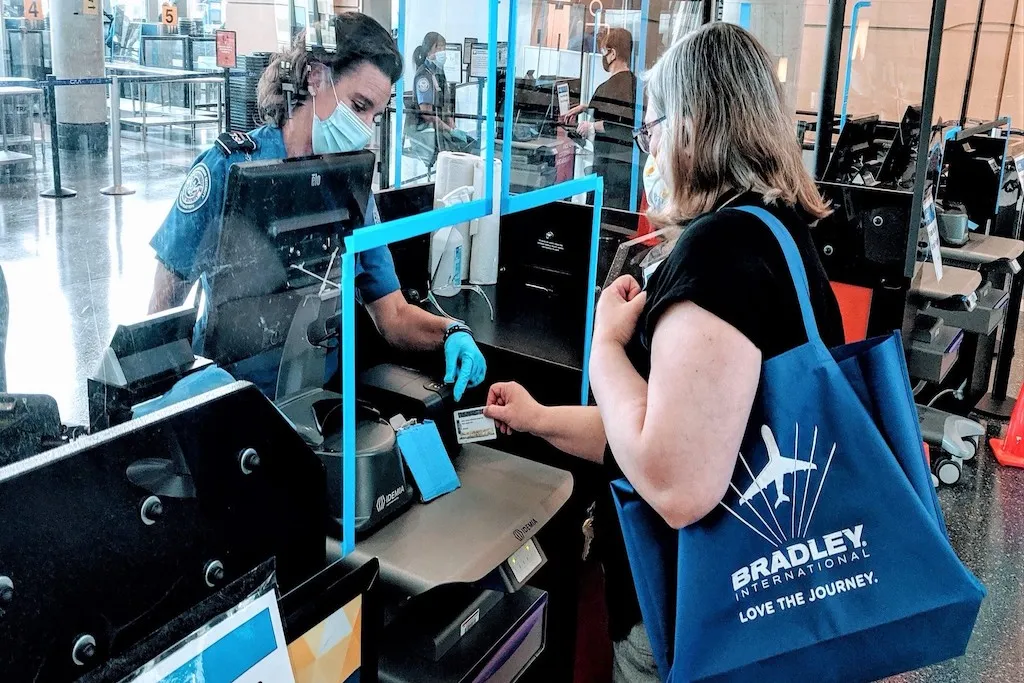
The global aviation industry is currently navigating a period of significant turbulence, grappling simultaneously with a sudden and dramatic surge in jet fuel prices and mounting operational disruptions stemming from a partial U.S. government shutdown. This dual challenge, occurring just as the crucial spring break travel season commences, is placing immense pressure on airlines and travelers alike, prompting urgent strategic reconsiderations and raising concerns about potential impacts on profitability and passenger experience.
The Unfolding Jet Fuel Crisis: A Global Shockwave
The most immediate and financially impactful pressure point for airlines is the unprecedented spike in jet fuel costs. As of Tuesday afternoon, New York time, the average price of jet fuel paid by U.S. airlines had soared to $3.67 per gallon, a nearly 50 percent increase from $2.50 per gallon on February 27th, and an even more staggering rise from $2.00 per gallon in mid-December. This rapid escalation, described by some as the biggest spike in history for a short period, is sending alarm bells throughout the industry.
Data from Airlines for America (A4A), the advocacy group for U.S. carriers, underscores the domestic impact, while the International Air Transport Association (IATA) provides a broader global perspective. IATA’s jet fuel price monitor for the week ending March 6th reported an average global increase of 58 percent in just one week. Critically, this spike has not been uniform across regions. Asian markets, including Oceania, witnessed a 77 percent increase, and the Middle East saw a 74 percent jump, highlighting significant regional disparities driven by complex market dynamics and supply chain vulnerabilities, particularly concerning shipping routes like the Straits of Hormuz.
Quantifying the Financial Impact on U.S. Carriers
Skift’s Head of Research, Seth Borko, recently conducted a detailed analysis leveraging U.S. airline SEC disclosures to translate these abstract price movements into tangible financial figures for major U.S. carriers. His findings indicate a profound potential impact. By analyzing the "risks and sensitivities" sections of 10-K and 10-Q filings, which mandate companies to disclose the financial implications of significant commodity price fluctuations, Borko estimated the additional fuel costs if airlines maintained their planned 2026 flight schedules at current prices, compared to their 2025 baseline of $2.40 per gallon.
The punchline of this analysis is stark: an extra $24 billion in annual fuel costs for the eight major U.S. airlines examined – United, American, Delta, Southwest, Alaska, JetBlue, Allegiant, and Frontier. To put this into perspective, American Airlines alone could face an additional $6.4 billion in fuel costs, a figure that dwarfs its recent operating profits.
This analysis, however, comes with crucial caveats. It is not a forecast but rather an illustration of the sheer magnitude of the problem. Airlines are not passive price-takers in the long run; they will inevitably react to such a cost shock. Potential responses include reducing flight capacity by parking aircraft, adjusting route schedules, and, most notably, attempting to raise fares and introduce or increase ancillary fees to offset the heightened expenses.
Airline Strategies and Historical Precedents
The industry’s response to fuel price volatility varies significantly. Unlike many international carriers, most U.S. airlines are largely unhedged against fuel price fluctuations, meaning they are immediately exposed to market swings. In contrast, some European airlines, such as Lufthansa, have adopted more aggressive hedging strategies. Lufthansa, for instance, has openly discussed how its hedged position could offer a competitive advantage, potentially allowing it to be less impacted than unhedged rivals and even match fare increases initiated by others.
The debate among analysts and industry observers revolves around whether airlines can successfully pass these increased costs on to consumers without triggering "demand destruction." If higher fares deter travelers, airlines could face the challenging scenario of rising costs coupled with falling demand – a form of stagflation that would be particularly detrimental.
Historical context offers some insights. The period from 2000 to 2008 saw multiple severe fuel spikes that profoundly reshaped the U.S. airline industry. The year 2000’s spike contributed to the wave of bankruptcies that characterized the early 2000s, including United in 2002 and Delta in 2005. The peak in August 2008, when oil prices neared $140 a barrel (a figure potentially equivalent to current inflation-adjusted levels), was a watershed moment. It was this crisis that prompted U.S. airlines to introduce charges for first checked bags and in-flight meals – practices that were previously unthinkable and are now standard.
While the current crisis echoes past challenges, there are notable differences. U.S. airlines today are structurally healthier, benefiting from significant consolidation over the past decade, which has resulted in fewer, larger players with greater pricing power and flexibility to manage capacity. This improved structural health might make them less prone to radical measures, but a sustained spike to $200 a barrel, as mentioned in the Skift discussion, could still push the boundaries of current business models.
The U.S. Government Shutdown: A Brewing Operational Crisis
Compounding the fuel crisis is a partial U.S. government shutdown, which has significantly impacted airport operations and passenger experience. This shutdown, which commenced around February 14th, has specifically affected the Department of Homeland Security (DHS), including the Transportation Security Administration (TSA), while leaving other agencies like Immigration and Customs Enforcement (ICE) funded.
The most critical fallout has been the predicament of TSA agents, who are deemed essential personnel and therefore required to work without pay. The last week of February marked the first time these agents missed a full paycheck, following a partial payment earlier in the month. This financial strain on a vital workforce is directly translating into operational bottlenecks at airports nationwide.
Reports from across the country indicate a rapidly deteriorating situation. Houston’s Hobby Airport experienced four-hour wait times for security screenings on a recent Sunday. New Orleans International Airport saw security lines extending all the way to its parking garages. While major hubs like those in the New York area have, so far, reported relatively normal wait times, the situation is highly variable and depends on local staffing levels and passenger volumes, with spring break destinations being particularly hard hit.
The timing of this shutdown is particularly unfortunate, coinciding with what was anticipated to be a record-breaking spring break travel season. Increased passenger numbers are exacerbating the impact of staffing shortages, as financially stressed TSA agents may call in sick or seek alternative employment, further depleting an already stretched workforce.
Broader Implications of the Shutdown
Beyond security lines, the shutdown has suspended Global Entry services, creating additional bottlenecks for international arrivals. Travelers with Global Entry, typically fast-tracked through customs, are now facing longer waits, adding to the overall travel friction.
This is not an isolated incident for TSA agents. They were also among the federal employees affected by the previous government shutdown from October into November, which was the longest on record. The recurring nature of these shutdowns, and the repeated expectation for essential workers to perform their duties without pay, has significant implications for morale, recruitment, and retention within the TSA. It raises questions about the long-term sustainability of maintaining a motivated and adequately staffed security force under such conditions.
Unlike the previous shutdown, air traffic controllers are currently still receiving pay, a legislative adjustment made after the severe disruptions caused by their unpaid status in earlier shutdowns. However, this distinction has sparked debate in Washington regarding fairness to other essential workers, like TSA agents, who continue to be affected.
The political deadlock in Congress, with no immediate resolution in sight, suggests that airport disruptions are likely to intensify. As the shutdown continues and TSA agents miss further paychecks, staffing shortages are expected to worsen, potentially leading to even longer wait times and increased passenger frustration.
A Volatile Spring: Outlook and Key Indicators
The convergence of soaring fuel costs and airport operational chaos creates an exceptionally volatile environment for the aviation sector this spring. Airlines face a delicate balancing act: how to absorb or pass on massive fuel price increases without alienating passengers already stressed by airport delays. The prospect of demand destruction due to both high prices and a frustrating travel experience looms large.
Industry stakeholders will be closely monitoring upcoming events for clearer guidance. The JPMorgan Industrials Conference, scheduled for the upcoming week, is anticipated to be a pivotal moment. Major U.S. airline CEOs are expected to speak, providing updated financial guidance and insights into their strategies for navigating these unprecedented challenges. Their statements will offer critical signals on potential capacity adjustments, fare strategies, and the overall outlook for the industry in the coming months.
Ultimately, the aviation sector finds itself at a critical juncture, with global geopolitical events and domestic political impasses conspiring to create a landscape of profound uncertainty. The ability of airlines to adapt, coupled with the resolution of these external pressures, will determine the trajectory of air travel in the near future.



 Chandra Hamzah
 Tatiana Tantri Indah Sari
 Budi Mulyono
 Anjar Salim

