
 Gabriela Annisa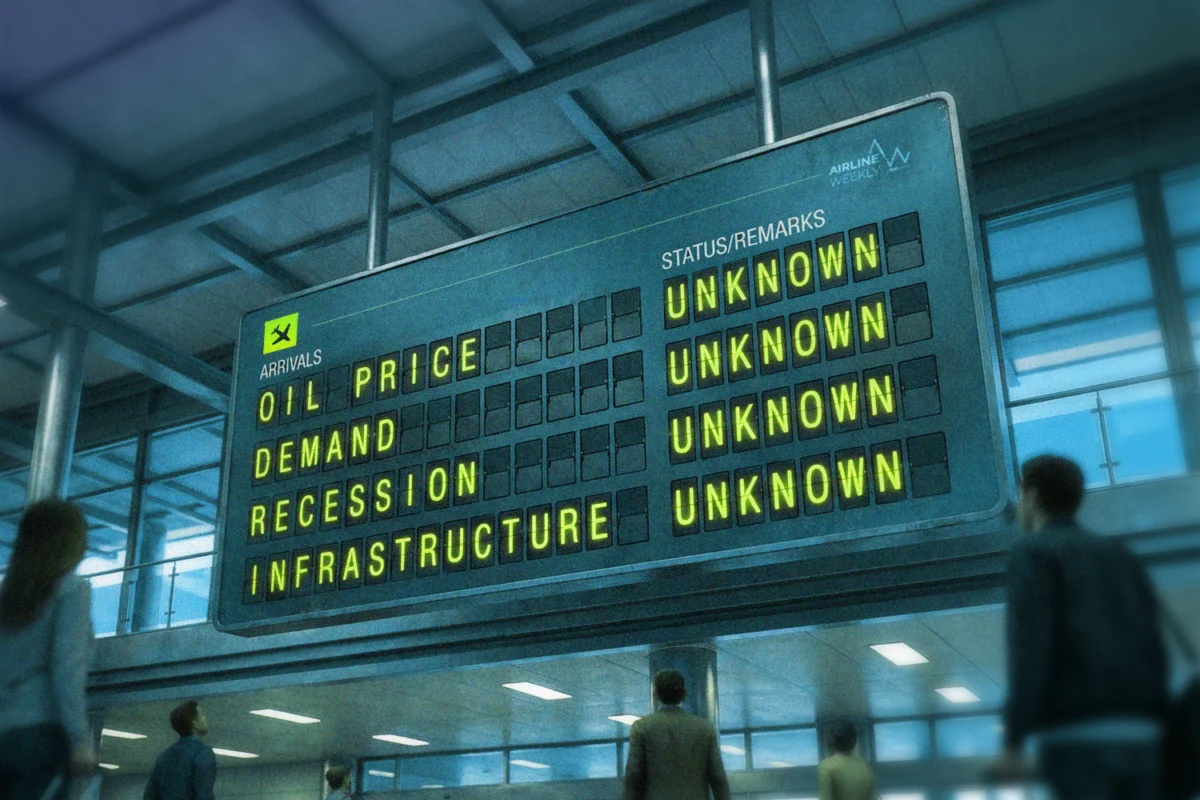
The global aviation sector, which began 2026 with a discernible air of optimism, now finds itself bracing for an unprecedented convergence of challenges, collectively dubbed the "quadruple shock." Initial forecasts pointed to robust demand, stable fuel prices, and an easing of geopolitical tensions that had plagued previous years, setting the stage for a period of sustained recovery and growth. However, a sudden and dramatic escalation of conflict in the Middle East, specifically involving Iran, has fundamentally reshaped this outlook, plunging the industry into a new era of uncertainty. The immediate repercussions include the effective shuttering of vital Gulf aviation hubs, a sharp surge in global oil prices, and a palpable wave of anxiety across the global economy, all compounded by a dramatic increase in operational costs and heightened security mandates.
The Shifting Sands of 2026: From Optimism to Crisis
At the dawn of 2026, the airline industry was riding a wave of cautious optimism. The post-pandemic travel rebound had stabilized, with leisure travel demonstrating remarkable resilience and business travel steadily recovering. Major carriers had largely restructured balance sheets, fleet modernization efforts were underway, and efficiency gains from technological advancements promised leaner operations. Fuel prices, while always a concern, had remained within manageable bounds, hovering around $75-$85 per barrel for Brent crude, allowing airlines to plan capacity and pricing with a degree of predictability. Furthermore, concerns regarding international trade tariffs, which had previously threatened cargo volumes and global economic stability, had largely receded following a series of diplomatic breakthroughs in late 2025. This environment fostered a sense of stability, prompting airlines to project healthy passenger growth rates of 5-7% and a return to pre-2020 profitability levels for many established carriers. Industry bodies like the International Air Transport Association (IATA) had even released upbeat forecasts, highlighting the industry’s resilience and its crucial role in global economic recovery.
However, this fragile equilibrium was shattered in mid-March 2026. Long-simmering tensions in the Persian Gulf region, which had been carefully managed through a series of international diplomatic efforts, erupted into open conflict following a major maritime incident in the Strait of Hormuz. The incident quickly escalated, drawing in regional and international actors and leading to widespread military engagements across key areas. The immediate consequence was the declaration of vast no-fly zones over critical airspace and the effective closure of major international airports in the Gulf region, transforming a previously bustling global transit corridor into a conflict zone.
Chronology of Crisis: A Rapid Deterioration
- Early 2026 (January-February): Global airlines express widespread optimism. Forward bookings for spring and summer show strong demand. Fuel prices are stable, and supply chain disruptions for new aircraft deliveries are largely resolved. Industry analysts predict a banner year for profitability.
- March 10, 2026: An international shipping vessel is reportedly attacked in the Strait of Hormuz. Initial reports are conflicting, but regional tensions immediately spike.
- March 12-15, 2026: Diplomatic efforts fail to de-escalate the situation. Several nations begin to issue travel advisories for the Gulf region. Airlines initiate contingency planning, though full-scale route adjustments are not yet implemented.
- March 17, 2026: Full-scale military conflict erupts, leading to the immediate closure of major airspace segments over Iran, Iraq, and parts of the Arabian Gulf. Key international airports such as Dubai International (DXB), Doha Hamad International (DOH), and Abu Dhabi International (AUH) announce operational disruptions, ranging from severe restrictions to temporary closures.
- March 18, 2026: Global oil prices surge dramatically. Brent crude futures jump by over 25% in a single day, crossing the $110 per barrel mark and continuing a steep upward trajectory. Airlines are forced to reroute thousands of flights, adding significant mileage and flight time, particularly for routes connecting Europe with Asia, Africa, and Oceania. This immediately translates into increased fuel burn and extended crew duty times.
- Late March 2026: Major airlines issue profit warnings, revising their optimistic Q1 and Q2 forecasts downwards. The International Monetary Fund (IMF) and World Bank begin to signal a potential downgrade of global economic growth projections for 2026, citing energy price volatility and trade disruptions. Aviation insurance premiums skyrocket for routes traversing or approaching the expanded conflict zone.
The Quadruple Shock Unpacked: Four Intertwined Threats
The airline industry now confronts a multi-faceted crisis, with four distinct yet interconnected shocks reverberating through its operations and financial stability:
1. Gulf Hub Disruption: The Strategic Crossroads Silenced
The Persian Gulf region has, for decades, served as the indispensable bridge between East and West, with mega-hubs like Dubai, Doha, and Abu Dhabi processing hundreds of thousands of passengers and vast quantities of cargo daily. These airports are home to some of the world’s largest and most successful airlines, including Emirates, Qatar Airways, and Etihad Airways, which have built their business models on efficient long-haul connections. The sudden closure or severe restriction of these hubs has created an unprecedented logistical nightmare.
Thousands of flights per day have been cancelled, delayed, or rerouted, affecting millions of passengers and disrupting global supply chains. For instance, a direct flight from London to Singapore, which previously utilized Gulf airspace, now faces a detour of several hours, potentially adding 1,500 to 2,500 nautical miles and requiring significantly more fuel. This forces airlines to reduce payload (carrying fewer passengers or less cargo) or even offload baggage to compensate for the increased fuel requirements. The ripple effect extends to crew scheduling, as longer flight times necessitate additional crew members or longer layovers, leading to increased accommodation costs and potential duty time violations. Slot availability at alternative hub airports, such as Istanbul, Frankfurt, or Delhi, is becoming a critical bottleneck, leading to further delays and operational inefficiencies. The economic impact on the Gulf carriers themselves is catastrophic, as their entire operational model is predicated on their hub-and-spoke networks in a now-compromised region. IATA estimates that the direct revenue loss from flight cancellations and rerouting, combined with the loss of transit passenger traffic, could exceed $5 billion per month for the industry globally, with a significant portion impacting Gulf-based airlines directly.
2. Soaring Fuel Prices: A Major Cost Headwind
Aviation fuel typically accounts for 25-35% of an airline’s total operating costs, making the industry acutely vulnerable to price volatility. The "Iran war" immediately triggered a sharp and sustained increase in crude oil prices, driven by fears of supply disruptions from the region, which accounts for a significant portion of global oil production and transit through the Strait of Hormuz. Brent crude, which was trading below $80 per barrel in early March, surged past $120 within days and showed signs of further escalation.
This sudden spike has devastating implications. Many airlines employ hedging strategies to lock in fuel prices for future consumption, but these strategies rarely cover 100% of their needs and are typically implemented months in advance. The unprecedented speed and scale of the current price surge mean that many carriers are now purchasing a substantial portion of their fuel at significantly elevated spot market rates. For a major international carrier consuming millions of gallons of jet fuel daily, every $10 increase per barrel translates into hundreds of millions of dollars in additional annual costs. Low-cost carriers, often operating on thinner margins and with less extensive hedging portfolios, are particularly exposed. The option of implementing fuel surcharges is available, but this risks dampening demand further, creating a difficult balancing act for airline management. Analysis by the International Civil Aviation Organization (ICAO) suggests that if fuel prices remain above $110 per barrel for the remainder of 2026, the global airline industry could face an additional $60-80 billion in fuel expenses compared to initial forecasts.
3. Global Economic Uncertainty: Demand Contraction Looms
The "Iran war" is not merely an aviation crisis; it is a profound global economic shock. The intertwining of energy price volatility, supply chain disruptions, and heightened geopolitical risk has ignited fears of widespread inflation and a potential global recession. Higher fuel costs translate into higher costs for transportation of all goods, not just air freight, leading to increased prices for consumers across sectors. This inflationary pressure erodes household purchasing power, leading to reduced discretionary spending, which directly impacts leisure travel demand.
Business travel, often seen as a bellwether for corporate confidence, is also expected to contract. Companies facing economic headwinds are likely to curtail non-essential travel to cut costs. Furthermore, the broader uncertainty and perception of increased global instability can deter both leisure and business travelers, even to destinations far removed from the conflict zone. The IMF has already revised its global GDP growth forecast for 2026 downwards by 0.8 percentage points, specifically citing the conflict’s impact on energy markets and global trade. This economic contraction directly translates into reduced passenger volumes and lower cargo demand for airlines, creating a twin challenge of higher costs and lower revenues. The World Tourism Organization (UNWTO) projects a potential 15-20% decline in international tourism receipts for 2026 if the conflict persists, severely impacting airlines that rely heavily on tourism flows.
4. Heightened Operational Costs and Security Measures
Beyond fuel and rerouting, the conflict has ushered in a new era of elevated operational costs and mandatory security enhancements. Airlines are now facing significantly higher insurance premiums, particularly for war risk and liability coverage, for any flights that operate near or potentially over conflict-affected regions, or even for their entire global network due to a perceived increase in general aviation risk.
Security measures at airports worldwide have been intensified in response to the heightened threat level. This includes increased screening protocols, additional security personnel, and more rigorous cargo inspections, all of which add to airport operating costs, which are often passed on to airlines through increased fees. Airlines themselves are investing more in internal security intelligence, threat assessment, and emergency response planning.
Furthermore, the rerouting of flights has cascading operational consequences. Longer flight paths not only consume more fuel but also increase maintenance requirements for aircraft, leading to higher spare parts consumption and more frequent scheduled checks. Crew management becomes more complex, requiring additional staffing buffers to account for extended duty periods and potential disruptions. Some airlines may even need to lease additional aircraft to maintain their schedules due to reduced daily utilization of their existing fleet on longer routes, adding substantial capital expenditure or leasing costs. The administrative burden of navigating constantly changing airspace restrictions and obtaining overflight permissions for new routes also adds to operational overheads.
Supporting Data and Analysis
The convergence of these four shocks presents a more formidable challenge than many individual crises the industry has faced in the past. During the 2008 financial crisis, demand slumped, but fuel prices eventually stabilized. Post-9/11, security costs rose dramatically, but fuel was relatively stable, and the economic impact was more localized. Even the COVID-19 pandemic, while devastating for demand, saw fuel prices plummet. The current scenario combines the worst elements of several past crises: demand contraction akin to an economic recession, fuel price surges reminiscent of the 1970s oil shocks, and geopolitical airspace restrictions similar to those experienced during the early days of the Iraq war, all layered with increased security and operational complexities.
A recent analytical report by CAPA Centre for Aviation indicates that global airline profitability, which was projected to reach $28 billion in 2026, could now plunge into a net loss exceeding $40 billion, marking a swing of nearly $70 billion. This financial strain is expected to disproportionately affect airlines with weaker balance sheets, higher debt levels, and less diversified route networks. Several smaller carriers and those with significant exposure to the Middle East market are already reportedly facing severe liquidity challenges.
Official Responses and Industry Reactions
The global aviation community has reacted with urgency and a unified call for international cooperation.
- IATA (International Air Transport Association): Director General Willie Walsh issued a stark warning, stating, "The industry is confronting an existential threat unlike any we have seen. We urge all governments to prioritize the establishment of safe air corridors, facilitate efficient rerouting, and provide emergency financial support where necessary to prevent widespread bankruptcies and preserve global connectivity. The economic fallout will be immense if airlines are allowed to fail." IATA is actively coordinating with national aviation authorities and air navigation service providers to optimize alternative flight paths and ensure the safety of rerouted aircraft.
- ICAO (International Civil Aviation Organization): The UN agency responsible for global aviation safety has convened emergency sessions, focusing on coordinating airspace management, ensuring effective communication among air traffic control centers, and updating security guidelines for airlines and airports. ICAO President Salvatore Sciacchitano emphasized, "Our primary concern is the safety and security of civil aviation. We are working tirelessly with member states to ensure that despite the conflict, international standards for safe air navigation are upheld and adapted to the evolving geopolitical landscape."
- Airline CEOs: Executives from major carriers have voiced their concerns. Qantas CEO Alan Joyce noted, "We are doing everything possible to minimize disruption, but the rerouting adds significant costs and complexity. Passengers must understand that higher fares are an inevitable consequence of this new operational reality." Lufthansa CEO Carsten Spohr highlighted the broader economic implications, stating, "This is not just an airline crisis; it’s a crisis for global trade and tourism. Governments must act decisively to stabilize energy markets and reassure consumers."
- Governments: Many nations have issued updated travel advisories, recommending against non-essential travel to the Middle East. Discussions are underway in several capitals regarding potential aid packages for their national carriers, including temporary tax relief, loan guarantees, and support for aviation insurance costs. Some governments are also exploring the release of strategic oil reserves to temper price spikes, though the effectiveness of such measures in the face of ongoing conflict remains uncertain.
Broader Impact and Implications
The "quadruple shock" is poised to reshape the aviation landscape for years to come. For airlines, the immediate future points to reduced capacity, higher fares, and a potential wave of consolidation as financially weaker players struggle to survive. Fleet expansion plans may be deferred or cancelled, impacting aircraft manufacturers like Boeing and Airbus. There will be an increased focus on operational resilience, including diversified route networks that are less dependent on single geopolitical choke points, and a renewed push for greater fuel efficiency and the accelerated adoption of sustainable aviation fuels (SAFs) to mitigate future oil price shocks.
For passengers, the era of cheap, convenient global travel may be temporarily paused. Higher ticket prices, longer journey times, and fewer direct flight options will become the norm for many international routes. The convenience of transit through Gulf hubs, which connected vast swathes of the world, has been severely compromised, forcing travelers to consider more circuitous and time-consuming journeys.
Beyond aviation, the ripple effects on the global economy are profound. Supply chains, already strained by previous disruptions, will face new bottlenecks and increased costs. The tourism sector, a major contributor to many national economies, will suffer significantly. The confidence of investors and consumers alike has been shaken, potentially slowing economic recovery and investment globally.
While the aviation industry has historically demonstrated remarkable resilience in the face of adversity, the confluence of these four severe shocks presents an unprecedented test. The magnitude of the challenge necessitates not just internal airline adjustments but also coordinated international action to stabilize the geopolitical environment, manage energy markets, and support the critical infrastructure of global connectivity. The path ahead is fraught with uncertainty, but the industry’s ability to adapt and innovate will be crucial in navigating this turbulent new chapter.

 Chandra Hamzah
 Tatiana Tantri Indah Sari
 Hendra Ismail
 Walid Sujud Trenggono
 Budi Mulyono