
 Lukman Taruna Persada Ramadan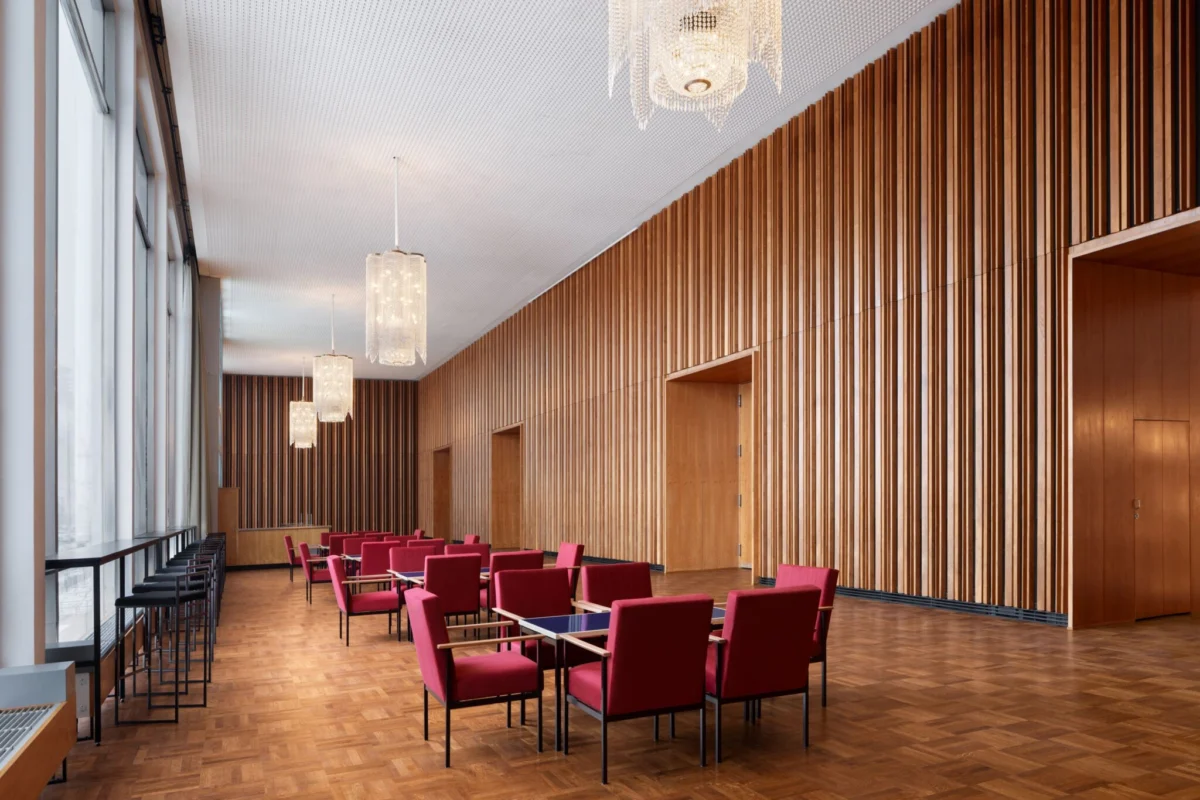
Berlin’s cinematic landscape has been profoundly enhanced with the grand reopening of Kino International in late February 2026, following an extensive and meticulously executed heritage-listed general refurbishment. An undisputed architectural landmark of post-war modernism and a pivotal premiere venue, this iconic institution, located on the monumental Karl-Marx-Allee, has for decades stood as a central pillar of national and international film culture. Its return marks not merely the revival of a cinema but the reassertion of a vibrant cultural hub, where preserved historic design, exquisite craftsmanship, and contemporary technology converge to create an unparalleled experience that seamlessly integrates architecture, design, and urban life, from its hallowed auditorium to the legendary Panorama Bar.
A Legacy Reimagined: Blending Past and Future
The significance of Kino International extends far beyond its function as a mere film theatre. Erected between 1961 and 1963 to the visionary designs of architect Josef Kaiser, it is a quintessential example of European post-war modernism, reflecting the architectural ambitions of the former German Democratic Republic (GDR). Its position on Karl-Marx-Allee, one of Berlin’s most historically significant urban boulevards, underscores its monumental status. For decades, it served as the premiere cinema of the GDR, a vital social meeting point, and a prominent stage for public life, deeply shaping the cultural identity of East Berlin. Since 1992, the Berlin-based Yorck Cinema Group has meticulously overseen its operation, demonstrating an unwavering commitment to preserving its rich history and ensuring its continuous relevance. The recent refurbishment, a testament to this dedication, now presents Kino International not just as a cinema, but as a holistic architectural work of art, a place for film, encounter, and dynamic urban engagement.
The Historical Tapestry of Kino International
The story of Kino International is intrinsically woven into the fabric of Berlin’s post-war history. Karl-Marx-Allee itself, originally named Stalin-Allee, was conceived in the 1950s as a grand socialist boulevard, a showpiece of East German planning and architecture. Its monumental, neo-classical "wedding cake style" buildings, and later, more modern structures like Kino International, aimed to embody the ideals of the socialist state. Kino International, with its sleek, modernist lines and functional design, marked a distinct shift from the earlier architectural expressions on the Allee, showcasing a progressive vision for public spaces.
Birth of an Icon (1961-1963): Architect Josef Kaiser’s original brief for Kino International was ambitious. He envisioned a multi-functional cultural centre, not solely a premiere cinema. The initial concept included not only the expansive cinema auditorium but also generous foyers, dedicated rooms for club meetings, and even a library. This comprehensive approach underscored the building’s role as a community anchor, designed to foster intellectual and social engagement beyond film screenings. Kaiser’s design emphasized a clear formal language, expansive spatial sequences, and a deliberate, artful staging of material and light, elements that continue to define the building as a key work of its era. Its opening in 1963 was a landmark event, immediately establishing it as the most prestigious film venue in the GDR.

A Cultural Hub in Divided Berlin: During the Cold War, Kino International played a unique role. As the official premiere cinema for the GDR, it hosted state-sanctioned film events, often showcasing productions from other socialist countries, but also, notably, select international films that were deemed ideologically acceptable. This made it a rare window to the wider world for East German citizens, and attending a premiere there was a significant cultural experience. Beyond official screenings, its spacious foyers and the Panorama Bar became informal gathering places for artists, intellectuals, and the general public, fostering a vibrant social scene distinct from the often-controlled public life of the GDR. The cinema’s consistent participation in the Berlin International Film Festival (Berlinale) further cemented its status, allowing a limited, but significant, interaction with global film culture even during the city’s division. The Berlinale itself, established in 1951, emerged as a symbol of cultural exchange in a divided city, and Kino International’s involvement, even if limited to specific sections or screenings, was a powerful statement of its international aspirations.
Transition and Continuity (Post-1992): Following German reunification in 1990, many East German institutions faced an uncertain future. Kino International, however, found a new steward in the Yorck Cinema Group in 1992. Renowned for their dedication to preserving historic cinemas and maintaining a diverse film program, Yorck recognized the immense cultural and architectural value of Kino International. Their stewardship ensured that the cinema continued to operate with great commitment, upholding its historical significance while adapting to the demands of a unified Germany and a changing media landscape. This long-term dedication set the stage for the recent, monumental refurbishment.
The Meticulous Restoration Process: A Harmony of Preservation and Innovation
The recent refurbishment represented the most comprehensive intervention in Kino International’s history, necessitating its complete closure for the first time since its inauguration. The project was meticulously planned and executed by Berlin-based Dickmann Richter Architekten, whose approach expertly navigated the inherent tension between stringent heritage preservation requirements and the necessity of contemporary modernization. This delicate balance was achieved through close coordination with the heritage authorities, ensuring that every intervention respected the building’s original integrity while propelling it into the 21st century.
The Scope of the Project: The scale of the undertaking was immense. As architect Daniel Dickmann noted, "We succeeded in carefully guiding Kino International into the present. It looks as it once did, yet in every respect it has been reimagined." This involved a complete overhaul of the building’s infrastructure. All technical systems, from basement to roof, were either renewed or thoroughly modernized to meet the most stringent contemporary standards. This included extensive interventions to integrate state-of-the-art ventilation, heating, and electrical systems, as well as new sanitary and rainwater installations. Crucially, heritage-listed wall and ceiling surfaces, often concealing outdated infrastructure, were carefully opened, technically upgraded, and then painstakingly restored to their original appearance.
Technical Modernization and Energy Efficiency: A significant triumph of the refurbishment is the dramatic improvement in the building’s energy footprint. The integration of new heating and ventilation technologies has reduced the building’s energy demand by approximately 70 percent, a remarkable achievement for a historic structure. This commitment to sustainability not only ensures the cinema’s long-term viability but also sets a benchmark for future heritage projects. The roof structure itself underwent a comprehensive refurbishment, receiving new skylights, a renewed waterproofing system, and elegant zinc sheet cladding. Even the integration of modern building services components on the roof was handled with extreme sensitivity to preserve the visual integrity of the historic silhouette.
Acoustic Excellence and Audience Comfort: Recognizing that a premium cinematic experience hinges on both visual and auditory immersion, a particular focus of the refurbishment was dedicated to enhancing the building’s acoustic quality. More than 10,000 square feet of new acoustic insulation were strategically installed in the cinema auditorium and the Panorama Bar. This, coupled with the precise integration of modern audio technology discreetly hidden behind the historic wall coverings, delivers a significantly enhanced sound experience, ensuring crystal-clear audio fidelity for every film screening and event. Furthermore, audience comfort was prioritized through a strategic reduction in the number of seats to 506. This decision allowed for an increased row spacing, providing noticeably more legroom and an altogether more luxurious viewing experience.

Craftsmanship and Iconic Elements: The refurbishment was a monumental exercise in meticulous craftsmanship. Over 4 miles of wooden slats, each a delicate component of the interior design, were individually dismantled, painstakingly refurbished, and then reinstalled with precision. The historic concrete terrazzo flooring, a durable and aesthetically pleasing material, along with natural stone surfaces and the striking gold ceiling in the entrance area, were all carefully restored to their original grandeur.
However, perhaps the most iconic element to receive special attention was the legendary silver premiere curtain. With its shimmering surface composed of more than 40 million sequins, it is globally recognized as one of the most distinctive design elements in European cinema history. This magnificent curtain was not merely cleaned; it underwent a meticulous restoration true to its original design and has been newly staged. Its glittering presence now serves as a breathtaking prelude to every film screening, evoking a sense of glamour and anticipation that is synonymous with Kino International.
Kino International’s Enduring Cultural Significance
The reopening of Kino International is more than just the unveiling of a renovated building; it is the re-establishment of a vital cultural institution and a lifestyle destination that continues to shape Berlin’s urban fabric.
More Than a Cinema: A Lifestyle Destination: Beyond the primary auditorium, the building itself unfolds as a multi-layered spatial experience. The grand Foyer, the impressive staircase hall, and the fabled Panorama Bar collectively form an ensemble that powerfully connects cinema, the city, and society. The Panorama Bar, with its expansive views over Karl-Marx-Allee, is poised to reclaim its role as a central meeting point for filmmakers, creatives, and the general public. Its return as a vibrant social hub will once again make Kino International a dynamic lifestyle destination, fostering dialogue, collaboration, and celebration.
A Venue for National and International Film Culture: Since its inception, Kino International has consistently hosted countless premieres and festivals, solidifying its reputation as an established and indispensable venue of the Berlin International Film Festival. The Berlinale, one of the "Big Three" film festivals alongside Cannes and Venice, holds immense international prestige. Kino International’s deep-rooted connection to this festival underscores its global relevance and its ongoing contribution to the international film circuit. Its architectural and historical gravitas provides a unique backdrop for film premieres and industry events, adding a layer of historical depth to contemporary cinematic achievements.
Architectural Heritage and Urban Identity: Josef Kaiser’s initial vision for a building with strong architectural ambition, conceived as a cultural center with diverse functions, continues to resonate. The cinema auditorium, generous foyers, and other communal spaces were designed to interact seamlessly. The building’s enduring appeal lies in its "clear formal language, expansive spatial sequences, and deliberate staging of material and light," qualities that continue to make it a seminal work of its era and a defining feature of Karl-Marx-Allee. Its preservation and thoughtful modernization serve as a powerful reminder of the importance of architectural heritage in shaping urban identity and fostering a sense of place.

Statements and Perspectives
Daniel Dickmann’s statement encapsulates the spirit of the refurbishment: "It looks as it once did, yet in every respect it has been reimagined." This sentiment is echoed by the Yorck Cinema Group, whose long-term commitment to Kino International demonstrates their understanding of its profound cultural value. Representatives from the Berlin State Office for Monuments (Landesdenkmalamt Berlin) have also praised the project as a exemplary model of heritage conservation, highlighting the careful balance achieved between preserving historical substance and integrating modern functional and ecological requirements. The success of this collaboration between architects, owners, and heritage authorities underlines a shared vision for keeping Berlin’s cultural landmarks alive and relevant for future generations.
Broader Implications: A Model for Heritage Preservation
The reopening of Kino International is more than a local news story; it presents a compelling case study for heritage preservation globally. In an era where historic buildings often face challenges of economic viability and technological obsolescence, this project demonstrates that it is possible to maintain the integrity of architectural heritage while embracing contemporary needs for functionality, comfort, and sustainability. The 70 percent reduction in energy demand, for instance, sets a new standard for eco-friendly restoration.
Furthermore, the revitalization of Kino International reinforces the enduring importance of physical cinemas in an increasingly digital world. While streaming platforms offer convenience, the communal experience of watching a film in a grand, historically significant venue like Kino International remains irreplaceable. It speaks to a deeper human need for shared cultural experiences and the preservation of communal spaces.
The project also contributes significantly to the ongoing revitalization and appreciation of Karl-Marx-Allee. As one of Berlin’s most unique boulevards, its architectural ensemble tells a complex story of 20th-century German history. Kino International, now magnificently restored, serves as a beacon, drawing visitors and locals alike to explore this historically rich district. It embodies the resilience of Berlin itself – a city that consistently rebuilds, reinvents, and reclaims its past to forge a vibrant future. The iconic Kino International, once again, shines brightly as a testament to cinema’s enduring power and architecture’s timeless beauty.




 Anjar Salim
 Chandra Hamzah
 Tatiana Tantri Indah Sari
 Budi Mulyono
