
 Walid Sujud Trenggono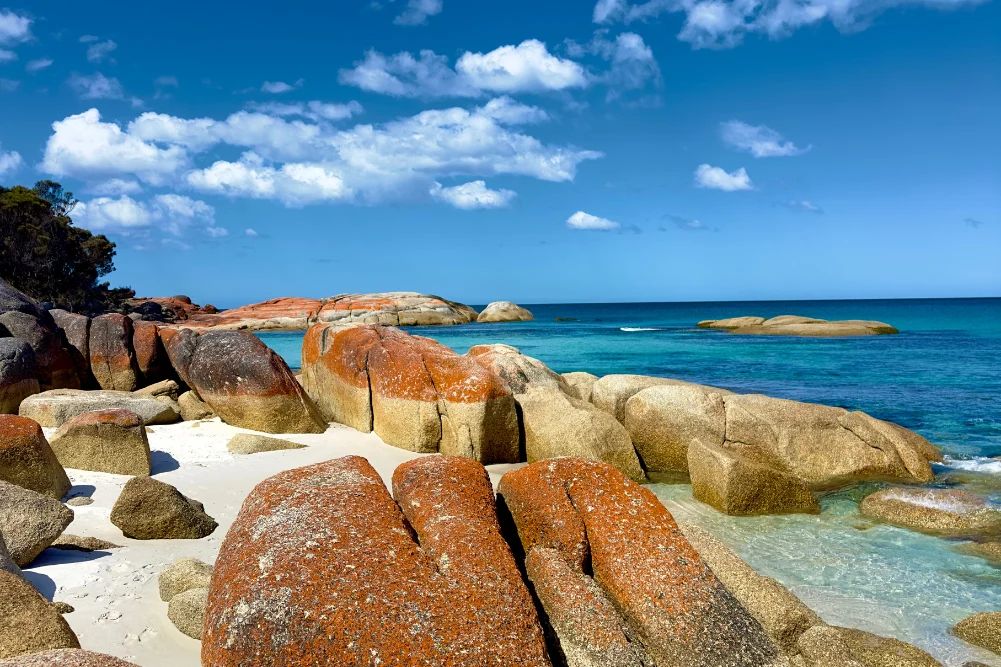
The Bay of Fires, situated on the northeastern coast of Tasmania, has long been recognized as one of Australia’s most significant natural landmarks, characterized by its distinctive orange-hued granite boulders and pristine white sands. Known to the traditional Palawa owners as Larapuna, the region has recently seen a surge in "soft adventure" tourism, a market segment that combines rigorous outdoor activity with high-end amenities. This trend is exemplified by curated expeditions such as those offered by Intrepid Travel, which provide structured three-day trekking experiences designed to balance physical challenge with professional hospitality. As Tasmania continues to position itself as a global leader in eco-tourism, the Bay of Fires remains a focal point for both environmental conservation and regional economic development.
Historical and Geological Context of the Bay of Fires
The nomenclature of the Bay of Fires dates back to 1773, when Captain Tobias Furneaux of the HMS Adventure observed numerous fires burning along the coastline. These fires were managed by the Palawa people, the Indigenous inhabitants of Tasmania, who used traditional fire-stick farming to manage the landscape and encourage the growth of specific vegetation. Today, the "fire" of the coastline is most visibly represented by the vibrant orange lichen that encrusts the massive granite boulders. This lichen, a symbiotic partnership between fungi and algae, thrives in the clean air and specific mineral conditions of the Tasmanian coast.
Geologically, the region is dominated by Devonian granite, which has been sculpted by millennia of marine erosion. The contrast between the burnt-orange rocks, the turquoise waters of the Tasman Sea, and the ultra-white quartz sand has earned the Bay of Fires international acclaim, including being named the most beautiful beach in Australia for 2025 by various travel authorities. This recognition has necessitated a delicate balance between increasing visitor numbers and maintaining the ecological integrity of the Humbug Point Conservation Area and Mount William National Park.
The Three-Day Trek: A Chronological Overview
The standard guided expedition typically commences in Launceston, Tasmania’s second-largest city, which serves as the primary gateway for the northern regions of the state. From here, participants are transported to St Helens, the largest town on the northeast coast, which serves as a logistical base camp.
Day One: Humbug Point and Coastal Acclimatization
The initial phase of the trek focuses on the Skeleton Bay Track, leading toward Dora Point within the Humbug Point Conservation Area. This segment is designed as an introductory hike, allowing participants to adjust to the variable Tasmanian climate. The region is notorious for "sneaky rain"—localized, light precipitation that can penetrate standard gear—and rapid temperature fluctuations.
The ecology of this area is characterized by coastal heathland, flowering paperbarks, banksia, and tea trees. The trail provides an immediate introduction to the local fauna, specifically the common wombat (Vombatus ursinus). Known as the "bulldozer of the bush," wombats are prolific in this region, frequently marking their territory with distinctive cubic droppings. While the animals themselves are often elusive during daylight hours, their presence is a constant feature of the trail’s landscape.
Day Two: Eddystone Point and the 12-Kilometer Stretch
The second day represents the most physically demanding portion of the itinerary. It begins at Eddystone Point, home to a 35-meter-high lighthouse constructed from pink granite. This area is a site of significant maritime history, as the treacherous waters off the point have been the site of numerous shipwrecks over the past two centuries.
The trek involves a 6-kilometer walk along Eddystone Beach, where hikers contend with high-velocity winds that can reach gusts of nearly 70 kilometers per hour. This segment highlights the marine biodiversity of the region, including Pacific gulls, sandpipers, and oystercatchers. The terrain shifts from open beach to fire trails, passing through dunes patterned with minerals leached from the surrounding granite. The day concludes with a return to St Helens, totaling approximately 25,000 steps for the average participant.
Day Three: Mount William National Park and Final Observations
The final day focuses on Mount William National Park, specifically the Stumpy’s Bay area. This region is a stronghold for the Tasmanian subspecies of the short-beaked echidna (Tachyglossus aculeatus setosus), which is larger and hairier than its mainland counterparts. The park is also a critical habitat for the Forester kangaroo and various bird species, including the splendid fairy-wren and green rosella.
The trek concludes with a 6-kilometer loop before returning to Launceston. En route, many tours stop at the Little Blue Lake, a former tin mining site. The lake’s striking turquoise color is a result of suspended white clay particles and mineral remnants from the Endurance tin mine, which operated from the 1870s until the 1980s. While visually stunning, the water’s mineral content makes it unsuitable for swimming, serving as a stark reminder of the region’s industrial past.
Regional Economic Impact and Infrastructure
The transition of northeast Tasmania from an industrial and extraction-based economy to a tourism-driven one is most evident in the towns of St Helens and Derby. St Helens, traditionally known as Tasmania’s game fishing capital, has successfully diversified its economy to support the influx of hikers and eco-tourists. The local hospitality sector has seen significant investment, with properties like the Panorama Hotel undergoing renovations to cater to the "soft adventure" market.
The culinary scene in St Helens has also become a major draw, emphasizing hyper-local sourcing. The region is famous for its southern rock lobster and oysters, particularly those from Lease 65, located just minutes from the town center. The integration of local produce into the trekking experience—ranging from chef-prepared meals to specialized trail snacks—provides a direct economic benefit to local producers and reinforces the "premium" nature of the guided tour model.
Nearby, the town of Derby has undergone a similar transformation. Once one of the world’s richest tin-mining centers, it is now a globally recognized hub for mountain biking. This synergy between hiking in the Bay of Fires and mountain biking in Derby has created a robust tourism corridor that supports year-round employment in a previously volatile economic region.
Safety, Preparation, and Guided Expertise
One of the primary drivers for the growth of guided treks is the emphasis on safety and expert knowledge. The presence of trained guides—often accompanied by participants with professional backgrounds in emergency services—mitigates the risks associated with Tasmania’s unpredictable wilderness. Guides provide not only navigational assistance but also historical and biological context that enriches the traveler’s experience.
For example, historical narratives such as the story of William Swallow—a convict who escaped from the Sarah Island penal settlement and was later tried for piracy in England—add a layer of cultural depth to the physical journey. Furthermore, the logistical support provided by operators like Intrepid Travel, which includes gear transport and pre-arranged accommodation, allows a broader demographic to engage with the wilderness, including older travelers and those who may not have the technical skills for unguided backcountry expeditions.
Environmental Implications and Sustainability
The increasing popularity of the Bay of Fires brings with it a responsibility for sustainable management. The "Leave No Trace" principles are strictly enforced by guided groups to protect the fragile coastal heath and the nesting sites of shorebirds. The use of established trails and the centralization of accommodation in towns like St Helens help minimize the human footprint on the national parks.
The presence of over one million wombats in Tasmania—nearly double the human population—highlights the success of local conservation efforts, but also the need for ongoing vigilance against threats like mange and habitat fragmentation. Eco-tourism operators are increasingly being held to high standards of environmental stewardship, with many seeking B-Corp certification or similar credentials to demonstrate their commitment to the landscapes they profit from.
Conclusion: The Future of Tasmanian Wilderness Travel
The Bay of Fires guided trek represents more than just a scenic walk; it is a microcosm of the modern Tasmanian economy and its relationship with the natural world. By combining Indigenous history, geological wonder, and high-quality local hospitality, the region has created a tourism product that is both aspirational and accessible.
As the global travel market continues to shift toward meaningful, nature-based experiences, Tasmania’s northeastern coast is well-positioned to thrive. The success of these three-day expeditions suggests that the future of conservation may lie in its ability to be shared and experienced, provided that the "fire" of the bay—both its literal history and its metaphorical beauty—is protected for future generations. The integration of regional development, wildlife protection, and premium tourism ensures that the Bay of Fires will remain a beacon of the Australian wilderness for years to come.




 Anjar Salim
 Chandra Hamzah
 Tatiana Tantri Indah Sari
 Budi Mulyono
 Lukman Taruna Persada Ramadan
