
 Budi Mulyono
Delta Air Lines has initiated a series of strategic maneuvers aimed at solidifying its premium market share, headlined by the announcement of a new Delta One Lounge at Los Angeles International Airport (LAX) and an update on its narrowbody fleet cabin configurations. While the carrier moves forward with infrastructure improvements, it simultaneously faces delays in its long-awaited transcontinental business class product for the Airbus A321neo. These developments coincide with significant shifts in the cruise industry, including a major overhaul of Carnival Cruise Line’s loyalty program and a high-profile legal challenge regarding passenger safety during shore excursions.
Delta Air Lines Infrastructure and Fleet Strategy at LAX
The aviation landscape at Los Angeles International Airport continues to evolve as Delta Air Lines accelerates its "Delta SkyWay" project. The airline confirmed the opening of a second Delta One Lounge located in Terminal 2, with the initial phase slated for a summer 2026 debut. This facility is designed to cater exclusively to Delta One passengers and Delta 360 members, providing a high-touch, secluded environment that bridges the gap between traditional airport lounges and private clubs.
This expansion follows the successful launch of the primary Delta One Lounge in Terminal 3, reflecting a broader industry trend where legacy carriers are investing heavily in ground-based premium experiences to justify rising ticket prices. Industry analysts note that LAX is a critical battleground for premium transcontinental and transpacific traffic, where Delta competes directly with United’s Polaris and American’s Flagship offerings.
However, Delta’s hardware strategy for its narrowbody fleet has hit a significant roadblock. The Safran VUE business class seat, which was previously announced as the centerpiece of the A321neo’s premium transcontinental configuration, has reportedly been abandoned. Sources indicate that Delta is now evaluating the Thompson Aero VantageSOLO as a replacement. The VantageSOLO is a lie-flat seat designed specifically for narrowbody aircraft, offering direct aisle access in a 1-1 configuration.
The transition between seat manufacturers is expected to cause substantial delays. Certification for the new Thompson Aero seats is not anticipated until mid-2028 at the earliest. This delay leaves a gap in Delta’s product consistency, as the airline currently utilizes a mix of standard first-class recliner seats and older lie-flat products on its premium domestic routes.
Operational Analysis: The Airbus A220-300 Experience
While the long-term premium product faces delays, Delta’s mid-tier offerings on the Airbus A220-300 are receiving increased scrutiny. The A220-300 has become a cornerstone of Delta’s domestic fleet, praised for its fuel efficiency and passenger-friendly 2-3 seating configuration in the main cabin.
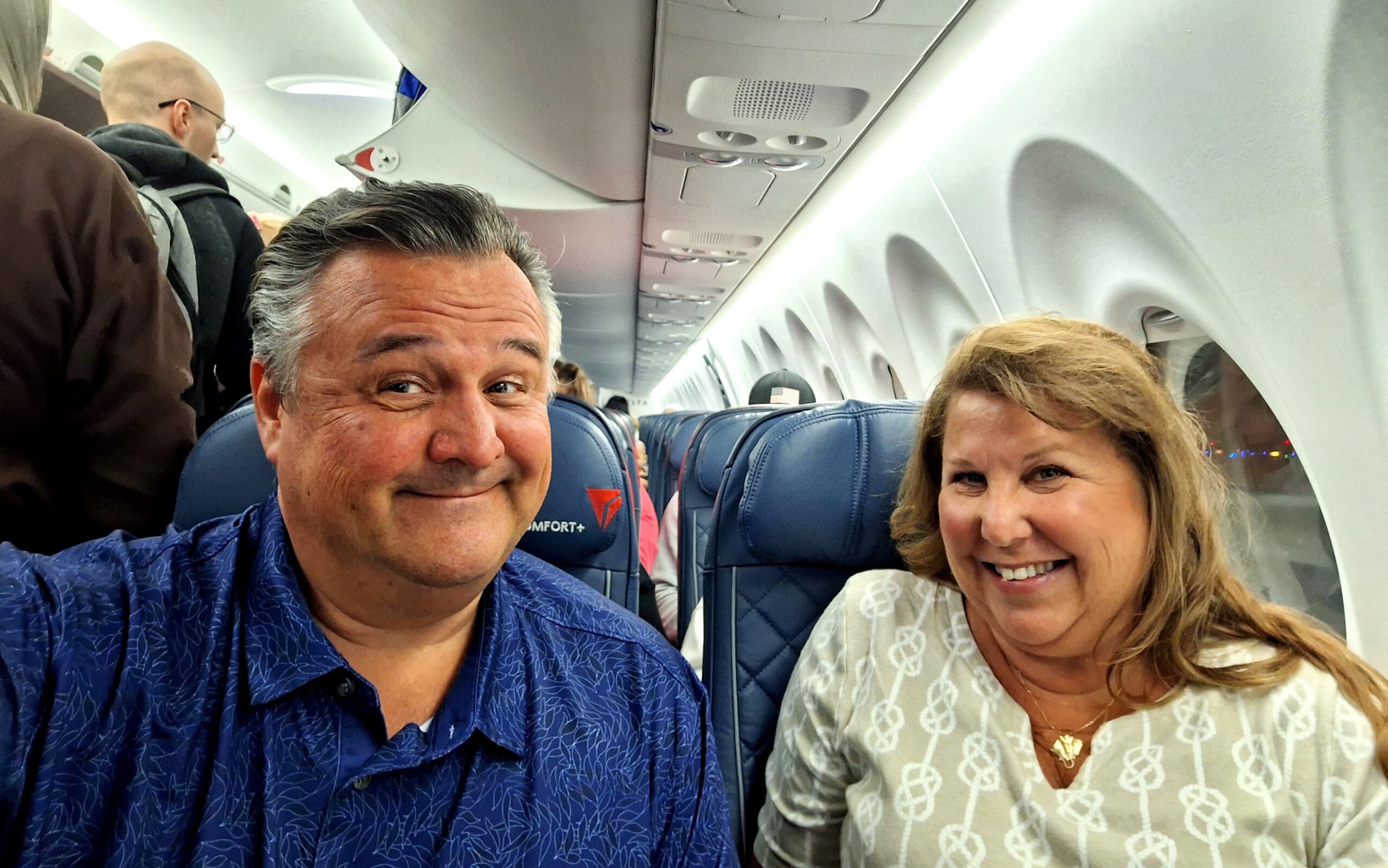
Recent field evaluations of the A220-300’s Comfort Plus cabin highlight the specific advantages of the front-row bulkhead (Row 10). This row offers significantly more legroom than standard Comfort Plus rows, though it introduces a trade-off in seat width due to the fixed armrests containing the tray tables and swing-out In-Flight Entertainment (IFE) screens.
The A220’s Comfort Plus product is positioned as a bridge between the Main Cabin and First Class, offering four inches of additional legroom and dedicated overhead bin space. As Delta continues to take delivery of more A220 aircraft, the consistency of this product across its regional and short-haul network remains a key selling point for corporate travelers.
Financial Incentives and Loyalty Program Shifts
The travel finance sector is seeing increased activity as Southwest Airlines and Chase Bank launched elevated welcome offers for the Rapid Rewards credit card suite. Through July 1, 2026, the three personal tiers—Priority, Premier, and Plus—are offering between 80,000 and 90,000 points upon meeting spending requirements.
The Southwest Rapid Rewards Priority Credit Card remains the most robust option for frequent travelers, featuring a $75 annual travel credit and four upgraded boardings per year. Unique to the Southwest ecosystem, the Priority card allows users to secure preferred seating and extra legroom options within 48 hours of departure, a benefit that offsets the airline’s open-seating policy.
Concurrently, the cruise industry is navigating a major transition in loyalty structures. Carnival Cruise Line has announced the replacement of its "Very Important Fun Person" (VIFP) program with a new, yet-to-be-named loyalty framework effective September 1, 2026. Crucially, the airline has issued an "opt-in" mandate, requiring current members to manually migrate their profiles to the new system or risk losing their accumulated status and "Cruise Days." This move is seen as an effort to purge inactive accounts and streamline the data management of its frequent cruiser base.
Legal Developments and Passenger Safety Concerns
The travel industry is also grappling with serious safety and legal challenges. In a significant maritime lawsuit, a 23-year-old woman is suing Carnival Cruise Line after losing both legs during a shore excursion in Nassau, Bahamas. The incident occurred when the passenger was allegedly sucked under the propeller of a catamaran.
The legal filing alleges that the excursion crew encouraged excessive alcohol consumption and failed to follow basic safety protocols regarding the positioning of the vessel while passengers were in the water. Carnival has filed for dismissal, a common move in maritime law where cruise lines often argue that third-party excursion operators are independent contractors rather than agents of the cruise line. This case highlights the ongoing debate regarding the liability of "closed-loop" travel providers for the safety of their passengers during off-ship activities.

In the aviation sector, the Department of Justice has moved forward with a federal indictment against a Delta passenger who allegedly assaulted a flight attendant during a domestic flight. The passenger faces charges of interference with flight crew members and attendants, a federal offense that carries a maximum sentence of 20 years in prison. The Federal Aviation Administration (FAA) continues to maintain a "zero tolerance" policy for unruly passenger behavior, which saw a dramatic spike during the post-pandemic recovery period.
Global Travel Warnings and Technological Innovations
As Mexico prepares to co-host the 2026 FIFA World Cup, security concerns in Guadalajara have prompted new advisories for international travelers. While the city is a major cultural and sporting hub, recent escalations in regional cartel activity have led to increased security screenings and "Level 3: Reconsider Travel" warnings for certain areas surrounding the Jalisco state capital. Travelers attending matches are urged to use official transportation and remain within designated "Fan Zones" to mitigate risks.
On the technological front, the industry is exploring the implementation of overhead bin locks to address the rising issue of "cabin theft" and the unauthorized relocation of luggage. Several startups are currently pitching biometric or app-based locking systems to major carriers. While these systems promise enhanced security, airlines are weighing the potential for increased boarding times and the operational complexity of managing lock malfunctions mid-flight.
Chronology of Key Events
- June 8, 2026: Southwest Airlines launches elevated 90,000-point offers for Rapid Rewards Priority credit cards.
- June 9, 2026: Delta Air Lines confirms the shift from Safran to Thompson Aero for A321neo premium seats, pushing certification to 2028.
- June 10, 2026: Carnival Cruise Line issues a final warning for VIFP members to opt-in to the new loyalty system before the September 1 deadline.
- June 11, 2026: Reports emerge regarding the A220-300 bulkhead seat performance and the effectiveness of third-party travel insurance in connection with Delta flight disruptions.
- June 12, 2026: Federal indictment filed in the Delta flight attendant assault case; Guadalajara safety warnings updated ahead of World Cup logistics meetings.
Impact and Implications
The delay in Delta’s A321neo premium product suggests a broader challenge within the aerospace supply chain. Seat manufacturers have struggled to meet the rigorous safety and weight requirements of modern aviation regulators, particularly for lie-flat seats in narrowbody cabins. For Delta, this means a prolonged period of product inconsistency on lucrative routes like New York to Los Angeles or San Francisco.
For the consumer, the surge in credit card offers and loyalty program changes indicates a highly competitive environment where companies are willing to pay a premium for customer data and long-term loyalty. However, the legal and safety incidents reported this week serve as a reminder of the inherent risks in global travel and the importance of comprehensive travel insurance and situational awareness.
As the industry moves into the peak summer travel season of 2026, the focus remains on whether infrastructure—such as the new Delta One Lounge—can keep pace with the record-breaking demand for premium travel experiences. The success of these investments will likely dictate the financial health of major carriers and cruise lines for the remainder of the decade.


 Anjar Salim
 Lukman Taruna Persada Ramadan
 Chandra Hamzah
 Tatiana Tantri Indah Sari