
 Budi Mulyono
Delta Air Lines has quietly implemented a substantial modification to its "Bags on Time" service guarantee, a long-standing policy designed to incentivize operational efficiency and bolster passenger confidence in checked luggage handling. Under the revised terms, passengers who do not receive their checked baggage at the carousel within 20 minutes of their aircraft’s arrival now have a significantly narrower window of just two hours to file a claim for compensation. This change marks a drastic departure from the previous policy, which allowed travelers approximately 48 hours to submit a request for the 2,500 SkyMiles bonus associated with the guarantee.
The adjustment, which was enacted without a formal press announcement, represents a strategic shift in how the Atlanta-based carrier manages its customer service recovery efforts. While the core promise—2,500 SkyMiles if bags take longer than 20 minutes to appear—remains intact, the administrative barrier to successfully claiming those miles has been heightened. Industry analysts suggest this move is likely intended to streamline data verification and reduce the volume of retroactive claims filed days after a flight has concluded.
Historical Context and the Evolution of the Baggage Guarantee
The "Bags on Time" program was originally introduced as a temporary promotion in early 2015 before becoming a permanent fixture of Delta’s service commitment. At the time of its inception, the initiative was viewed as a bold move to differentiate Delta from its primary domestic competitors, American Airlines and United Airlines. By putting a hard time limit on baggage delivery and backing it with a tangible reward, Delta sought to position itself as the industry leader in operational reliability.
Throughout the last decade, the program has survived various industry shifts and internal policy reviews. In 2021, rumors circulated within the aviation community that Delta intended to sunset the guarantee entirely. However, the airline maintained the program, recognizing its value as a marketing tool and a metric for ground crew performance. The 20-minute threshold is measured from the moment the aircraft door is opened—a data point tracked precisely by the airline’s internal systems—to the moment the bag is scanned at the baggage claim carousel.

The previous 48-hour claim window provided a generous buffer for travelers, particularly those arriving late at night or those managing complex onward travel arrangements. The transition to a two-allotted hour window aligns Delta more closely with real-time operational reporting but places a new burden of immediacy on the passenger.
Technical Specifications of the 20-Minute Rule
To understand the implications of the new two-hour filing deadline, it is necessary to examine the technical mechanics of Delta’s baggage tracking system. Delta was the first major U.S. carrier to implement Radio Frequency Identification (RFID) tracking technology on a global scale, investing an estimated $50 million in the infrastructure in 2016. This technology allows the airline to track bags in real-time via the Fly Delta mobile app, providing both the carrier and the passenger with transparency.
The "Bags on Time" guarantee applies to all domestic flights within the 50 United States and Puerto Rico operated by Delta Air Lines and Delta Connection. The 20-minute clock begins at the "block-in" time or when the cabin door is officially opened, as recorded by the aircraft’s Aircraft Communications Addressing and Reporting System (ACARS). If the first bag from a specific flight does not reach the carousel within the 20-minute mark, every passenger who checked a bag on that flight is technically eligible for the 2,500 SkyMiles, provided they are a member of the SkyMiles loyalty program at the time of travel.
Comparative Analysis of Industry Standards
Delta’s baggage guarantee is one of the few voluntary service-level agreements in the U.S. aviation industry that offers immediate compensation for minor delays. The only other major carrier with a comparable policy is Alaska Airlines, which also offers a 20-minute baggage guarantee. Alaska Airlines provides passengers with a choice between 2,500 Mileage Plan miles or a $25 discount code for a future flight.
In contrast, larger competitors like American Airlines and United Airlines do not offer a timed delivery guarantee. These carriers generally adhere to Department of Transportation (DOT) mandates, which focus on compensation for lost, damaged, or significantly delayed bags rather than the speed of delivery at the carousel.

The value of 2,500 SkyMiles is estimated by industry experts to be worth approximately $30 to $35, depending on the redemption method. For a family of four checking multiple bags, a 21-minute wait could result in 10,000 SkyMiles, roughly equivalent to $120 to $140 in travel value. By shortening the claim window to two hours, Delta effectively reduces its "breakage"—the percentage of unclaimed rewards—as many passengers may not realize their bags were late until they have already left the airport and surpassed the two-hour limit.
Impact of Recent Department of Transportation Regulations
The timing of Delta’s policy change is noteworthy given the recent regulatory environment. In April 2024, the U.S. Department of Transportation announced a final rule requiring airlines to provide automatic cash refunds for checked baggage fees if a bag is not delivered within 12 hours of a domestic flight’s arrival (or 15 to 30 hours for international flights).
While the DOT rule focuses on the refund of the specific baggage fee (typically $30 to $35 for a first bag), Delta’s "Bags on Time" program is a voluntary loyalty-based incentive that triggers at a much lower threshold (20 minutes). However, the federal mandate for "automatic" refunds has increased the pressure on airlines to maintain impeccable data records. By requiring passengers to file "Bags on Time" claims within two hours, Delta can reconcile these claims against their internal RFID data almost immediately, ensuring that the 2,500-mile disbursement does not conflict with or complicate federal refund requirements for longer delays.
Operational and Strategic Implications
From a corporate perspective, the shift to a two-hour window serves several strategic purposes. First, it ensures that claims are filed while the operational data is "fresh" in the system. If a passenger waits 48 hours to file, the airline’s customer service agents may need to perform more extensive manual lookups to verify the exact door-open time and carousel-delivery time.
Second, the policy change incentivizes the use of the Fly Delta mobile app. Passengers who use the app receive notifications when their bags are loaded, when they are "coming soon" to the carousel, and when they have been delivered. By forcing a quick turnaround for claims, Delta encourages passengers to stay engaged with the app throughout their journey.
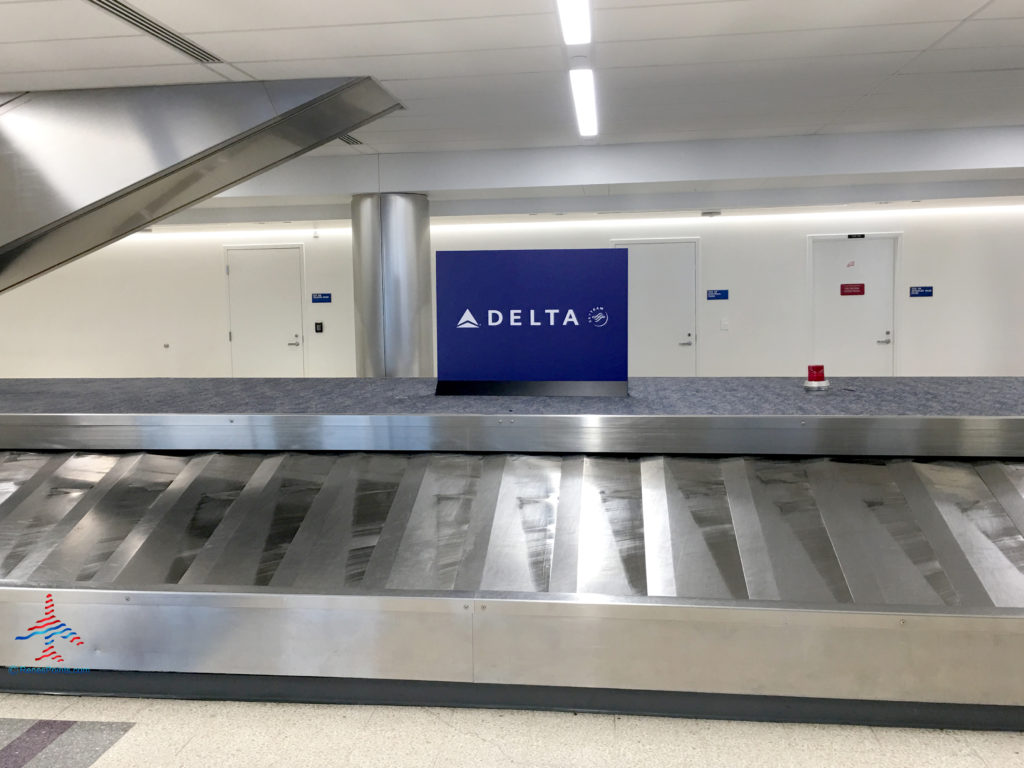
Third, there is a clear financial motivation. The "breakage" rate for a two-hour window is significantly higher than a 48-hour window. Business travelers heading straight to meetings or parents managing young children at baggage claim are less likely to prioritize a mile-claim form within the first 120 minutes of landing. This reduction in successful claims allows Delta to maintain the marketing "halo" of the guarantee while simultaneously reducing the total volume of SkyMiles issued.
Passenger Guidelines and Submission Process
To successfully navigate the new policy, Delta passengers must be proactive. The airline requires that the claim be submitted through a specific landing page on the Delta website (delta.com/bag-guarantee). The form requires the passenger’s SkyMiles number, the flight confirmation number, and details regarding the arrival.
Travelers are advised to monitor the time the aircraft door opens and the time their first bag appears on the belt. If the duration exceeds 20 minutes, the claim should ideally be submitted via a smartphone while waiting for ground transportation or during the commute from the airport. Because the two-hour window is strictly enforced by the system’s timestamp, claims submitted at 121 minutes post-arrival are expected to be automatically rejected.
Conclusion and Future Outlook
Delta Air Lines’ decision to truncate the "Bags on Time" claim window reflects a broader trend in the travel industry toward "gamifying" loyalty and tightening the windows for consumer recourse. While Delta remains a leader in baggage handling performance—consistently ranking near the top of DOT’s Air Travel Consumer Reports—this policy change serves as a reminder that voluntary perks are subject to the carrier’s discretion and can be restricted with little notice.
As the airline continues to invest in biometric boarding and advanced gate technology, the baggage carousel remains one of the final "analog" friction points in the passenger experience. By maintaining the 20-minute guarantee but shortening the claim window, Delta is betting that its operational speed will keep most passengers satisfied, while the strict filing deadline will protect its bottom line from the costs of its own minor delays. For the savvy frequent flyer, the message is clear: in the modern era of air travel, the clock starts the moment the door opens, and the window for compensation closes faster than ever before.




 Chandra Hamzah
 Tatiana Tantri Indah Sari
 Anjar Salim

