
 Anjar Salim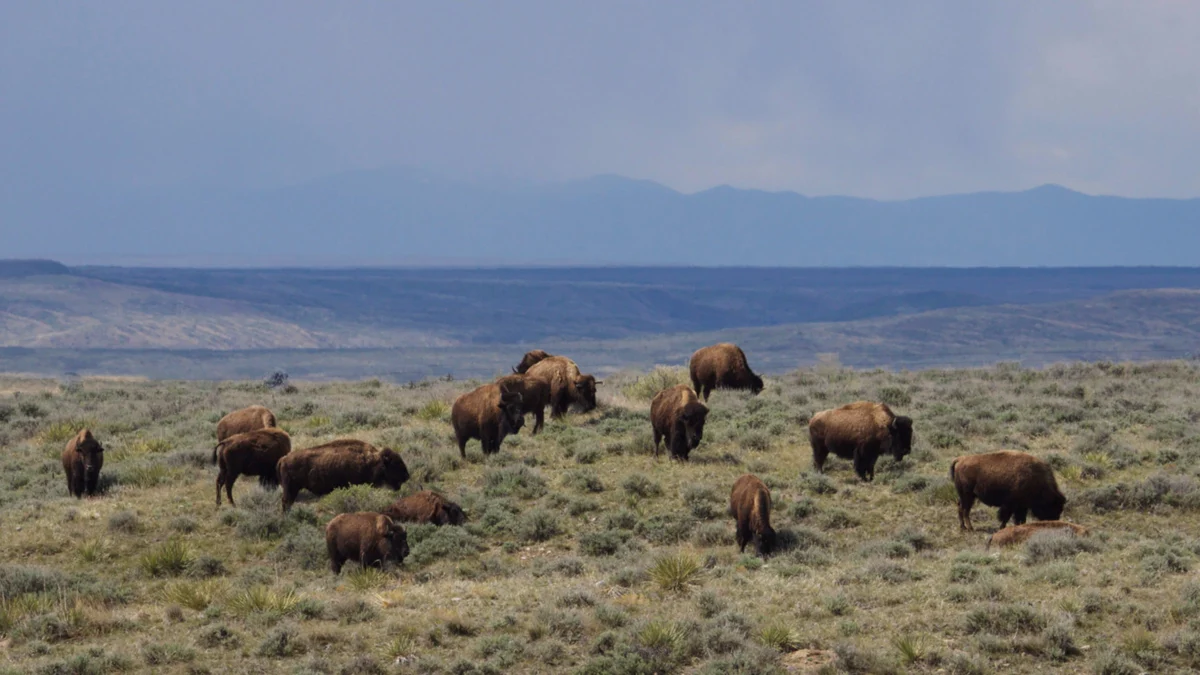
Nearly 1,000 American bison will remain on public grazing allotments in Montana for the foreseeable future, following a decisive preliminary injunction issued by U.S. District Court Judge Brian Morris. The ruling successfully halts a contentious Bureau of Land Management (BLM) directive that would have forced the removal or culling of the expansive bison herd from federal lands by September 30. The legal battle centers on a fundamental disagreement regarding the legal definition of livestock, the intent of century-old federal grazing legislation, and the ecological role of native ungulates on America’s shortgrass prairies.
The controversy revolves around the American Prairie Reserve, a nonprofit conservation organization that spans more than 600,000 acres of a mosaic consisting of private lands and public grazing leases in north-central Montana. The acreage is fully accessible to the public for recreational activities, including camping, hiking, and wildlife-watching. While the conservation group originally secured its federal grazing permits in 2005, the regulatory landscape shifted dramatically in May 2026 when the BLM issued a sweeping order attempting to revoke those permits based on a newly minted interpretation of the Taylor Grazing Act of 1934.
The Regulatory Reinterpretation and the Taylor Grazing Act
Enacted during the Dust Bowl era to stabilize the livestock industry and prevent overgrazing on public lands, the Taylor Grazing Act authorizes the Department of the Interior to issue permits for livestock grazing. Historically, the statute and its subsequent administrative rules have been interpreted broadly to accommodate various forms of herbivory, range management, and conservation strategies. However, the BLM’s 2026 directive sought to drastically narrow this scope.
Under the updated regulatory framework, the agency claimed that grazing permits apply exclusively to "production-oriented" livestock. The BLM defined this restricted category as animals utilized within an operation explicitly designed to yield commercial outputs such as meat, milk, or fiber, or animals directly assisting in the management of those production animals, such as horses used by cattle ranchers. Because American Prairie manages its bison primarily for ecological restoration, biodiversity enhancement, and cultural preservation rather than intensive commercial meat production, the BLM argued the herd violated the terms of the federal grazing leases.
Judge Morris decisively rejected this narrow administrative reinterpretation. In his written opinion, the judge underscored that the statutory text of the Taylor Grazing Act does not support the agency’s newly invented restrictions.
"No statutory language or judicial precedent exists that requires a livestock operation to focus exclusively on production and entirely ignore conservation, range improvement, preservation, or other values," Judge Morris stated in the decision. "Congress recognized livestock grazing and livestock management often includes and considers preservation, improvement, and thoughtful development, hand-in-hand with other uses."
Furthermore, Morris expressed profound skepticism regarding the agency’s administrative process, writing that he struggled to see how the BLM’s choice to impose the new regulation while blatantly ignoring empirical evidence submitted by American Prairie could be deemed consistent with federal administrative law.
Chronology of the Conflict
The legal showdown is the culmination of decades of tension between traditional agricultural interests and modern conservation initiatives on the Northern Great Plains. A timeline of key developments highlights the escalation of the dispute:
- 2005: The BLM initially grants grazing permits to American Prairie, allowing bison to graze alongside cattle on designated public allotments within the Montana shortgrass prairie ecosystem.
- 2022: Following comprehensive environmental reviews, the BLM concludes in an official agency document that bison grazing actively improves rangeland productivity, soil health, and riparian conditions on the exact federal lands the agency would later attempt to clear.
- January 2026: Tribal leaders step into the fray. J. Garret Renville, chairman of the Coalition of Large Tribes and Sisseton-Wahpeton Oyate of the Lake Traverse Reservation, writes a formal letter to the Secretary of the Interior defending American Prairie. The letter emphasizes that the nonprofit has supplied animals to various Native American tribes attempting to reestablish sovereign herds, noting that the reserve’s raising techniques mirror traditional tribal land stewardship.
- May 2026: The BLM reverses its course, issuing an administrative order reinterpreting the Taylor Grazing Act to exclude non-production animals and ordering the removal of nearly 1,000 bison by September 30. American Prairie executives publicly warn that the decision threatens the survival of the herd and forces the cancellation of the organization’s 2026 public bison harvest.
- September 13, 2026: U.S. District Court Judge Brian Morris issues a preliminary injunction blocking the BLM’s removal order, allowing the bison to remain on three active federal allotments while the underlying lawsuit proceeds through the federal court system.
Stakeholder Reactions and Economic Impacts
The BLM’s permit revocation effort drew sharp divisions among local communities, agricultural lobbies, and indigenous groups. Traditional ranching organizations, including the Montana Stockgrowers Association, largely supported the federal government’s push to prioritize commercial livestock production on public lands, arguing that federal grazing allotments were fundamentally created to support the economic viability of tax-paying livestock producers.
Conversely, the decision drew fierce opposition from conservationists and tribal governments. Alison Fox, Chief Executive Officer of American Prairie, praised the court’s intervention as a critical victory for ecological integrity.
"Bison belong on this landscape, and today’s ruling gives them a chance to stay," Fox said following the release of the decision. "For more than 20 years, our bison have grazed these lands under federal authorization and without grazing violations. The court recognized the concrete harm that removing them would cause, not just to our work, but to our Tribal partners and the broader effort to return bison to their native home."
Had the BLM’s September 30 removal deadline taken effect, American Prairie leadership noted the organization would have faced an untenable financial and logistical crisis. Beth Saboe, the preserve’s director of public relations, explained earlier in the year that a worst-case scenario would have required culling or relocating hundreds of animals at a tremendous financial cost to the nonprofit. The regulatory uncertainty also forced the premature cancellation of the organization’s 2026 public bison harvest, a program designed to manage population numbers sustainably while supplying meat to local communities and food banks.
Ecological Implications: Bison Versus Cattle
At the core of the biological debate is a stark contrast between how bison and domestic cattle interact with fragile prairie ecosystems. Scientific literature increasingly demonstrates that native ungulates provide unique ecological benefits that conventional livestock management often fails to replicate.
Cattle tend to exhibit localized, intensive grazing patterns. When placed on a pasture, domestic cattle frequently concentrate heavily in riparian zones and low-lying areas, lingering for extended periods unless actively rotated by human herders. This behavior can lead to soil compaction, overgrazing of preferred plant species, and degradation of stream banks if not carefully managed.
Bison, conversely, are the keystone species that evolved alongside the North American prairie over millennia. Behavioral studies show that bison are relentless travelers, frequently covering two to three miles per day across vast expanses. Because they graze more continuously and move fluidly across the landscape, they prevent the over-utilization of any single micro-habitat.
Research published in prominent ecological journals indicates that this nomadic grazing strategy enhances overall plant biodiversity, stimulates root growth, and increases the drought tolerance of native grasslands. Ironically, the BLM itself acknowledged these exact restorative benefits in its 2002 environmental assessment of the region, noting that bison presence measurably enhanced rangeland health.
Legal analysts point out that if American Prairie were ultimately stripped of its bison grazing rights, the organization could legally opt to replace the bison with domestic cattle on the exact same federal leases. Paradoxically, under the BLM’s new production-oriented rule, cattle operations that scientific studies suggest pose a higher risk of localized ecological degradation would be fully permitted, while ecologically restorative bison would remain banned.
Broader Legal and Policy Implications
Judge Morris’s preliminary injunction is restricted specifically to the three federal allotments where American Prairie bison are currently authorized to graze. The court declined to extend protections to three additional tracts of public land where bison do not presently graze, meaning the full scope of the nonprofit’s long-term expansion plans remains constrained for now.
Nevertheless, the ruling establishes a significant legal precedent regarding the boundaries of federal administrative authority. By checking an agency’s attempt to unilaterally rewrite long-standing statutory definitions through internal policy memos, the decision reinforces the judicial expectation that federal departments must align their administrative rules with congressional intent and empirical science.
As the lawsuit moves toward a final merits determination, the outcome will likely shape the future of public land management across the American West. The case serves as a high-stakes test of whether federal public lands can legally accommodate modern conservation and indigenous stewardship models, or whether century-old grazing frameworks will remain strictly anchored to traditional agricultural production. For now, the thunderous hooves of nearly 1,000 bison will continue to echo across the Montana shortgrass prairie, secured temporarily by the stroke of a federal judge’s pen.




 Chandra Hamzah
 Tatiana Tantri Indah Sari
 Budi Mulyono
 Lukman Taruna Persada Ramadan