
 Tatiana Tantri Indah Sari
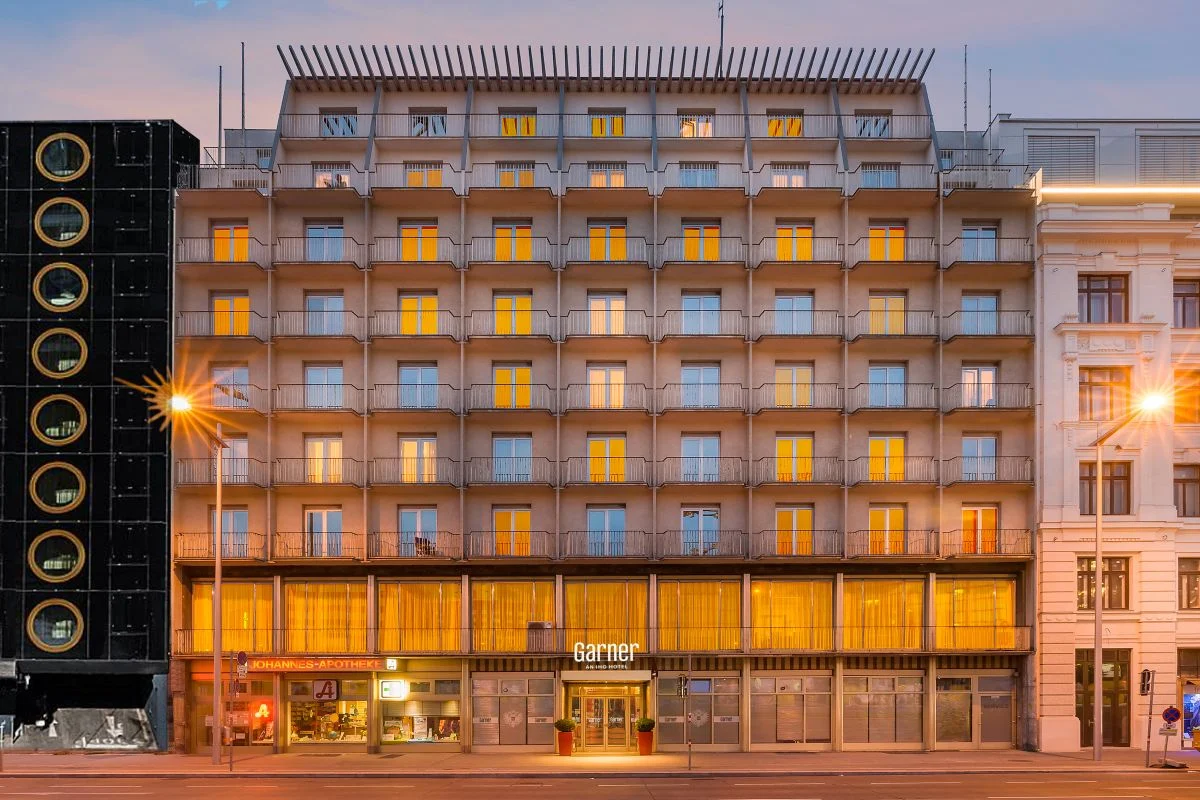
Global hospitality giant InterContinental Hotels Group (IHG) has reported significant gains in its competitive positioning, driven by an accelerating wave of property conversions across key international markets. During a financial trading update released on Thursday, leadership at the UK-headquartered hotel group revealed that conversions currently account for approximately half of all U.S. property openings and an impressive 60% of total system signings. Contrary to historical industry trends where conversions predominantly involved independent, unbranded hotels seeking the distribution power of a major enterprise, IHG’s latest growth is heavily fueled by properties defecting from rival branded portfolios.
Chief Executive Officer Elie Maalouf pointed to a broader industry shift during his briefing with analysts and investors. Observing the dynamics of the current economic and operational climate, Maalouf noted that property owners are increasingly voting with their feet, moving away from competing flags in search of superior enterprise value, technological infrastructure, and loyalty program performance. This migration of branded inventory underscores a widening performance gap among major hospitality players, as owners seek out platforms capable of delivering resilient returns amid persistent operational cost pressures and shifting travel demand patterns.
The Mechanics of Conversion-Led Growth
The strategic pivot toward conversions rather than ground-up construction has become a cornerstone of modern hotel development. High interest rates, elevated construction costs, and prolonged supply chain timelines have made greenfield development challenging. For hotel owners and real estate investors looking to maximize asset value quickly with minimal downtime, affiliating with an established global system offers an immediate pathway to higher occupancy and enhanced revenue management.
IHG’s portfolio of brands—spanning luxury labels like InterContinental and Regent to essentials and midscale offerings such as Holiday Inn, Holiday Inn Express, and the rapidly scaling conversion brand Garner—positions the company to capture diverse asset classes. According to company disclosures, the vast majority of these conversions are not coming from independent operators transitioning out of unbranded status, but rather from direct competitors within the branded ecosystem.
This phenomenon reflects what industry analysts describe as a structural consolidation of hotel real estate under top-tier enterprise umbrellas. Property owners calculations are increasingly straightforward: alignment with a powerhouse reservation engine and a massive loyalty base yields better net operating income than remaining with underperforming or less agile competitors. By absorbing these properties into its ecosystem, IHG bypasses the multi-year development cycle, seamlessly integrating operational assets into its global network while expanding its geographical footprint at an accelerated pace.
Upgraded Growth Projections and Financial Performance
Reflecting this sustained momentum, consensus financial forecasts for IHG have been revised upward. The company’s net room count growth—calculated after accounting for hotels leaving its system upon contract expirations or standard brand attrition—is now projected to reach 4.8% for the full year. This represents a notable upward revision from earlier projections of 4.2%.
During Thursday’s trading update, executive leadership expressed strong confidence in the company’s ability to achieve and potentially exceed these benchmarks. The robust performance logged throughout the third quarter is expected to push consensus expectations modestly higher as analysts re-evaluate the compounding benefits of IHG’s net unit growth and fee-based business model.
The asset-light business model practiced by IHG—where the company primarily manages and franchises properties rather than owning real estate outright—allows it to scale efficiently without heavy capital expenditure burdens. This structure shields the corporation from direct real estate ownership risks while enabling it to capture fee revenue from every dollar generated across its expanding system. The combination of accelerating net unit growth and strong revenue-per-available-room (RevPAR) metrics forms the foundation of the company’s optimistic financial outlook.
Industry Dynamics: Winners and Losers in a Fragmented Landscape
The hospitality sector has experienced a complex post-pandemic recovery characterized by bifurcated consumer behavior, fluctuating corporate travel volumes, and rising labor and utility expenses. In this environment, scale has become more critical than ever. Major hotel groups leverage proprietary technology stacks, vast digital marketing budgets, and massive customer loyalty programs—such as IHG One Rewards—to drive direct bookings and reduce dependency on expensive third-party online travel agencies (OTAs).
Addressing the competitive landscape during the earnings call, CEO Elie Maalouf framed the current market environment in stark terms. There are clear winners and losers emerging as owners re-evaluate their franchise partnerships. By capturing market share from rivals, IHG is validating its multi-brand strategy and the efficacy of its commercial platforms.
This flight to quality is not restricted to the North American market. Across Europe, the Middle East, Asia, and Greater China, property owners are similarly assessing the long-term viability of their existing brand affiliations. The launch and expansion of midscale conversion brands, such as Garner, have provided owners of independent or lower-tier branded hotels with a cost-effective route to modernization. Garner, designed specifically to offer flexible conversion terms and high-quality guest standards without the rigid, capital-intensive brand mandates of traditional upper-midscale segments, has emerged as a powerful tool in IHG’s development arsenal.
Chronology of Strategic Evolution
To understand IHG’s current conversion momentum, it is necessary to examine the strategic steps taken by the company over recent years to optimize its portfolio architecture:
- Pre-2020 Foundation: IHG maintained a strong presence in the midscale and upscale segments with Holiday Inn and Crowne Plaza, while selectively expanding its luxury footprint through acquisitions like Kimpton Hotels & Restaurants and Regent Hotels & Resorts.
- Pandemic Resilience and Adaptation (2020–2022): Facing unprecedented disruption during the global health crisis, the hospitality industry pivoted heavily toward asset preservation and flexible management agreements. IHG accelerated digital investments, enhanced its loyalty ecosystem, and laid the groundwork for more agile brand introduction strategies.
- Portfolio Diversification (2023): Recognizing a gap in the midscale conversion space, IHG introduced Garner in the United States, followed by international expansions into Europe and other key regions. The brand was engineered to appeal directly to owners seeking a conversion-friendly model with lower capital expenditure requirements.
- Acceleration and Scale (2024–Present): Conversions began to form an increasingly large share of total signings and openings. By mid-2024 and extending into the recent third-quarter trading updates, IHG successfully captured disillusioned owners from rival brands, pushing net room growth forecasts upward to 4.8%.
Implications for the Broader Hospitality Sector
The accelerated shift of branded hotels toward enterprise platforms like IHG carries significant implications for the broader hospitality ecosystem. For competing hotel groups, the loss of existing properties to a rival flag signals potential vulnerabilities in owner satisfaction, support services, or digital distribution ROI. It prompts a re-evaluation of franchise terms, fee structures, and owner support mechanisms across the industry.
For independent hotel owners and smaller regional chains, the expanding dominance of global giants like IHG, Marriott, Hilton, and Hyatt raises the barriers to independent survival. As loyalty programs command an increasingly large share of consumer bookings, unbranded properties face mounting pressure to affiliate with a major system to maintain competitive occupancy rates. This dynamic points toward continued industry consolidation, where independent market share is gradually absorbed by scaled global operators.
Furthermore, the emphasis on conversions over new builds aligns with broader corporate sustainability goals. Reusing existing structures and upgrading them to meet modern energy-efficiency and operational standards requires fewer carbon-intensive materials than razing and rebuilding or developing greenfield sites. As institutional investors face stringent environmental, social, and governance (ESG) reporting requirements, conversion-heavy growth models offer a more sustainable pathway to portfolio expansion.
Looking Ahead: Sustaining Momentum
As IHG moves into the final quarter of the year and looks toward the future, the company’s leadership remains focused on maintaining its competitive edge. The combination of organic development and strategic conversions provides a dual engine for growth that is less vulnerable to short-term macroeconomic volatility than construction-dependent models.
With upgraded net room growth projections and a proven ability to attract properties away from competing portfolios, IHG has solidified its position as a primary beneficiary of the current structural realignment in global hospitality. Whether this "flight to quality" among hotel owners will force rival hotel groups to adjust their value propositions remains to be seen, but for IHG, the current playbook is yielding tangible, market-share-expanding results.




 Gabriela Annisa

 Lukman Taruna Persada Ramadan

 Anjar Salim

 Dwi Wanna
