Anjar Salim

In the demanding environment of high-altitude mountaineering and remote wilderness trekking, experience remains the ultimate currency. The ability to accurately interpret shifting meteorological patterns, navigate complex topography, and select the precise technical apparatus required for survival is a skillset forged exclusively through time spent on the mountain. For sixty years, British outdoor apparel manufacturer Berghaus has cultivated this exact brand of empirical expertise, earning a revered status among alpinists, hikers, and explorers across the globe.
As the brand marks its milestone diamond anniversary, Berghaus is undertaking a significant commercial expansion, bringing its storied European heritage and technical pedigree directly to the United States market through both digital storefronts and select nationwide specialty retailers. This strategic entry introduces American consumers to a legacy of weather-resistant engineering that began in the industrial Northeast of England and has since evolved into a cornerstone of global outdoor performance gear.
Foundation and Historical Chronology: Six Decades in the Wild
The origins of Berghaus trace back to 1966 in Newcastle upon Tyne, United Kingdom. The enterprise was established by visionary climbing partners and mountaineers Gordon Davison and Peter Lockey. Frustrated by the inadequacy of contemporary mountaineering gear available in the mid-1960s, Davison and Lockey initially operated as outdoor equipment importers and retail store owners before realizing they possessed the technical insight required to manufacture superior alternatives.
Operating under the newly minted name Berghaus—derived from the German words for "mountain house"—the founders began designing and producing pioneering climbing equipment and apparel from their North East England base. Their early developments focused on a deliberate intersection of three critical metrics: uncompromising environmental protection, ergonomic comfort, and long-term durability in hostile alpine conditions.
Throughout the subsequent decades, the company established a formidable chronology of technical milestones within the European outdoor sector. In the 1970s, Berghaus became one of the earliest European brands to adopt and integrate the revolutionary Gore-Tex membrane into its outerwear, fundamentally altering the waterproof-breathable landscape. The 1980s and 1990s saw the introduction of landmark product lines, including the iconic Mera Peak jacket and the Extrem series, both of which became staple kit for Himalayan expeditions, British Mountain Rescue teams, and serious backcountry enthusiasts.
By combining rigorous field-testing in the volatile British weather systems with progressive textile engineering, Berghaus transformed from a regional specialty shop into an international authority on technical outerwear. Now, entering its seventh decade of operation, the brand’s expansion into the North American market represents one of the most anticipated geographical rollouts in the contemporary outdoor apparel industry.
The Engineering Philosophy: Performance Meets Heritage
The modern outdoor apparel market is saturated with brands emphasizing hyper-specialized, minimalist aesthetics. Berghaus, however, has consistently maintained a design philosophy that bridges high-performance technical specifications with traditional craftsmanship and bold, heritage-inspired visual styling.
According to product development data released by the company, contemporary Berghaus collections are engineered using a systems-based approach. Garments are constructed not merely to repel water or insulate against cold, but to facilitate microclimate management for the wearer across fluctuating output levels and extreme temperature differentials. This balance of physiological comfort and physical fortress-level defense is the defining characteristic of the brand’s latest flagship offerings, which are now officially available to American consumers.
Industry analysts note that this cross-generational appeal—resonating equally with veteran mountaineers nostalgic for the brand’s 1990s colorblocking and modern hikers seeking certified environmental protection—places Berghaus in a unique competitive tier within the North American retail landscape.
Product Spotlight: Core Offerings for the American Market
To establish its market presence in the United States, Berghaus has curated a selection of flagship products that encapsulate its sixty-year design philosophy. These items highlight the brand’s ongoing commitment to technical excellence, weather resilience, and retro-infused styling.
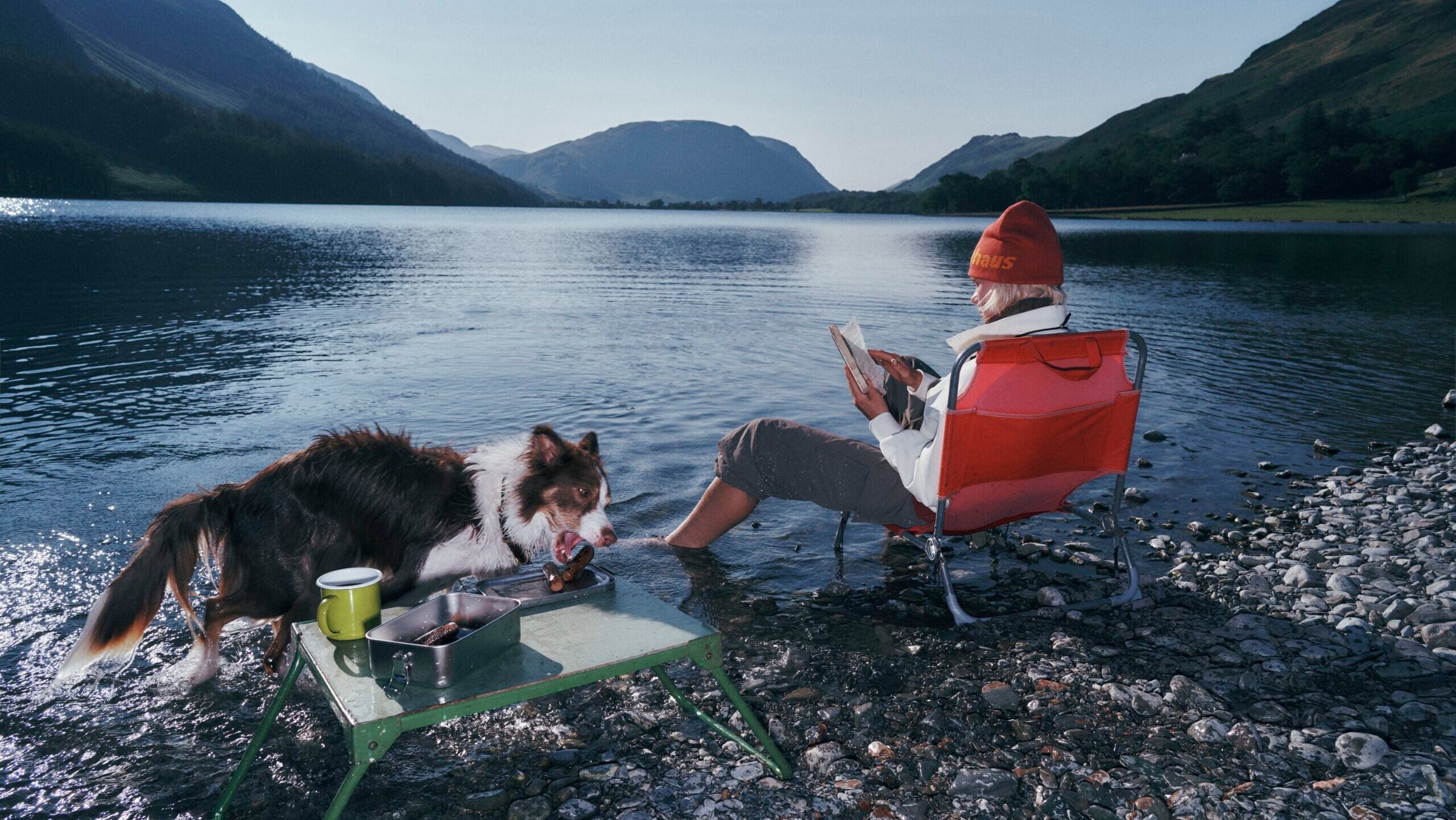
Kara-Su 7000 GTX Jacket
Engineered specifically for unforgiving mountain environments where reliable shelter is a matter of safety, the Kara-Su 7000 GTX Jacket serves as the technical anchor of the new lineup. The jacket’s primary defense mechanism is a three-layer Gore-Tex Pro waterproof and breathable membrane, widely recognized within the technical textiles industry as the gold standard for high-abrasion, severe-weather durability.
The fabric boasts a 28,000mm hydrostatic head rating, ensuring absolute impermeability against driving rain, wet snow, and high-pressure moisture infiltration. Beyond the membrane, the jacket features comprehensive structural sealing. The cuffs are regulated via robust metal snaps, while the hem incorporates dual-drawcord adjustments to prevent wind draft.
Significantly, the hood utilizes the trail-tested Mera Peak design architecture, featuring four independent adjustment points. This multi-axis adjustment allows the wearer to achieve a hyper-tailored fit that moves synchronously with the head, eliminating the peripheral vision obstruction common in inferior storm hoods. Storage capacity is optimized with five strategically positioned pockets, including an easily accessible chest stash pocket and two elevated hand pockets explicitly engineered to remain unobstructed by a loaded backpack’s hipbelt. Stylistically, the Kara-Su 7000 GTX integrates bold, three-colorway blocking with historical embroidery that honors the brand’s mid-century founding roots.
Kara-Su Pant
Dynamic lower-body movement is critical during technical ascents and long-distance treks. The Kara-Su Pant is constructed to accommodate high-step maneuvers and variable trail topography through an articulated knee pattern and a modern, straight-leg cut.
Fabricated from a dense polyamide and elastane composite weave, the trousers provide intrinsic windproof performance alongside a subtle thermal property that maintains lower-body comfort in chilly, exposed alpine terrain. Practical utility is enhanced through traditional waist architecture—featuring belt loops and a reinforced button-snap fly—complemented by secure hand pockets and a rear storage pocket. Adjustable ankle drawcords allow users to cinch the cuffs tightly over mountaineering boots or roll them upward for ventilation during high-output climbs, while a retro-inspired leg patch provides a distinct aesthetic nod to Berghaus archives.
Kara-Su Sweater
Blending technical heritage with casual lifestyle appeal, the Kara-Su Sweater exemplifies the leisure-to-trail ethos that has gained traction among modern outdoor participants. The garment features an oversized cut designed to facilitate effective layering without restricting upper-body mobility.
Constructed from a heavy-weight brushed jersey fabric, the sweater delivers a tactile, soft-against-the-skin feel while retaining essential warmth retention properties. Aesthetic and functional durability is reinforced through heavy-ribbed cuffs and a structured hem, which maintain garment shape over prolonged usage cycles. Embellished with the classic embroidered Extrem 7000 logo and vivid colorblocking, the Kara-Su Sweater bridges the gap between high-altitude technical heritage and fireside recovery comfort.
Industry Implications and Future Outlook
The introduction of Berghaus to the United States retail sector arrives at a transformative time for the outdoor apparel industry. As post-pandemic participation in hiking, camping, and backcountry exploration stabilizes, consumers are increasingly prioritizing durability, repairability, and multi-use versatility over disposable fast-fashion outdoor gear.
Market observers suggest that brands with authentic historical lineages and proven manufacturing credentials are exceptionally well-positioned to capture market share from consumers experiencing brand fatigue with tech-startups. By leveraging sixty years of continuous design evolution—from pioneering lightweight rucksacks in Newcastle to perfecting Gore-Tex integration in the Cumbrian fells—Berghaus enters the American market not as an untested newcomer, but as an established master of craft.
As these products roll out across digital platforms and physical retail floors nationwide, the broader implication is clear: American outdoor enthusiasts now have direct access to a heritage brand that treats comfort and technical protection not as opposing forces, but as twin pillars of a successful journey into the wild.



 Tatiana Tantri Indah Sari

 Dwi Wanna
 Lukman Taruna Persada Ramadan