
 Chandra Hamzah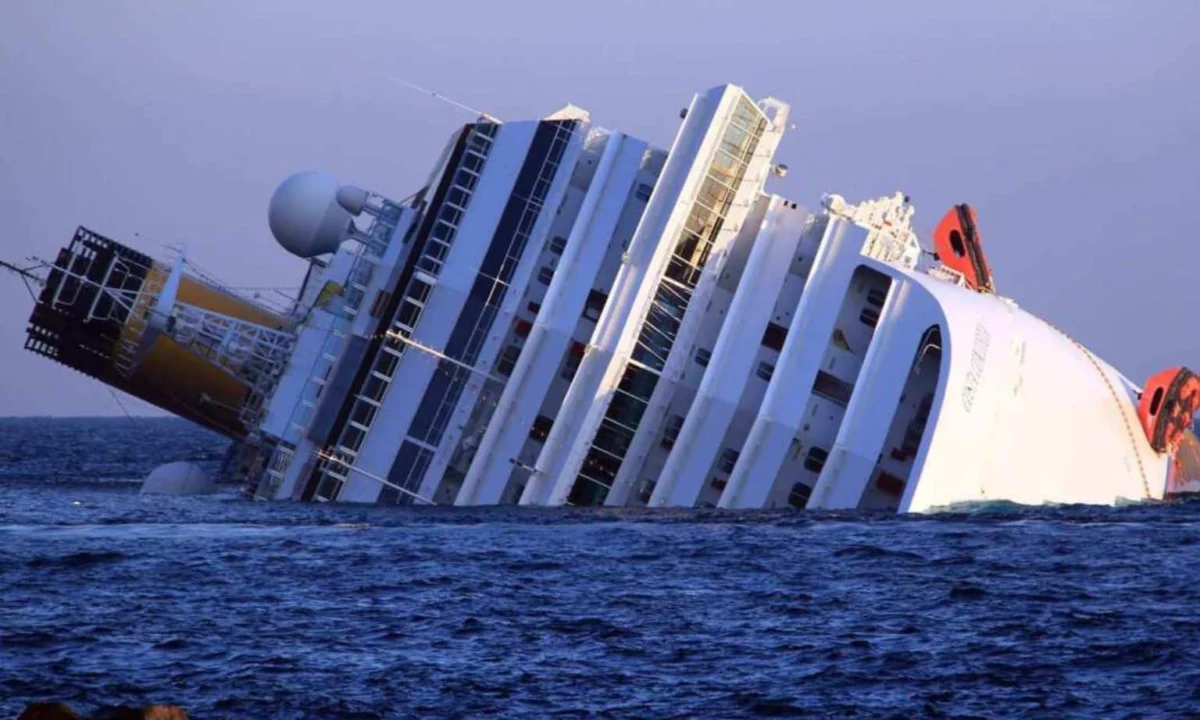
Netflix is set to release a new documentary on July 10th, delving into the tragic capsizing of the Costa Concordia in 2012, an incident that claimed the lives of 32 individuals. The film promises a comprehensive examination of the disaster, drawing upon survivor testimonies, archival footage, and an in-depth analysis of the events that led to the catastrophic loss of life. The disaster, which occurred off the coast of Italy, remains a stark reminder of the potential for human error and negligence in the modern cruise industry.
The Costa Concordia, a Concordia-class cruise ship operated by Costa Cruises, struck a submerged rock on the night of January 13, 2012, in the Tyrrhenian Sea. The impact, which occurred just off the coast of the island of Isola del Giglio, ripped a massive 53-meter gash in the ship’s port side hull. Within minutes, the engine room began to flood, leading to a complete loss of power to the engines and essential ship services. As seawater surged into the vessel, the ship’s stability was compromised, causing it to list heavily. It then drifted back towards the shore before rolling onto its starboard side, coming to rest partially submerged against the rocky seabed.
Beyond the immediate mechanical failures and the terrifying struggle for survival, the story of the Costa Concordia is also one of profound human failings, deceit, and a chilling disregard for protocol. The actions of the ship’s captain, Francesco Schettino, have been central to the narrative of the disaster, with prosecutors and courts ultimately holding him responsible for the deaths of passengers and crew. The incident was a significant anomaly in the history of modern maritime travel. While other large-scale maritime disasters have occurred, such as the sinking of the MS Estonia in 1994 which resulted in over 800 fatalities in the Baltic Sea, the Costa Concordia disaster’s scale, the circumstances of its capsizing close to shore, and the direct culpability of its captain distinguish it within recent memory.
The Costa Concordia disaster served as a critical inflection point for the global cruise industry, prompting a sweeping re-evaluation and enhancement of safety protocols and technological advancements. These changes have been implemented across the sector, aiming to ensure that such a tragedy is never repeated.
The Human Element: Captain Schettino’s Role in the Catastrophe
At the heart of the Costa Concordia disaster lies the controversial figure of its captain, Francesco Schettino. His trial and subsequent conviction for manslaughter, causing a maritime disaster, and abandoning ship led to a 16-year prison sentence. The court’s findings detailed a series of critical errors in judgment and a pattern of behavior that directly contributed to the catastrophic outcome.
Schettino was found to have steered the massive cruise ship dangerously close to the shore of Isola del Giglio. This deviation from safe navigation routes was not an accidental miscalculation but a deliberate maneuver. Allegations surfaced during the investigation and trial suggesting that Schettino had ordered the ship to approach the island as a form of "salute" to a retired officer residing there, a practice known as a "periscope maneuver" or "inchino." Some accounts even suggested that the deviation from the charted course was partly to impress a Moldovan cabin steward, with whom he allegedly had a relationship and who was on board as a non-paying guest. Prosecutors argued that her presence on the bridge, and Schettino’s desire to impress her, "generated confusion and distraction for the captain."
Further compounding the allegations of negligence, reports emerged that Schettino had instructed his first officer to check the ship’s radar because he himself had forgotten his reading glasses in his cabin, hindering his ability to monitor critical navigational information. Another deeply disturbing claim suggested that Schettino had slowed the ship down to "finish dinner in peace," a claim that underscores a perceived lack of urgency and professionalism in the face of potential navigational hazards. Unverified reports also indicated that traces of cocaine were found in Schettino’s hair samples, though this was not a primary factor in his conviction.
The most damning evidence against Schettino revolved around his delayed response in ordering an evacuation and his repeated deviations from established maritime protocols. As the ship began to list and flood, precious minutes were lost before the evacuation order was given. This delay significantly hampered the ability of the crew to manage the unfolding crisis and ensure the safe disembarkation of all passengers and crew.
Perhaps the most egregious act attributed to Schettino was his departure from the sinking vessel while thousands of passengers and crew members were still onboard. In a widely publicized and condemned move, Schettino was reportedly among the first to board a lifeboat, later claiming he had accidentally fallen into it. He then refused direct orders from the Italian Coast Guard to return to the ship and assist in coordinating the ongoing evacuation efforts. This act of abandonment, coupled with his failure to adequately lead and manage the crisis, solidified the court’s judgment that his negligence was a crucial factor in the tragic fate of the Costa Concordia and its occupants.
A Chronology of Disaster: The Night of January 13, 2012
The events of January 13, 2012, unfolded rapidly and with devastating consequences:
- 6:45 PM (CET): The Costa Concordia departs from Civitavecchia, Italy, en route to Savona.
- 9:30 PM (CET): The ship deviates from its planned route and heads towards the island of Isola del Giglio. Captain Francesco Schettino is at the helm.
- 9:42 PM (CET): The Costa Concordia strikes a submerged rock approximately 0.7 nautical miles (1.3 kilometers) off the coast of Isola del Giglio. The impact creates a 53-meter gash in the hull on the port side.
- 9:45 PM – 10:00 PM (CET): Water begins to flood the engine room and other lower decks, leading to a loss of power. The ship starts to list.
- 10:00 PM – 10:15 PM (CET): Initial reports suggest confusion regarding the severity of the situation. Captain Schettino reportedly makes a preliminary announcement to passengers about a "blackout" rather than an emergency.
- 10:18 PM (CET): The ship’s general alarm is sounded, and the evacuation order is finally given.
- 10:20 PM onwards (CET): The chaotic evacuation process begins. Passengers, many in pajamas or casual wear, struggle to reach lifeboats in the darkness and the increasing list of the ship.
- 10:30 PM (CET): The Costa Concordia drifts further ashore and begins to capsize.
- 10:50 PM (CET): Captain Schettino is seen boarding a lifeboat.
- Late Evening/Early Morning: Rescue operations commence, with the Italian Coast Guard and other vessels assisting in the rescue of passengers and crew from the partially submerged ship and lifeboats.
- January 14, 2012: The Costa Concordia is resting on its side, partially submerged, with its bow pointing skyward. Rescue efforts continue, and the full extent of the casualties becomes apparent. The official death toll eventually rises to 32.
The Broader Context: Maritime Safety Before and After Concordia
The Costa Concordia disaster was a stark wake-up call for the international maritime industry. Prior to the incident, cruise ship safety regulations, while present, were not always as robust or as rigorously enforced as they are today. The sheer size and complexity of modern cruise liners, coupled with the vast number of passengers and crew they carry, necessitate exceptionally high safety standards.
The sinking of the MS Estonia in 1994, which tragically claimed over 800 lives, had previously highlighted vulnerabilities in maritime safety, particularly concerning ferry operations in harsh weather conditions. However, the Costa Concordia incident, occurring in relatively calm seas and involving a vessel designed for leisure, brought a different set of concerns to the forefront: the critical role of human judgment, the effectiveness of emergency response protocols on large passenger vessels, and the adequacy of navigational systems.
Advances in Maritime Safety: Learning from Tragedy
In the wake of the Costa Concordia disaster, the cruise industry, under pressure from regulatory bodies and public scrutiny, has implemented significant advancements in safety protocols and technologies. These changes have made modern cruise ships demonstrably safer than ever before.
Enhanced Navigation and Bridge Systems:
Modern cruise ships are equipped with highly sophisticated navigation systems that significantly reduce the potential for human error. These systems often integrate artificial intelligence (AI) and advanced sensor technology.
- Smart Bridge Systems: These systems utilize cameras, radar, sonar, and other sensors to create detailed, real-time digital cartography of the ship’s surroundings, including underwater obstacles. This provides captains with a comprehensive "digital twin" of the sea environment.
- Integrated Navigation: Advanced systems combine data from various sources, including GPS (offering accuracy within meters), inertial navigation systems, and electronic chart display and information systems (ECDIS).
- Predictive Collision Avoidance: AI-powered systems can analyze potential collision risks based on the movement of other vessels and known navigational hazards, providing early warnings to the bridge crew. In some cases, these systems can even be programmed to automatically override human commands if a ship is steered into a dangerously close proximity to an object or area.
- Weather Monitoring and Routing: Sophisticated satellite technology provides real-time weather forecasting and allows for optimal route planning to avoid severe weather conditions, a critical factor in preventing many maritime incidents.
Improved Ship Design and Stability:
While the fundamental design of cruise ships remains focused on passenger comfort and amenities, there has been an increased emphasis on structural integrity and emergency systems.
- Stabilizers: Advanced fin stabilizers, often described as underwater wings, work proactively to counteract the roll of the ship, keeping it steady even in rough seas. This not only enhances passenger comfort but also contributes to overall vessel stability.
- Watertight Compartmentation: Modern ships are designed with multiple watertight compartments. While the Costa Concordia’s damage was extensive, the principles of compartmentation are crucial in containing flooding and maintaining buoyancy in the event of hull breaches.
Evolved Evacuation and Lifeboat Technology:
The efficiency and safety of evacuation procedures have also seen significant improvements.
- High-Capacity, High-Tech Lifeboats: Newer lifeboats are designed for rapid deployment and can accommodate larger numbers of passengers. Some modern lifeboats can launch and embark up to 1,000 passengers in approximately 20 minutes, a critical improvement for emergency situations.
- Improved Muster Drills: Cruise lines now conduct more rigorous and realistic muster drills. These can involve both physical drills on deck and digital simulations to ensure passengers are familiar with emergency procedures and the location of safety equipment. The drills emphasize clear communication and passenger understanding.
- Crew Training: Extensive training programs for crew members focus on crisis management, emergency response, and leadership during evacuations. Regular simulations and tabletop exercises are conducted to prepare crews for a wide range of potential scenarios.
Regulatory Oversight and Industry Standards:
International maritime organizations, such as the International Maritime Organization (IMO), have responded to the Costa Concordia disaster by reviewing and strengthening existing regulations. This includes enhanced requirements for navigation equipment, crew training, and the development of comprehensive safety management systems for cruise lines.
The Netflix documentary on the Costa Concordia disaster is poised to revisit a pivotal moment in maritime history. By bringing together diverse perspectives and providing a comprehensive account, it aims to not only recount the tragedy but also to underscore the profound lessons learned and the ongoing commitment to ensuring the safety and security of all those who embark on a cruise. The narrative serves as a testament to the cruise industry’s capacity for change and adaptation in the face of devastating events, ultimately leading to a safer maritime environment for future generations.



 Anjar Salim
 Tatiana Tantri Indah Sari
 Budi Mulyono
 Lukman Taruna Persada Ramadan
