
 Tatiana Tantri Indah Sari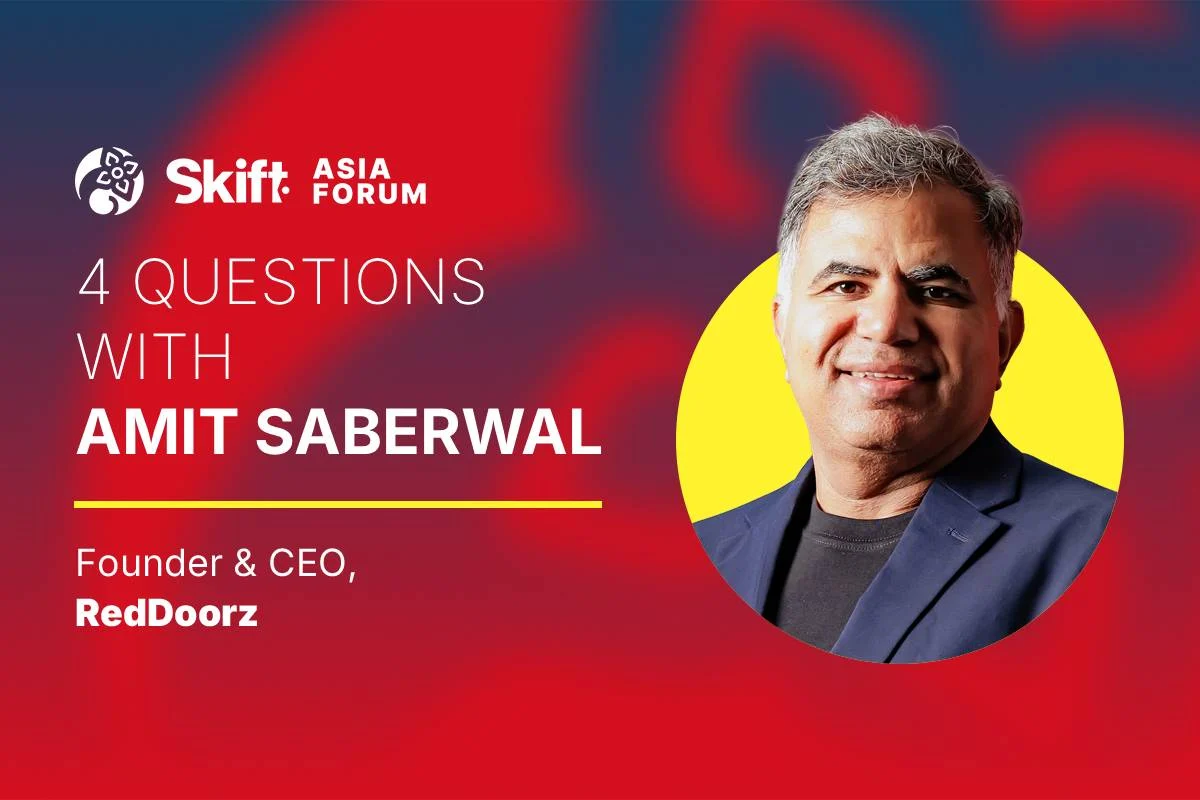
As the global travel industry navigates a landscape shaped by shifting economic realities and evolving consumer preferences, the battleground for hospitality dominance has decisively moved towards value and experience. RedDoorz, a prominent budget hospitality platform in Southeast Asia, is at the forefront of this transformation, betting on a strategy rooted in consistency and operational excellence rather than mere scale. Amit Saberwal, Founder and CEO of RedDoorz, is slated to offer a granular perspective on this dynamic evolution at the highly anticipated Skift Asia Forum 2026 in Bangkok, an event renowned for bringing together thought leaders shaping the future of travel.
Saberwal’s decade-long journey has seen him build RedDoorz into one of Southeast Asia’s most aggressive and innovative players in the budget accommodation sector. His strategic approach is characterized by a sophisticated blend of brand segmentation, stringent operational control, and an increasingly robust integration of AI-driven systems. These pillars underpin RedDoorz’s resilience and expansion in a region marked by its fragmented yet rapidly growing travel markets.
The Skift Asia Forum, scheduled for April 28–29, 2026, serves as a critical platform for industry leaders to dissect emerging trends and challenges. Saberwal’s insights are particularly timely, arriving at a juncture where hospitality operators are contending with tightening margins, heightened traveler expectations for personalized and authentic experiences, and a customer journey that is overwhelmingly digital-first. His session, "What It Takes to Win the Next Phase of Loyalty," promises to be a focal point for attendees responsible for growth, product development, and commercial performance, offering a unique opportunity to pressure-test their strategies against proven models of scaling in complex environments.
Sustained Growth Amidst Macroeconomic Headwinds
Despite a global economic climate marked by significant macroeconomic challenges, RedDoorz has demonstrated remarkable fortitude, maintaining an impressive 25% year-over-year growth rate in its primary market. This sustained expansion is not accidental but a direct outcome of a meticulously crafted multi-brand strategy designed to cater to the diverse accommodation requirements of its vast guest base.
RedDoorz’s portfolio now encompasses seven distinct brands, each targeting specific traveler segments. Within this diverse ecosystem, premium offerings such as Sans and Urbanview are experiencing particularly accelerated growth, recording an astounding 40-50% annual increase. This strong performance in the mid-tier and upper-budget segments underscores a broader trend: while travelers are keen to optimize accommodation spend, they are simultaneously trading up on the quality and consistency of their experience.
A significant contributor to this enhanced customer experience and growth trajectory has been RedDoorz’s strategic investment in company-operated hotels. This division, which currently manages over 100 properties, affords RedDoorz total operational control and ensures a consistent standard of service quality across its brand spectrum. The company projects to double the footprint of its company-operated hotels within the next 12 to 18 months, a move that will further solidify its brand reputation and operational efficiency. Industry analysts note that this hybrid approach—combining a broad network of franchised or partnered properties with a core of directly managed assets—provides both the scale of a platform and the quality control typically associated with traditional hotel chains.
Navigating Fragmentation: The Indonesian Blueprint for Scale
Scaling across multiple, often highly fragmented markets presents a unique set of challenges and opportunities. Saberwal often cites Indonesia as a prime example of RedDoorz’s successful adaptation and growth strategy. As the world’s fourth most populous nation with over 280 million inhabitants, Indonesia stands as a major travel hub in Southeast Asia. Its demographic profile, characterized by a large share of young people aged 18-40, coupled with significant infrastructure developments, has created fertile ground for the travel sector.
Over the past five years, improved road connectivity and port infrastructure in cities like Bandung, Malang, Surabaya, and Balikpapan have spurred increased business activities and facilitated domestic travel. RedDoorz has strategically capitalized on these developments, expanding its presence in these burgeoning urban centers.
Crucially, RedDoorz has cultivated a strong, loyal relationship with Indonesian millennials over the past decade. This demographic, often embarking on their careers and undergoing personal and professional evolution, exhibits shifting travel preferences over time. By proactively launching diverse brands and tailored accommodation options, RedDoorz has successfully retained these users, expanding its reach in tandem with their evolving needs. This long-term engagement strategy highlights a key lesson in scaling: genuine loyalty, built through understanding and adapting to customer lifecycle changes, can lead to multi-fold business acceleration by effectively capturing a macroeconomic growth curve at the opportune moment. This approach distinguishes RedDoorz from competitors who might focus solely on transactional volume, demonstrating a deeper understanding of market dynamics and consumer psychology.
The Evolving Landscape of Traveler Expectations
The modern traveler is no longer content with standard offerings. Google travel trend reports corroborate what RedDoorz has observed on the ground: consumers are increasingly prioritizing shorter, regional trips, typically lasting 3-4 days. This shift is primarily driven by cost pressures and broader macroeconomic uncertainties, prompting travelers to seek more frequent, accessible getaways.
Beyond duration, the nature of travel itself is undergoing a profound transformation. The pervasive use of artificial intelligence is fostering the rise of hyper-individualized travel plans, where recommendations and itineraries are meticulously tailored to personal preferences. This technological advancement empowers travelers to craft unique experiences, moving away from generic package tours.
A significant behavioral shift is the prioritization of authenticity over superfluous amenities. Travelers are actively seeking accommodations that allow them to immerse themselves more deeply in local culture, often opting for centrally located properties that provide genuine local experiences rather than luxury add-ons. This trend has directly influenced spending habits: tourists are now allocating less of their budget solely towards accommodation, instead seeking reliable, reasonably priced stays. The savings are then redirected towards enriching experiences, local cuisine, and cultural activities. This shift is evident in the burgeoning popularity of festival-based travel with family and friends, a segment where RedDoorz has seen substantial growth. For instance, during a recent Eid celebration, leisure cities served by RedDoorz witnessed bookings double compared to the previous year, underscoring the strong demand for experience-driven, value-for-money travel.
Southeast Asia’s Digital Decade and the Ascendance of AI
Southeast Asia has been in the midst of a profound digital decade, gaining significant momentum in the post-pandemic era. Internet penetration in the region reached an impressive 75% in 2021, with approximately 40 million new users joining the digital ecosystem annually. This massive digital adoption has fundamentally reshaped traveler discovery and booking behaviors. The era of walk-ins has largely been supplanted by digital platforms, and the preference has shifted from generic accommodations to reliable, branded stays.
The next frontier in this digital evolution is the widespread integration of Artificial Intelligence. Current data indicates that a staggering 75% of users now leverage AI-assisted search for their travel planning. This exponential rise in AI adoption necessitates a corresponding adaptation on the supply side. Hotel operators must enhance their operational flexibility and effectiveness to align with these heightened guest expectations.
RedDoorz is at the vanguard of this AI revolution, deploying the technology across its platform to enhance personalized search functionalities and streamline the entire guest journey. Through its company-operated hotel division, RedDoorz has developed sophisticated AI solutions for operations monitoring and quality management. These innovations have yielded tangible benefits, allowing the company to reduce operating expenses by an impressive 20-40% and deliver higher margins at scale. This dual focus on enhancing guest experience and optimizing internal operations through AI positions RedDoorz as a model for future-proofing hospitality businesses in a rapidly digitizing world.
Winning Loyalty in a Digital-First Environment
The challenge of cultivating and maintaining customer loyalty in today’s digital-first, value-conscious environment is paramount. Saberwal’s insights at Skift Asia Forum 2026 will resonate deeply with leaders grappling with pricing pressures, the fluidity of consumer expectations, and the fragility of trust in an increasingly interconnected booking ecosystem. RedDoorz’s strategy for loyalty is multi-faceted: it combines consistent service quality (achieved through operational control), personalized offerings (via multi-brand segmentation), and technological empowerment (through AI).
This approach suggests that the next phase of loyalty is not merely about reward points but about delivering a consistently reliable, relevant, and friction-free experience across all touchpoints. By understanding the evolving needs of its core demographic (millennials and young professionals), adapting its product offerings, and leveraging technology to enhance both guest experience and operational efficiency, RedDoorz is crafting a blueprint for sustained success.
The broader implications for the hospitality industry are significant. RedDoorz’s trajectory indicates that budget hospitality is no longer synonymous with compromise. Instead, it represents a dynamic sector where innovation in branding, operations, and technology can unlock immense value. Competitors, both established chains and emerging startups, are undoubtedly observing RedDoorz’s model, particularly its ability to balance aggressive growth with stringent quality control and smart technological investments.
Saberwal’s participation at Skift Asia Forum 2026 offers a unique opportunity for industry professionals to gain first-hand knowledge from a leader who is not just observing but actively shaping the future of budget hospitality in one of the world’s most vibrant travel markets. His presentation will serve as a crucial benchmark for those looking to understand what truly works at scale in a region poised for continued growth and digital transformation. Attendees responsible for driving growth, product innovation, or commercial performance within their organizations are encouraged to apply to attend, as tickets are limited for this pivotal event in Bangkok. The insights gleaned from RedDoorz’s journey could very well define the strategies that lead to success in the next chapter of global travel.



 Anjar Salim
 Chandra Hamzah
 Budi Mulyono
 Lukman Taruna Persada Ramadan
