
 Budi Mulyono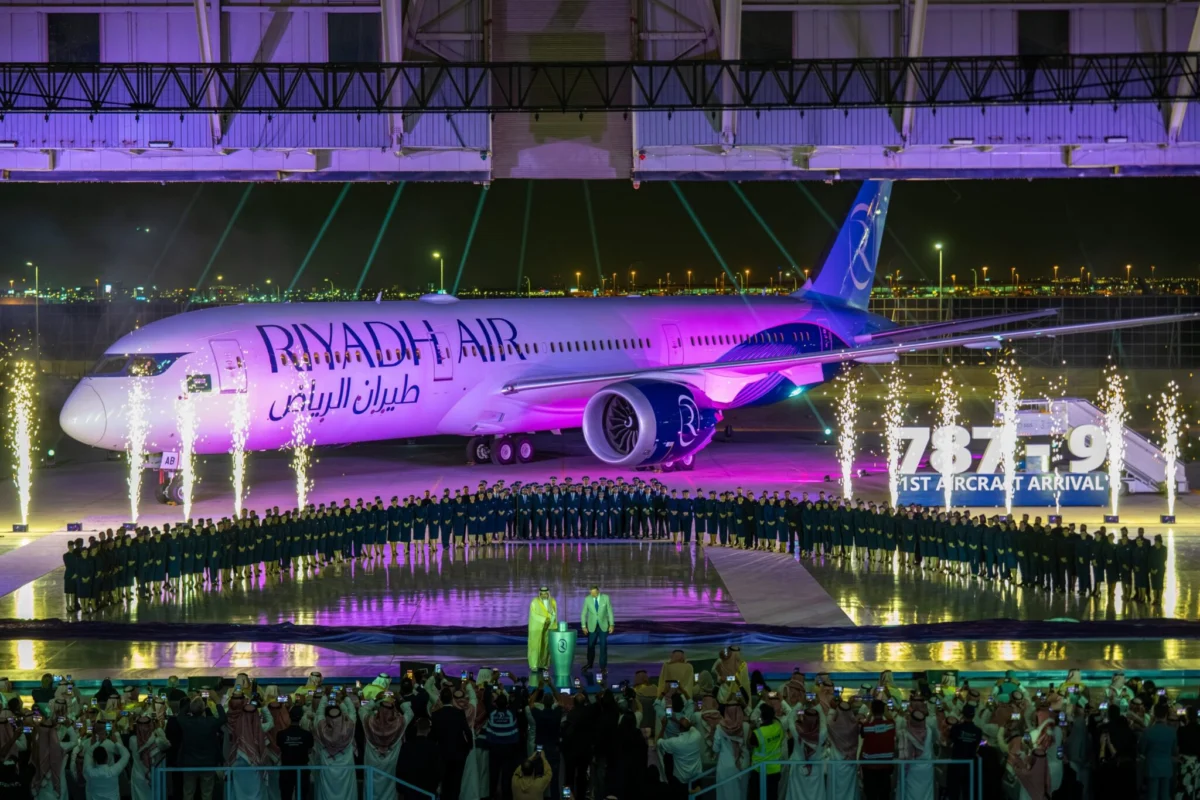
Riyadh Air, Saudi Arabia’s burgeoning national carrier, has significantly accelerated its transition from a high-concept startup to a fully operational global airline with the announcement of new daily services to Mumbai and the rapid expansion of its wide-body fleet. Within a span of just three weeks, the airline has successfully integrated its fifth factory-built Boeing 787-9 Dreamliner and commenced high-frequency operations to major international hubs, including London Heathrow, Dubai, Jeddah, and Cairo. The latest addition to its network, the Mumbai route, is scheduled to commence on August 4, 2026, marking a strategic pivot toward the high-volume South Asian market. This rapid scaling underscores the kingdom’s commitment to its Vision 2030 program, which seeks to position Riyadh as a preeminent global aviation and logistics hub.
A Chronology of Rapid Mobilization
The evolution of Riyadh Air has been characterized by an unprecedented pace of development within the commercial aviation sector. Established in March 2023 by the Public Investment Fund (PIF), the airline was conceived not merely as a transport provider but as a catalyst for Saudi Arabia’s non-oil economic diversification. Following years of meticulous planning and the procurement of a robust order book from Boeing and Airbus, the airline entered its final countdown to passenger launch in early 2026.
In June 2026, Riyadh Air received its first two Boeing 787-9 Dreamliners, which served as the cornerstone for its initial proving flights and regulatory certifications. The momentum continued into July, with the delivery of the third, fourth, and fifth aircraft in quick succession. This fleet growth allowed the carrier to bring forward its launch dates for critical routes. While the initial roadmap suggested a staggered rollout, the airline successfully inaugurated services to London Heathrow, Cairo, and Dubai ahead of schedule, capitalizing on peak summer travel demand.
The announcement of the Mumbai service represents the next phase of this aggressive expansion. By securing a daily frequency to India’s financial capital by August 2026, Riyadh Air is positioning itself to capture a significant share of the transit traffic moving between South Asia, Europe, and North America.
Strategic Entry into the South Asian Corridor
The decision to prioritize Mumbai as one of Riyadh Air’s earliest destinations reflects a sophisticated understanding of global aviation economics. While the airline’s leadership, headed by CEO Tony Douglas, has emphasized that Riyadh Air is an airline "for the Saudi people," the economic reality of long-haul aviation necessitates a strong "feed" from high-density markets. South Asian countries, particularly India, represent some of the world’s fastest-growing aviation markets and provide the necessary passenger volumes to sustain a global hub-and-spoke model.
The Mumbai-Riyadh corridor is historically significant, driven by robust trade links, a massive expatriate workforce, and increasing leisure travel. By offering daily wide-body service with a four-cabin configuration, Riyadh Air is not just targeting the budget-conscious traveler but is actively courting the corporate and premium segments that have traditionally been served by established Gulf competitors such as Emirates and Qatar Airways. Industry analysts suggest that the "South Asian feed" will be critical for Riyadh Air as it looks to fill its onward flights to Western Europe and the United States.
Redefining the Passenger Experience: The Four-Cabin Strategy
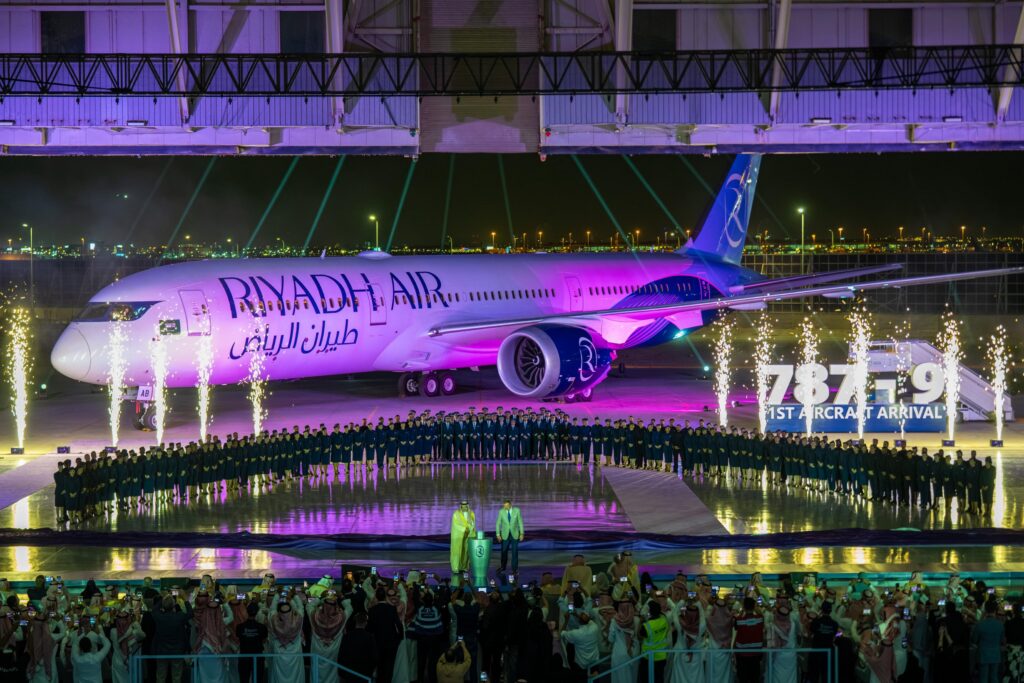
Riyadh Air is distinguishing itself from other startup carriers by entering the market as a premium, full-service entity from its first day of operation. The airline’s Boeing 787-9 Dreamliners are configured with four distinct classes of service: Business Elite, Business Class, Premium Economy, and Economy. This tiered approach allows the airline to maximize revenue per seat while catering to a diverse demographic of travelers.
Business Elite and Business Class
The flagship product, Business Elite, is designed to rival the world’s most prestigious first-class offerings. These suites feature sliding privacy doors, 32-inch 4K high-definition entertainment screens, and fully flat beds. A unique aspect of the Business Elite cabin is the ability to convert selected center suites into double beds, a luxury feature usually reserved for the top-tier products of global "super-connector" airlines.
The standard Business Class cabin provides all passengers with direct aisle access and fully flat seating, ensuring a consistent premium experience. Riyadh Air has partnered with Kayanee, a Saudi-based wellness brand, to provide restorative in-flight products and exclusive loungewear for Business Elite and Business Class guests, emphasizing a "customized wellness journey" that touches all five senses.
Premium Economy and Economy
In a move that mirrors the shifting preferences of modern travelers, Riyadh Air has introduced a dedicated Premium Economy cabin. Rather than simply offering extra legroom, the airline has positioned this as a genuine upgrade, featuring wider seats, enhanced dining options, and significantly more personal space. Guests in this cabin also receive Kayanee loungewear tops, a rarity for the Premium Economy segment.
Even in Economy, the airline is betting big on technology and comfort. All passengers have access to the Panasonic Avionics Astrova in-flight entertainment (IFE) system. This system is a market leader, offering "mobile-first" connectivity, cinema-quality visuals, and 4K resolution. The library includes over 1,100 pieces of content, including partnerships with Disney+, HBO Max, and Warner Bros.
Technological Innovation and Connectivity
A central pillar of Riyadh Air’s strategy is its "digital-first" philosophy. The airline has committed to providing high-speed onboard connectivity across all cabins. Members of the "Sfeer" loyalty program receive complimentary Wi-Fi, a move designed to drive immediate enrollment and direct engagement through the airline’s digital channels.
Furthermore, Riyadh Air has introduced a "Best Offer Guarantee" for its loyalty members. By incentivizing direct bookings through its own website and app, the airline aims to reduce reliance on third-party global distribution systems (GDS) and travel agencies, thereby increasing its margins and owning the customer relationship from the point of sale. This data-driven approach is expected to allow for highly personalized marketing and service delivery as the airline matures.
Fleet Pipeline and Long-Term Vision
The current fleet of five Boeing 787-9s is merely the vanguard of a much larger operation. To achieve its goal of serving 100 destinations by 2030, Riyadh Air has secured one of the most substantial aircraft pipelines in the Middle East. The airline’s commitments include:
- Boeing 787-9 Dreamliners: A total order of 39 aircraft with options for an additional 33, intended for long-haul and ultra-long-haul routes.
- Airbus A321neo: A recent commitment for 60 narrow-body aircraft to serve regional destinations and medium-haul markets where a wide-body aircraft may not be economically viable.
- Airbus A350-1000: Ordered to facilitate future ultra-long-haul expansion to distant markets such as North America and Oceania.
This mixed-fleet strategy provides Riyadh Air with the flexibility to serve high-demand hubs like London and Mumbai with large wide-body aircraft while using efficient narrow-body planes to build frequency on regional routes within the Middle East and North Africa.
Strategic Partnerships and Global Integration
Recognizing that no airline can achieve global dominance in isolation, Riyadh Air has spent its pre-operational phase building an extensive network of partnerships. Just last week, the airline signed a Memorandum of Understanding (MoU) with Air India. This partnership is expected to facilitate seamless code-sharing and interline agreements, allowing Riyadh Air passengers to access dozens of secondary cities across the Indian subcontinent while giving Air India passengers streamlined access to the Saudi capital.
These partnerships are vital for a new entrant. By aligning with established players, Riyadh Air can offer "end-to-end" connectivity to destinations it does not yet serve. Similar discussions are reportedly underway with carriers in Europe and North America, ensuring that by the time the airline reaches its 100-destination goal in 2030, it will be part of a deeply integrated global ecosystem.
Broader Implications for the Aviation Industry
The emergence of Riyadh Air is a direct challenge to the established "Big Three" Gulf carriers: Emirates, Qatar Airways, and Etihad. For decades, these airlines have dominated the transit traffic between East and West. Riyadh Air’s entry, backed by the virtually limitless resources of the PIF, signals a shift in the regional balance of power.
However, Riyadh Air’s mission differs slightly from its neighbors. While Emirates and Qatar Airways focused on building massive transit hubs from the ground up, Riyadh Air is launching into an environment where Saudi Arabia is simultaneously investing billions in domestic tourism, entertainment (such as the Qiddiya project), and infrastructure. The airline is not just a transit vehicle; it is the primary gateway for a nation that is opening its doors to the world for the first time in its history.
The rapid induction of the fifth Boeing 787 and the imminent launch of the Mumbai route are clear indicators that Riyadh Air is meeting its internal milestones with precision. As the airline continues to translate its ambitious vision into scheduled flight hours, the global aviation industry is watching closely. Whether Riyadh Air can maintain this momentum and achieve its "100 destinations by 2030" target remains the defining question for the next decade of Middle Eastern aviation. For now, the successful launch of its premium service to London and the strategic expansion into India suggest that the "Riyadh Air era" has officially begun.




 Anjar Salim
 Chandra Hamzah
 Tatiana Tantri Indah Sari
 Lukman Taruna Persada Ramadan
