
 Budi Mulyono
The European aviation landscape has witnessed a significant shift in low-cost carrier operations as Ryanair, the continent’s largest airline by passenger numbers, officially amended its controversial family seating policy. The move, effective June 25, 2026, follows a protracted investigation by the United Kingdom’s Competition and Markets Authority (CMA) into whether the airline’s previous practices constituted unfair contract terms. While the airline has maintained that its prior policies were both legal and transparent, the new adjustments align Ryanair with broader industry standards in Europe, albeit with the characteristic vocal opposition of its executive leadership.
The Genesis of the Regulatory Scrutiny
The intervention by the CMA began several months ago following a surge in consumer complaints regarding the mandatory nature of paid seat assignments for families. Under Ryanair’s longstanding "Family Plus" or standard booking protocols, at least one adult in a traveling party was required to purchase a reserved seat if they were traveling with children between the ages of two and 11. In exchange for this adult purchase, the airline offered free adjacent seat assignments for up to four children.
While Ryanair framed this as a benefit, regulators viewed the "requirement" to pay as a potential breach of consumer protection laws. The CMA’s investigation focused on the principle that families were effectively being taxed for a service—sitting together—that should be a fundamental expectation of safety and service. Furthermore, the CMA argued that because non-family groups could opt for free random allocation without a mandatory purchase, the policy unfairly targeted a specific demographic of travelers.
Legal experts pointed toward the Consumer Rights Act 2015, which mandates that contract terms between traders and consumers must be fair. A term is considered unfair if it causes a significant imbalance in the parties’ rights and obligations to the detriment of the consumer. By forcing a purchase to ensure a minor was not separated from a guardian, the CMA suggested Ryanair was leveraging parental anxiety for ancillary revenue.
Detailed Breakdown of the Policy Transition
The policy overhaul represents a complete reversal of Ryanair’s previous seating logic. To understand the impact, it is necessary to contrast the old system with the newly implemented June 2026 standards.
The Former Protocol
Under the previous system, Ryanair utilized a "carrot and stick" approach. To ensure a child (aged 2–11) sat with an adult, the adult had to pay for a seat assignment, which typically ranged from £6 to £25 depending on the route and seat location. Once the adult paid, the airline would allow the children on the same reservation to select adjacent seats in specific rows (usually rows 18–33) at no additional cost. If an adult refused to pay, the system could technically separate the family, leading to operational friction at the boarding gate or on the aircraft.
The New Protocol
As of the June 25 deadline, the mandatory requirement for adults to purchase a seat has been abolished. Families now have two distinct options:
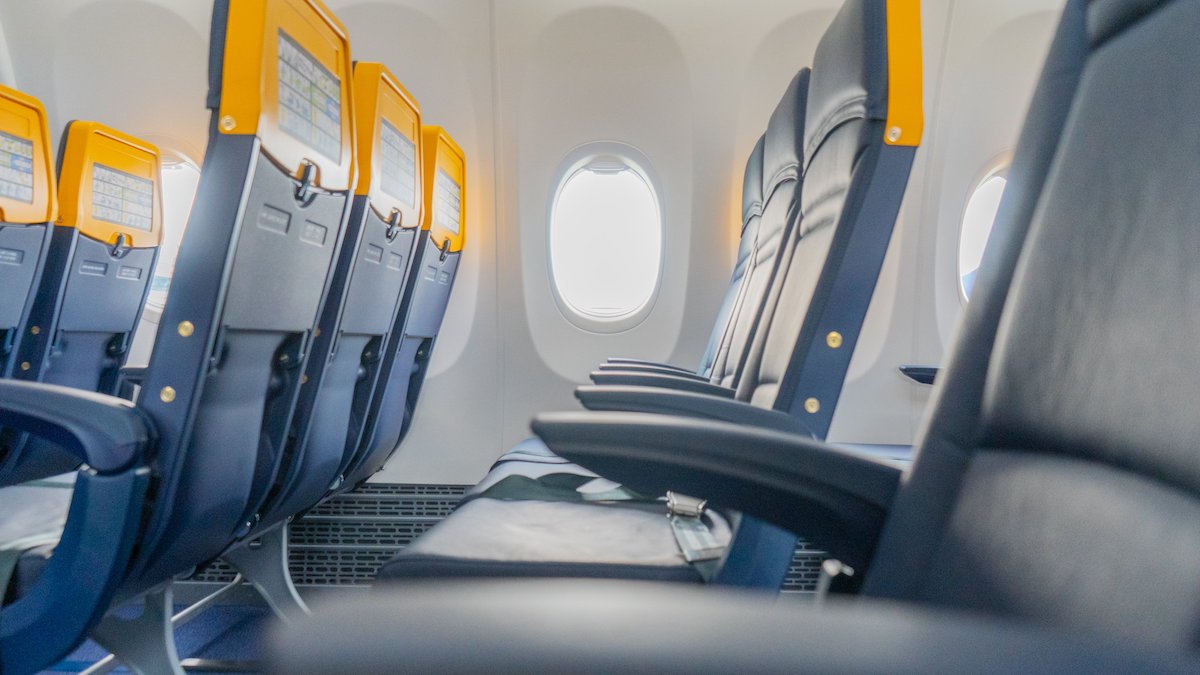
- Free Random Allocation: Families who do not wish to pay for reserved seating can now check in for their flights and receive seat assignments free of charge. Ryanair has committed to seating children with at least one accompanying adult under this free tier. However, the airline has explicitly stated that these families will "likely be seated toward the rear of the cabin," utilizing the least popular rows of the Boeing 737 fleet to accommodate these groups.
- Paid Reserved Seating: For families who wish to select specific seats at the time of booking (such as extra legroom or front-of-cabin seating), the previous discount for children has been removed. Every member of the party, including children, must now pay the full market rate for a reserved seat. This brings Ryanair in line with the pricing models of competitors like EasyJet and Wizz Air, where every seat is monetized individually regardless of the passenger’s age.
Financial Context and Ancillary Revenue Analysis
The timing of this policy change is significant when viewed through the lens of Ryanair’s financial performance. Ancillary revenue—income generated from non-ticket sources such as baggage fees, priority boarding, and seat assignments—is the backbone of the low-cost carrier model. In recent fiscal years, Ryanair has reported that ancillary revenue accounts for approximately 30% to 35% of its total turnover.
Industry analysts suggest that the "revenue neutral" claim made by Ryanair regarding this change is plausible. While the airline loses the "forced" revenue from adults who previously had to pay to sit with their children, it gains new revenue from families who choose to pay for the entire group to sit in preferred sections of the plane. Furthermore, by pushing free-seating families to the back of the aircraft, Ryanair preserves the high-value seats at the front for business travelers and high-yield customers who are willing to pay a premium for quick deplaning.
Data from the European aviation sector shows that seat selection fees have become increasingly sophisticated. Algorithms now adjust seat prices in real-time based on demand, flight duration, and historical booking patterns. By removing the "free for children" exception, Ryanair simplifies its pricing algorithm, potentially increasing the average yield per seat across the entire cabin.
The Executive Response: Michael O’Leary’s Critique
True to his reputation for bluntness, Ryanair CEO Michael O’Leary did not mince words regarding the CMA’s pressure. In a formal statement, O’Leary characterized the regulatory intervention as a step backward for consumer choice and an affront to the airline’s innovative pricing structures.
O’Leary argued that the CMA was ignoring larger issues in the industry, such as the "predatory" pricing of Online Travel Agencies (OTAs) and the inefficiencies of European Air Traffic Control (ATC). He suggested that the CMA’s focus on seating was a "distraction" from the high fares charged by legacy carriers on routes where Ryanair does not compete.
"We will reluctantly adjust to this industry standard," O’Leary stated, "as we don’t want to waste time explaining to misguided regulators how badly they misunderstand what is in the best interest of UK and Europe’s consumers." He further posited that the change would actually be less convenient for families, who may now have to wait until the 24-hour check-in window opens to know their seating arrangement, rather than having the "certainty" provided by the old system.
Safety Regulations and the Industry Standard
The debate over family seating is not merely a financial one; it is a matter of aviation safety. The European Union Aviation Safety Agency (EASA) has long provided guidance suggesting that children should be seated in the same row as their guardians, or at least no more than one seat row away. The rationale is that in the event of an emergency evacuation or sudden decompression, a parent needs to be immediately available to assist a child with an oxygen mask or life vest.
Regulators in the United States have moved in a similar direction. The U.S. Department of Transportation (DOT) recently launched a dashboard to track which airlines guarantee fee-free family seating, putting public pressure on carriers to ensure minors are not separated from their parents. By aligning with the UK CMA’s demands, Ryanair is effectively acknowledging a global trend toward "family-friendly" transparency in the low-cost sector.
Historically, low-cost carriers (LCCs) have used seating as a primary tool for "unbundling" services. By offering a very low base fare and charging for every additional comfort, they have expanded the air travel market to millions. However, the CMA’s stance indicates that there is a regulatory limit to what can be unbundled. If a service is deemed "essential" for safety or basic human dignity (such as a parent supervising a toddler), regulators are increasingly unwilling to allow it to be gated behind a paywall.
Broader Implications for the Travel Market
The shift in Ryanair’s policy is expected to have a ripple effect across the European travel industry. Competitors who have similar "forced" payment structures may preemptively update their policies to avoid the legal costs associated with a CMA investigation.
For the consumer, the impact is nuanced. Families who are highly price-sensitive will benefit from the ability to sit together for free, even if it means being relegated to the back of the aircraft. However, "middle-class" family travelers—those who value both a specific location on the plane and the assurance of sitting together—will likely see the cost of their holidays increase as the child discount for reserved seating disappears.
From an operational standpoint, the new policy may lead to slower boarding processes. Placing large numbers of families at the rear of the aircraft can create bottlenecks in the aisle, particularly on the Boeing 737-800 and 737-8200 "Gamechanger" aircraft used by Ryanair, which feature high-density seating configurations. Ryanair’s ground staff will likely face new challenges in managing cabin baggage and passenger flow as the rear of the plane becomes more congested with strollers and family gear.
Conclusion and Future Outlook
The resolution of the dispute between Ryanair and the UK CMA marks a significant moment in the evolution of low-cost aviation. It highlights the ongoing tension between aggressive corporate "innovation"—which Ryanair defines as unbundling and low base fares—and the protective mandate of government regulators.
While Ryanair frames the update as a reluctant surrender to "misguided" oversight, the move ultimately standardizes the airline’s operations with the rest of the European market. As of June 25, 2026, the era of the "forced adult purchase" for family seating ends, replaced by a system that offers a free, albeit less desirable, option for families, alongside a more expensive premium tier. Whether this results in a truly "revenue neutral" outcome for the airline remains to be seen in the coming fiscal quarters, but for the millions of families flying Ryanair annually, the rules of the game have fundamentally changed.




 Anjar Salim
 Chandra Hamzah
 Tatiana Tantri Indah Sari
 Lukman Taruna Persada Ramadan
