
 Tatiana Tantri Indah Sari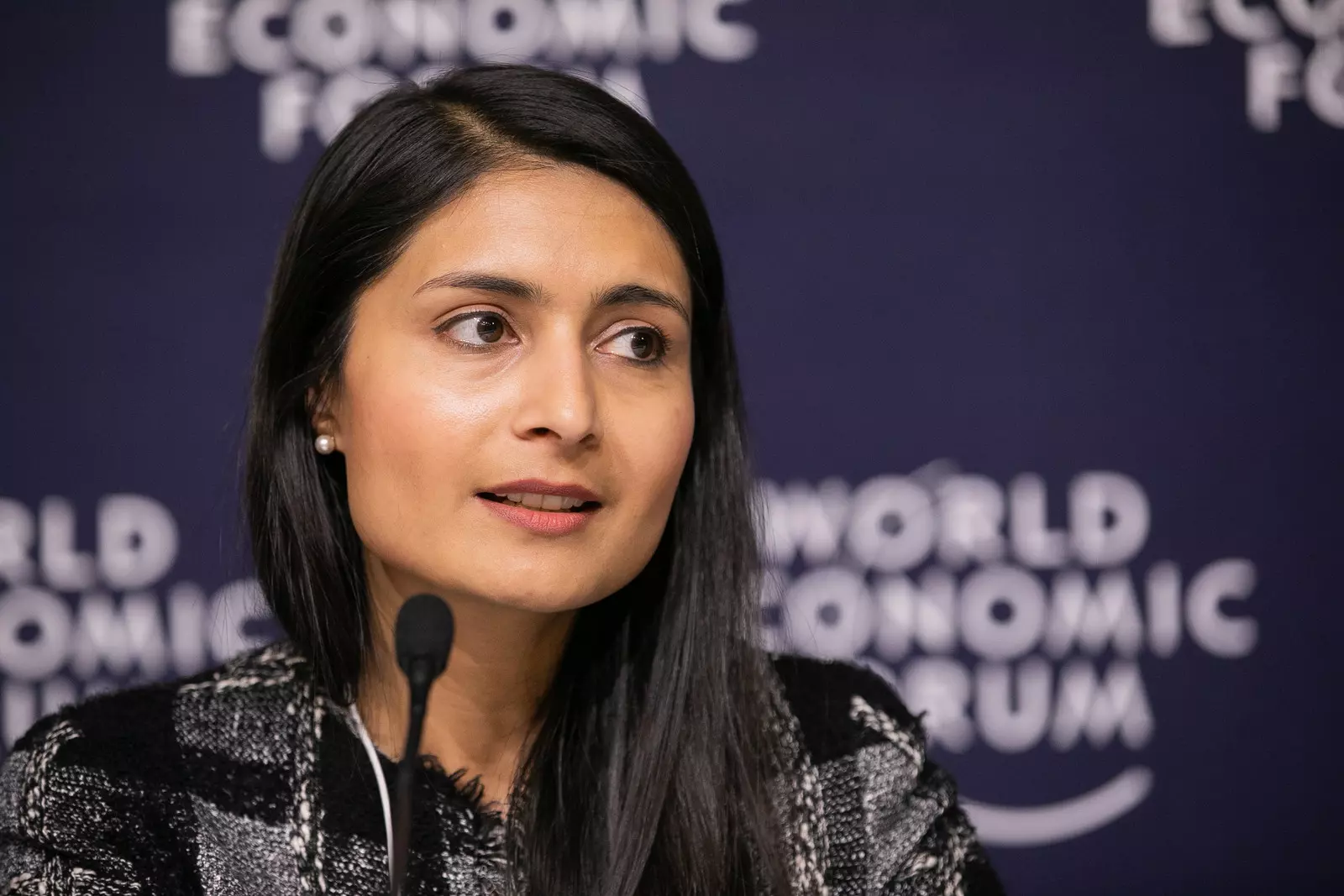
The International Air Transport Association (IATA), the formidable global trade body representing over 330 airlines comprising 83% of total air traffic, has announced the appointment of Saadia Zahidi as its next Director General. This landmark decision marks a significant moment in the aviation industry, as Zahidi will be the first woman to lead the influential organization in its storied history. Her selection underscores a strategic shift for IATA, bringing a leader with a profound background in global economic development, future of work, and social equity from the World Economic Forum (WEF) to the forefront of an industry grappling with unprecedented challenges and transformative opportunities.
Zahidi, currently a Managing Director and member of the Board at the WEF, is slated to commence her tenure on November 1. She succeeds Willie Walsh, a highly regarded figure in the aviation sector, who will transition to his new role as Chief Executive Officer at IndiGo, India’s largest airline by market share, starting August 3. The succession plan introduces a new era for IATA, pivoting from a leader known for his operational acumen and strong advocacy within the airline industry to one celebrated for her expertise in global economic trends, multi-stakeholder collaboration, and inclusive growth.
Saadia Zahidi’s Extensive Background and Vision for IATA
Saadia Zahidi brings more than two decades of distinguished experience from the World Economic Forum, an organization renowned for its role in fostering public-private cooperation on global issues. During her extensive career at the WEF, Zahidi has been instrumental in shaping global agendas, founding and heading its Centre for the New Economy and Society. Her work has focused on critical areas such as the future of work, education and skills, gender equality, and the impact of technology on society. She is perhaps best known for spearheading the WEF’s influential Global Gender Gap Report, an annual benchmark that provides comprehensive data on gender disparities and progress toward equality across various sectors worldwide.
Her leadership at the WEF involved convening diverse groups of leaders from government, business, academia, and civil society to address complex systemic challenges. This experience in navigating intricate global ecosystems and forging consensus among disparate stakeholders is expected to be invaluable at IATA. The aviation industry, inherently global and deeply intertwined with geopolitical, economic, and social factors, demands a leader capable of engaging effectively across a broad spectrum of interests. Zahidi’s track record suggests a strategic vision that extends beyond purely commercial aviation metrics, embracing the broader societal and economic impact of air travel.
Sources close to the IATA Board of Governors suggest that Zahidi’s appointment signals a clear intent to broaden the organization’s strategic focus. While maintaining its core mission of advocating for the industry and setting technical standards, IATA under Zahidi is anticipated to place a stronger emphasis on issues like sustainability, diversity and inclusion within the aviation workforce, and leveraging technology for societal benefit. Though no official statement from Zahidi regarding her vision has been released prior to her start date, it is logically inferred that she will champion an agenda that seeks to position aviation as a key enabler of global prosperity and sustainable development, aligning with the United Nations Sustainable Development Goals. Her emphasis on inclusive growth could translate into initiatives promoting accessibility to air travel, fostering diverse talent pipelines within the industry, and ensuring aviation’s benefits are shared more equitably across economies.
Willie Walsh’s Enduring Legacy and Transition to IndiGo
Willie Walsh, a towering figure in global aviation, leaves IATA after a five-year tenure marked by significant challenges and robust leadership. A former CEO of British Airways and the International Airlines Group (IAG), Walsh brought to IATA a reputation as a shrewd operator and a fierce advocate for airline interests. Over his five years, he transformed IATA from an organization primarily associated with technical standard-setting into a more visible and vocal public presence, particularly during crises.
His leadership during the tumultuous COVID-19 pandemic was particularly noteworthy. Walsh became a prominent voice for the airline industry, tirelessly lobbying governments for consistent travel policies, financial support, and the safe reopening of borders. He championed initiatives like the IATA Travel Pass, a digital health credential system, in an effort to standardize health verification and streamline international travel during a period of unprecedented disruption. His pragmatic, often direct, approach resonated with many airline executives who appreciated his unwavering focus on the commercial realities and operational needs of carriers.
Walsh’s move to IndiGo, one of the world’s fastest-growing low-cost carriers, underscores the dynamic nature of aviation leadership. IndiGo, with its extensive domestic network in India and growing international presence, represents a significant growth story in the global aviation landscape. His experience in leading major airline groups and navigating complex operational environments will be invaluable to IndiGo as it seeks to further consolidate its market position and expand its global footprint. His departure from IATA leaves big shoes to fill, given his ability to command respect and attention across the industry and within governmental circles. Industry analysts widely acknowledge that whoever followed Walsh would inherit a tricky comparison, given his unusually effective advocacy for the organization.
The Global Aviation Landscape Zahidi Inherits
Saadia Zahidi steps into the leadership role at a critical juncture for the global aviation industry. While the sector has demonstrated remarkable resilience in its post-pandemic recovery, it continues to navigate a complex array of challenges and opportunities.
Key Challenges:
- Sustainability: The industry faces immense pressure to achieve its ambitious net-zero carbon emissions target by 2050. This necessitates significant investment in Sustainable Aviation Fuels (SAF), hydrogen-powered aircraft, electric propulsion, and advanced air traffic management systems. IATA estimates that SAF could contribute up to 65% of the emissions reduction needed to reach net zero by 2050, requiring a massive scaling up of production and supportive policy frameworks. The current production of SAF remains a tiny fraction of total fuel demand.
- Economic Viability: Despite a strong rebound in passenger demand, airlines continue to battle fluctuating fuel prices, inflation, supply chain disruptions (especially for aircraft and spare parts), and labor shortages. IATA’s latest forecasts project global airline net profit to reach approximately $25.7 billion in 2024, a significant improvement but still a modest 2.7% net profit margin on revenues of $964 billion.
- Regulatory Harmonization: The global nature of aviation means IATA must continually work towards harmonizing diverse national regulations, from security protocols to environmental policies, to ensure seamless and efficient air travel. The fragmentation of rules can create significant operational complexities and costs for airlines.
- Digital Transformation: The industry is undergoing a rapid digital transformation, encompassing everything from advanced passenger processing and baggage tracking to the adoption of artificial intelligence and blockchain for operational efficiency and enhanced customer experience. Initiatives like IATA’s ONE Order aim to modernize the distribution landscape, offering greater flexibility and personalization for travelers.
- Workforce Development: A looming challenge is attracting and retaining a skilled workforce, including pilots, engineers, air traffic controllers, and ground staff, especially as the industry expands. This includes fostering greater diversity and inclusion within a traditionally male-dominated sector.
Supporting Data:
IATA’s own data provides a snapshot of the industry’s trajectory:
- Global passenger numbers are projected to reach 4.7 billion in 2024, surpassing the 4.5 billion recorded in 2019.
- Air cargo volumes are also seeing a rebound, with projected revenues of $134.7 billion in 2024.
- The industry’s direct economic contribution supports over 4 million jobs globally, with a broader impact on over 65 million jobs through tourism.
- Fuel costs, despite some recent stabilization, remain the largest operational expense for airlines, representing approximately 31% of operating costs in 2024.
IATA’s Evolving Role and Strategic Imperatives
Under Zahidi’s leadership, IATA is poised to further evolve its role from a technical standards body to a more comprehensive global advocacy and thought leadership organization. Her expertise in multi-stakeholder engagement, honed at the WEF, will be crucial in fostering collaboration between airlines, governments, technology providers, and environmental groups to tackle the industry’s most pressing issues.
Her focus on the "Future of Work" at the WEF could directly translate into initiatives aimed at addressing the aviation industry’s talent pipeline, reskilling and upskilling programs for new technologies, and promoting more inclusive hiring practices. Similarly, her work on gender equality could drive significant progress in increasing female representation in leadership and technical roles within aviation, an area where the industry significantly lags.
The integration of her perspective on global economic trends and the Fourth Industrial Revolution can provide IATA with a unique vantage point to anticipate future disruptions and opportunities. This could lead to IATA playing a more proactive role in shaping regulatory frameworks that encourage innovation, sustainable practices, and resilient supply chains. The organization’s traditional strengths in safety, security, and efficiency will undoubtedly remain paramount, but they will likely be complemented by a broader strategic agenda focused on long-term sustainability and societal impact.
Chronology of Leadership Transition
The transition timeline highlights a carefully managed, though swift, handover:
- August 3: Willie Walsh officially assumes his role as Chief Executive Officer at IndiGo, based in Gurugram, India. This marks his formal departure from IATA.
- August 4 – October 31: During this interim period, it is anticipated that a senior executive or a member of IATA’s Board of Governors will assume temporary leadership responsibilities to ensure continuity of operations and strategic initiatives. This interim arrangement allows for a smooth handover of ongoing projects and relationships.
- November 1: Saadia Zahidi officially takes the helm as IATA’s new Director General, ushering in her new strategic direction for the global airline industry.
This structured timeline ensures that IATA’s critical functions, including its advocacy efforts, standard-setting activities, and ongoing projects, remain uninterrupted during the leadership change.
Statements and Reactions from Related Parties
While official statements from Saadia Zahidi are pending her start date, the announcement has been met with significant interest and positive anticipation across the aviation sector.
- IATA Board of Governors: Following the announcement, the IATA Board of Governors, representing the diverse leadership of member airlines, is understood to have expressed profound confidence in Saadia Zahidi’s capabilities. A statement, potentially issued by the Chair of the Board, would logically highlight her unique qualifications, global perspective, and ability to lead IATA through its next phase of growth and transformation. It would also acknowledge Willie Walsh’s immense contributions during a challenging period for the industry.
- Willie Walsh: Upon his departure, it is expected that Willie Walsh would issue a statement reflecting on his impactful five years at IATA. Such a statement would typically convey his gratitude to the IATA team and member airlines, express satisfaction with the organization’s achievements under his leadership, and extend his best wishes to Saadia Zahidi for her upcoming tenure, acknowledging the crucial role IATA plays in the global aviation ecosystem.
- Industry Leaders: Representatives from IATA member airlines, particularly those championing diversity and sustainability, are likely to welcome Zahidi’s appointment with enthusiasm. Many would see her background as a refreshing and necessary injection of broader global perspectives into an industry often criticized for its lack of diversity at the top. Comments from airline CEOs would likely emphasize the importance of her expertise in sustainability, technology, and workforce development for the future health of the sector.
- World Economic Forum: The WEF would undoubtedly issue a statement acknowledging Zahidi’s departure, commending her extensive contributions over two decades, particularly in areas like the Global Gender Gap Report and the Centre for the New Economy and Society. Such a statement would likely celebrate her transition to a global leadership role, underscoring the impact of WEF alumni on international organizations.
Broader Impact and Implications
Saadia Zahidi’s appointment as the first woman Director General of IATA carries significant implications for the global aviation industry and beyond:
- Diversity in Leadership: This historic appointment sends a powerful message about the increasing importance of diversity and inclusion at the highest levels of global industries. It challenges long-standing norms in a sector that has traditionally been male-dominated, potentially inspiring a new generation of women to pursue careers in aviation leadership and technical roles. It also aligns IATA with broader global movements towards more equitable representation in corporate and organizational governance.
- Strategic Repositioning of IATA: Zahidi’s background signals a potential shift in IATA’s strategic focus, moving beyond purely technical and commercial concerns to integrate broader societal and environmental dimensions. Her expertise in global trends, such as the Fourth Industrial Revolution and sustainable development, could enable IATA to proactively address future challenges and position aviation as a key contributor to global progress, rather than solely an economic engine. This could mean increased engagement with non-traditional aviation stakeholders, including environmental NGOs, social impact investors, and technology innovators.
- Enhanced Multi-Stakeholder Engagement: Her experience at the WEF in convening diverse groups for collaborative problem-solving is perfectly suited for IATA’s advocacy role. In an increasingly complex global regulatory environment, her ability to build consensus and foster partnerships will be critical in advancing the industry’s interests and navigating geopolitical complexities. This could lead to more robust dialogues with governments, international bodies like the UN and ICAO, and other industry partners on shared challenges.
- Focus on Human Capital and Innovation: Given her work on the future of work and skills, Zahidi is likely to prioritize human capital development within the aviation sector. This includes addressing pilot shortages, promoting new skills for digital and sustainable aviation, and fostering a more inclusive and attractive work environment. Her emphasis on technology at the WEF also suggests an acceleration of innovation within IATA’s agenda, particularly in areas like AI, automation, and advanced air mobility.
In conclusion, Saadia Zahidi’s appointment represents a pivotal moment for the International Air Transport Association and the global aviation industry. Her unique blend of expertise in global economics, sustainable development, and multi-stakeholder collaboration positions her to lead IATA through an era defined by rapid technological change, profound environmental imperatives, and the ongoing need for resilient, inclusive growth. While inheriting the formidable legacy of Willie Walsh and navigating a complex global landscape, Zahidi’s leadership is poised to redefine IATA’s role, ensuring aviation remains a vital, sustainable, and socially responsible force in the 21st century.



 Anjar Salim
 Chandra Hamzah
 Budi Mulyono
 Lukman Taruna Persada Ramadan
