
 Hendra Ismail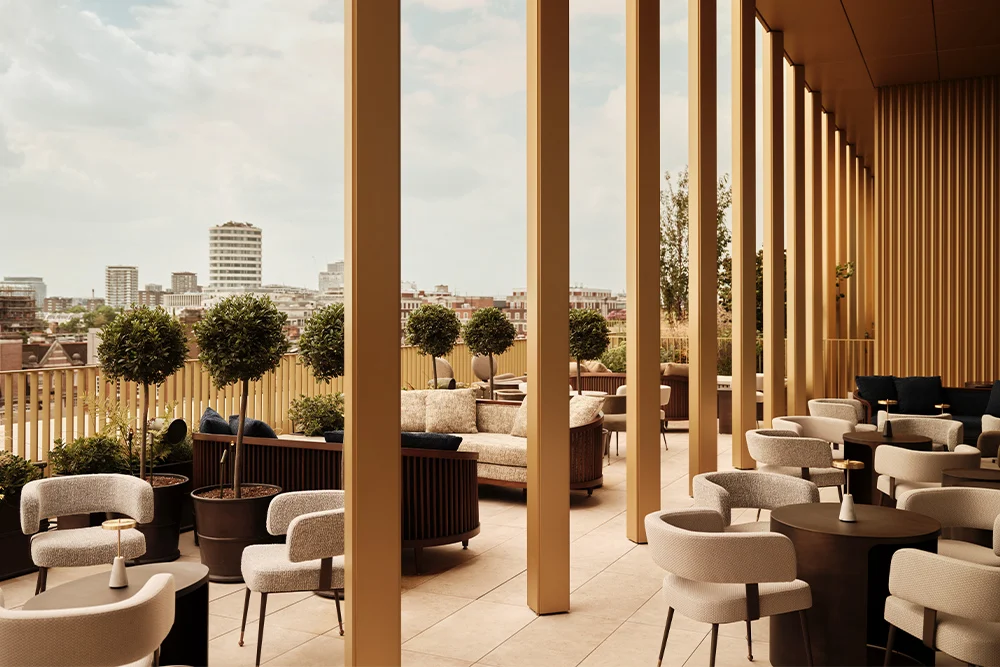
The relocation of London’s U.S. Embassy in 2017 marked the dawn of an extraordinary undertaking: the metamorphosis of a Grade II listed modernist landmark, conceived by the visionary Finnish-American architect Eero Saarinen, into the opulent Chancery Rosewood hotel. Saarinen, renowned for iconic structures such as the Gateway Arch in St. Louis and the revolutionary TWA Terminal at JFK Airport (now the TWA Hotel), envisioned his 1960s building as a "palace on the park." This significant architectural project, spanning over a decade, has culminated in the rebirth of this historic site into a 144-suite luxury destination, redefining its purpose while honoring its distinguished past.
A Prime Location Steeped in History
Nestled within Mayfair’s prestigious Grosvenor Square, an area historically synonymous with North American diplomatic presence, the Chancery Rosewood commands a coveted address. The hotel officially reopened its doors last September, offering an exclusive all-suite experience. "You cannot get a better location in London," states Trish Luyckx, chief design and project services officer at Rosewood Hotel Group. She further connects the location to the brand’s heritage, noting the "tie-in to our brand’s origin in Turtle Creek, Texas." The successful realization of this ambitious project is attributed to the "passion of everyone who’s worked on the project for over 10 years," highlighting the dedication and collaborative spirit that underpinned its creation.
A Collaborative Vision for Enduring Value
From the initial stages, a formidable consortium of design experts united their considerable talents to optimize operational flow, expand usable space, and embed sustainability at the core of the development. This commitment aligns with the owner, Qatari Diar’s, ambition to create a project that delivers lasting value not only for the hotel but also for the wider community and the destination itself. The ensemble of architectural and design firms involved reads like a who’s who of the industry, including ReardonSmith Architects and David Chipperfield Architects, alongside the creative prowess of Yabu Pushelberg, AvroKO, Sagrada, and Joseph Dirand, among other specialized consultants.
Engineering Prowess and Heritage Preservation
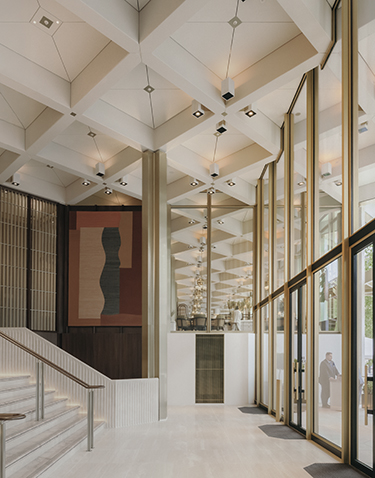
The transformation involved a substantial expansion, nearly doubling the building’s footprint with the addition of a new top floor and two subterranean levels. Given the unconventional and innovative design of Saarinen’s original structure, securing meticulous heritage and planning consents was a complex but crucial undertaking. Saarinen’s signature "checkerboard" spatial arrangement allowed for a self-supporting exterior facade. Furthermore, a radical 45-degree rotation of the conventional structural grid into a diagrid system unified the entire building, a design choice that ingeniously minimized the need for internal columns and contributed to the building’s unique aesthetic.
A particularly remarkable feat of engineering involved the facade of the original building. "In a major feat of engineering and construction, the facade was lifted and suspended over a 98-foot-deep excavation for nearly three years while works below were completed," explains Irek Pasek, director at ReardonSmith Architects. This allowed for the extensive excavation and construction of the new lower levels to proceed unimpeded, demonstrating an extraordinary level of technical expertise and logistical coordination.

Addressing Heritage Challenges with Innovative Solutions
Restoring the historic property to its former grandeur presented significant challenges, not least of which was the listed diagrid ceiling. This iconic architectural feature, while visually striking, could not be utilized for the integration of conventional air conditioning systems. The solution involved the implementation of a highly sophisticated system, typically employed in museum settings, ensuring both the preservation of heritage integrity and the delivery of superior environmental control and sustainability. This approach underscores a commitment to finding solutions that respect the building’s past while meeting contemporary functional demands.
Sustainability Integrated into Design and Operation
The project achieved numerous BREEAM (Building Research Establishment Environmental Assessment Method) credits through what are described as "seemingly invisible architectural provisions." Ryan Butterfield, associate director at David Chipperfield Architects, highlights these elements, including the creation of substantial basement space for a more efficient and larger plant, the integration of water-efficient vacuum drainage systems, the development of biodiverse rooftop gardens, and rigorous waste and recycling monitoring throughout the construction phase. Furthermore, the careful renewal and reconfiguration of original elements—such as brass window latches, balustrade trims, light boxes, and timber flooring—not only enhanced the building’s circularity but also reinforced its connection to its historical aesthetics, creating a seamless blend of old and new.
A Design Narrative: Mid-Century Glamour Meets Contemporary Sophistication
The interior design philosophy for the public areas, suites, and the hotel’s "houses" (named in homage to American dignitaries such as John Adams and John F. Kennedy) was curated by Parisian architect Joseph Dirand. His vision conjures an aesthetic that artfully blends the allure of "James Bond-meets-‘Mad Men’," evoking the sophisticated glamour of the 1960s. Furniture, including select pieces designed by Saarinen himself, and classical lighting fixtures are meticulously chosen to imbue the spaces with a timeless poise characteristic of the era.
Artful Juxtapositions and Reverence for History
Within the central open passageways, illuminated installations inspired by the swirling shapes of tree leaves found in Grosvenor Square cascade from a skylight. These contemporary artistic elements provide a striking visual contrast to the rich walnut timber imported from Michigan, adding a layer of natural texture and warmth.
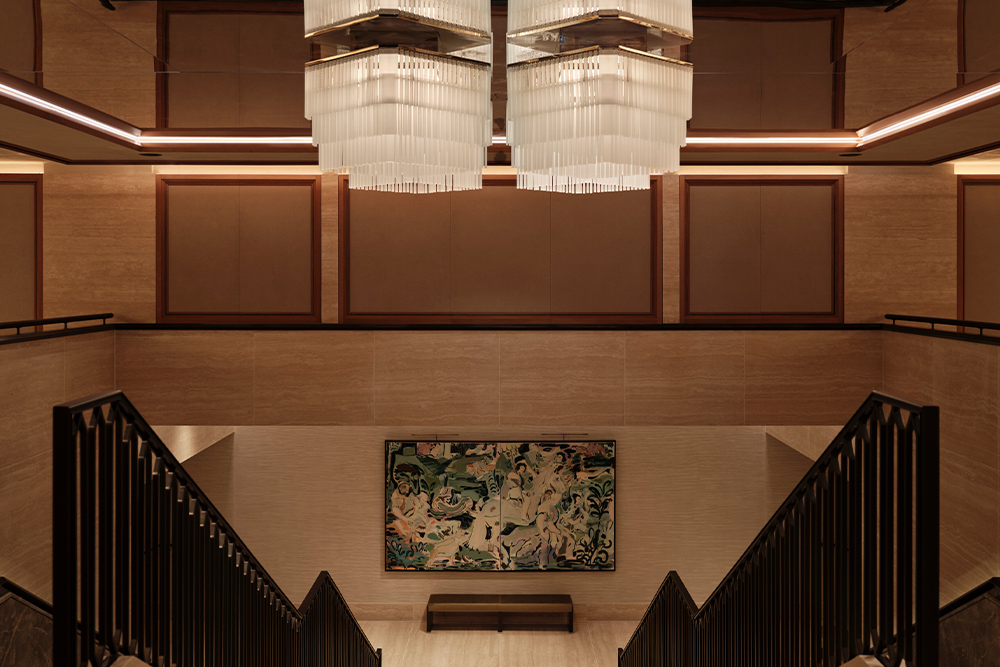
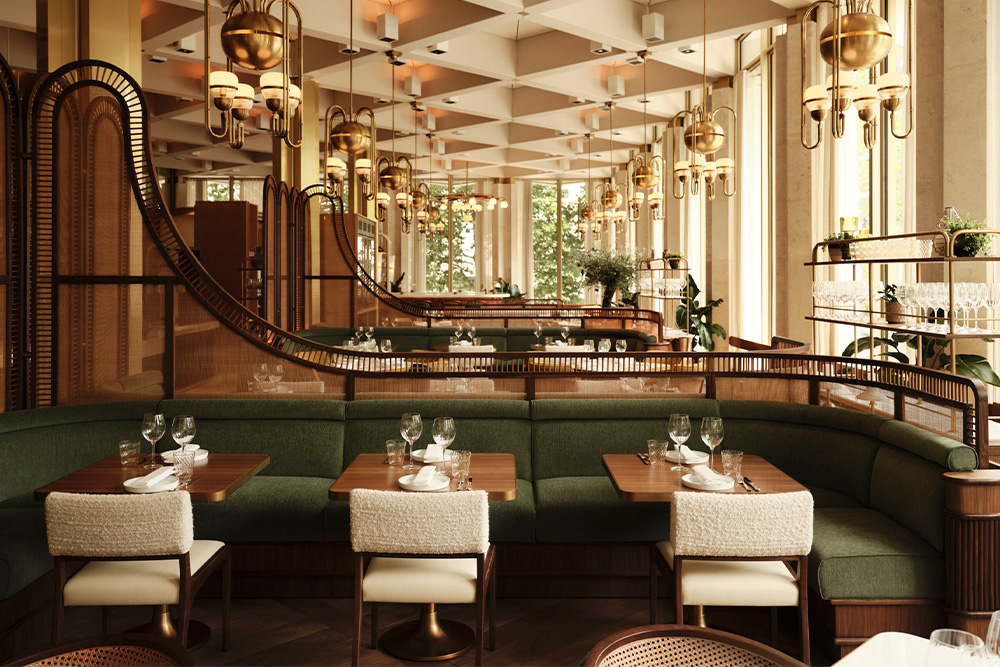
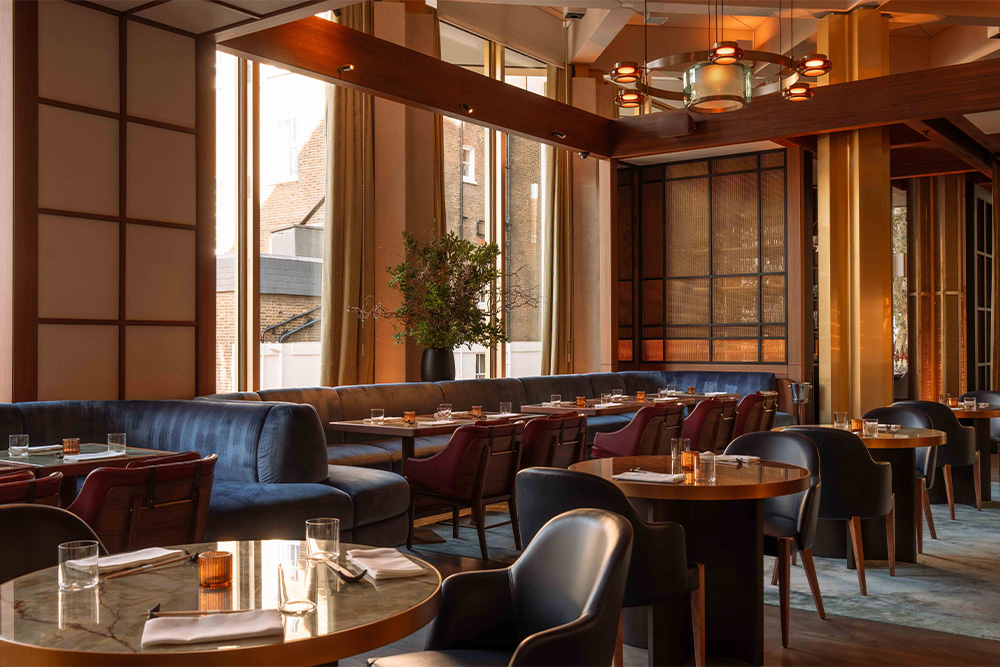
The reception lounge serves as a central hub from which the various food and beverage spaces radiate. Joseph Dirand’s elegant Jacqueline tea lounge is a subtle yet fitting tribute to the beloved former First Lady, Jacqueline Kennedy Onassis, capturing her grace and style. Preliminary concepts for other F&B outlets were developed by Tristan Auer in Paris and Bar Studio in Melbourne. These concepts were then brought to fruition by New York-based AvroKO, who were responsible for the detailed designs and the selection of furniture, fixtures, and equipment (FF&E) for the Serra brasserie, GSQ deli, and the Asian grill, Tobi Masa.
Adam Farmerie, cofounder and principal at AvroKO, elaborated on the design approach for Serra brasserie: "To synergize with the facade windows’ rhythm and Cartesian geometry, we laid out Serra’s seating plan into bays reinforced by a relentless regularity of brass chandeliers. Second, we deliberately introduced curvilinear elements to juxtapose the building’s architectural language. Since Saarinen implemented curves in his other buildings and most of his furniture, we figured he’d approve." This thoughtful integration of contrasting elements demonstrates a deep understanding and respect for Saarinen’s original design ethos.
Echoes of Heritage in Contemporary Spaces
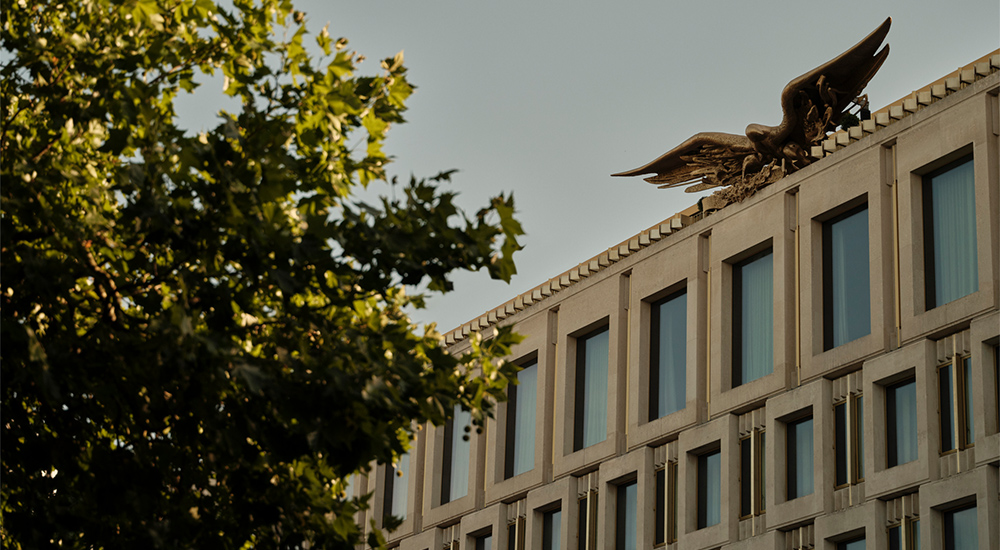
The rooftop Eagle Bar, designed by London-based Sagrada, draws inspiration from the fluid form of the American Eagle sculpture. This significant artwork was originally crafted for the embassy by Polish-American artist Theodore Roszak, utilizing salvaged parts from World War II B-52 bombers. The sculpture, after being temporarily removed for preservation, was meticulously restored and reinstated, serving as a powerful and evocative link to the building’s past.
A Subterranean Sanctuary: The Asaya Spa Experience
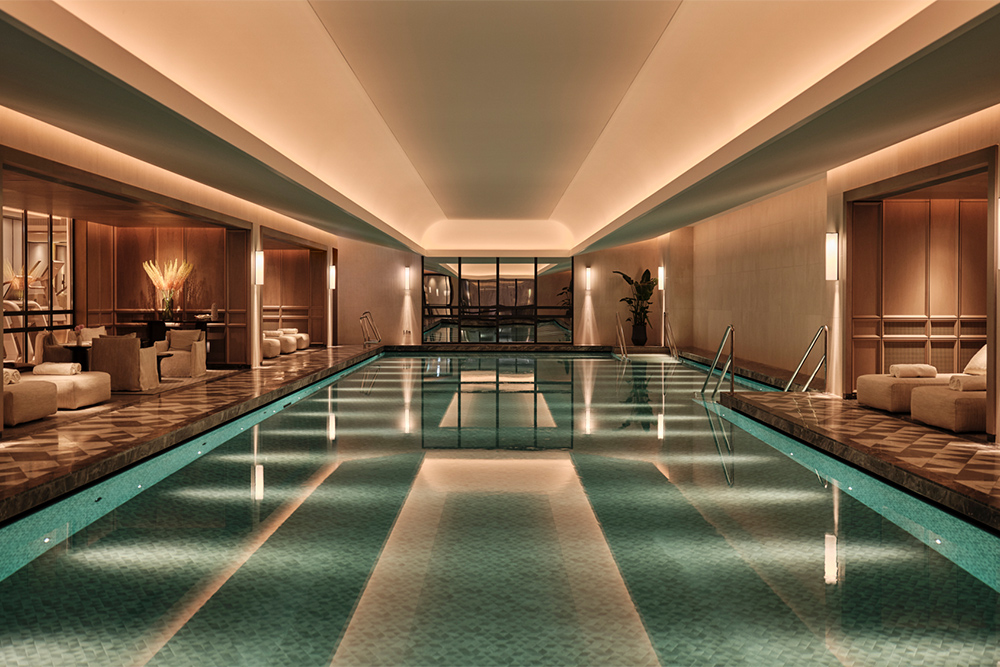
Located two levels below ground, the Asaya Spa, conceptualized by Yabu Pushelberg, embraces the absence of natural daylight. The design unfolds as a sequence of intimately proportioned, residential-like spaces, defined by careful attention to proportion, indirect illumination, and atmospheric depth. This approach creates an environment of softness and calm that beautifully balances the inherent strength and structure of Saarinen’s architecture, transforming the subterranean setting into a serene and private retreat.
"Rather than bringing the building’s exterior language into the spa, we introduced a softer expression—one aligned with Rosewood’s vision of residential warmth and English sensibilities," explains George Yabu, partner at Yabu Pushelberg. Glenn Pushelberg adds, "The spa respects the legacy of the structure while responding to its contemporary identity, creating a dialogue between authority and serenity, monumentality, and retreat."
An Artful Collection and Immersive Suites
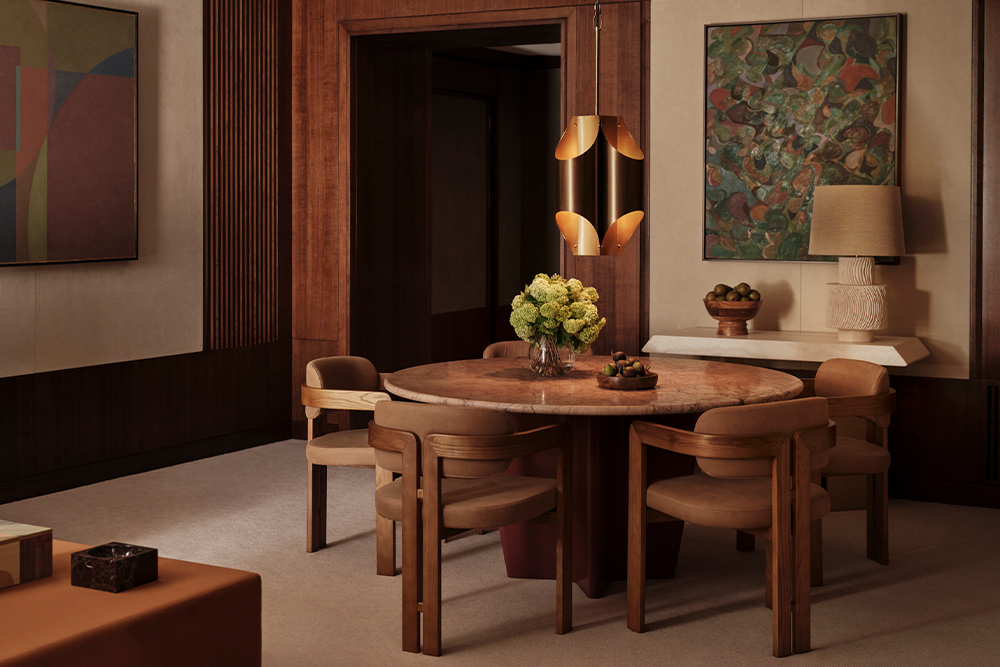
The hotel’s commitment to artistry extends throughout its 144 suites. An in-house art concierge meticulously manages the hotel’s extensive collection of over 700 works. This curated collection features pieces by renowned artists such as David Hockney, Damien Hirst, Peter Blake, Tracey Emin, and Barbara Hepworth, alongside works by emerging talents, enriching the guest experience with a diverse and engaging artistic narrative. The suites themselves reflect a curated mid-century aesthetic, incorporating furniture and lighting designed by icons of the era, including Saarinen, Tobia Scarpa, Warren Platner, and Robert Sonneman.
A Legacy Reimagined
The transformation of Eero Saarinen’s U.S. Embassy into the Chancery Rosewood is more than just a hotel development; it is a significant act of architectural preservation and creative reimagining. By respecting the original modernist masterpiece while introducing contemporary luxury and sustainable practices, the project has successfully breathed new life into a landmark building. The result is a destination that honors its storied past, celebrates exceptional design, and offers an unparalleled experience in the heart of London, standing as a testament to visionary architecture and collaborative execution.
This article originally appeared in HD’s April 2026 issue.

 Anjar Salim
 Dwi Wanna
 Budi Mulyono
 Lukman Taruna Persada Ramadan
 Chandra Hamzah
 Gabriela Annisa