Anjar Salim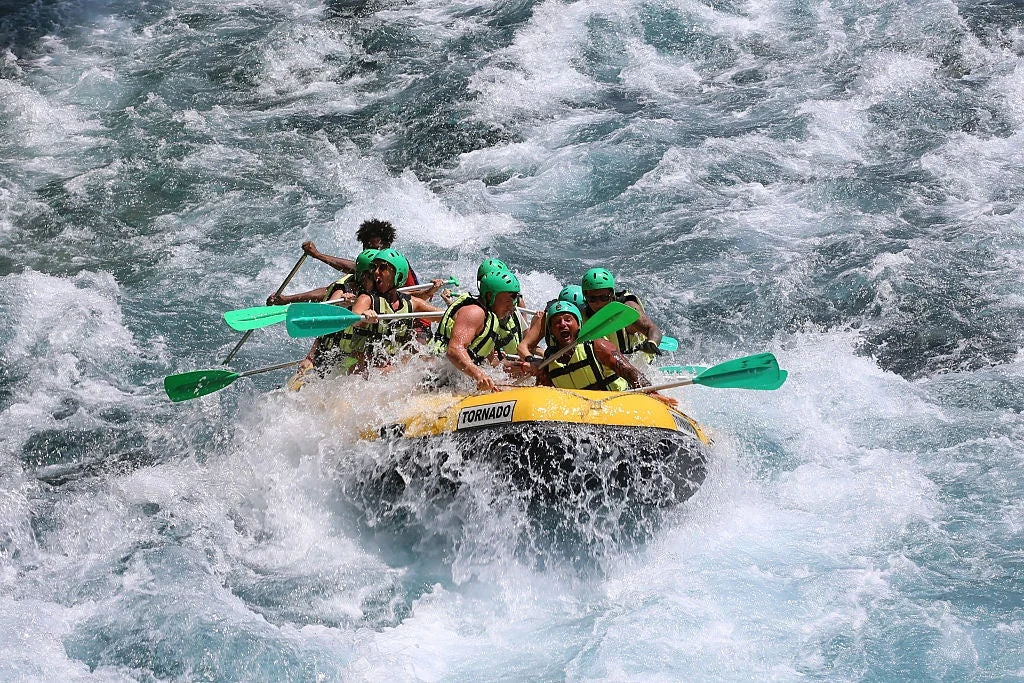
The professional relationship between a backcountry guide and a client is built upon a foundation of perceived expertise, trust, and a shared understanding of risk. In the outdoor adventure industry—spanning whitewater rafting, mountaineering, and backcountry skiing—clients pay not only for access to remote environments but for the specialized knowledge required to navigate them safely. However, a growing dialogue within the industry explores a critical ethical and practical dilemma: the point at which a client should question or disobey a guide’s instructions when they believe their safety is being compromised. This issue was recently highlighted by a client’s experience on the Upper Gauley River in West Virginia, where a guide’s high-risk maneuvers led to significant psychological distress and a questioning of professional boundaries.
The Upper Gauley Incident: A Case Study in Risk Tolerance
The Upper Gauley River is widely regarded as one of the most technical and demanding stretches of whitewater in the United States. Dropping over 330 feet in a 13-mile stretch, it features several Class V rapids, including Insignificant, Pillow Rock, Lost Paddle, Shipwreck, and Sweets Falls. Navigation of these waters requires precise maneuvering and a deep understanding of hydraulic forces.
In a recent report, a client participating in a guided commercial trip on the Upper Gauley described a guide who deliberately sought out hazardous features, such as deep holes and narrow slots, and intentionally flipped the raft to provide a more "thrilling" experience for the group. While a segment of the clientele expressed satisfaction with this aggressive approach, other participants reported feeling terrified and noted that other commercial boats were taking significantly more conservative lines. This discrepancy raises questions about the "standard of care" expected in the guiding industry and whether a guide’s desire to provide entertainment can ethically supersede a client’s comfort level and safety.
The Statistical Landscape of Guided Adventure Sports
To understand the context of these risks, it is necessary to examine the safety data associated with high-consequence outdoor activities. While guided trips are statistically safer than unguided expeditions, they are not without peril.
Whitewater Rafting Safety Data
According to data compiled by American Whitewater, the national nonprofit organization for river conservation and safety, the fatality rate for whitewater rafting remains relatively low compared to other high-risk activities. On average, between 10 and 20 fatalities occur annually on U.S. rivers during commercial rafting trips. However, "near-miss" incidents—such as boat flips, "out-of-boat" experiences (swimmers), and entrapments—are significantly more common. In high-volume, high-technicality rivers like the Gauley, the margin for error is slim, and intentional flips can lead to foot entrapment or "strainers" (fallen trees) that turn a controlled thrill into a life-threatening emergency.
Mountaineering and Avalanche Risks
The risks are similarly pronounced in winter backcountry environments. A recent tragedy near Lake Tahoe, California, served as a grim reminder of the fallibility of even the most experienced professionals. In that incident, an avalanche claimed the lives of nine individuals, including six clients and three professional guides. This event underscored the reality that "guided" does not mean "safe." According to the American Avalanche Association, human factors—such as the "expert halo" (where clients blindly follow a leader) and "social facilitation" (the desire to perform for a group)—contribute to a significant percentage of avalanche accidents.
The Human Element: Expert Fallibility and the "Expert Halo"
The psychological phenomenon known as the "expert halo" occurs when a group assigns a high level of competence to a leader and, as a result, ceases to think critically or voice concerns. In the context of backcountry guiding, this can be lethal. Even seasoned professionals are susceptible to cognitive biases and simple human error.
Mark Sundeen, a former guide with over a decade of experience in Utah and Alaska, highlights the reality of professional fallibility. Sundeen recalls an instance where, during a technical descent on an Alaskan snowfield, he inadvertently tied a slip knot—a knot designed to fail under tension—into a primary rope anchor. Both he and his clients rappelled off the anchor before the mistake was realized. The anchor held by chance, rather than by design. Such anecdotes emphasize that a guide’s certification or years of experience do not provide an absolute guarantee of safety.
Furthermore, the demographics of the guiding workforce often trend toward younger individuals who may have a higher tolerance for risk. Many entry-level guides are in their early twenties, a developmental period often associated with lower levels of risk aversion. This can create a "risk gap" between the guide, who views a boat flip as routine, and a client, who views it as a traumatic near-death experience.
The Legal and Ethical Framework of Client Rights
From a legal perspective, the relationship between a guide and a client is governed by the principles of negligence and the "assumption of risk."
Assumption of Risk vs. Gross Negligence
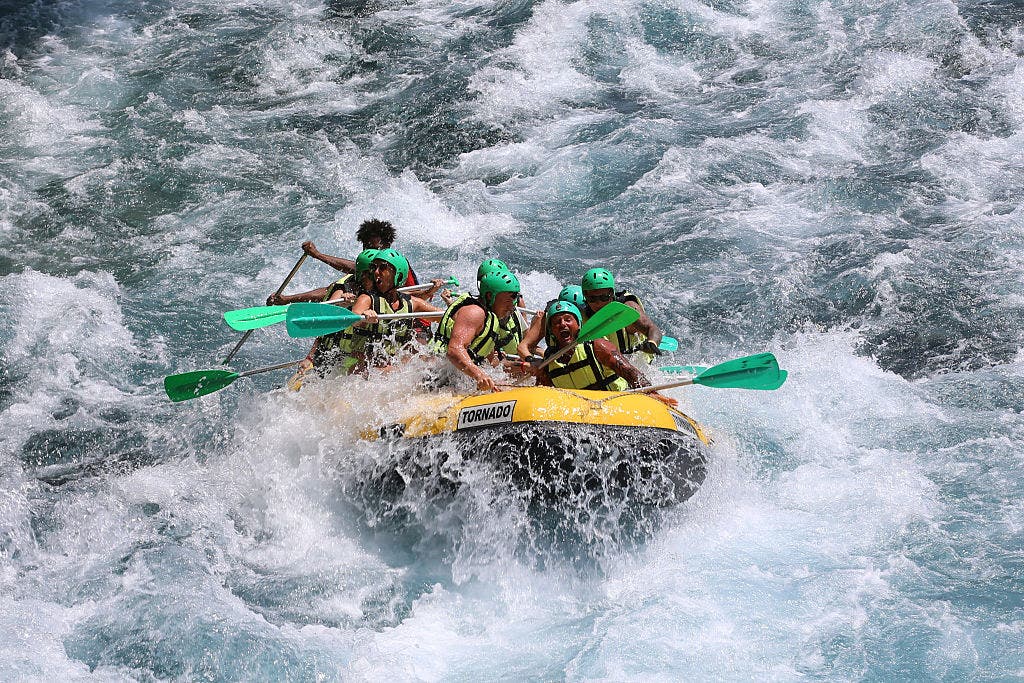
When a client signs a liability waiver, they acknowledge that certain risks are inherent to the activity (e.g., a raft may flip in a Class V rapid). However, waivers generally do not protect guide services from "gross negligence"—conduct that demonstrates a reckless disregard for the safety of others. Intentionally flipping a boat in a dangerous section of the river, especially against the unspoken or spoken wishes of the participants, may cross the line from an inherent risk to a negligent act.
The Ethical Right of Refusal
Ethically, a client maintains the right to bodily autonomy and the right to refuse to participate in an activity they deem unsafe. In the "Challenge by Choice" philosophy adopted by many outdoor education programs, participants are encouraged to push their limits but are given the ultimate authority to opt out of any specific challenge. In a commercial guiding context, however, this is logistically difficult. Once a raft is in the middle of a rapid or a climber is halfway up a cliff, "opting out" is often no longer a safe or viable option.
Industry Responses and Standard Operating Procedures
In response to the tension between adventure and safety, many top-tier guiding outfits have implemented more rigorous Standard Operating Procedures (SOPs). These include:
- Comprehensive Pre-Trip Briefings: Guides are increasingly trained to conduct "vulnerability checks," where clients are encouraged to speak up about their fear levels and physical limitations before the trip begins.
- Tiered Risk Options: Some companies now offer different "tracks" for the same river or mountain—one focused on "max thrills" and another on "conservative lines."
- The "Veto" Rule: Borrowing from the "Stop the Line" protocol used in surgical theaters and aviation, some guiding services are empowering clients with a "veto" power, where the expedition pauses if any member expresses a genuine safety concern.
Chronology of a Safety Intervention
If a client feels that a guide is taking unnecessary risks, experts suggest a specific chronological approach to intervention:
- Phase 1: The Booking Phase. Research the company’s safety record and specific guide assignments. Request a guide known for a conservative approach if high-risk maneuvers are not desired.
- Phase 2: The Put-In/Trailhead. Explicitly state boundaries during the safety talk. For example: "I am here for the scenery and the technical skill, but I do not want the boat to be intentionally flipped."
- Phase 3: The Moment of Concern. If a guide begins taking lines that seem unsafe, use clear, non-confrontational language. Instead of saying "You are being reckless," say "I am uncomfortable with this line; can we look for a more conservative route?"
- Phase 4: Post-Trip Reporting. If the guide ignores these requests, the client has a responsibility to report the behavior to the company’s management. This serves as a vital feedback loop that can prevent future accidents.
Broader Implications for the Adventure Tourism Industry
The debate over guide authority comes at a time when adventure tourism is seeing unprecedented growth. As more "novice" adventurers seek out "expert-level" experiences, the pressure on guides to deliver high-octane results increases. This "commodification of risk" can lead to a dangerous erosion of safety margins.
The industry is currently at a crossroads. There is a push for more standardized certification through organizations like the American Mountain Guides Association (AMGA) and the American Canoe Association (ACA), which emphasize not just technical skill, but "soft skills" like communication, empathy, and risk management.
Ultimately, the safety of a backcountry expedition is a collective responsibility. While the guide provides the technical expertise, the client provides the "reality check" of their own physical and psychological limits. The "Defiant Client" is not merely a nuisance; they are often a necessary counterweight to the "expert halo" that can lead a group into disaster. As the industry evolves, the most successful guide services will be those that view client concerns not as a challenge to their authority, but as a critical component of a robust safety culture.


 Chandra Hamzah
 Gabriela Annisa
 Tatiana Tantri Indah Sari
 Budi Mulyono