
 Anjar Salim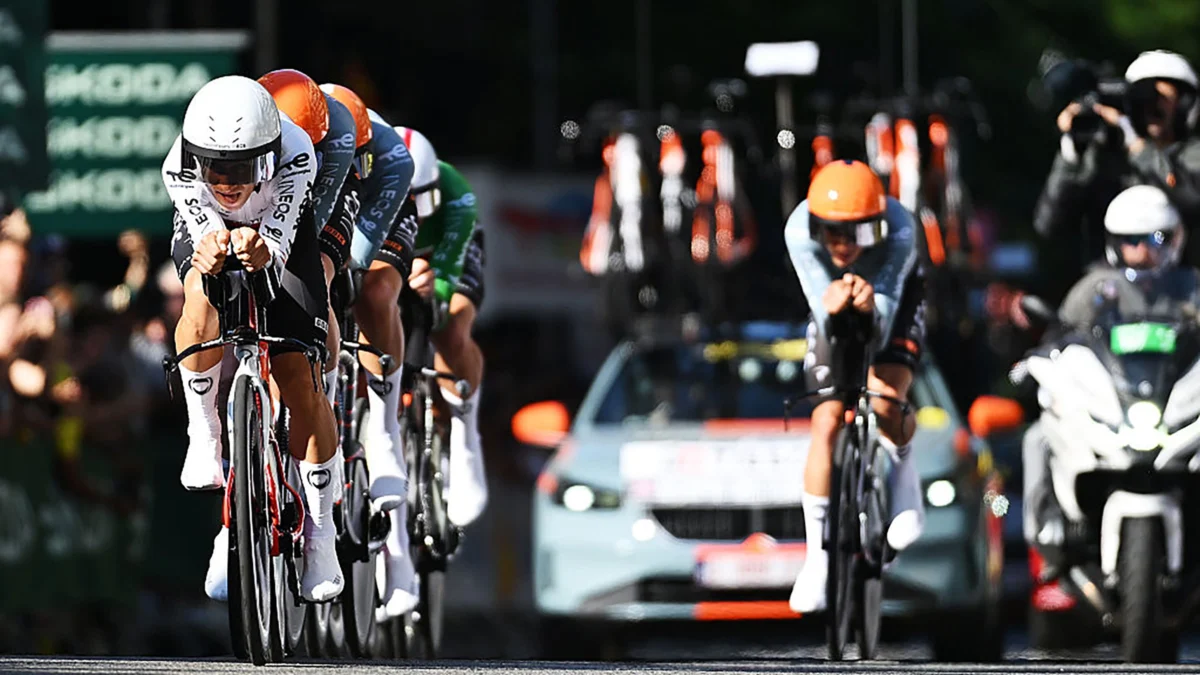
The 2026 Tour de France commenced on Saturday, July 4, with a high-speed team time trial through the urban landscape of Barcelona, marking a significant international start for the world’s most prestigious cycling event. While the Grand Départ in Spain offered a scenic backdrop of Mediterranean architecture and coastal vistas, it also presented the peloton with grueling environmental challenges. Temperatures in the Catalan capital exceeded 90 degrees Fahrenheit (32.2 degrees Celsius) during the opening stage, forcing teams to employ sophisticated—and occasionally visually unconventional—thermoregulation strategies to maintain peak physiological performance.
Among the most discussed tactical displays during the Stage 1 warm-up was the approach taken by the British outfit Netcompany-Ineos. Known historically for its rigid adherence to "marginal gains," the team deployed a pre-cooling protocol that involved riders soaking their forearms in plastic bins filled with chilled water. This maneuver, captured by international broadcasters and cycling media, has reignited discussions regarding the lengths to which modern professional teams go to secure even the slightest competitive advantage in an increasingly polarized sport.
The Barcelona Grand Départ and Climatic Context
The decision to host the first three stages of the 113th Tour de France in Spain underscores the race’s growing trend toward internationalization. However, the July heat along the Mediterranean coast is a known variable that complicates the logistical and physical requirements of a three-week Grand Tour. High humidity levels combined with stagnant air in urban corridors like Barcelona create a high-risk environment for core temperature spikes, which can lead to premature fatigue and diminished power output during a high-intensity effort like a team time trial.
In a team time trial (TTT), the collective speed of the unit is paramount. Unlike individual stages, the TTT requires perfect synchronization, and if a single key rider overheats and "blows up," the entire team’s time is jeopardized. Consequently, the hours leading up to the start ramp are dedicated to keeping the riders’ core temperatures as low as possible for as long as possible.
The History of "Marginal Gains" at Team Sky and Ineos
To understand the significance of Netcompany-Ineos’ cooling strategy in 2026, one must examine the lineage of the team. Formerly known as Team Sky (2010–2019) and later Ineos Grenadiers, the squad was the dominant force in professional cycling for nearly a decade. Under the leadership of Sir Dave Brailsford, the team secured seven Tour de France titles between 2012 and 2019 with riders Bradley Wiggins, Chris Froome, Geraint Thomas, and Egan Bernal.
The foundation of this success was the "marginal gains" philosophy. Brailsford famously posited that if a team could improve every element of performance by just one percent, the cumulative effect would be a significant competitive leap. This philosophy manifested in several industry-changing innovations:
- Sleep Logistics: The team began transporting custom-made mattresses and pillows for every rider to every hotel to ensure consistent spinal alignment and sleep quality, bypassing the variable quality of French hotel bedding.
- Environmental Control: The squad utilized its own laundry facilities to eliminate the risk of bacterial cross-contamination and ensure that technical fabrics were treated with specific detergents to maintain aerodynamic properties.
- Nutritional Precision: The introduction of "kitchen trucks" and dedicated chefs allowed for hyper-individualized caloric and macronutrient monitoring, moving away from standard hotel catering.
- Technological Integration: Extensive wind-tunnel testing for every component, from the texture of the riders’ skinsuits to the viscosity of the chain lubricant, became the team’s hallmark.
The 2026 Pre-Cooling Protocol: Technical Details
As Netcompany-Ineos prepared for the Barcelona TTT, the team’s technical staff unveiled a setup that appeared deceptively simple compared to their historical high-tech reputation. According to reports from on-site technical analysts, the team arrived at the warm-up area with a specialized trolley system. They deployed eight folding tables, each supporting a large plastic storage bin.
The bins were filled with water meticulously maintained at exactly 8.8 degrees Celsius (47.84 degrees Fahrenheit). Riders, already dressed in their aerodynamic time-trial suits and futuristic helmets, sat in a row and submerged their forearms into the water while spinning on stationary trainers.
The science behind this specific "marginal gain" is rooted in heat exchange. The forearms have a high surface-area-to-volume ratio and significant vascularity near the skin’s surface. By submerging them in cold water, the team aimed to facilitate rapid conductive cooling of the blood, which then circulates back to the core, effectively acting as a heat sink. This allows riders to perform their high-intensity warm-up—necessary to "wake up" the anaerobic systems—without the standard rise in core temperature that would normally occur in 90-degree heat.
When questioned by members of the press regarding the specific temperature and the expected wattage gain, team representatives remained guarded. A staff member notably replied with a concise "You’ll see," maintaining the air of calculated secrecy that has long defined the British squad’s public persona.
Comparative Performance and Stage 1 Results
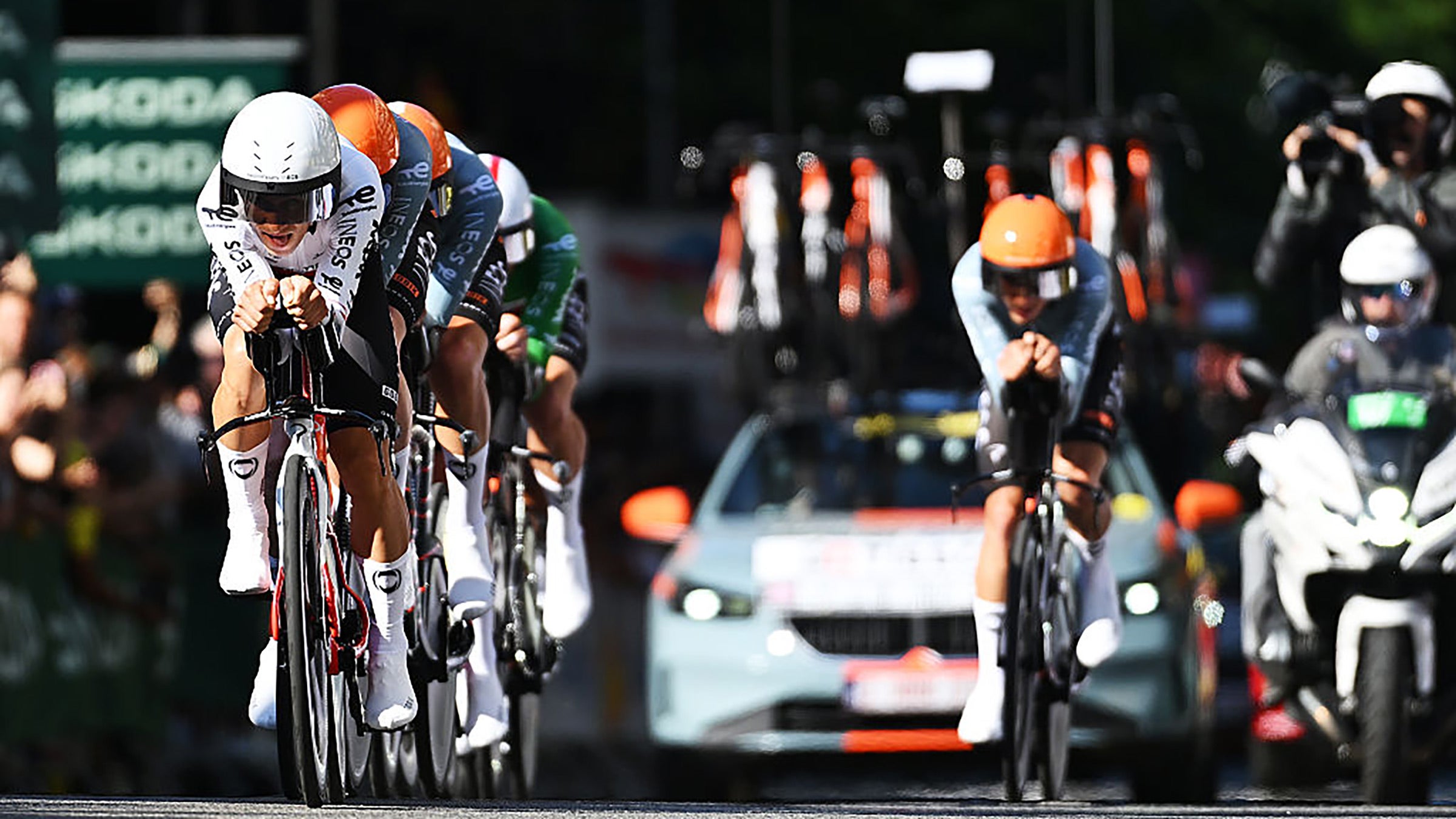
Despite the elaborate cooling measures and the team’s historical prowess in the discipline, the results of the Barcelona team time trial highlighted the narrowing gap between the world’s elite programs. Netcompany-Ineos delivered a robust performance, navigating the technical corners of the Barcelona course with precision. However, they were unable to secure the stage victory.
The stage was won by Visma–Lease-a-Bike, a team that has emerged as the primary rival to the Ineos legacy in the 2020s. Netcompany-Ineos finished the course eight seconds behind the winners. In the context of a 15-to-20-kilometer TTT, eight seconds is a significant margin, yet it represents a difference of less than one percent in total time—ironically falling within the very "marginal" window the team seeks to optimize.
Stage 1 Team Time Trial Results (Top 5):
- Visma–Lease-a-Bike: 18:20
- UAE Team Emirates: +0:04
- Netcompany-Ineos: +0:08
- Red Bull-Bora-Hansgrohe: +0:12
- Lidl-Trek: +0:15
Analysis of Implications and the Changing Landscape of the Tour
The visual of elite athletes soaking their arms in plastic tubs serves as a metaphor for the current state of professional cycling. While the sport is more data-driven than ever, the solutions to extreme environmental factors are often found in fundamental physics rather than proprietary carbon fiber.
1. The Normalization of Gains
What was once considered a "marginal gain" by Team Sky in 2012 has now become the baseline for the entire peloton. Most top-tier teams now travel with their own chefs, mattresses, and sophisticated cooling vests. This "arms race" of optimization means that teams like Netcompany-Ineos must look for increasingly niche methods—such as specific water temperatures for forearm immersion—to find an edge.
2. Climate Change and Race Logistics
The 2026 Tour de France’s start in Barcelona is part of a broader trend of Grand Tours grappling with extreme heat. The UCI (Union Cycliste Internationale) has had to refine its Extreme Weather Protocol in recent years. For teams, heat management is no longer an optional "gain" but a requirement for basic safety and competitiveness. The move from high-tech cooling gadgets to the high-heat-capacity solution of water immersion suggests a shift toward more effective, if less "high-tech" looking, solutions.
3. The Psychological Element
There is also a psychological component to the "You’ll see" attitude of the Netcompany-Ineos staff. By creating a spectacle of their preparation, teams can exert pressure on their rivals, signaling that they have discovered a "secret" that others have not. However, as the eight-second deficit to Visma–Lease-a-Bike suggests, psychological posturing cannot overcome the raw physical power and collective coordination of a rival team in peak form.
Conclusion
The opening of the 2026 Tour de France in Barcelona provided a stark reminder that the race is won as much in the hours of preparation as it is on the tarmac. Netcompany-Ineos’ forearm-cooling protocol may have appeared rudimentary to the casual observer, but it represented the latest iteration of a decade-long pursuit of physiological optimization.
As the peloton moves out of Spain and toward the Pyrenees, the focus will shift from heat management to climbing efficiency. However, the lesson of Stage 1 remains: in the modern era of professional cycling, no detail is too small, and no method is too unconventional if it promises to shave a fraction of a second off the clock. The 2026 Tour has only just begun, but the battle of the margins is already in full swing.




 Chandra Hamzah
 Tatiana Tantri Indah Sari
 Budi Mulyono
 Lukman Taruna Persada Ramadan