Gabriela Annisa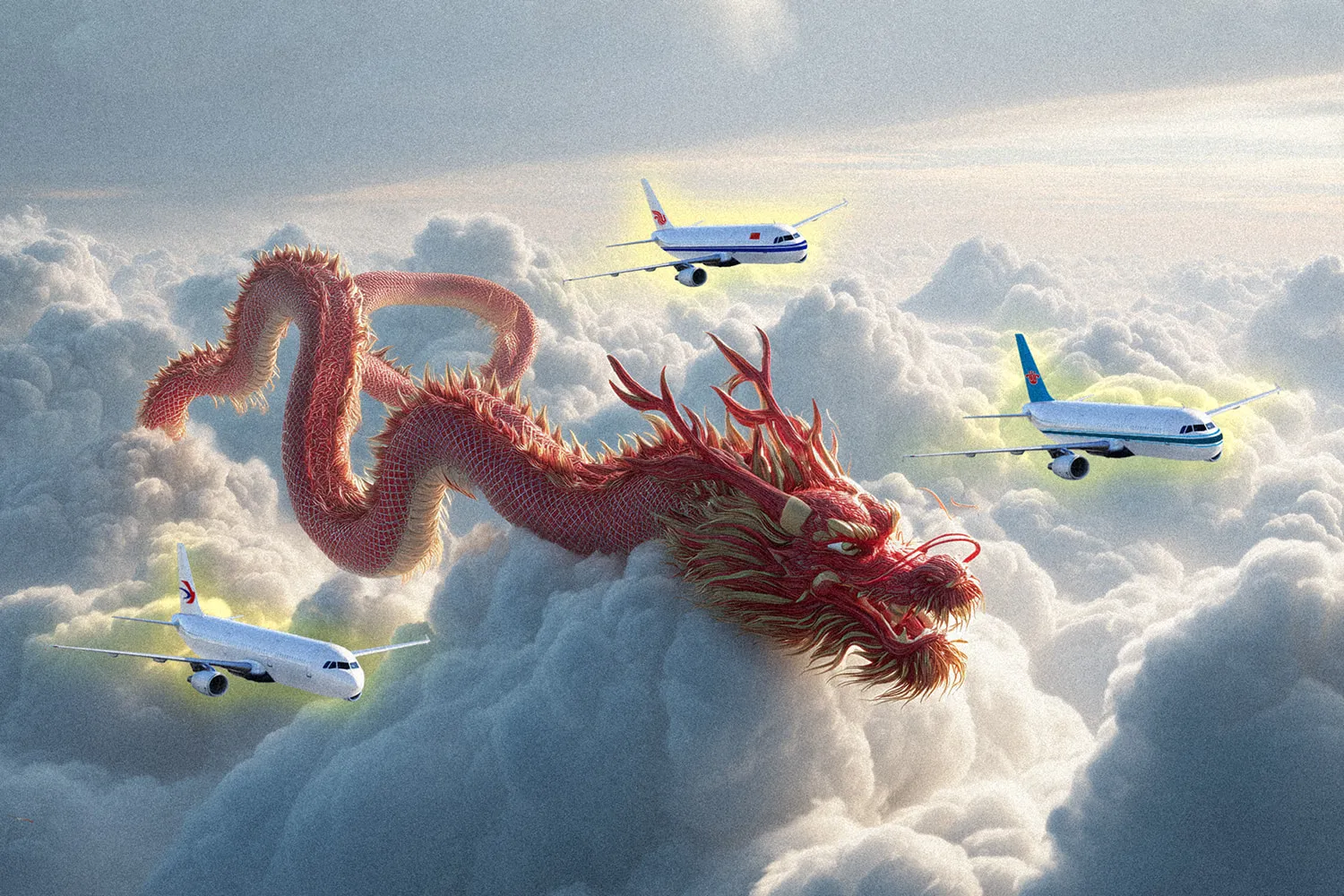
The aviation industry across East Asia has largely roared back to life, with many carriers reporting robust profits fueled by a resurgence in premium demand. However, a contrasting narrative unfolds in Mainland China, where the nation’s "Big Three" airlines – Air China, China Eastern Airlines, and China Southern Airlines – have faced persistent struggles for six consecutive years. Despite China’s vast domestic market and strategic importance in global aviation, these state-owned giants continue to contend with a complex web of challenges, including significantly diminished North American routes, an aging fleet in need of modernization, intense competition, and a geopolitical landscape that creates formidable headwinds. The question remains whether these carriers can effectively navigate these obstacles to reclaim their pre-eminence, or if rising fuel costs and enduring diplomatic tensions will prolong their period of underperformance.
The Lingering Shadow of Zero-COVID and a Stifled Recovery
The genesis of China’s airlines’ prolonged difficulties can be traced back to the onset of the COVID-19 pandemic and Beijing’s exceptionally stringent "Zero-COVID" policy. While global aviation markets began their staggered recovery in late 2021 and early 2022, China maintained severe travel restrictions, including extensive quarantine requirements, flight capacity caps, and sporadic lockdowns of major cities and airports. This policy effectively isolated the country from international travel for nearly three years, crippling the international operations of its major carriers.
During this period, from early 2020 through late 2022, Chinese airlines were forced to heavily pivot to the domestic market, which, while substantial, could not compensate for the lucrative international routes. Passenger traffic plummeted by as much as 80-90% on international segments, leading to massive financial losses. Air China, China Eastern, and China Southern collectively reported billions of dollars in losses annually. For instance, in 2022, China Eastern recorded a net loss of approximately RMB 37.36 billion (around USD 5.2 billion), while Air China and China Southern also posted significant deficits. This period of sustained financial bleeding drained reserves and hampered investment in fleet upgrades and route development that many international competitors were undertaking in anticipation of reopening.
When China finally abandoned its Zero-COVID policy in December 2022, the expectation was a rapid rebound. However, the international recovery has been markedly slower and more complicated than anticipated. While domestic travel rebounded swiftly, international capacity for Chinese carriers remained significantly below pre-pandemic levels throughout 2023 and into 2024. This slow crawl back to normalcy is a primary contributor to the extended period of struggle, as the most profitable long-haul routes, particularly those to North America and Europe, have been the slowest to restore.
Geopolitical Headwinds: The North American Conundrum
One of the most significant and persistent challenges for China’s "Big Three" is the dramatic reduction in air routes to North America. Prior to the pandemic, the US-China air corridor was one of the busiest and most profitable in the world, facilitating extensive business travel, tourism, and student exchanges. At its peak in 2019, there were over 300 direct flights per week between the two countries.
However, escalating geopolitical tensions between Washington D.C. and Beijing, exacerbated by the pandemic and subsequent reciprocal flight restrictions, have severely curtailed this vital market. The US government imposed restrictions on Chinese airlines early in the pandemic, citing safety concerns and China’s own limits on US carriers. These restrictions led to a tit-for-tat reduction in flights, resulting in a drastically diminished flight schedule that remains in place. As of early 2024, the number of approved weekly round-trip flights between the US and China is still a fraction of pre-pandemic levels, far fewer than what either country’s airlines could operate under normal circumstances.
This reduction disproportionately affects Chinese carriers, which historically held a larger share of this market and relied heavily on its profitability. The absence of these high-yield routes means a substantial loss of revenue, particularly from premium-class passengers and cargo. While US carriers have also been affected, the impact on Chinese airlines, compounded by their general international isolation during Zero-COVID, has been more profound. Analysts estimate that international capacity for Chinese airlines to North America remains down by approximately 80% compared to 2019 levels, severely limiting their ability to compete for high-value trans-Pacific traffic. This situation creates a strategic disadvantage, forcing these carriers to focus on less lucrative regional routes or rely more heavily on transfer traffic through other Asian hubs, where they face intense competition from better-positioned regional rivals.
An Aging Fleet and Modernization Challenges
Another critical factor contributing to the struggles of China’s "Big Three" is the relative age and composition of their fleets. While these airlines operate a large number of aircraft, a significant portion comprises older generation models that are less fuel-efficient and offer a less competitive passenger experience compared to the newer aircraft operated by many of their East Asian counterparts. The average fleet age for China’s major carriers tends to be slightly higher than leading airlines in Japan, South Korea, or Singapore.
Fleet modernization has been hindered by several factors. The financial strain from years of losses has limited capital available for large-scale aircraft purchases. Furthermore, geopolitical issues have impacted aircraft procurement. Delays in new aircraft deliveries from major Western manufacturers, particularly Boeing, due to factors like the 737 MAX grounding and broader US-China trade tensions, have complicated fleet planning. While China is actively promoting its homegrown Commercial Aircraft Corporation of China (COMAC) C919 narrow-body jet, its rollout is still in early stages and it primarily targets the domestic market, not the long-haul international routes where the "Big Three" need to compete with modern wide-body jets.
Operating an older fleet directly translates to higher fuel consumption, a critical cost factor in an industry already battling volatile oil prices. Older aircraft also typically incur higher maintenance costs and may not offer the latest in-flight amenities or cabin configurations that premium passengers now expect. This puts Chinese airlines at a disadvantage when competing for discerning international travelers who have a choice of carriers offering state-of-the-art aircraft like the Boeing 787 Dreamliner, Airbus A350, or A380.
Intensifying Domestic and Regional Competition
Even within their traditionally strong domestic and regional markets, China’s "Big Three" face increasing competition. Domestically, the rapid expansion of China’s high-speed rail network continues to siphon off short-to-medium haul passengers, particularly for routes under 800 kilometers. The efficiency and convenience of high-speed rail, often connecting city centers directly, present a formidable alternative to air travel for many Chinese citizens.
Moreover, the rise of smaller, privately-owned airlines and low-cost carriers (LCCs) within China has intensified price competition. Airlines like Spring Airlines and Juneyao Airlines have carved out significant market shares by offering more agile operations and lower fares, forcing the state-owned giants to compete on price, often at the expense of profitability.
Regionally, other East Asian hubs and carriers have capitalized on the slower recovery of Chinese airlines. Airports in Singapore, Seoul, Tokyo, and Hong Kong have seen a surge in transfer traffic that might have otherwise flowed through Beijing or Shanghai. Carriers like Singapore Airlines, Korean Air, ANA, and JAL have aggressively restored and expanded their networks, offering attractive connections and superior service. These airlines have reported strong financial results, driven by robust premium demand and efficient operations, highlighting the stark contrast with their Chinese counterparts. For instance, Singapore Airlines reported a record annual net profit of S$2.16 billion (USD 1.6 billion) for the financial year ending March 2023, while Korean Air saw its highest-ever operating profit in 2022, largely attributed to strong cargo demand and a recovering passenger market, especially in premium segments. This demonstrates a market where Chinese carriers are losing ground not only in direct competition but also in the lucrative transfer market.
Financial Strain and Operational Costs
The cumulative effect of these challenges has placed significant financial strain on China’s major airlines. Beyond the direct losses incurred during the Zero-COVID period, they continue to grapple with high operational costs. Fuel remains one of the largest expenditures for any airline, and global energy price volatility has been a constant pressure. With older, less fuel-efficient fleets, Chinese carriers are more susceptible to these fluctuations.
Furthermore, these state-owned enterprises often carry higher legacy costs, including a large workforce and extensive infrastructure, which can make them less agile than newer, leaner competitors. While the Chinese government has historically provided support to its key industries, the scale of losses over six years presents a sustained drain on resources. The need to balance profitability with national strategic objectives, such as promoting domestic aviation manufacturing or maintaining extensive domestic networks, can also complicate commercial decision-making.
Statements from Industry Stakeholders and Analyst Perspectives
Industry analysts have consistently pointed to the unique confluence of factors impacting Chinese carriers. "The extended period of international isolation due to Zero-COVID created a severe structural disadvantage," notes Peter Harbison, Chairman Emeritus of CAPA – Centre for Aviation. "While other major Asian carriers used the reopening period to aggressively expand and capture premium demand, Chinese airlines were late to the game and immediately faced geopolitical hurdles that continue to limit their most profitable routes."
Airline executives, while typically guarded in their public statements, have implicitly acknowledged the challenges through their strategic shifts. Air China, China Eastern, and China Southern have all emphasized a renewed focus on domestic and regional expansion, along with a cautious, incremental approach to international route restoration. They are also exploring enhanced partnerships with foreign airlines on routes not directly impacted by bilateral restrictions.
The Civil Aviation Administration of China (CAAC) has signaled its commitment to supporting the industry’s recovery, often through advocating for increased bilateral flight agreements and encouraging domestic market development. However, the CAAC operates within the broader framework of national foreign policy, meaning that geopolitical tensions often supersede purely commercial aviation considerations.
Pathways to Recovery: Strategies and Outlook
Despite the formidable headwinds, China’s "Big Three" are not without pathways to recovery, though it promises to be a protracted and challenging journey.
- Aggressive International Network Restoration (where possible): While North America remains constrained, there is potential for growth in European, Middle Eastern, and Southeast Asian markets. Building strong partnerships and codeshare agreements can help bridge gaps.
- Fleet Modernization: A concerted effort to replace older aircraft with more fuel-efficient and passenger-friendly models is crucial. This will require significant capital investment and potentially strategic sourcing from both Western manufacturers and accelerated deployment of COMAC aircraft for domestic and regional routes.
- Enhanced Service and Premium Offerings: To compete with leading Asian and global carriers, Chinese airlines must elevate their service standards, particularly in premium cabins. Investing in better in-flight entertainment, catering, and ground services will be essential to attract high-value travelers.
- Digital Transformation and Operational Efficiency: Streamlining operations, leveraging data analytics for route optimization, and enhancing digital customer interfaces can improve profitability and competitiveness.
- Strategic Focus on Transfer Hubs: While challenging, developing Beijing, Shanghai, and Guangzhou into competitive international transfer hubs could help capture a share of global traffic. This requires coordinated efforts with airport authorities and immigration services to ensure seamless connections.
- Government Support and Policy Adjustments: Continued, targeted government support, coupled with diplomatic efforts to ease flight restrictions with key markets, will be vital. The balance between geopolitical interests and aviation commerce will be a defining factor.
Broader Implications for China’s Global Ambitions
The struggles of China’s "Big Three" airlines have broader implications for the nation’s global connectivity and soft power. A robust, globally competitive aviation sector is essential for facilitating trade, tourism, and cultural exchange, all of which contribute to China’s international influence. If its major carriers remain constrained, it could hinder China’s ability to project its economic and cultural reach as effectively as it might otherwise. It could also cede further ground to rival aviation hubs and carriers in East Asia, potentially reshaping global air traffic patterns for years to come.
The next few years will be critical for Air China, China Eastern, and China Southern. Their ability to adapt to a rapidly changing global aviation landscape, overcome geopolitical constraints, and invest strategically in their future will determine whether they can break free from their six-year struggle and once again compete on an equal footing with the world’s leading airlines. The dragon, while powerful, finds itself navigating turbulent skies, and its path forward is fraught with both challenge and opportunity.


 Budi Mulyono
 Lukman Taruna Persada Ramadan
 Chandra Hamzah
 Tatiana Tantri Indah Sari