
 Budi Mulyono
The aviation industry is defined by fierce competition, thin profit margins, and a relentless quest for market share. In this environment, the public movements of top executives are often scrutinized as indicators of corporate strategy or personal loyalty. Recently, much attention has been directed toward Scott Kirby, the Chief Executive Officer of United Airlines, who has been frequently observed traveling as a passenger on American Airlines. While the sight of a major airline CEO utilizing a primary competitor’s services may appear contradictory to the casual observer, a deeper examination of Kirby’s professional history, contractual benefits, and the logistical realities of the U.S. aviation hub system reveals a multifaceted explanation for this behavior.
The Historical Context of Scott Kirby’s Career
To understand Scott Kirby’s current relationship with American Airlines, one must look back at his tenure within the industry’s executive ranks. Kirby is widely regarded as one of the most influential architects of the modern American aviation landscape. His career trajectory took a significant turn during the merger of US Airways and American Airlines in 2013, a deal in which he played a pivotal role alongside his long-time mentor, Doug Parker.
Following the merger, Kirby served as the President of American Airlines, where he was instrumental in integrating the two massive carriers and refining the airline’s revenue management systems. However, in August 2016, the aviation world was stunned when American Airlines announced Kirby’s immediate departure. Reports at the time indicated that the board of directors and Doug Parker had decided Kirby would not be the successor for the CEO position. Within hours of his exit from American, Kirby was hired as the President of United Airlines, eventually ascending to the role of CEO in May 2020.
Despite his transition to United, Kirby’s departure from American Airlines included a separation agreement that preserved certain executive perks. Among these is the provision of lifetime "positive space" travel privileges. In the airline industry, positive space travel is a significant benefit that differs from the "space available" or standby travel typically offered to lower-level employees. Positive space privileges allow the holder to confirm a seat on any flight, in any cabin, as long as a seat is available for sale to the public. This benefit is often granted to high-ranking executives as part of their retirement or severance packages, and in Kirby’s case, it remains a valid contractual right despite his leadership role at a competing carrier.
The Logistics of a Dallas-Chicago Commute
Beyond contractual perks, the primary driver for Kirby’s frequent appearances on American Airlines is geographical. Although United Airlines is headquartered in Chicago, Illinois, and maintains its primary base of operations at O’Hare International Airport (ORD), Kirby has maintained his primary residence in the Dallas-Fort Worth (DFW) area. This creates a recurring need for transit between two of the busiest aviation hubs in the United States.
Dallas-Fort Worth International Airport is the primary global hub for American Airlines. Consequently, American maintains a dominant market share on the DFW-ORD route. On a typical day, American Airlines operates approximately 14 non-stop flights between Dallas and Chicago. In contrast, United Airlines, while maintaining a significant presence, operates roughly half that frequency, with an average of seven daily flights.
For a high-level executive whose schedule is dictated by time-sensitive meetings and global operational demands, flight frequency is a critical factor. The density of American’s schedule provides Kirby with greater flexibility, allowing him to choose a departure time that best fits his professional obligations rather than being tethered to United’s more limited schedule on that specific route. Furthermore, the use of positive space travel on American allows Kirby to commute without displacing a revenue-paying passenger on his own airline, a consideration that carries weight in an industry focused on maximizing load factors and yield.
Competitive Strategy and Public Posturing
The irony of Kirby flying American Airlines is heightened by his public commentary regarding the carrier. Since taking the helm at United, Kirby has been a vocal critic of American’s business model. He has frequently suggested that American’s strategy—which has historically focused on domestic connectivity and smaller regional markets—is less resilient than United’s focus on global international gateways and premium-heavy aircraft configurations.
In various industry forums and earnings calls, Kirby has gone as far as to suggest that American Airlines is in a precarious financial position compared to its peers. Most notably, he once made a provocative case for United Airlines potentially acquiring American Airlines to "save" the carrier, a statement that many analysts viewed as a rhetorical maneuver to highlight United’s perceived strength rather than a serious regulatory possibility.
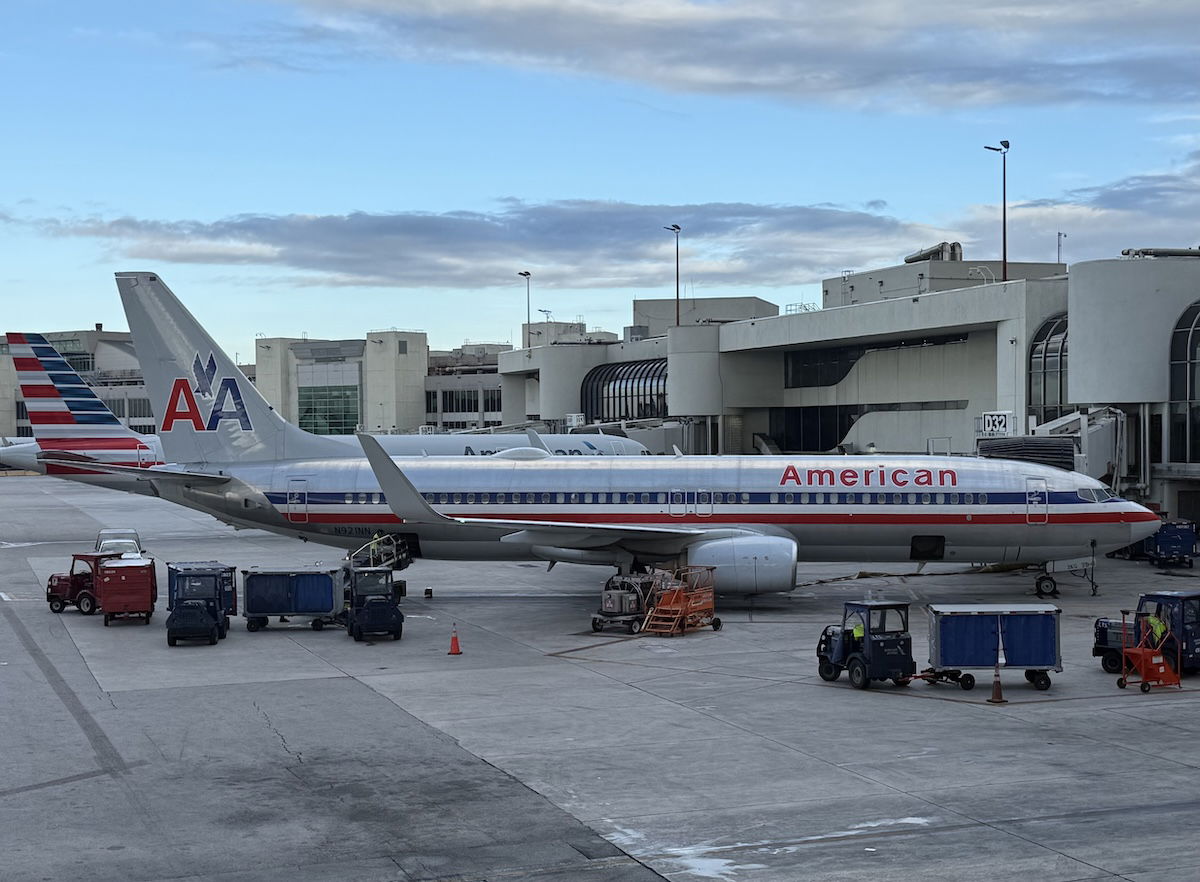
Given this aggressive competitive posturing, some industry observers suggest that Kirby’s continued use of American Airlines serves a dual purpose. On one hand, it is a practical exercise of a contractual right. On the other, it allows Kirby to engage in competitive intelligence. By flying on a rival’s aircraft, an executive can observe firsthand the quality of service, the condition of the cabin interior, the efficiency of ground operations, and the morale of the competing workforce. While Kirby is likely not conducting formal "undercover boss" missions, the insights gained from being a regular passenger on a rival carrier are invaluable for a CEO tasked with outperforming that very competitor.
Executive Compensation and Corporate Ethics
The financial aspect of Kirby’s travel also warrants mention. In 2023, Kirby’s total compensation package was valued at approximately $18.6 million, with some projections for future years reaching as high as $32 million depending on performance-based incentives. While he certainly possesses the personal wealth to purchase tickets on any airline, the utilization of a free, lifetime perk is a standard practice among former C-suite executives.
From a corporate governance perspective, there is no prohibition against an executive using travel benefits from a former employer, even if that employer is a direct competitor. These benefits are considered part of the "deferred compensation" earned during his tenure at American. However, Kirby is reportedly mindful of the distinction between personal and business travel. Contractually, these lifetime perks are often designated for personal use or commuting, whereas travel specifically for United Airlines business is typically conducted on United’s own fleet or through official corporate channels.
Employee Relations and Public Perception
The sight of a CEO on a rival airline can be a sensitive issue for frontline employees. Pilots, flight attendants, and ground crews are often the most visible advocates for their brand, and seeing their leader on a competitor’s aircraft can lead to questions regarding loyalty or confidence in the company’s own product.
However, within the professional aviation community, the nuances of hub logistics and executive contracts are generally understood. American Airlines employees who recognize Kirby on their flights are often veteran staff members who worked under his leadership during the US Airways and American merger. While the relationship between Kirby and American’s current management may be chilly, the frontline interactions are often characterized by professional courtesy.
Furthermore, some analysts argue that Kirby’s presence on American flights actually benefits United’s public image by projecting an aura of confidence. By utilizing American’s services, Kirby demonstrates that he is not "afraid" of the competition and is comfortable enough in United’s market position to utilize his rival’s infrastructure when it is most convenient.
Broader Industry Implications and the "CEO Experience"
The case of Scott Kirby highlights a broader trend in executive leadership: the importance of experiencing the "real world" of commercial aviation. Many airline executives spend their careers flying in the front of the cabin on their own aircraft, where the service is meticulously curated, and the crew is aware of their presence. This can create a "bubble" that obscures the actual passenger experience.
By flying American Airlines as a regular passenger (albeit one with high status), Kirby is exposed to the same delays, boarding processes, and service variations as the general public. This perspective is critical for an executive who has vowed to transform United Airlines into a "customer-centric" organization. Whether he is taking notes on American’s "Oasis" cabin interior or observing the efficiency of their DFW hub operations, the data gathered from these flights likely informs his strategic decisions at United.
Conclusion
The frequent presence of United Airlines CEO Scott Kirby on American Airlines flights is a unique phenomenon that blends personal history with cold, hard logistics. It is the result of a career that spanned two of the world’s largest airlines and a residency that sits in the heart of a rival’s fortress hub.
While Kirby continues to use his public platform to challenge American Airlines’ dominance and criticize its strategic direction, his private actions as a commuter reflect the reality of the U.S. hub-and-spoke system. In the world of high-stakes aviation, efficiency and contractual rights often trump the optics of brand loyalty. As Kirby continues to lead United through an ambitious expansion phase, his "commuter" status on American serves as a reminder of his deep roots in the industry and the complex, often overlapping relationships that define the executive suites of the world’s major carriers.




 Anjar Salim
 Chandra Hamzah
 Tatiana Tantri Indah Sari
 Lukman Taruna Persada Ramadan